
Heritage trail
The Mughal Trail: Lahore to Thatta
A route through the Mughal monuments of Pakistan: the fort, mosques and gardens of Lahore, the Grand Trunk Road forts and gardens, Peshawar and the tiled mosque and tombs of Thatta.
- Punjab, Khyber Pakhtunkhwa and Sindh
- Includes 2 UNESCO World Heritage Sites
- Best October to March
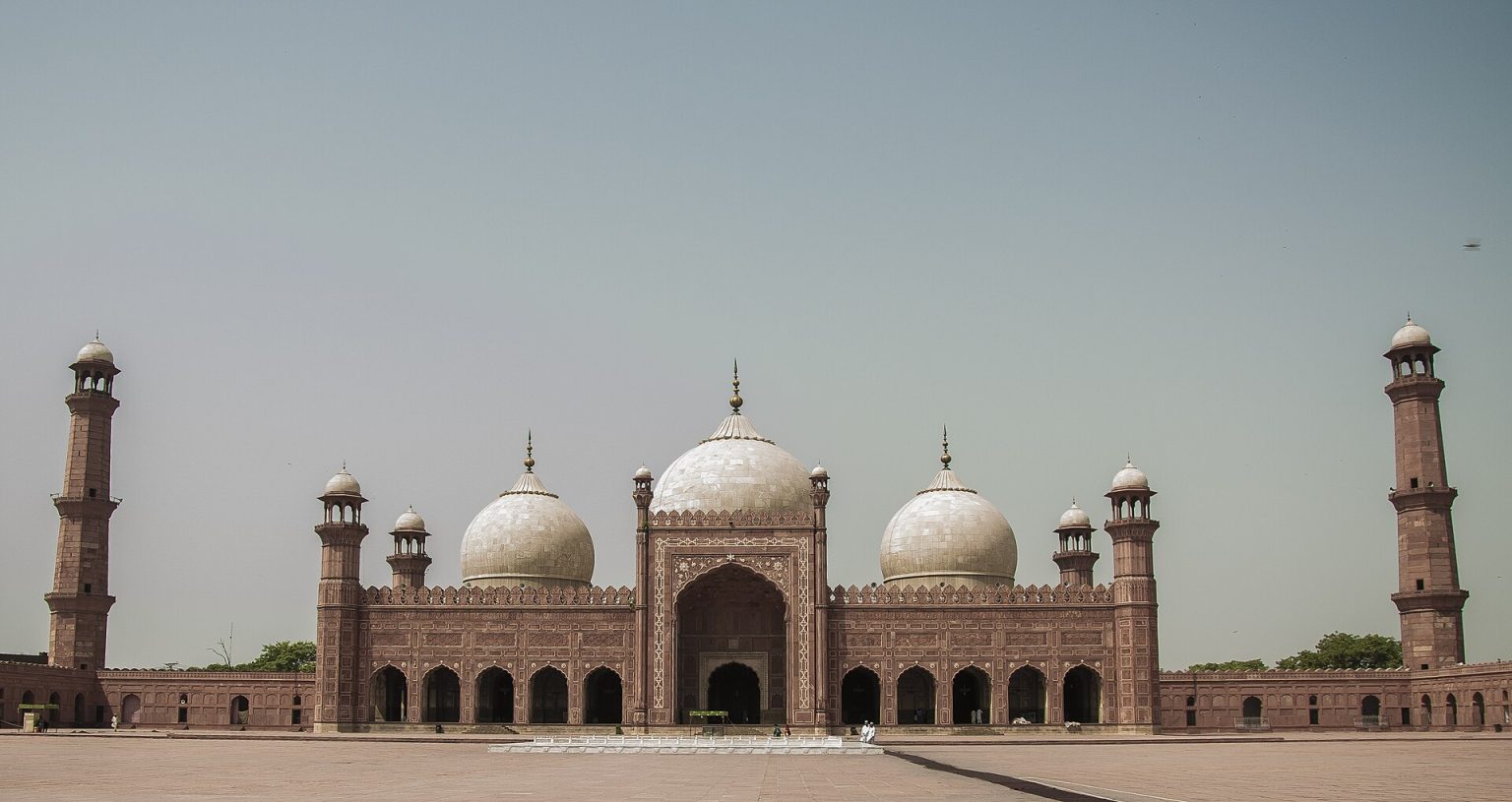
Badshahi Mosque, Lahore
About the trail
The Mughal emperors ruled from Delhi and Agra, but their route to Kabul and Kashmir ran through what is now Pakistan, and the Punjab was a favoured province. Lahore served as a Mughal capital for periods, and the Grand Trunk Road carried emperors, armies and merchants between the Indus and the plains. The result is a belt of monuments stretching from Peshawar to Lahore and, in the south, to Thatta in Sindh.
UNESCO inscribed two of them together in 1981: the Fort and Shalamar Gardens in Lahore, described as masterpieces of the Mughal civilisation at its height in the 16th and 17th centuries. Others are not on the World Heritage List but are among Pakistan's most visited places. For the political history, see the Mughal era topic page.
Opening hours, ticketing and access vary; some forts are in military hands. Confirm opening and access locally before each stop.

Lahore
Two days gives you the fort, mosques and gardens; the Walled City rewards a slower look.
 Lahore Fort and Badshahi MosqueThe fort, built up over generations, has 21 monuments in UNESCO's account, including marble palaces and mosques decorated with mosaics and gilt. Across the Hazuri Bagh stands the Badshahi Mosque.
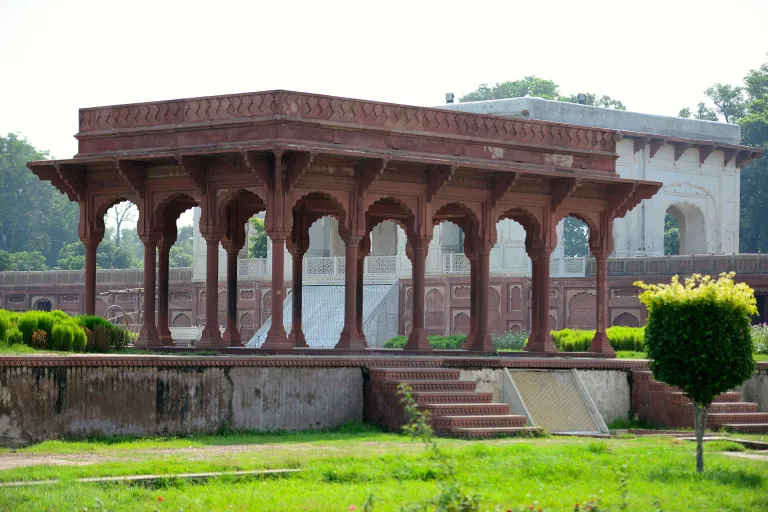 Shalimar GardensWater gardens on three terraces with pavilions, waterfalls and large ornamental ponds, about 7 km from the fort and part of the same World Heritage Site.
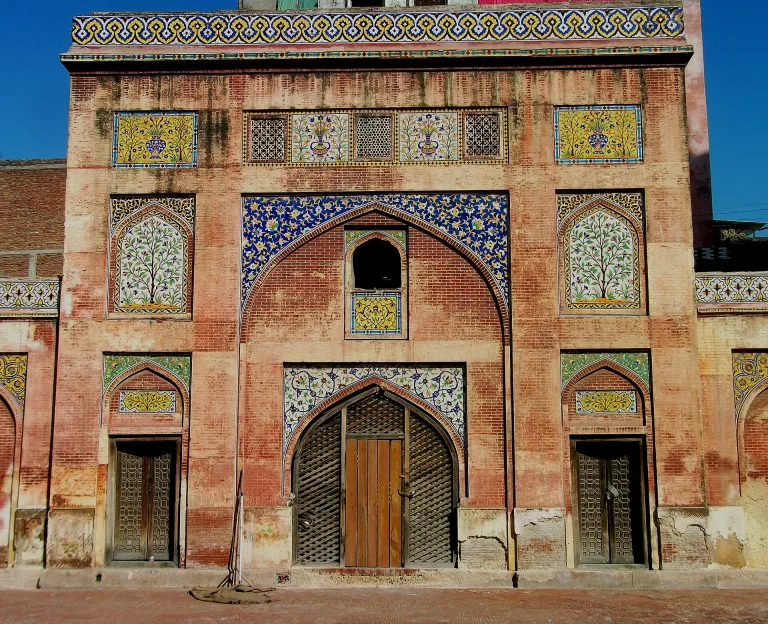 Wazir Khan MosqueA mosque in the Walled City covered in glazed tile mosaic and fresco. See the page for date and restoration details.
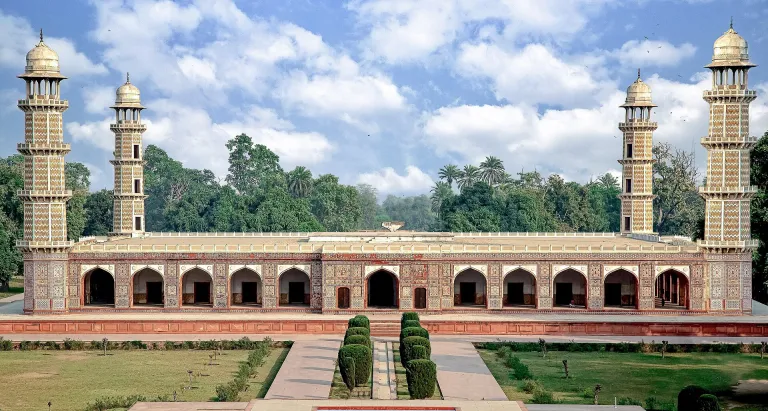 Tomb of Jahangir, ShahdaraA red sandstone tomb inlaid with marble in a four-quarter garden, entered through the Akbari Serai on the far bank of the Ravi.Walled City of LahoreGates, bazaars and havelis around the monuments; Delhi Gate and the Shahi Guzargah are the best entry points.
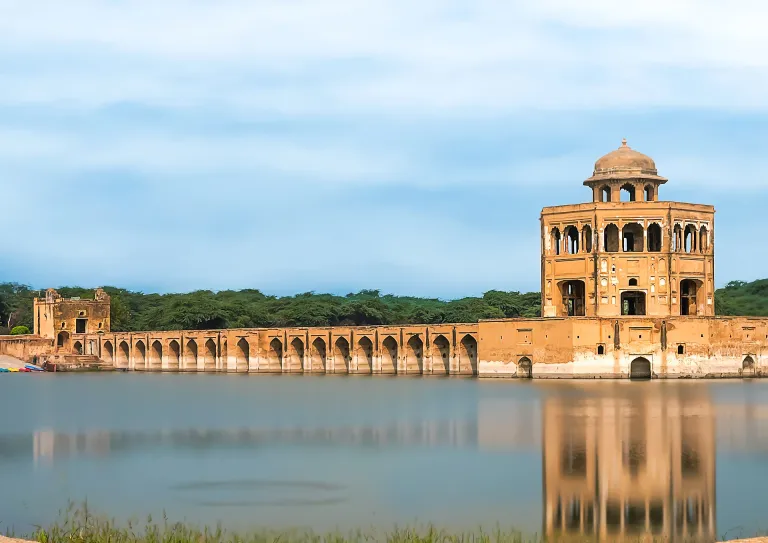 Hiran Minar, SheikhupuraA tower, a large tank and an octagonal pavilion at a former hunting reserve of Jahangir; the Tentative List entry dates from 1993.
Along the Grand Trunk Road
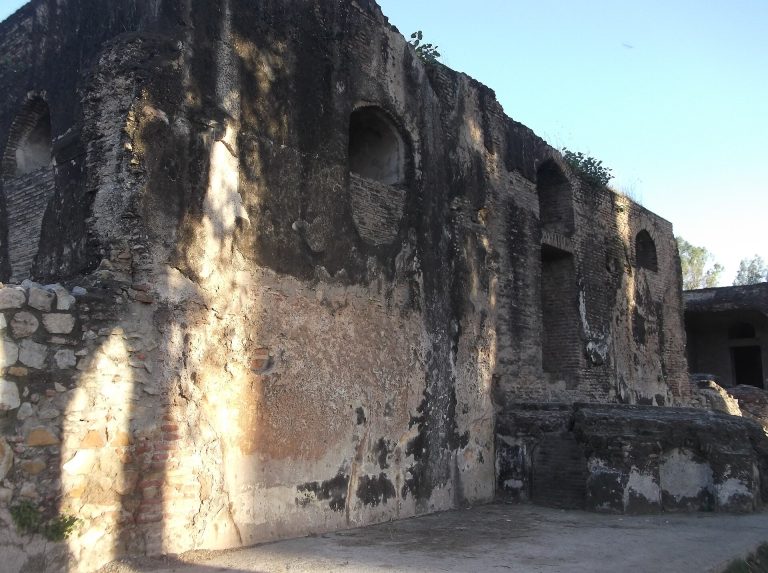 Wah Gardens, Hasan AbdalA 16th-century Mughal garden on the old Lahore to Srinagar route. Raja Man Singh is credited with building it in Akbar's reign. Jahangir stayed on 29 April 1607 and renamed the village Wah; Shah Jahan ordered its reconstruction in 1639. Restoration is reported to be partial.
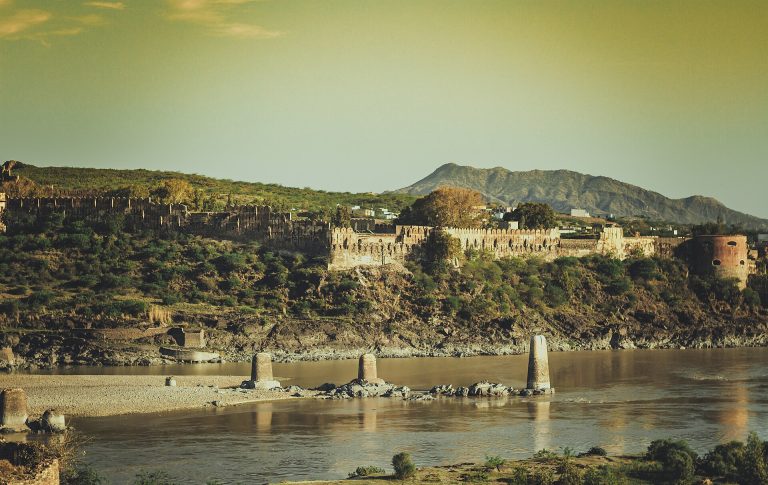 Attock FortOrdered by Akbar and built between 1581 and 1583 above the Indus. It is a military base, and public access is restricted.
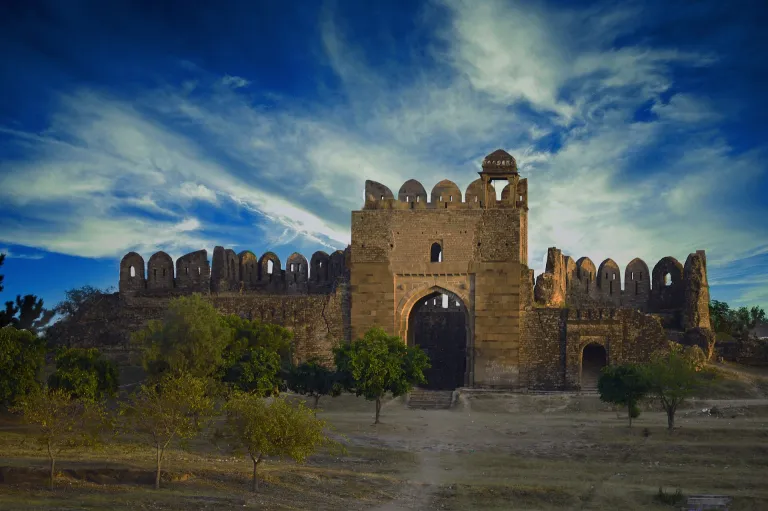 Rohtas FortBegun by Sher Shah Suri in 1541, not by the Mughals. It includes a later Mughal-period palace, the Haveli Man Singh, and is a World Heritage Site.
 Rawat FortAn old roadside inn-fortress on the Grand Trunk Road east of Rawalpindi, with a mosque and Gakhar graves.
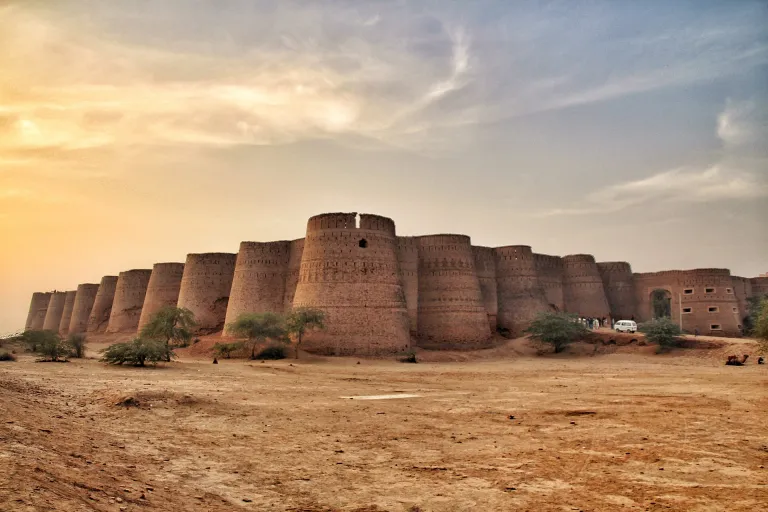 Pharwala FortA Gakhar stronghold on the Soan. Under Humayun the Mughals reinstated the Gakhar chiefs after 1555, according to Wikipedia. Conservation began in 2023 and the fort was declared open to the public.
Peshawar and Sindh
 Mahabat Khan Mosque, PeshawarA mosque in the old city with a marble facade, traditionally credited to a Mughal governor; scholars have debated its attribution and date.
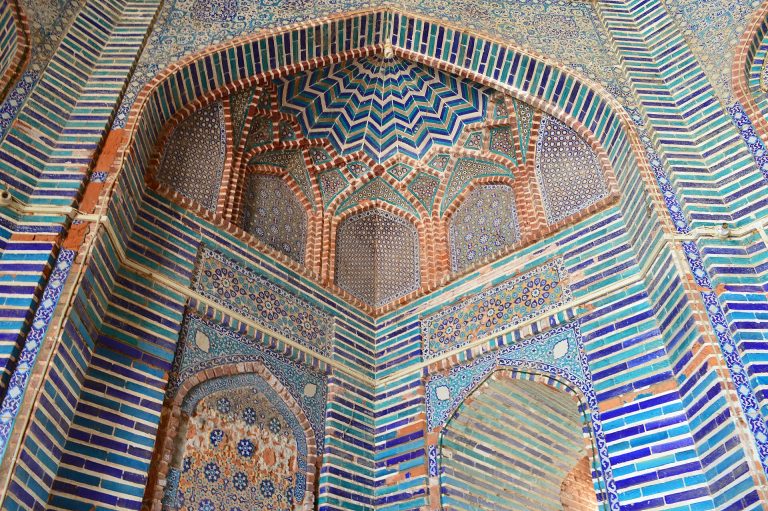 Shah Jahan Mosque, ThattaA mosque with no minarets and a roof of 93 domes, with some of the finest tilework in South Asia. See the page for the date given by its inscriptions.
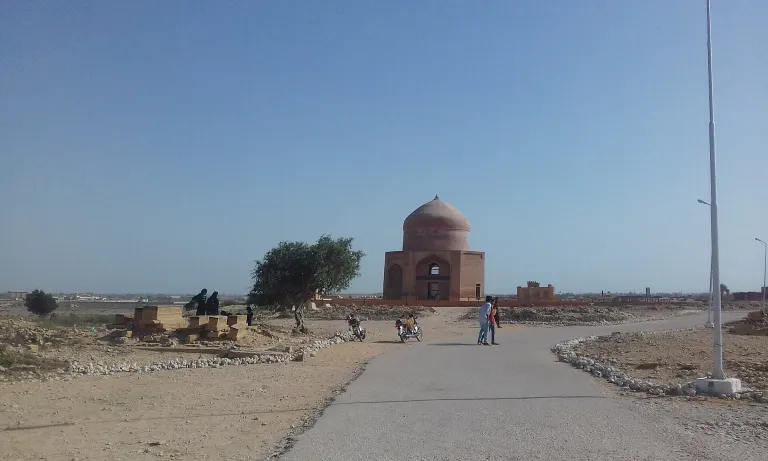 Makli NecropolisUNESCO describes a necropolis of 14th to 18th century tombs blending local, Gujarati and Mughal influences.
Planning
Best season
October to March
Summer heat in Lahore, Multan and interior Sindh is intense; monsoon rain affects the north.
Order of travel
Lahore first
Start in Lahore, then travel north-west along the Grand Trunk Road towards Peshawar. Thatta is a separate journey from Karachi.
Hours and tickets
Confirm locally
Archaeological sites and mosques post different hours, and some forts close for events or security. Check before you go.
Advisories
Check current guidance
Check current advisories and local authority guidance for Peshawar and the north-west, and for interior Sindh.
Visiting respectfully
- The mosques are active places of worship. Dress modestly, remove your shoes, and avoid visiting during Friday congregational prayer unless you are praying.
- Mausoleums and shrines are visited by families who come to pray; keep voices low and ask before photographing people.
- Do not climb on fort walls, sit on tomb platforms or touch tilework and frescoes.
- Hire licensed guides in Lahore; the Walled City is easy to get lost in.
- Respect military and security restrictions; photography near forts in military hands can be prohibited.

Frequently Asked Questions
Which Mughal sites are UNESCO World Heritage Sites?
The Fort and Shalamar Gardens in Lahore, inscribed in 1981. The Badshahi Mosque, Wazir Khan's Mosque, the Tomb of Jahangir complex, Hiran Minar and the Shah Jahan Mosque at Thatta are on the Tentative List.
Is Rohtas Fort Mughal?
No. It was begun in 1541 by Sher Shah Suri, who had driven out the Mughal emperor Humayun. It later received Mughal-period additions such as the Haveli Man Singh. UNESCO treats it as a model for later Mughal architecture.
Can I visit Attock Fort?
It is a military base and public access is restricted. Check with the authorities before planning a visit.
How many days does the Lahore section need?
Two days gives time for the fort, Badshahi Mosque, Wazir Khan Mosque, Shalimar and Shahdara, with slower walks in the Walled City if you wish.
Keep Exploring
Related places and stories on DailyLife.pk
Lahore Fort and Badshahi MosqueLahore Fort and Badshahi Mosque guide: Sheesh Mahal, Picture Wall, Alamgiri GateShalimar Gardens, LahoreVisit the Shalimar Gardens in Lahore: Mughal terraces and cascades, UNESCO listing, history, Mela Chiraghan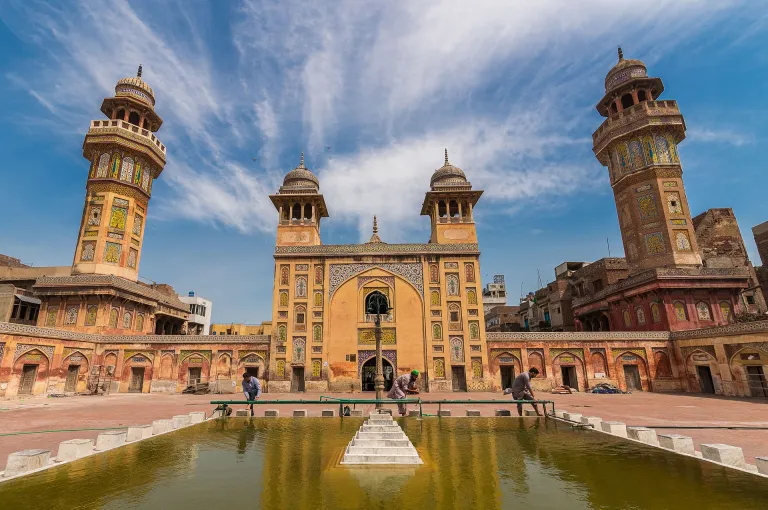 Wazir Khan Mosque, LahoreVisit Wazir Khan Mosque in Lahore: Mughal tilework, frescoes, Shahi HammamTomb of Jahangir and Akbari Serai, ShahdaraVisit the Tomb of Jahangir in Shahdara, Lahore: Mughal char-bagh garden, Akbari Serai
 Rohtas FortExplore Rohtas Fort near Jhelum: Sohail Gate, ramparts, Haveli Man Singh, Shahi Masjid and stepwellsShah Jahan Mosque, ThattaShah Jahan Mosque, Thatta: built 1644-1647 with 93 domes, blue tilework and famous acoustics.
How we know this
- Type Practical guide
- Sources 8 (4 official/academic)
- Reviewed October 2026
- Disputed points None
Rules and fees change, confirm with the official links below before you act.
8 sources
- Fort and Shalamar Gardens in Lahore, UNESCO World Heritage Centre
- Rohtas Fort, UNESCO World Heritage Centre
- Historical Monuments at Makli, Thatta, UNESCO World Heritage Centre
- Pakistan: State Party page, UNESCO World Heritage Centre
- Wah Gardens, Wikipedia (used to locate primary sources)
- Attock Fort, Wikipedia (used to locate primary sources)
- Pharwala Fort, Wikipedia (used to locate primary sources)
- Pharwala Fort on its way to regain lost glory, Dawn
Photo credits (16)
- Wide angle view of Badshahi Mosque.jpg, Mishel Ijaz, CC BY-SA 4.0, via Wikimedia Commons
- Alamgiri Gate - Main entrance to Lahore Fort.jpg, S.hassanjawad, CC BY-SA 3.0, via Wikimedia Commons
- Shalimar Gardens - Aunzee 48.jpg, Aun Muhammad, CC BY-SA 4.0, via Wikimedia Commons
- Courtyard of Wazir Khan Mosque, Lahore.jpg, Muhammad Umair Mirza, CC BY-SA 4.0, via Wikimedia Commons
- Tomb of Emperor Jahangir.jpg, Tahsin Shah, CC BY-SA 4.0, via Wikimedia Commons
- Octagonal Pavilion in Water Tank at Hiran Minar.jpg, Shaguftakarim, CC BY-SA 4.0, via Wikimedia Commons
- Baradari of Wah Mughal Gardens.jpg, Mobeen ur Rehman, CC BY-SA 4.0, via Wikimedia Commons
- Sohail Gate - Rohtas Fort by Hassan.jpg, Hassantahir6009, CC BY-SA 4.0, via Wikimedia Commons
- Masjid Muhabat Khan.jpg, Hafeezburki, CC BY-SA 4.0, via Wikimedia Commons
- Shahjahan Mosque Thatta Sindh 1.JPG, Ghazimemon, CC BY-SA 4.0, via Wikimedia Commons
- Makli Necropolis near Thatta province of sindh pakistan.jpg, Nadirkhanbrahui, CC BY-SA 4.0, via Wikimedia Commons
- Attock Qila.jpg, Imkashi94, CC BY-SA 4.0, via Wikimedia Commons
- Rawat Fort - Main Gate East.jpg, Mudabbirmaajid, CC BY-SA 3.0, via Wikimedia Commons
- Derawar Fort, Bahawalpur I.jpg, Fassifarooq, CC BY-SA 4.0, via Wikimedia Commons
- Badshahi Mosque, Lahore VI.jpg, Fassifarooq, CC BY-SA 4.0, via Wikimedia Commons
- Sohail Gate, Rohtas Fort, Pakistan.jpg, MBNav412, CC BY-SA 4.0, via Wikimedia Commons
