
Travel destination
Shalimar Gardens: Shah Jahan's Water Garden
Three descending terraces of marble, brick and water, laid out in 1641–42: a Mughal paradise garden and, with Lahore Fort, a UNESCO World Heritage Site.
- Baghbanpura, Lahore
- UNESCO World Heritage Site (1981)
- Best season October to March
Shalimar Gardens, Lahore
About the Shalimar Gardens
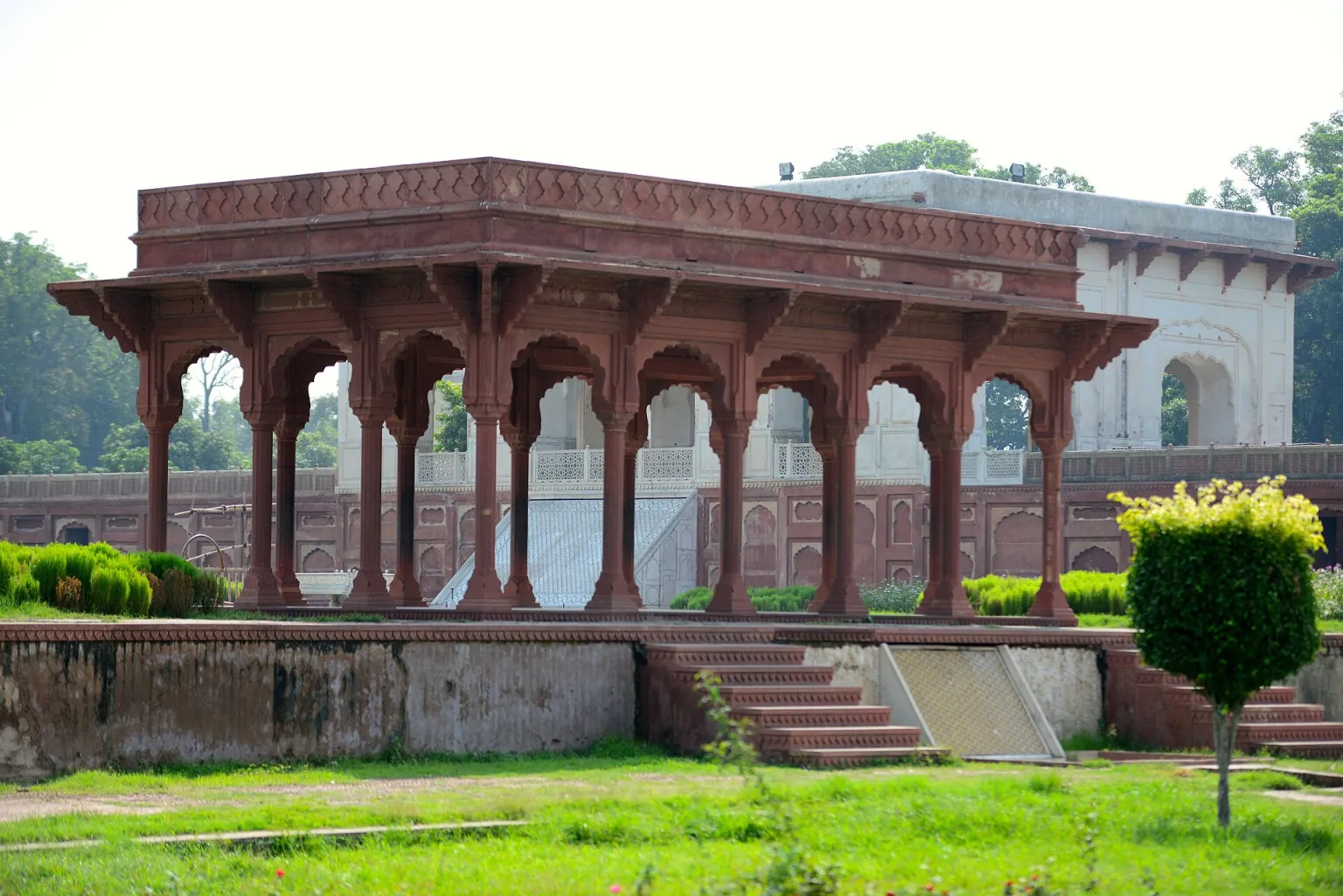
The Shalimar Gardens (Shalamar Bagh) are the finest surviving example of a Mughal water garden in Pakistan. UNESCO describes a rectilinear enclosure of about 16 hectares, bounded by crenellated red sandstone walls, with pavilions, large basins, waterfalls and ornamental ponds, planted with poplars and cypresses. Shah Jahan had them built in 1641–42, and together with Lahore Fort they were inscribed on the World Heritage List in 1981.
The garden is organised in three terraces, each four to five metres lower than the one above. Published accounts name the upper terrace Farah Baksh and the two lower terraces Faiz Baksh, and credit the nobleman Ali Mardan Khan with most of the engineering and Khalilullah Khan with managing the project. A long canal brought water from the north, and the design depended on gravity to feed hundreds of fountains; one count gives 414, with 105 on the upper terrace, 152 on the middle and 153 on the lowest, though totals vary between sources. The garden also has five water cascades, including the Sawan Bhadon pavilions framing a waterfall and a great marble cascade over which water ran like a sheet.
The gardens have had a turbulent history. Marble from the garden was removed in the Sikh period, and later the Mela Chiraghan festival of lamps was held here until it was banned in 1958; the gardens were nationalised in 1962. In 1999 road widening accidentally destroyed two of the three hydraulic works, and UNESCO placed the property on the World Heritage in Danger list in 2000 until 2012. Today the garden is a shaded green refuge in a very dense part of north-east Lahore.
A garden designed to be heard as much as seen.
What to See
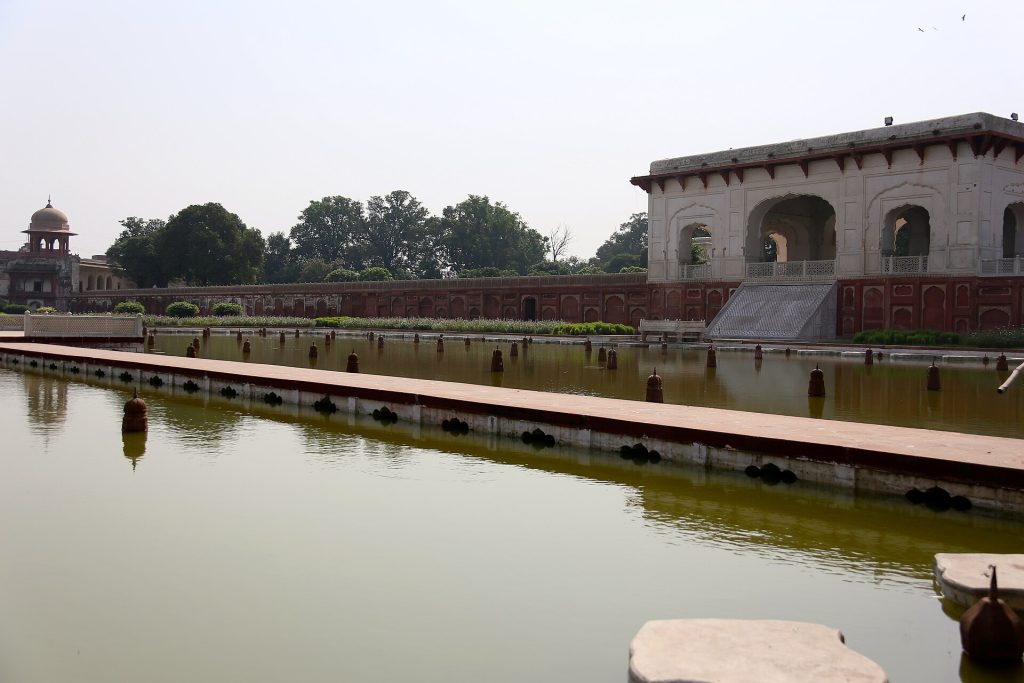
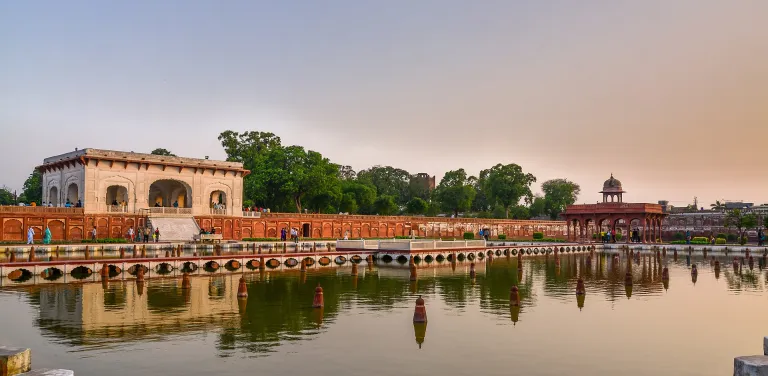 Farah Baksh terraceThe upper terrace, with the main building, tank and cascade, offers the clearest view down the whole axis.
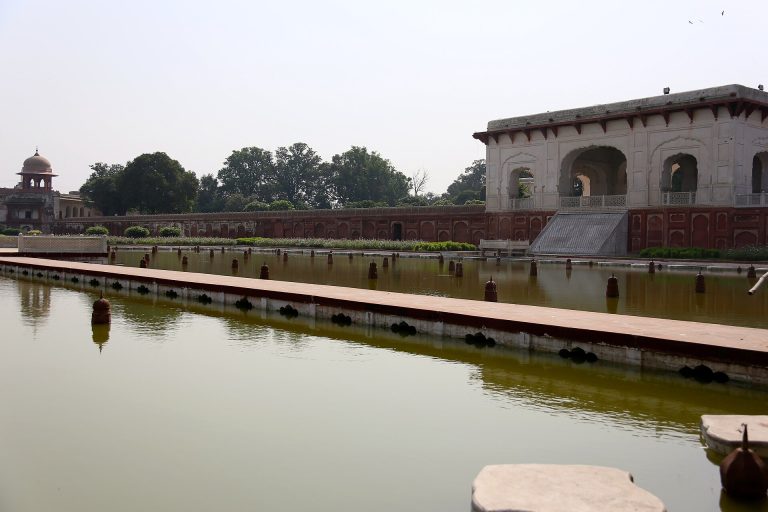 Faiz Baksh terracesThe middle and lower levels are linked by water channels, tanks and brick walkways, shaded by trees.
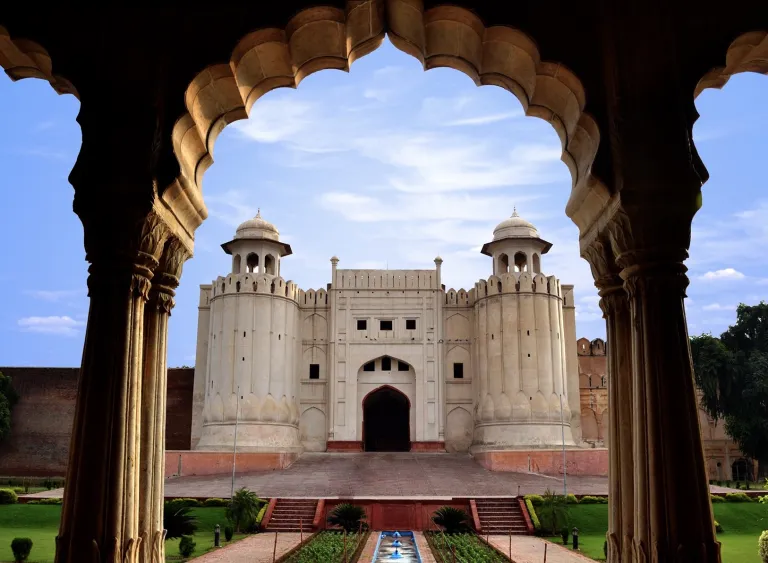 Lahore FortThe other half of the UNESCO listing, closer to the old city.
Plan Your Visit
Best Time to Visit
October to March
Pleasant weather and lower heat; the garden is especially lovely in the late-afternoon light. Summer midday is hot.
How to Reach
North-east Lahore
The gardens are in Baghbanpura, on the Grand Trunk Road side of the city. Use ride-hailing or a rickshaw; traffic is heavy at peak hours.
Tickets and Hours
Confirm locally
Entry fees and opening hours are set by the managing authority and change. Confirm before you go.
Where to Stay
Lahore
Stay in Gulberg, the Mall Road area or near the walled city and make this a half-day trip.
Photography
Ask for rules
Rules on tripods, drones and commercial shoots vary; ask at the gate.
Festivals
Check ahead
Large events and festivals can close or crowd the garden; confirm the programme.
Suggested Visit
- 1
Check access and weather
Confirm hours and avoid the hottest part of the day.
- 2
Start at the entrance on the upper terrace
Look down the main axis before you walk.
- 3
Walk the terraces
Move slowly down the levels; note each change of height and water feature.
- 4
Pause at the pavilions
Sit in the Sawan Bhadon pavilions and watch the light change.
- 5
Continue to Lahore Fort
Combine with the fort and old city in a single day.
Visit Responsibly
- Keep off the cascades, tank edges and historic brickwork.
- Use the bins provided and keep picnics tidy.
- Respect other visitors' privacy, particularly families, when photographing.
- Avoid drones unless you have permission.
- Be mindful that the area outside the garden is densely built and busy with traffic.
Nearby Places
Lahore Fort and Badshahi MosqueThe other site in the UNESCO property, plus the great Badshahi Mosque.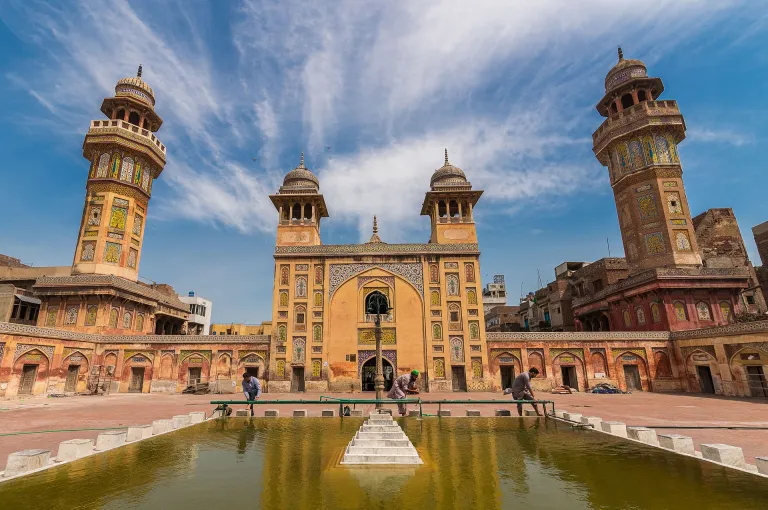 Walled City of LahoreBazaars, havelis and mosques inside the old city walls.Wazir Khan MosqueA masterpiece of Mughal tilework in the walled city.
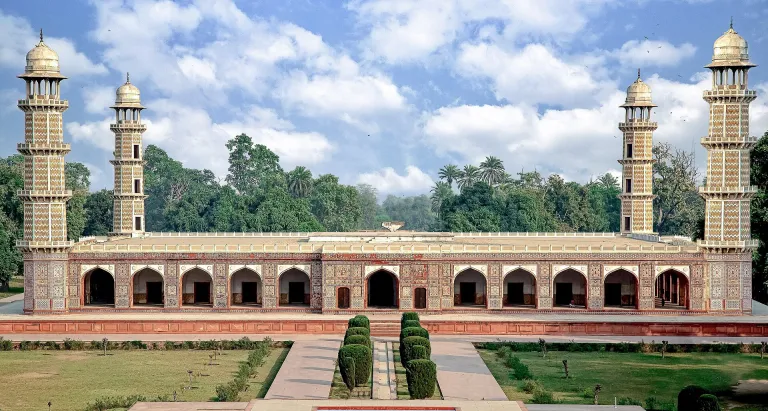 Tomb of JahangirA Mughal tomb garden across the Ravi in Shahdara.
 Mughal EraRead more on the dynasty that built the garden.
Shalimar Gardens, Lahore Through Time
Every dated moment our guides record about Shalimar Gardens, Lahore, from its own history and from national events that touched it. Each entry links to its source page.
- 1526–1857
Mughal era
The Mughals left monuments such as Lahore Fort and the Shalamar Gardens, a World Heritage property since 1981.
- 1556–1658
Mughal Lahore at its height
Akbar rebuilds Lahore Fort; Jahangir and Shah Jahan add palaces, the Wazir Khan Mosque (1634–41) and the Shalamar Gardens (1641–42).
- 16th–17th century
Mughal Lahore
Lahore Fort, the Shalamar Gardens (1641–42), Wazir Khan Mosque (1634–41) and the Badshahi Mosque (1671–73).
- 1627–1658
Shah Jahan
The age of marble and gardens: the Sheesh Mahal (1631–32), Wazir Khan Mosque (1634–41) and Shalamar Gardens (1641–42) in Lahore.
- 1981
Lahore and Makli
The Fort and Shalamar Gardens in Lahore and the Historical Monuments at Makli, Thatta, are inscribed.
Do you remember Shalimar Gardens, Lahore as it used to be? Share a memory or an old photo, our editors review every story before it appears.
Frequently Asked Questions
When were the Shalimar Gardens built?
Between 1641 and 1642 under Shah Jahan, according to UNESCO.
Is Shalimar Gardens a UNESCO site?
Yes, it was inscribed in 1981 together with Lahore Fort. The property was on the List of World Heritage in Danger from 2000 to 2012.
How many terraces are there?
Three, each four to five metres lower than the one above, descending from south to north.
How many fountains are there?
Counts vary. One published account gives 414 fountains in total; UNESCO speaks of cascades, basins and ponds without giving a number.
Do I need a ticket?
Ticket arrangements change, so confirm locally.
Keep Exploring
Related places and stories on DailyLife.pk
 Lahore Fort and Badshahi MosqueLahore Fort and Badshahi Mosque guide: Sheesh Mahal, Picture Wall, Alamgiri GateWalled City of LahoreExplore the Walled City of Lahore: Delhi Gate, the Royal Trail, Wazir Khan Mosque, Shahi HammamWazir Khan Mosque, LahoreVisit Wazir Khan Mosque in Lahore: Mughal tilework, frescoes, Shahi HammamTomb of Jahangir and Akbari Serai, ShahdaraVisit the Tomb of Jahangir in Shahdara, Lahore: Mughal char-bagh garden, Akbari Serai
 LahoreLahore travel guide: Badshahi Mosque, Lahore Fort, Shalimar Gardens, the Walled City, food streets, neighbourhoods, metroThe Mughal EraThe Mughal Empire in Pakistan: Babur to Aurangzeb, Lahore Fort, Shalamar Gardens
How we know this
- Type Travel guide
- Sources 2 (1 official/academic)
- Reviewed October 2026
- Disputed points None
Rules and fees change, confirm with the official links below before you act.
2 sources
- Lahore Fort and Shalamar Gardens, UNESCO World Heritage Centre
- Shalimar Gardens, Lahore, Wikipedia
Photo credits (7)
- Shalimar Gardens - Aunzee 48.jpg, Aun Muhammad, CC BY-SA 4.0, via Wikimedia Commons
- Faiz Bakhsh Terrace (Shalimar Gardens middle terrace) by Aunzee.jpg, Aun Muhammad, CC BY-SA 4.0, via Wikimedia Commons
- Reflection of Farah Baksh Terrace (Upper Terrace) main building.jpg, Muhammad Ashar, CC BY-SA 3.0, via Wikimedia Commons
- Lahore Fort view from Baradari.jpg, Rohaan Bhatti, CC BY-SA 3.0, via Wikimedia Commons
- Wazir Khan Mosque by Moiz.jpg, Moiz Ismaili, CC BY-SA 4.0, via Wikimedia Commons
- Tomb of Emperor Jahangir.jpg, Tahsin Shah, CC BY-SA 4.0, via Wikimedia Commons
- Badshahi Mosque, Lahore VI.jpg, Fassifarooq, CC BY-SA 4.0, via Wikimedia Commons
