
UNESCO World Heritage
Lahore Fort and Badshahi Mosque: Mughal Lahore at Its Grandest
The Mughal citadel of Lahore, a UNESCO World Heritage Site with the Shalimar Gardens, faces Aurangzeb's vast red-sandstone mosque across the Hazuri Bagh.
- Walled City, Lahore, Punjab
- UNESCO World Heritage Site (Fort), 1981
- Best season October to March
Badshahi Mosque and Lahore Fort, Lahore
About the Fort and the Mosque
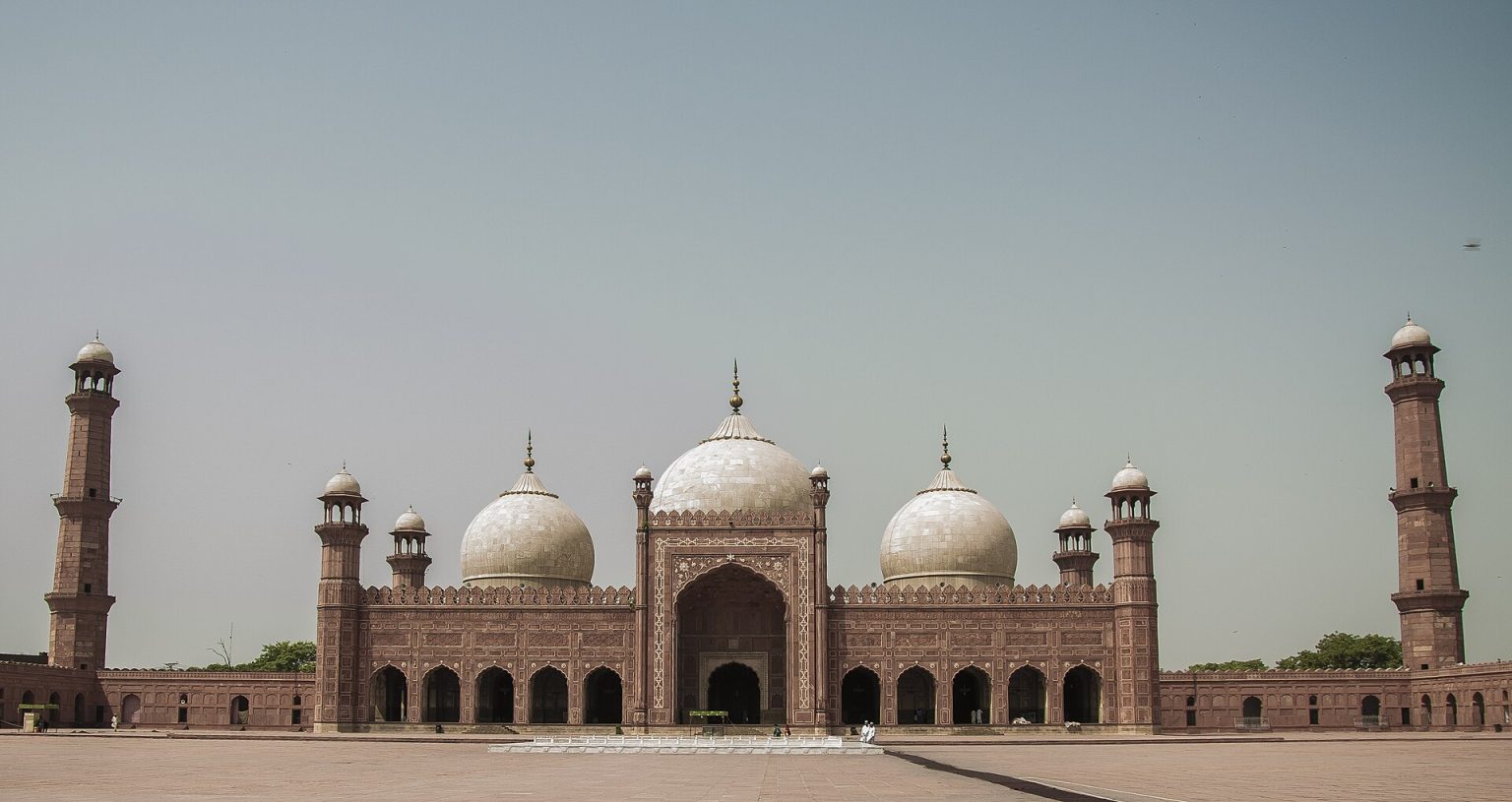
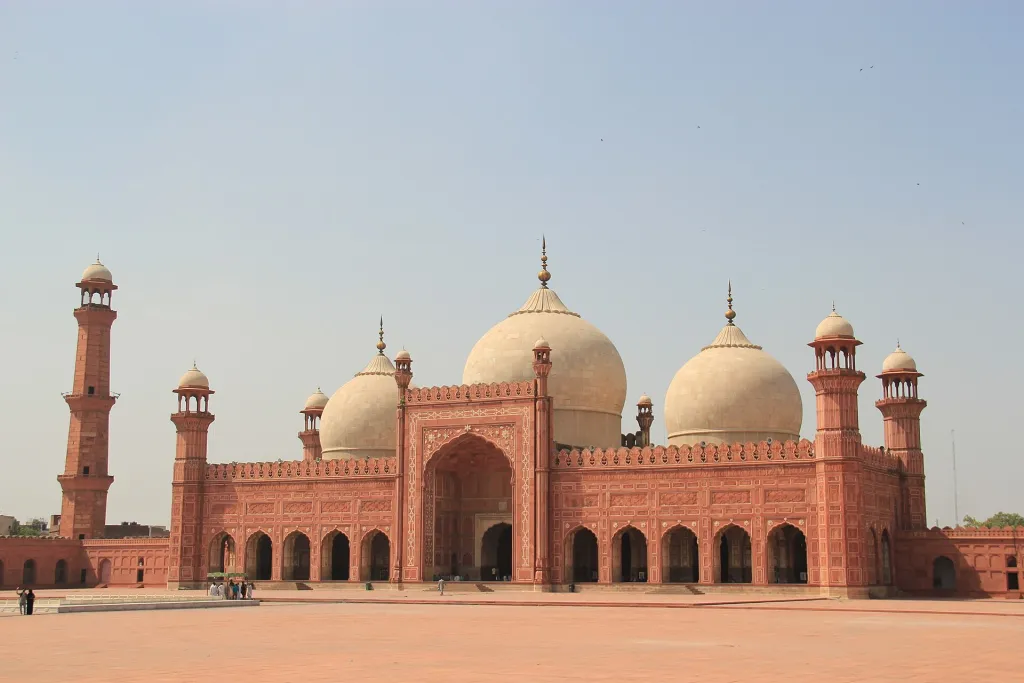
In the north-west corner of Lahore's Walled City stand two of the greatest buildings of the Mughal age. Lahore Fort, the Shahi Qila, is a royal citadel built up over generations; across a garden square to its west rises the Badshahi Mosque, the emperor's mosque, with its red sandstone walls, white marble domes and four towering minarets. Together they form the most powerful ensemble of Mughal architecture in Pakistan.
A fort has stood here for centuries, but the present complex is largely the work of the Mughal emperors from Akbar to Shah Jahan. Akbar rebuilt it, adding the Masjidi Gate and the Hall of Public and Private Audience; Jahangir completed the great northern court and covered the outer north and west walls with tile mosaic; Shah Jahan added marble pavilions, including the Diwan-e-Khas and the dazzling Shish Mahal (Sheesh Mahal) of 1631–32. UNESCO inscribed the fort, together with the Shalimar Gardens about 7 km away, as a World Heritage Site in 1981. The property spent 2000 to 2012 on the List of World Heritage in Danger after damage to the gardens' historic waterworks, before conservation work allowed its removal.
Aurangzeb built the Badshahi Mosque between 1671 and 1673, aligned with the fort's Alamgiri Gate. It ranks among the largest mosques in the world, and its immense courtyard still fills for Eid prayers. The mosque is not part of the UNESCO property, but the two are best visited together, along with the Hazuri Bagh between them and the tomb of the poet Allama Iqbal beside the mosque steps.
Which guide do you need? This guide covers Lahore Fort and the Badshahi Mosque in detail. For the old city around them, see Walled City of Lahore. For the whole city, see Lahore.
Highlights
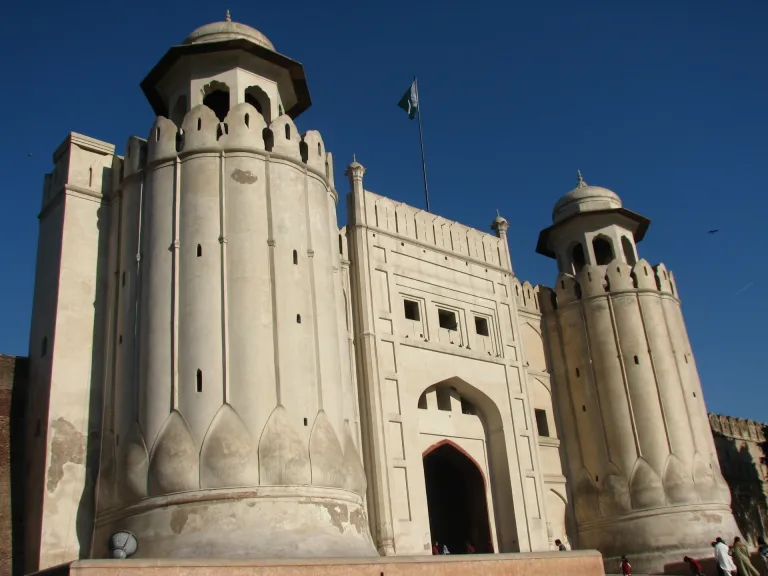 Alamgiri GateAurangzeb's monumental gateway to the fort, facing the Hazuri Bagh and the mosque.
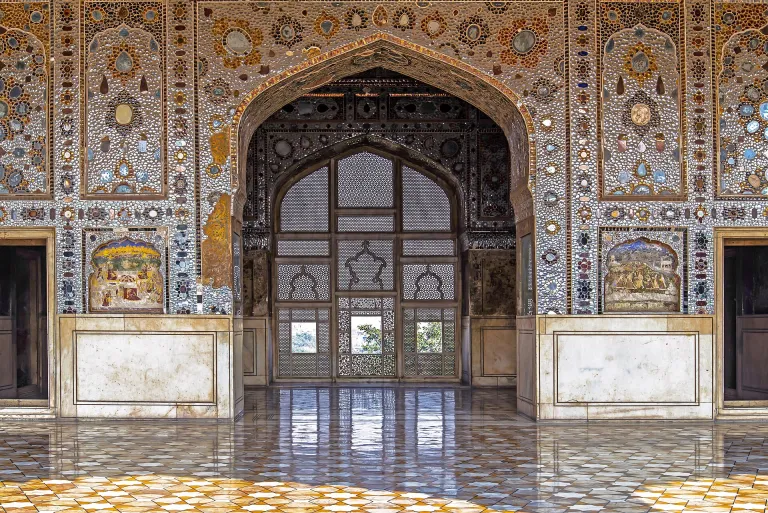 Shish MahalShah Jahan's 1631–32 'palace of mirrors', its ceilings inlaid with convex glass and pietra dura.
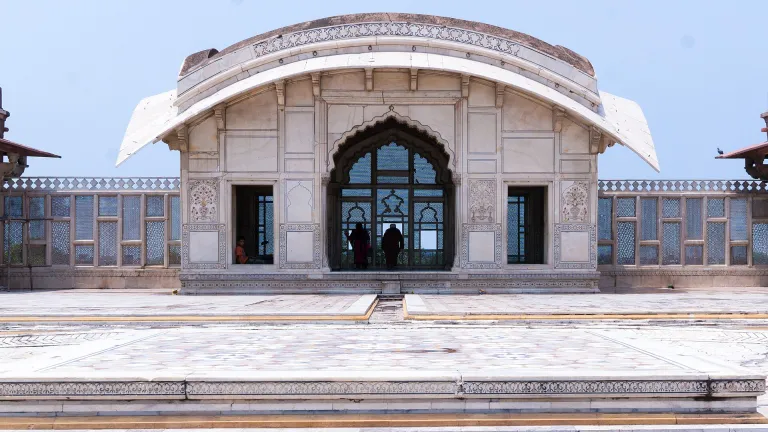 Naulakha PavilionA small white-marble pavilion with a curved Bengali-style roof and fine inlay.
 Badshahi MosqueAurangzeb's mosque of 1671–73, with red sandstone, marble domes and a vast courtyard.
 Hazuri Bagh and Iqbal's tombThe garden square with Ranjit Singh's marble baradari, and the tomb of Allama Iqbal by the mosque steps.
Plan Your Visit
Best Time to Visit
October to March
Winter days are mild and clear, though fog can settle in December and January. Summers are very hot, go early in the morning.
How to Reach
North-west corner of the Walled City
Both sites are by the Circular Road at the Walled City's north-west corner, reached by car, rickshaw or ride-hailing from anywhere in Lahore. A walk through the bazaars from Delhi Gate is a fine alternative.
Time Needed
Half a day or more
The fort is large; allow time for the Picture Wall and the Shah Burj, then cross to the mosque.
Food
Fort Road food street
Restaurants and rooftops on Fort Road look across to the mosque and are popular in the evening.
Mosque Etiquette
Dress modestly
Cover arms and legs, women should cover their hair, and remove shoes before entering. Avoid visits during congregational prayers.
Advisories
See advisory below
Lahore city is not in the areas most foreign advisories single out, but read current advice before travel.
Before You Go
Tickets, opening times and rules change, check these with official sources close to your visit.
- 1
Check opening times and tickets
Ticket prices for Pakistani and foreign visitors differ and are revised from time to time, and parts of the fort may be closed for conservation. Check with the Tourism Development Corporation of Punjab (tdcp.gop.pk) or at the gate.
- 2
Confirm photography rules
Rules for professional cameras, tripods and drones are set by the site management and can change. Ask at the entrance before filming.
- 3
Plan around prayers and events
The mosque fills for Friday and Eid prayers, and the fort hosts events that can close sections. Plan your visit accordingly.
- 4
Read the travel advisories
Foreign visitors should read the UK FCDO (gov.uk/foreign-travel-advice/pakistan) and US State Department (travel.state.gov) advice for Pakistan, which can affect travel insurance, and follow local authority guidance.
Suggested Half Day
A morning at the fort and mosque, ending on Fort Road.
- 1
Early morning: Lahore Fort
Enter by the Alamgiri Gate and walk through the Diwan-e-Aam, Jahangir's quadrangle and the Shah Burj with the Shish Mahal and Naulakha.
- 2
Late morning: Picture Wall
Walk outside the north and west walls to see the mosaic panels.
- 3
Midday: Hazuri Bagh and Badshahi Mosque
Cross the garden past the baradari and Iqbal's tomb into the mosque courtyard.
- 4
Evening: Fort Road
Return at dusk for dinner with a view of the lit domes and minarets.
Travel Responsibly
- Do not touch frescoes, mirror work or tile mosaics.
- Never scratch or write on walls, graffiti is a serious threat to the fort.
- Respect worshippers: keep voices low and do not walk in front of people praying.
- Use bins or carry litter out of both sites.
- Hire licensed guides and buy crafts from Walled City workshops.
Travel Advisories
The UK FCDO does not list Lahore city among the areas it advises against travelling to, though it advises against all but essential travel within 5 miles of the India–Pakistan border (with exceptions for the route to the Wagah ceremony). The US State Department rates Pakistan overall at Level 3, 'Reconsider travel'. Check current advisories and follow local authority guidance.

Lahore Fort and Badshahi Mosque Through Time
Every dated moment our guides record about Lahore Fort and Badshahi Mosque, from its own history and from national events that touched it. Each entry links to its source page.
- 1524–1707
The Mughal golden age
Babur's troops took Lahore in 1524. Akbar based his court here from 1584 and rebuilt the fort; Jahangir, Shah Jahan and Aurangzeb added palaces, the Shalimar Gardens (1641–42), the Wazir Khan Mosque (1634) and the Badshahi Mosque (1671–73).
- 1526–1857
Mughal era
The Mughals left monuments such as Lahore Fort and the Shalamar Gardens, a World Heritage property since 1981.
- 1556–1658
Mughal Lahore at its height
Akbar rebuilds Lahore Fort; Jahangir and Shah Jahan add palaces, the Wazir Khan Mosque (1634–41) and the Shalamar Gardens (1641–42).
- 16th–17th century
Mughal Lahore
Lahore Fort, the Shalamar Gardens (1641–42), Wazir Khan Mosque (1634–41) and the Badshahi Mosque (1671–73).
- 1605–1627
Jahangir
Jahangir completes the great northern court of Lahore Fort (1617–18) and decorates its walls with tile and painted panels (1624–25). He is buried at Shahdara.
- 1658–1707
Aurangzeb
The empire reaches its greatest extent. In Lahore he builds the Badshahi Mosque (1671–73) and the Alamgiri Gate of the fort.
- 1671–1707
Aurangzeb
Aurangzeb builds the Badshahi Mosque (1671–73). After his death in 1707 Mughal power fragments.
- 1671–1673 (gateway inscription: AH 1084, 1673–74)
Completion of the Badshahi Mosque
Built for the Mughal emperor Aurangzeb under the supervision of Lahore's governor Fidai Khan Koka, the Badshahi Mosque was completed in 1673 opposite the Lahore Fort. It was the last great imperial mosque of the Mughals and remains a symbol of Lahore.
- 1850s
British garrison and return
The British use the mosque as a garrison; a Badshahi Mosque Authority is set up in 1852 and the building is returned to Muslims in 1856. Cells around the courtyard are later demolished.
- 21 April 1938
Iqbal dies
Iqbal dies in Lahore and is buried beside the Badshahi Mosque.
- 21 April 1938
Death in Lahore
Dies in Lahore aged 60 and is buried beside the steps of the Badshahi Mosque. Armaghan-e-Hijaz is published after his death.
- 1981
Lahore and Makli
The Fort and Shalamar Gardens in Lahore and the Historical Monuments at Makli, Thatta, are inscribed.
- 1981
World Heritage
UNESCO inscribed the Lahore Fort and Shalimar Gardens. They were placed on the danger list in 2000 after damage to the gardens' waterworks and removed from it in 2012 following conservation work.
- 1993
First Tentative List entries
Seven properties are added, among them the Badshahi Mosque, Wazir Khan's Mosque, the Tomb of Jahangir complex and the Chaukhandi Tombs.
- 14 December 1993
UNESCO Tentative List
Pakistan submits the Badshahi Mosque to UNESCO's Tentative List of World Heritage Sites.
- August 2026
The Telegraph: unexplored destinations
Pakistan was reported among the Telegraph's most unusual destinations for 2026, cited for the Karakoram, Hunza, the Karakoram Highway and Lahore's Badshahi Mosque.
Do you remember Lahore Fort and Badshahi Mosque as it used to be? Share a memory or an old photo, our editors review every story before it appears.
Frequently Asked Questions
Is the Badshahi Mosque a UNESCO World Heritage Site?
The UNESCO World Heritage Site inscribed in 1981 is the Fort and Shalimar Gardens in Lahore. The Badshahi Mosque stands opposite the fort but is not part of the inscribed property.
Who built Lahore Fort?
The present fort is mainly the work of the Mughal emperors Akbar, Jahangir and Shah Jahan, with Aurangzeb's Alamgiri Gate and later Sikh and British additions.
When was the Badshahi Mosque built?
Between 1671 and 1673, by the Mughal emperor Aurangzeb.
What is the Shish Mahal?
The 'palace of mirrors' built by Shah Jahan in 1631–32 inside the fort's Shah Burj, famous for ceilings of inlaid mirror and glass.
Can non-Muslims visit the Badshahi Mosque?
Yes, visitors are welcome outside prayer times. Dress modestly, remove shoes and, for women, cover the hair.
Keep Exploring
Related places and stories on DailyLife.pk
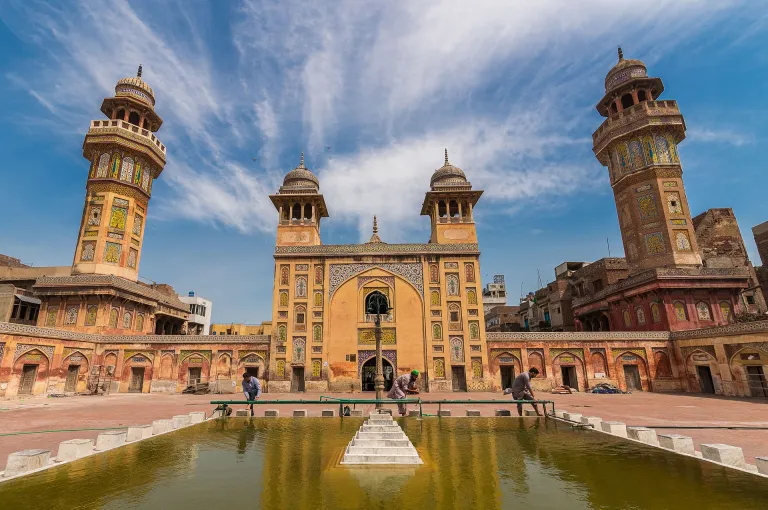 Walled City of LahoreExplore the Walled City of Lahore: Delhi Gate, the Royal Trail, Wazir Khan Mosque, Shahi Hammam
 Rohtas FortExplore Rohtas Fort near Jhelum: Sohail Gate, ramparts, Haveli Man Singh, Shahi Masjid and stepwellsLahoreLahore travel guide: Badshahi Mosque, Lahore Fort, Shalimar Gardens, the Walled City, food streets, neighbourhoods, metro
 The Mughal EraThe Mughal Empire in Pakistan: Babur to Aurangzeb, Lahore Fort, Shalamar Gardens
 Architecture of PakistanPakistan's architecture: Indus cities, Gandhara monasteries, Multan tombs, Mughal Lahore, Makli, mountain fortsThe Sikh EmpireThe Sikh Empire in Pakistan: Ranjit Singh's capture of Lahore in 1799, Multan, Peshawar
How we know this
- Type Travel guide
- Sources 7 (4 official/academic)
- Reviewed October 2026
- Disputed points None
Rules and fees change, confirm with the official links below before you act.
7 sources
- Fort and Shalamar Gardens in Lahore, UNESCO World Heritage Centre
- Badshahi Mosque, Encyclopaedia Britannica
- Royal fort of empire: Shahi Qila, Lahore Fort, Aga Khan Development Network
- Tourism Development Corporation of Punjab, Government of Punjab
- Pakistan Tourism Development Corporation, Government of Pakistan
- Pakistan travel advice – warnings and insurance, UK Foreign, Commonwealth & Development Office
- Pakistan Travel Advisory, U.S. Department of State
Photo credits (10)
- Wide angle view of Badshahi Mosque.jpg, Mishel Ijaz, CC BY-SA 4.0, via Wikimedia Commons
- Badshahi Mosque front picture.jpg, Romero Maia, CC BY-SA 4.0, via Wikimedia Commons
- Night View of Badshahi Mosque (King’s Mosque).jpg, Muhammad Ashar, CC BY-SA 3.0, via Wikimedia Commons
- Alamgiri Gate - Main entrance to Lahore Fort.jpg, S.hassanjawad, CC BY-SA 3.0, via Wikimedia Commons
- Sheesh Mahal, Shahi Qila, Lahore (1).jpg, Faisalrazamalik, CC BY-SA 4.0, via Wikimedia Commons
- Naulakha Pavilion in Lahore Fort.jpg, Jawad.hassan89, CC BY-SA 3.0, via Wikimedia Commons
- Hazuri Bagh Baradari with Lahore Fort in the background.jpg, Drdolittle13, CC BY-SA 3.0, via Wikimedia Commons
- Courtyard of Wazir Khan Mosque, Lahore.jpg, Muhammad Umair Mirza, CC BY-SA 4.0, via Wikimedia Commons
- Rohtas Fort (Jhelum, Pakistan) - World Heritage Site.jpeg, Hussain Khalid, CC BY-SA 4.0, via Wikimedia Commons
- Badshahi Mosque, Lahore VI.jpg, Fassifarooq, CC BY-SA 4.0, via Wikimedia Commons
