
Travel destination
Peshawar's Old City: Mosque and Storytellers' Bazaar
A 17th-century Mughal-era mosque with a marble facade and the old bazaar where caravan travellers once traded news and stories.
- Andar Shehr, Peshawar
- 17th-century mosque
- Qehwa and kebabs
- Best October to March
Mahabat Khan Mosque, Peshawar
About Mahabat Khan Mosque and Qissa Khwani Bazaar
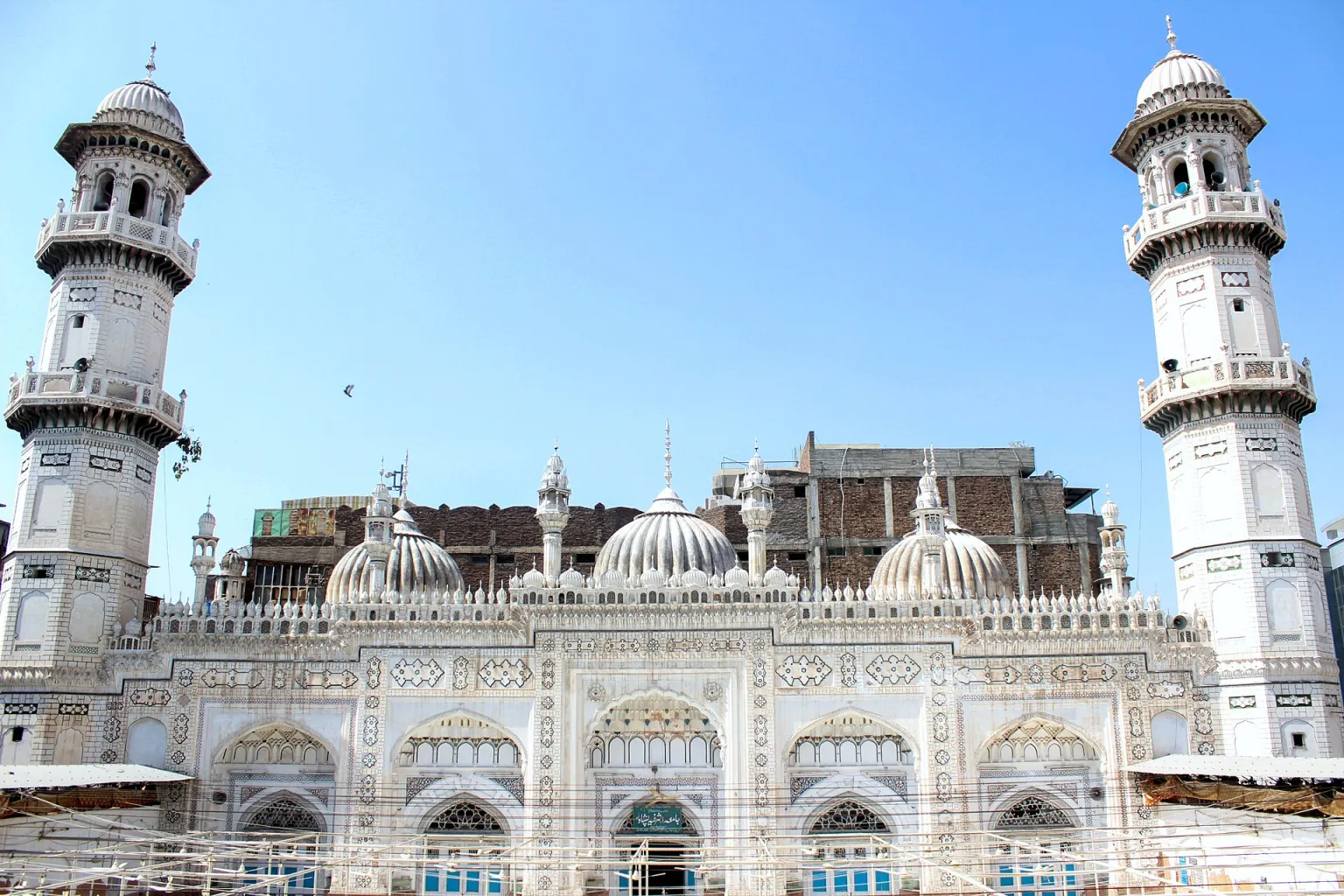
The Mahabat Khan Mosque rises above the lanes of Andar Shehr, Peshawar's walled core. Local tradition credits it to a Mughal governor named Mahabat Khan; the mosque is also known as the Jami Masjid of Andar Shehr, and scholars have debated its attribution, since no Mughal records mention the building. Dates offered in different sources range from the 1620s to 1670; Wikipedia gives 1660–1670 and The Friday Times notes that 1670 is considered most likely.
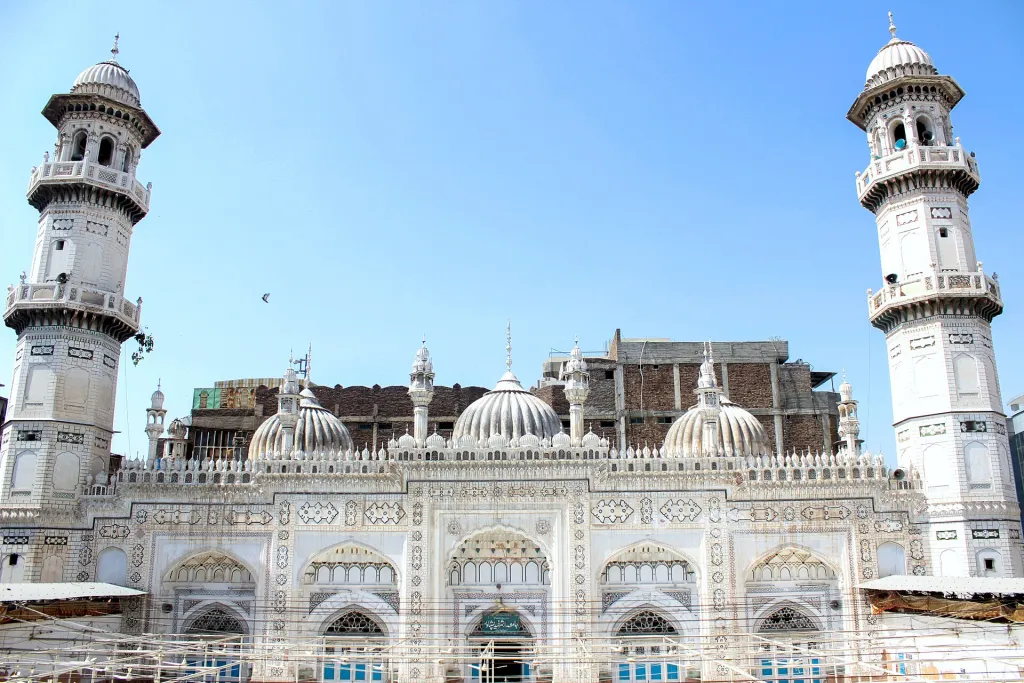
The prayer hall faces west beneath three fluted domes, and the front is composed of five arched portals, with the central arch taller than the rest, framed by two tall minarets and eight smaller decorative ones. Floral motifs and Quranic calligraphy cover many panels, and an open courtyard with a central ablution pool is lined by a single row of rooms. The Friday Times reports that damaged lime plaster and painted designs were being renewed in a 2022 restoration using traditional Mughal-era techniques.
Next to the mosque is the jewellers' bazaar, and a short walk away lies Qissa Khwani, 'the Storytellers' Bazaar', where caravan traders, travellers and storytellers once gathered over tea. It is known for its tea and qehwa houses and for old wooden-fronted buildings. It is also a place of memory: on 23 April 1930 British Indian troops fired on a nationalist protest here, a pivotal event linked to the Khudai Khidmatgar movement, and the bazaar has later suffered bomb attacks. Visit as you would any busy working bazaar and place of worship: respectfully and with local advice.
Highlights
 Mahabat Khan Mosque facadeA white marble front of five arches, minarets and carved calligraphy over the old city.
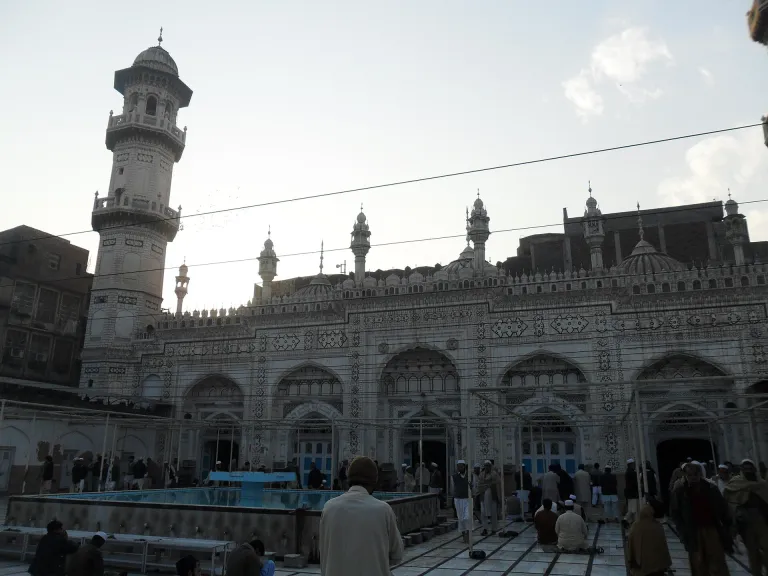 Courtyard and ablution poolA wide open court with a central pool and single row of rooms; the prayer hall faces west under three domes.
 Qissa Khwani BazaarThe 'Storytellers' Bazaar', now famed for tea houses, kebab stalls and dry-fruit shops.
 Bala Hisar FortThe old city's citadel lies a short distance to the west.
Plan Your Visit
Best Time to Visit
October to March; mornings
Summer afternoons are very hot. Visit in the morning, outside prayer times; Fridays are very busy around midday.
How to Reach
By taxi or ride-hail to Andar Shehr
Vehicle access in the old city is limited; get as close as the roads allow and walk the last stretch.
Where to Stay
Saddar or University Town
Hotels are in the cantonment and newer districts; the old city is a day visit.
Local Food
Chapli kebab, qehwa, dry fruit
Qissa Khwani and nearby lanes serve kebabs, tea and sweets; the Peshawar guide describes the wider food scene.
Etiquette
Dress modestly; remove shoes
Mosque visits require modest dress and shoes off; women should check whether non-worshippers are admitted and ask before photographing worshippers.
Advisories
Crowded commercial areas
Busy old-city bazaars can be congested. Check current advisories and follow local authority guidance.
Before You Go
Fees, permits and road conditions change, confirm these with official sources close to your travel date.
- 1
Check road and weather
Mountain and rural roads can close for snow, landslides, floods or repairs at short notice. Ask your hotel or driver the day before and check Khyber Pakhtunkhwa Culture & Tourism Authority (kptourism.com).
- 2
Confirm permits and entry rules
Rules for Pakistani and foreign visitors differ and can change. Confirm any registration, NOC or checkpoint requirement with the provincial tourism body or Pakistan Tourism Development Corporation (tourism.gov.pk).
- 3
Check fees and local charges
Entry fees, boat or jeep rates and camp charges are set locally and revised from time to time. Confirm on the spot or with the tourism office rather than relying on figures quoted online.
A Morning in Andar Shehr
About half a day.
- 1
Arrive early
Reach the old city before the heat and the crowds.
- 2
Mahabat Khan Mosque
Look at the facade, the portals and calligraphy; enter only outside prayer times and with permission.
- 3
Jewellers' bazaar
Walk the lanes beside the mosque.
- 4
Tea in Qissa Khwani
Finish with qehwa and a plate of kebabs, then continue to Bala Hisar or the Peshawar Museum.
Travel Responsibly
- Treat the mosque first as a place of worship; avoid prayer times and obey caretaker instructions.
- Ask before photographing people and keep to public areas.
- Carry cash in small notes and bargain politely in the bazaar.
- Use local guides who know the lanes and the history.
Travel Advisories
Government travel advice for parts of Khyber Pakhtunkhwa varies by district and changes over time, and foreign visitors should read the current guidance of their own government (for example the UK FCDO and US State Department), which can affect travel insurance. Some areas, especially near borders, may need a No Objection Certificate (NOC) or registration. Check current advisories with the Khyber Pakhtunkhwa Culture & Tourism Authority (kptourism.com) and follow local authority guidance; carry your CNIC, or passport and visa.
Frequently Asked Questions
Who built the Mahabat Khan Mosque?
Tradition credits a Mughal governor, Mahabat Khan, but the attribution is debated and no Mughal records of its construction survive. Dates of about 1660–1670 are commonly given.
What does Qissa Khwani mean?
'Storytellers' (or story-tellers') Market', recalling the caravan travellers and storytellers who once gathered there.
Can non-Muslims visit the mosque?
Practice varies and depends on the caretakers. Ask at the entrance, dress modestly and avoid prayer times.
Keep Exploring
Related places and stories on DailyLife.pk
Bala Hisar Fort, PeshawarBala Hisar Fort, Peshawar: its Durrani, Sikh and British history, the 1849 walls Khyber PassKhyber Pass guide: history from Darius to the British, Jamrud and Ali Masjid forts
 PeshawarPeshawar city guide: Qissa Khwani Bazaar, Mahabat Khan Mosque, Sethi House, Peshawar Museum, Pashtun food
 The Mughal EraThe Mughal Empire in Pakistan: Babur to Aurangzeb, Lahore Fort, Shalamar Gardens
 Sufi Shrines of PakistanVisit Pakistan's great Sufi shrines: Data Darbar, Shah Rukn-e-Alam, Lal Shahbaz Qalandar, Bhit Shah
 The British Colonial EraBritish rule in Pakistan 1843–1947: conquest of Sindh and Punjab, the North-West Frontier, railways, canal colonies
How we know this
- Type Travel guide
- Sources 3
- Reviewed October 2026
- Disputed points None
Rules and fees change, confirm with the official links below before you act.
3 sources
- Mahabat Khan Mosque, Wikipedia (used to locate sources)
- Renovating Peshawar's Mahabat Khan Mosque, The Friday Times, 26 February 2022
- Qissa Khwani Bazaar, Wikipedia
Photo credits (7)
- Masjid Muhabat Khan.jpg, Hafeezburki, CC BY-SA 4.0, via Wikimedia Commons
- Mohabbat Khan Mosque.jpg, Abdul Samad khan sherwani, CC BY-SA 4.0, via Wikimedia Commons
- Qissa Khwani Bazaar, Peshawar, Pakistan - panoramio.jpg, franek2, CC BY-SA 3.0, via Wikimedia Commons
- Bala Hisar-Peshawar.JPG, Ammad Malik-101, CC BY-SA 3.0, via Wikimedia Commons
- Sethial street - Sethi House Complex, Peshawar.jpg, Teseum, CC BY-SA 4.0, via Wikimedia Commons
- Shah Rukn-e-Alam Tomb.jpg, Junaidali88z, CC BY-SA 3.0, via Wikimedia Commons
- Badshahi Mosque, Lahore VI.jpg, Fassifarooq, CC BY-SA 4.0, via Wikimedia Commons
