
Travel destination
Jahangir's Tomb: A Mughal Garden across the Ravi
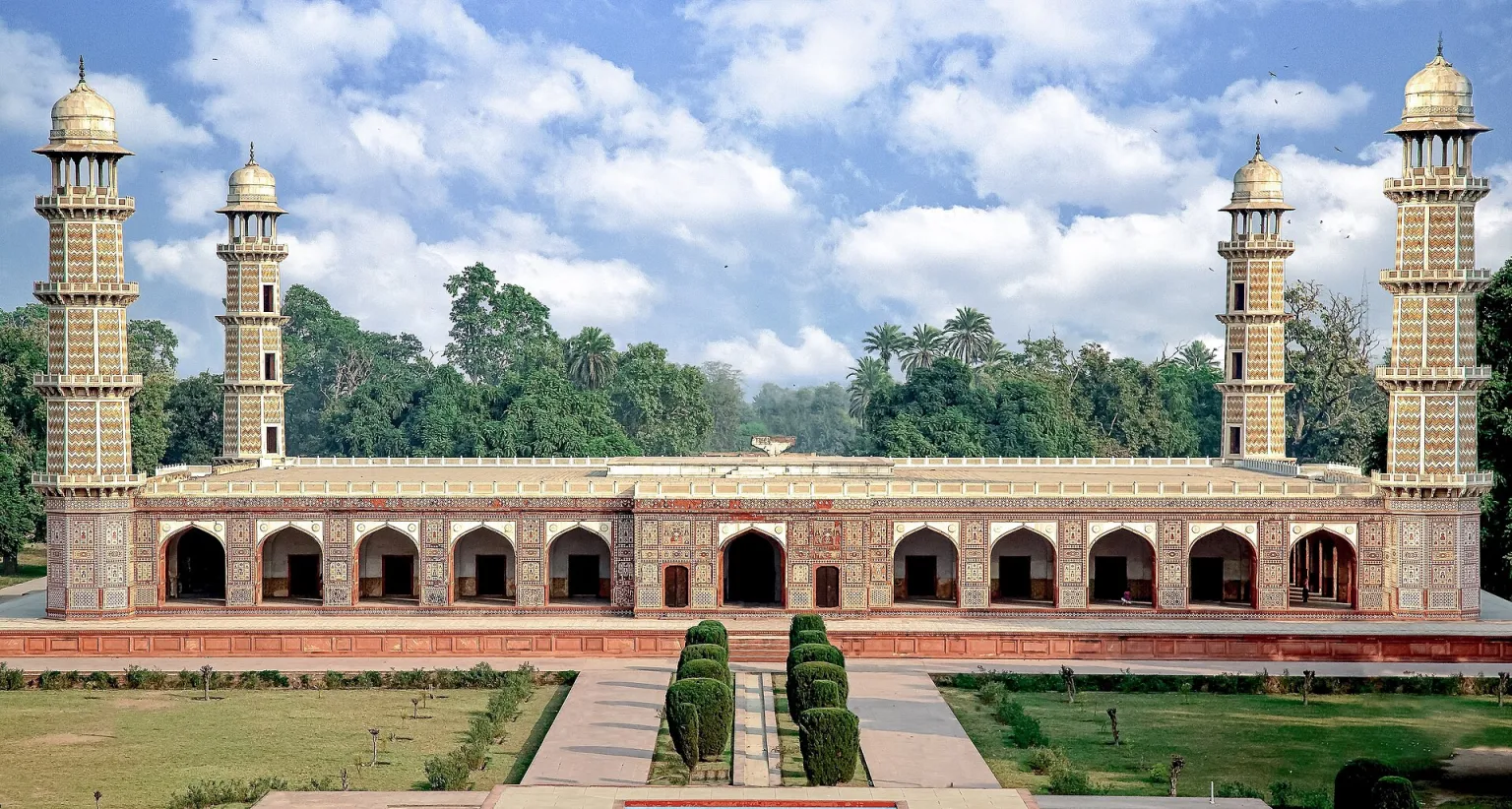
Red sandstone and white marble inlay mark the resting place of Emperor Jahangir in a four-quarter garden at Shahdara, reached through the vast Akbari Serai.
- Shahdara, Lahore
- Completed 1637
- Best season October to March
Tomb of Jahangir, Shahdara, Lahore
About the Tomb of Jahangir
Jahangir, the fourth Mughal emperor, died on 28 October 1627 at Rajouri in Kashmir while returning to Lahore. According to Dawn's reporting on the monument, his last wish was to be buried in Lahore, in the Dilkusha garden that belonged to his favourite wife, Nur Jahan. His son and successor, Shah Jahan, completed the mausoleum in 1637 across the Ravi from Lahore's fort, in the quarter now called Shahdara.
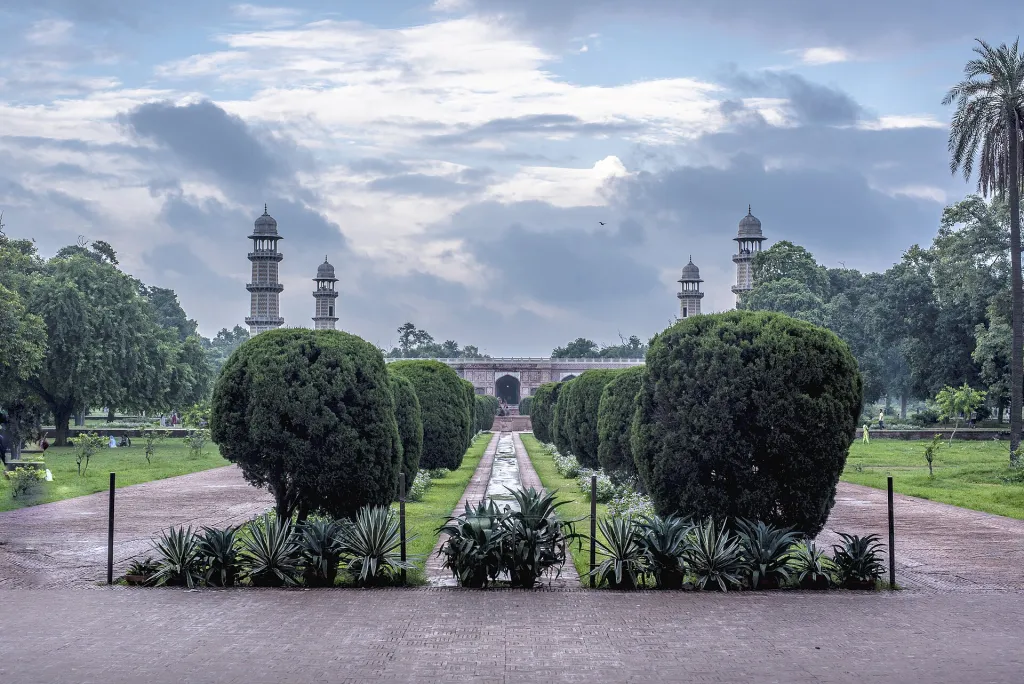
The tomb stands at the centre of a Persian-style char-bagh, a garden divided into four quadrants by water channels, with fountains at the crossings; the World Monuments Fund reads the channels as an image of the four rivers of paradise. The building is a single-storey structure with a minaret at each corner, faced in red sandstone and inlaid with floral and geometric motifs in marble. Inside, a white marble cenotaph is decorated in pietra dura with the 99 names of God, the emperor's name and his date of death. Published accounts give the minarets' height as roughly 30 metres.
The tomb is only one part of the Shahdara complex. The garden is entered through the Akbari Serai, a huge courtyard of rooms built in 1637 that once lodged travellers, and at the far end lies the tomb of Asif Khan, Jahangir's brother-in-law, dated by one account to 1645. The group has been on Pakistan's UNESCO tentative list since 1993. Conservation is an ongoing challenge: Dawn reported in 2021 that comprehensive work needed about Rs100 million, and that a 200-foot buffer zone required for listing was hard to ensure because of encroachments. The Ravi has repeatedly flooded the site, notably in 1988.
What to See
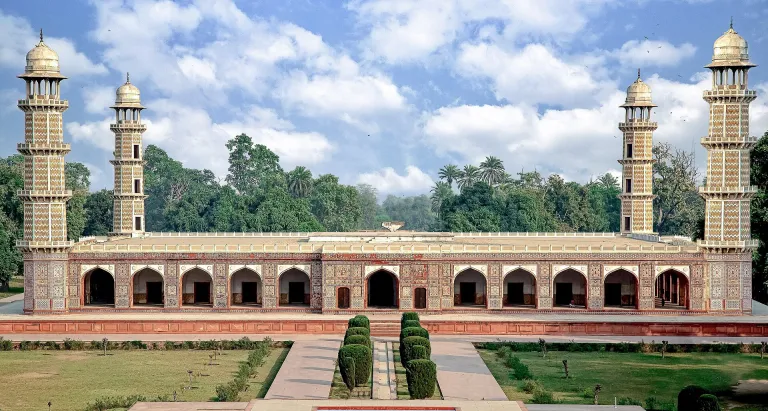 The mausoleumRed sandstone with white marble inlay, four corner minarets and an interior cenotaph inscribed with the 99 names of God.
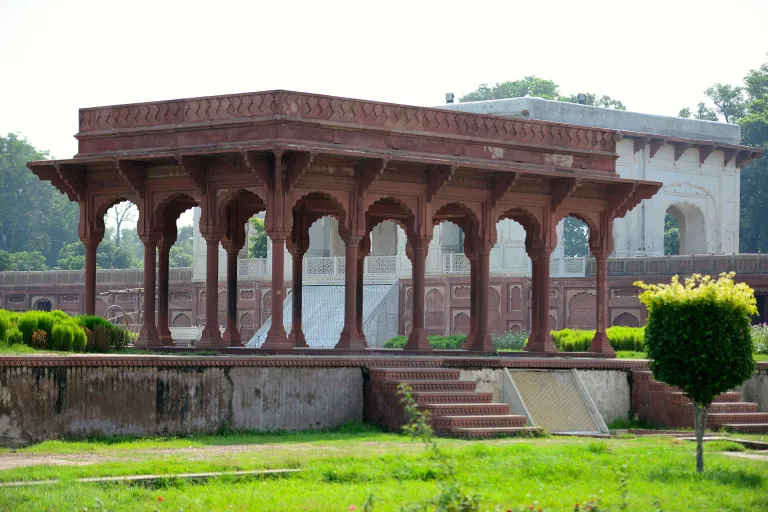 Shalimar GardensShah Jahan's other Lahore masterpiece, a UNESCO site on the city's north-eastern side.
Plan Your Visit
Best Time to Visit
October to March
Cooler months suit the open gardens. Avoid the riverbank area after heavy rain or in flood season.
How to Reach
Across the Ravi
Shahdara lies on the opposite bank of the Ravi from Lahore Fort and the old city. Traffic is heavy; use ride-hailing or a rickshaw and allow time.
Tickets and Hours
Confirm locally
Hours and ticket prices are set by the managing authority and change. Confirm before travel.
Where to Stay
Lahore
Stay in central Lahore and visit as a half-day trip, combined with the fort.
Photography
Ask at the gate
Rules on tripods, drones and commercial photography vary; ask on arrival.
Conditions
Variable
Published reports describe conservation needs and encroachment near the site. Expect works in progress and check locally.
Suggested Half-Day Plan
- 1
Check the situation
Ask about opening hours and any restoration works.
- 2
Enter through the Akbari Serai
Walk the courtyard and imagine caravans arriving.
- 3
Walk the garden axis
Approach the tomb along the central channel.
- 4
Inside the tomb
Look at the marble cenotaph and the sandstone and marble façade.
- 5
Tomb of Asif Khan
Compare its scale and decoration with Jahangir's tomb.
- 6
Onward to Lahore Fort
Continue to Lahore Fort or the Shalimar Gardens.
Visit Responsibly
- Do not climb on the platforms, lean on inlaid marble or touch the cenotaph.
- Respect worshippers and families; keep voices low inside the tomb.
- Report vandalism or damage to the site custodians.
- Dress modestly and take your litter with you.
- Avoid the riverbank area after heavy rain, when flooding is possible.
Frequently Asked Questions
Who built the Tomb of Jahangir?
Shah Jahan, who completed it in 1637 after his father's death in 1627.
What is the Akbari Serai?
A large courtyard of rooms built in 1637 that serves as the entry to the tomb complex and once provided lodging for travellers.
Is the tomb a UNESCO site?
Not yet. It is on Pakistan's tentative list (since 1993) as a candidate for inscription.
Has the site been flooded?
Yes. The Ravi has flooded it repeatedly, including a serious flood in 1988 that covered much of the site.
Do I need a ticket?
Confirm locally; arrangements change.
Keep Exploring
Related places and stories on DailyLife.pk
 Lahore Fort and Badshahi MosqueLahore Fort and Badshahi Mosque guide: Sheesh Mahal, Picture Wall, Alamgiri GateShalimar Gardens, LahoreVisit the Shalimar Gardens in Lahore: Mughal terraces and cascades, UNESCO listing, history, Mela Chiraghan
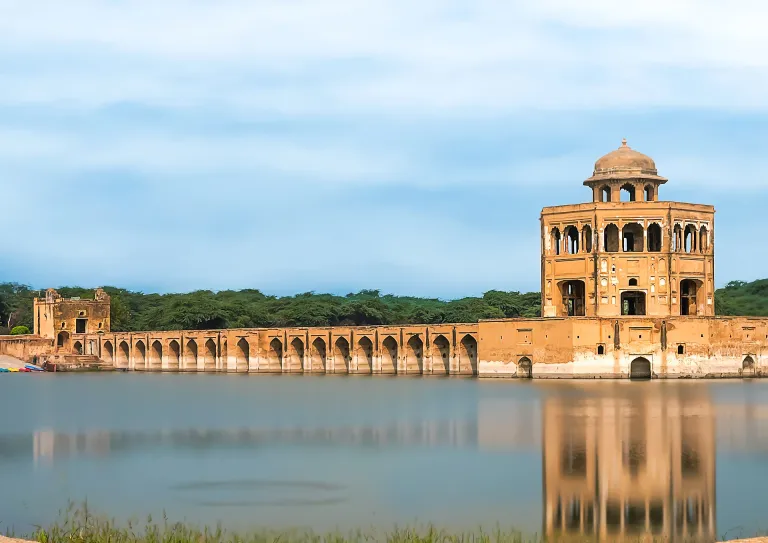 Hiran Minar, SheikhupuraVisit Hiran Minar near Sheikhupura: the Mughal deer tower, tank and pavilion, the legend of Mansraj
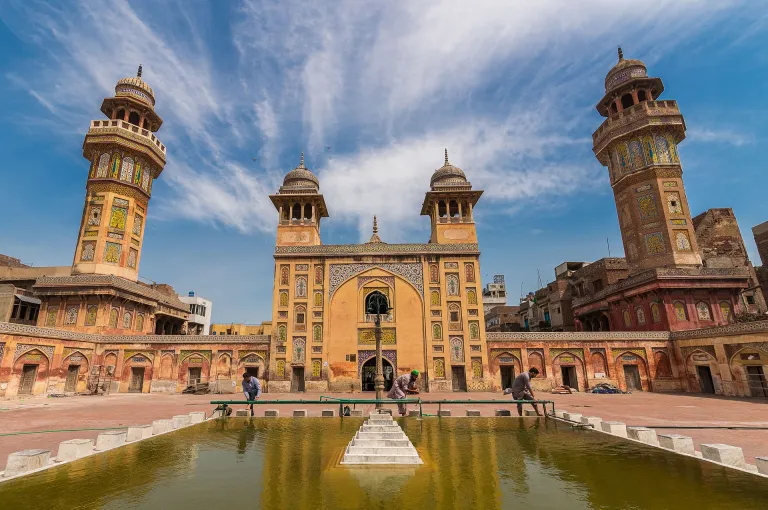 Walled City of LahoreExplore the Walled City of Lahore: Delhi Gate, the Royal Trail, Wazir Khan Mosque, Shahi Hammam
 LahoreLahore travel guide: Badshahi Mosque, Lahore Fort, Shalimar Gardens, the Walled City, food streets, neighbourhoods, metro
 The Mughal EraThe Mughal Empire in Pakistan: Babur to Aurangzeb, Lahore Fort, Shalamar Gardens
How we know this
- Type Travel guide
- Sources 3
- Reviewed October 2026
- Disputed points None
Rules and fees change, confirm with the official links below before you act.
3 sources
- Tomb of Jahangir, Wikipedia
- Tomb of Jahangir, World Monuments Fund
- Jahangir's Tomb needs Rs100m for conservation, Dawn
Photo credits (7)
- Tomb of Emperor Jahangir.jpg, Tahsin Shah, CC BY-SA 4.0, via Wikimedia Commons
- Tomb of Jahangir, Lahore.jpg, Shaguftakarim, CC BY-SA 4.0, via Wikimedia Commons
- Shalimar Gardens - Aunzee 48.jpg, Aun Muhammad, CC BY-SA 4.0, via Wikimedia Commons
- Wide angle view of Badshahi Mosque.jpg, Mishel Ijaz, CC BY-SA 4.0, via Wikimedia Commons
- Wazir Khan Mosque by Moiz.jpg, Moiz Ismaili, CC BY-SA 4.0, via Wikimedia Commons
- Octagonal Pavilion in Water Tank at Hiran Minar.jpg, Shaguftakarim, CC BY-SA 4.0, via Wikimedia Commons
- Badshahi Mosque, Lahore VI.jpg, Fassifarooq, CC BY-SA 4.0, via Wikimedia Commons
