
Food & Drinks
Offal and Paye: Know the PartIts Benefits and Its Limits
A pictured guide to kaleji, gurday, heart, maghaz, tripe, paye, head meat, tongue and marrow, with separate buying, cooking and storage decisions.
DailyLife.pk meat kitchen
Know exactly which part you are ordering
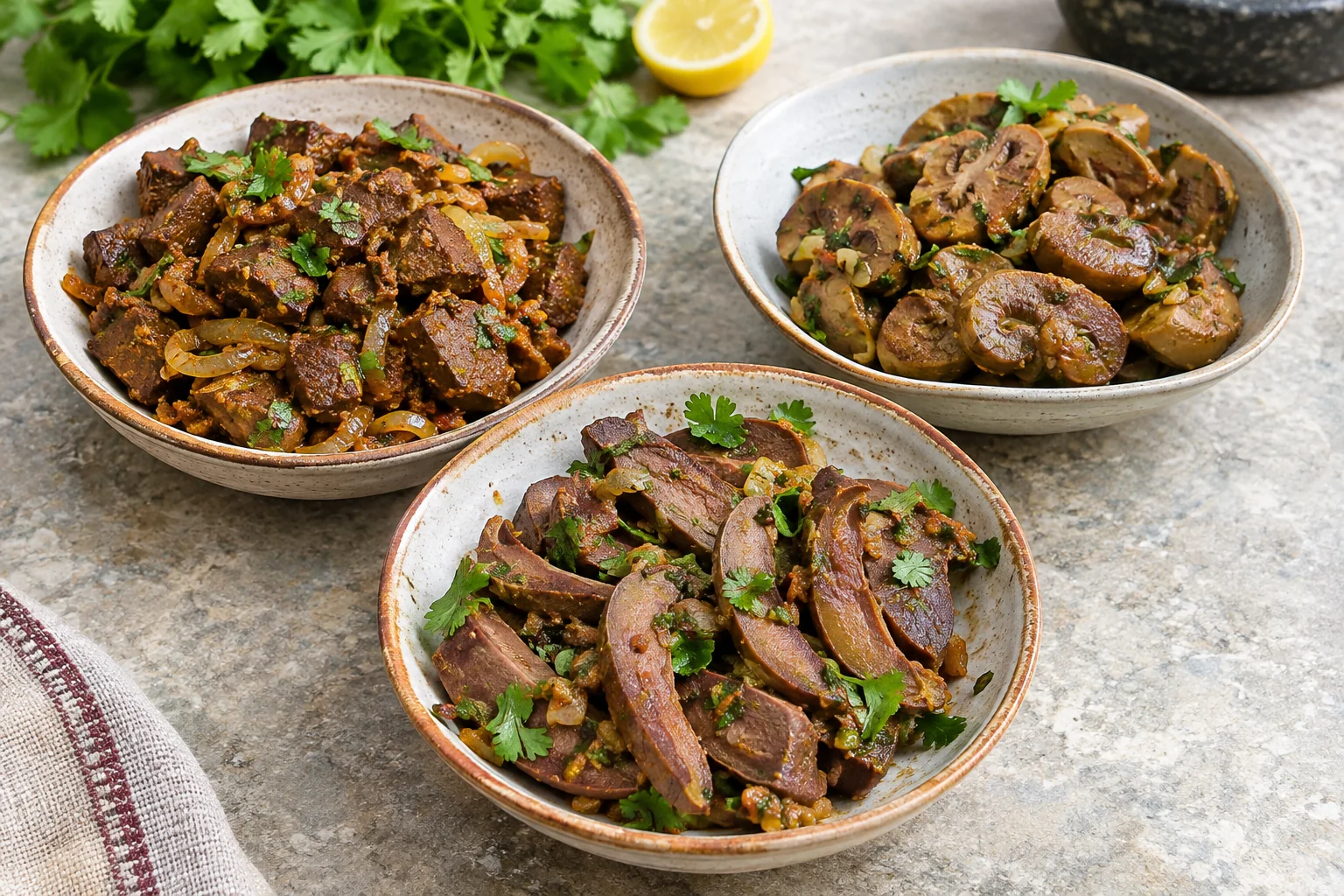
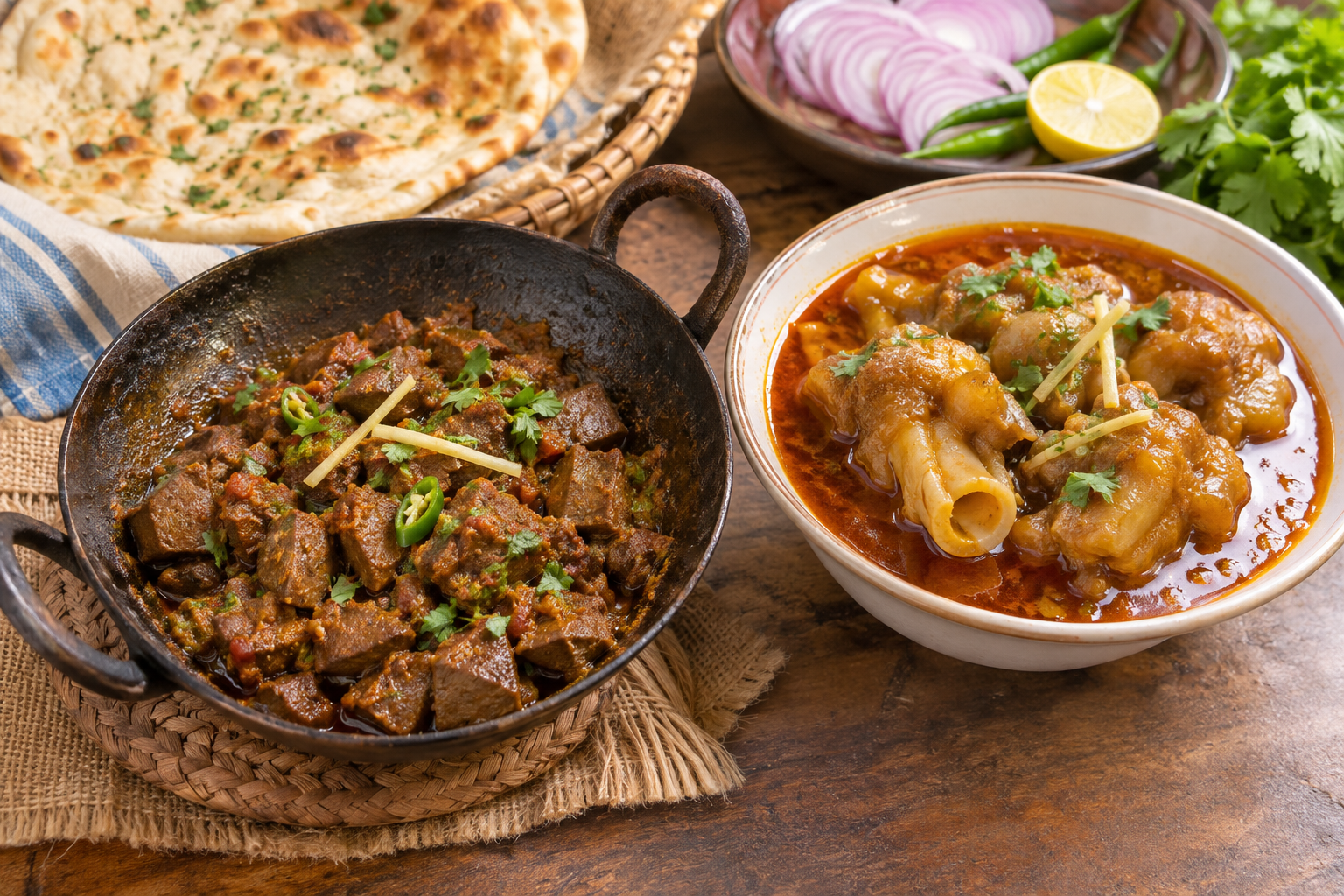
Offal is a broad kitchen category, not one ingredient with one cooking method or nutritional profile. Kaleji means liver, gurday are kidneys, dil is heart, maghaz or bheja means brain and paye are trotters. Ojri commonly refers to tripe, while siri describes head preparations whose included parts can vary. Tongue and marrow may also appear in the same shopping conversation, although they are different tissues with different uses. Ask for the animal, the exact part and its preparation status rather than accepting an unidentified mixed bag.
Liver is close-textured and can become dry with unnecessary cooking; kidneys need central trimming and can become rubbery; heart is firmer muscle that needs either an appropriate thin cut or a patient moist cook. Soft brain needs gentle handling and particular attention to its food-chain source. Honeycomb tripe is a prepared stomach lining with a springy texture. Paye contributes bones, skin and connective tissue that produces a gelatinous sauce, with much less boneless meat than its purchase weight might suggest.
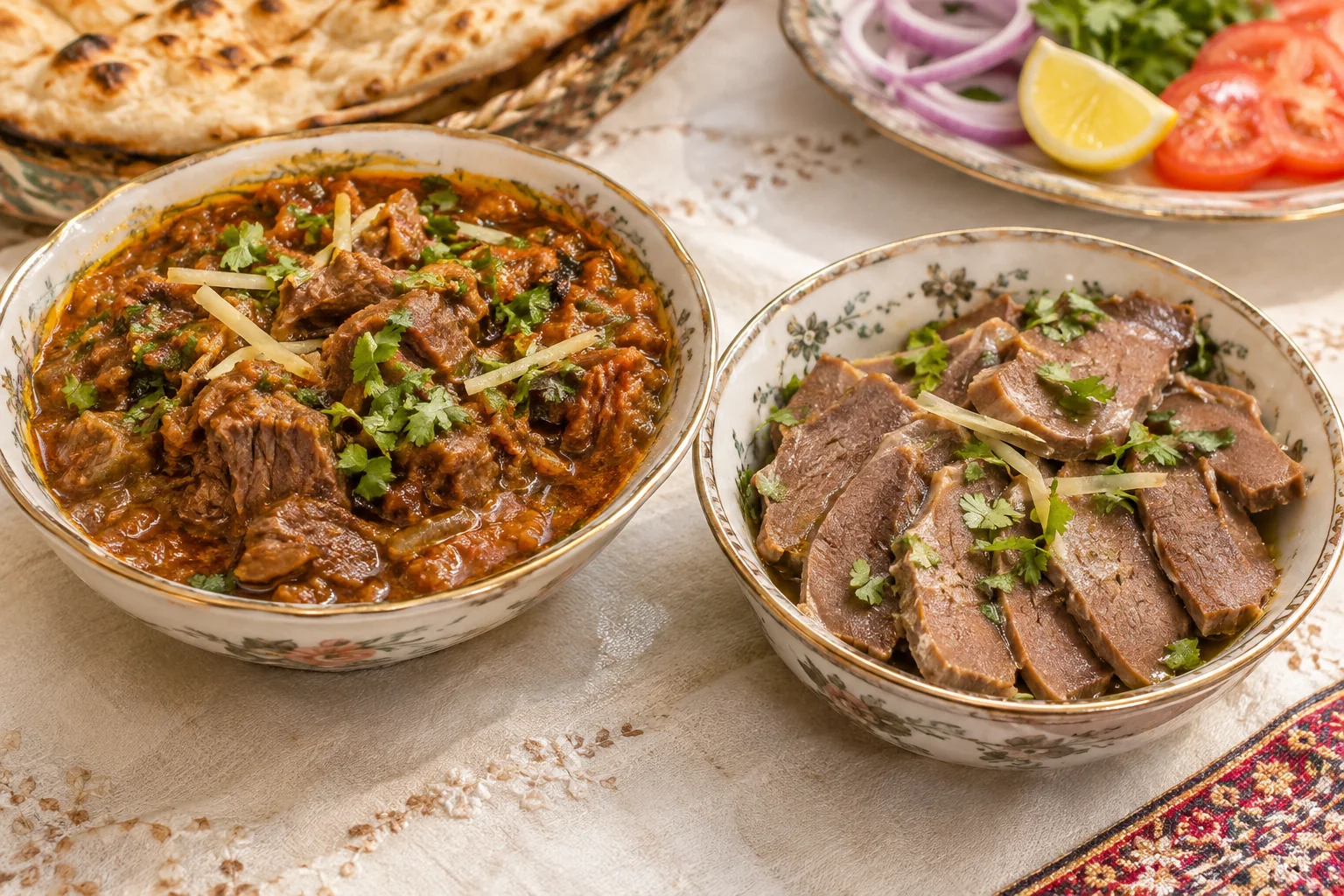
Head meat may include cheek, skin, tongue and bone, so the dish should be planned around the identified components. Cooked tongue can be peeled and sliced. Marrow enriches a dish with soft fatty tissue from inside suitable bones; it is not the same as a bowl of lean meat. Choose a part for the flavour, texture and practical meal you want. Using more of the animal can make culinary sense, but it does not require every household to like or eat every organ.
Buy prepared food-grade parts and maintain the cold chain
Buy from a reliable seller who identifies the species and keeps the product chilled. Ask how much trimming and cleaning has been done, whether an ingredient is raw or pre-cooked and whether the quoted weight is before or after preparation. Liver, kidneys, heart, brain, tripe and trotters should be separately identifiable. A mixed purchase can be separated into recipe batches; it should not determine that everything must enter the pot at once.
For tripe, request properly prepared material intended for human consumption. For paye and head pieces, request professional cleaning and cutting that fits your actual pot. Do not improvise heavy bone cutting with a domestic knife or expect the home kitchen to replace competent processing. Brain requires a traceable, legally permitted food supply. Food Standards Agency nervous-tissue controls illustrate how species and animal age can affect restrictions in one jurisdiction; ask about the rules applicable to your supply rather than assuming that example is Pakistani law.
Reject obvious spoilage, poor cleaning, leaking packs or an unexplained warm display. Colour, shine and lack of odour cannot certify absence of pathogens. Nor do lemon, vinegar, milk soaking or a long boil make an unsuitable ingredient acceptable. Make chilled meat a late shopping stop, use a cool bag and refrigerate promptly. Raw variety meats should generally be used or frozen within 1–2 days at 4°C or below, following stricter package directions; USDA refrigerator guidance gives this shorter organ-meat window.
Liver, kidneys and heart: benefits and a deliberate cook
Liver can contribute iron, vitamin B12 and protein, but its unusually high retinol content is also its key limitation. NHS vitamin A advice says adults should not eat liver or liver products more than once a week; that is a limit rather than a universal weekly serving prescription. NHS pregnancy advice says to avoid liver and liver products during pregnancy. People using vitamin A supplements or retinoid medicines should ask their clinician or pharmacist how the whole diet and treatment fit together. Do not increase liver servings to treat unexplained tiredness or anaemia: NHS anaemia guidance describes assessment and cause-specific treatment.
Kidneys contribute protein and B vitamins but do not cleanse or repair human kidneys. Open and trim the tough central white tissue and membrane where present, or ask the butcher to do so. An optional refrigerated flavour soak is a recipe choice, not decontamination. Heart contributes protein, iron and other nutrients and is firmer than liver. Remove major vessels and tough connective tissue; cut thinly for an appropriate faster method or choose a braise that gives thicker pieces time to soften. Eating heart is not a special treatment for heart health.
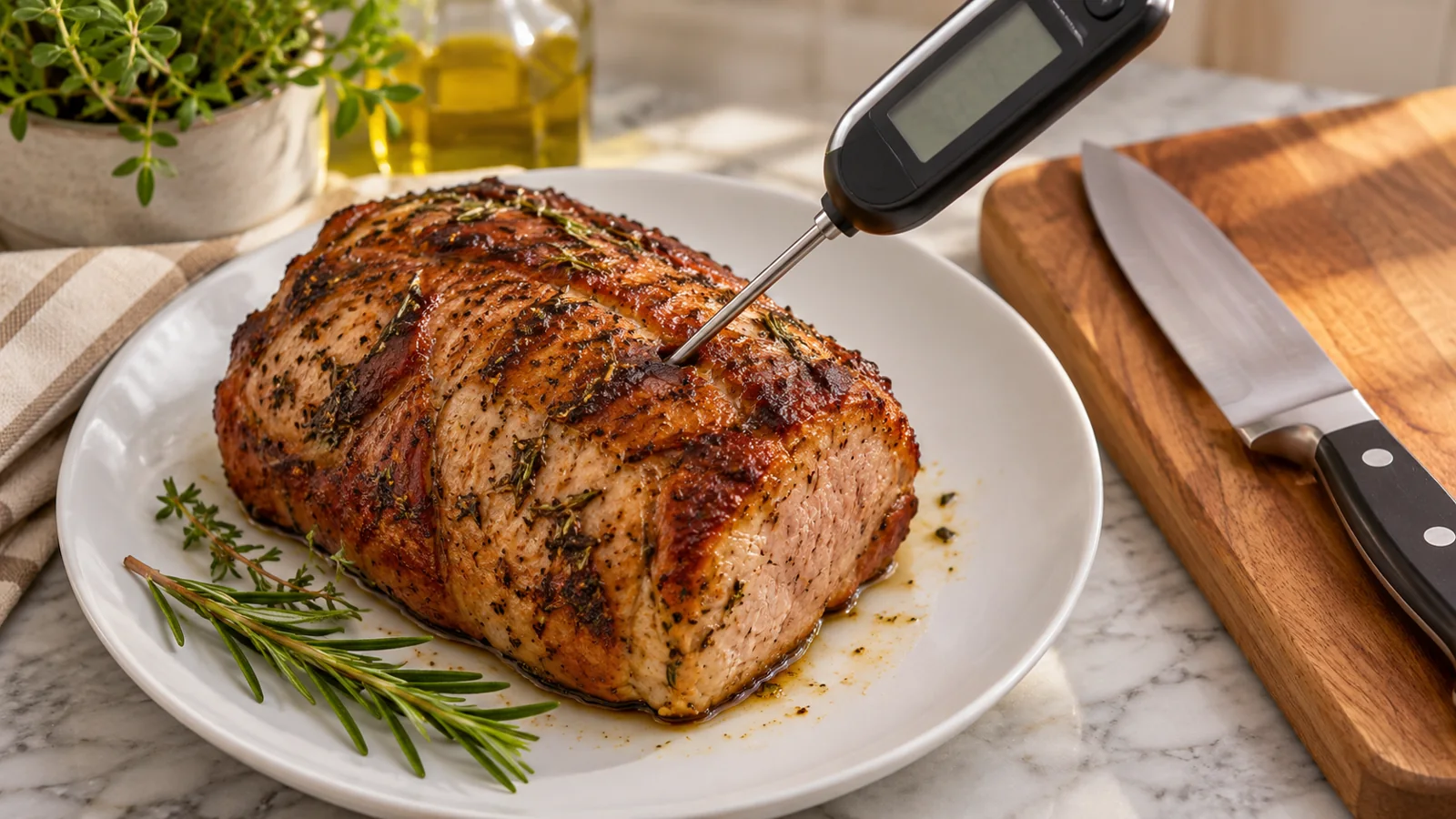
Prepare the spice base and garnishes before the organs come out of refrigeration. Cook even pieces in manageable batches and use a thermometer rather than outside colour. USDA red-meat organ guidance, including lamb and beef liver, kidneys and tongue, uses 160°F (71.1°C), commonly rounded to 71°C; USDA organ guidance also distinguishes poultry organs, which need 74°C. Heart likewise uses the organ endpoint; the USDA beef-organ guidance names it explicitly. Do not borrow the lower intact-steak temperature for an organ. Once safe, avoid unnecessary additional frying that dries liver or toughens kidneys.
Tripe and paye need a slow-cooking plan
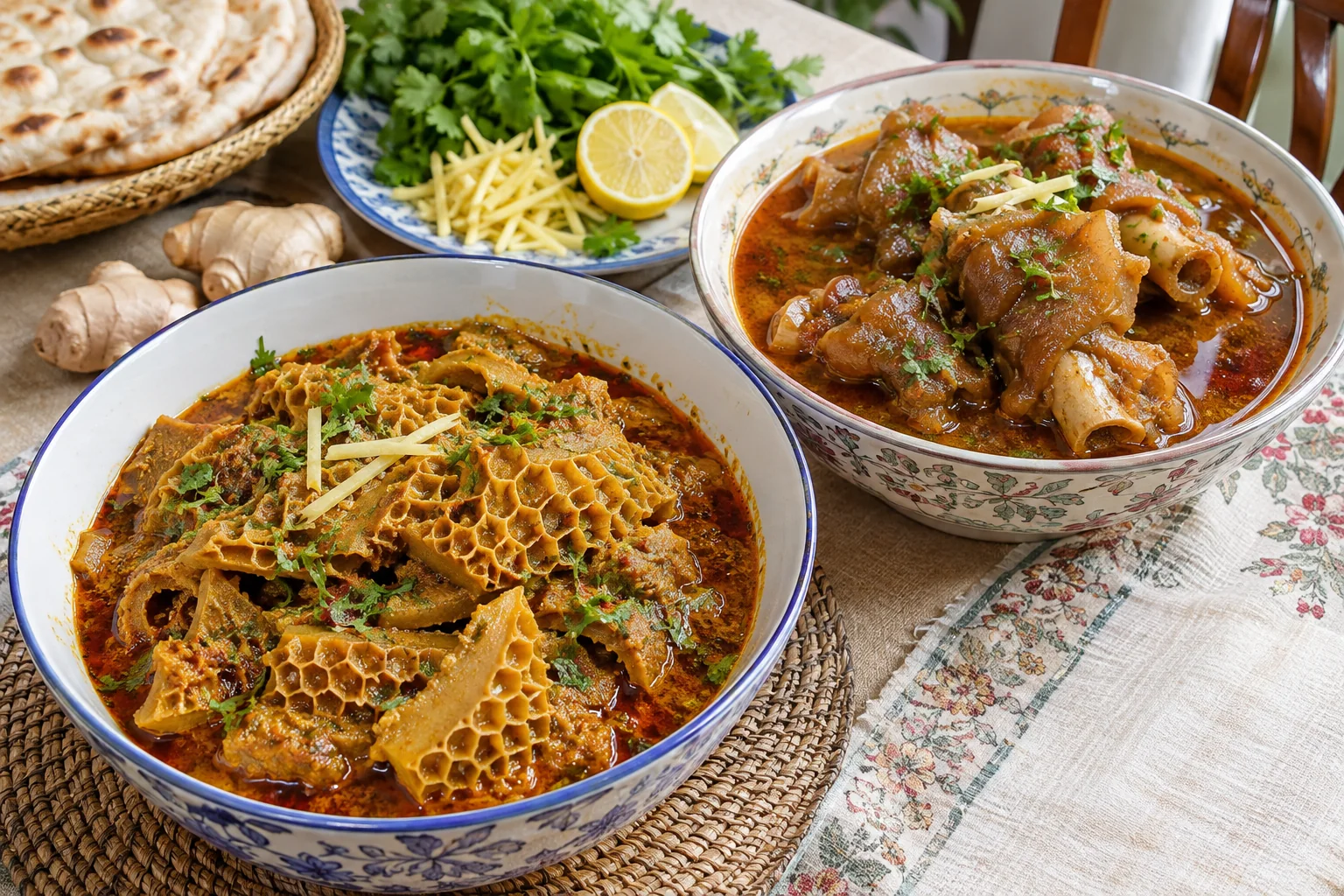
Tripe and paye are different ingredients even when both belong to a long-cooked menu. Tripe contributes protein and a distinctive textured bite. Ask whether it is raw prepared, blanched or fully cooked, then use a recipe matched to that state. Some methods include an initial boil or a change of water; these are part of preparation and flavour control, not a way to salvage spoiled material. Cut fairly even pieces, contain raw splashes and clean the sink and tools afterwards.
Paye brings substantial bone and connective tissue. Compare goat and beef trotters by cleaned portions and realistic servings, not just by the price per kilogram. Beef pieces may be much larger and need professional cutting and a larger pot. A recipe may add shank or another meaty cut if substantial edible meat is wanted. Softened connective tissue gives the gravy body, but gelatin formation does not establish a joint-repair effect or a dependable calcium dose.
Use controlled liquid, a sufficiently large vessel and the recipe's gentle cooking stage. Check the base so it does not catch and adjust water deliberately. Safety and tenderness are separate judgments: a tripe piece or trotter can be safely hot before it has softened as much as the dish requires. Neither a fixed whistle count nor a gelled cold broth is a safety test. For a pressure cooker, follow the manufacturer's fill limit, minimum liquid and release instructions, with attention to foaming or gelatinous liquids. Remove loose bones carefully and inspect portions again before serving; never blend a preparation that may contain fragments.
Brain, head meat, tongue and marrow need separate decisions
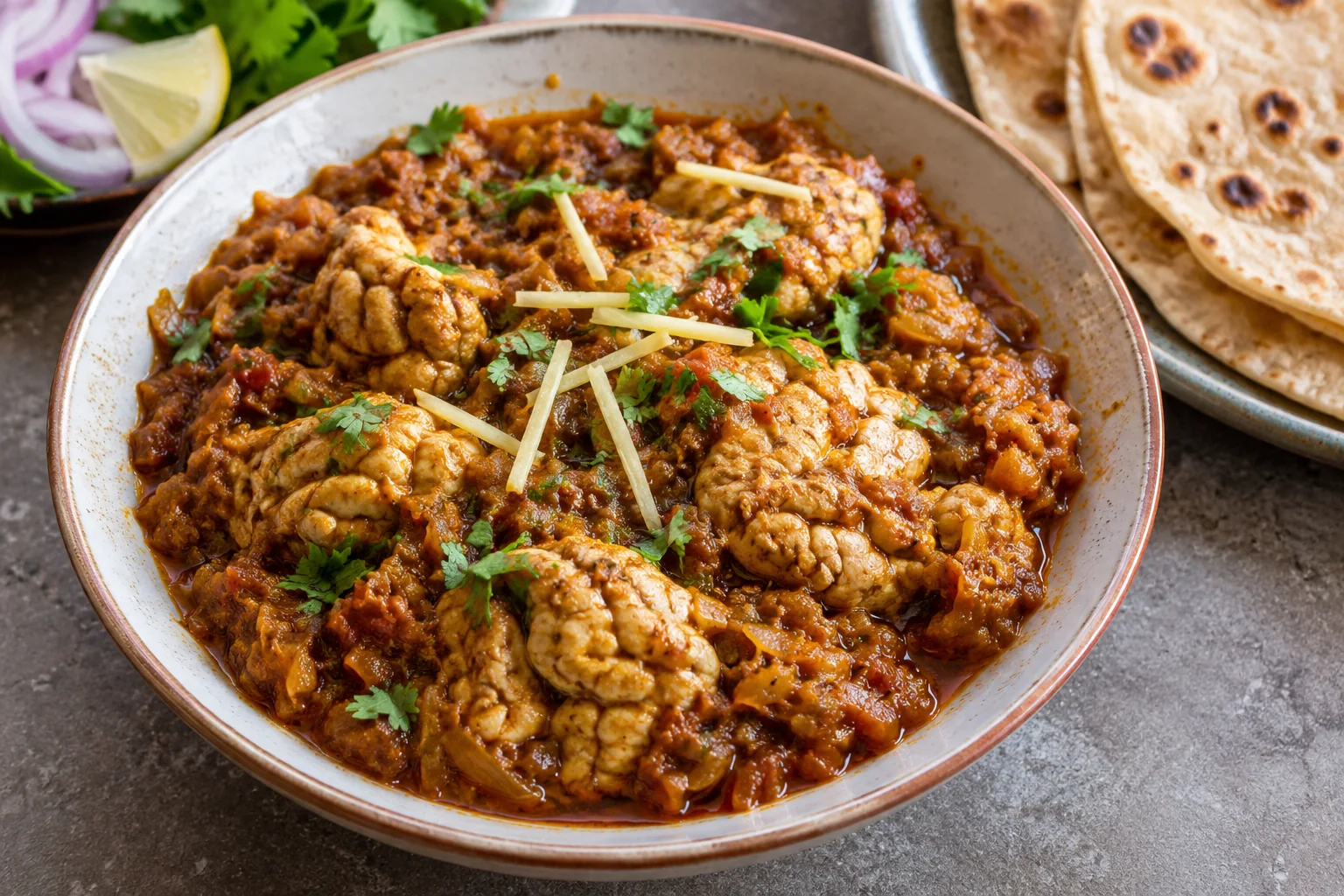
Brain is soft, delicate and cholesterol-rich. It can make a small specialty maghaz masala for people who enjoy it, but it is not a memory or intelligence booster. Buy only an identifiable food-grade product from a supplier who can explain the applicable controls. Ordinary home boiling or pressure cooking must not be advertised as making suspect or prohibited nervous tissue acceptable. Prepare the sauce first, follow a tested method and handle the organ gently so it cooks thoroughly without being smashed.
For head meat, ask whether the purchase includes cheek muscle, tongue, skin, bones or other tissues. Cheek can benefit from slow moist cooking; tongue needs its own cooking and peeling sequence. Keep brain separately identified. The usable meat yield depends on the contents, and a dark thick gravy can conceal bone chips. Remove cooked meat with clean tools if a boneless finish is wanted, and inspect it twice, during picking and serving. Eating head meat does not confer a special benefit on the eater's head or brain.
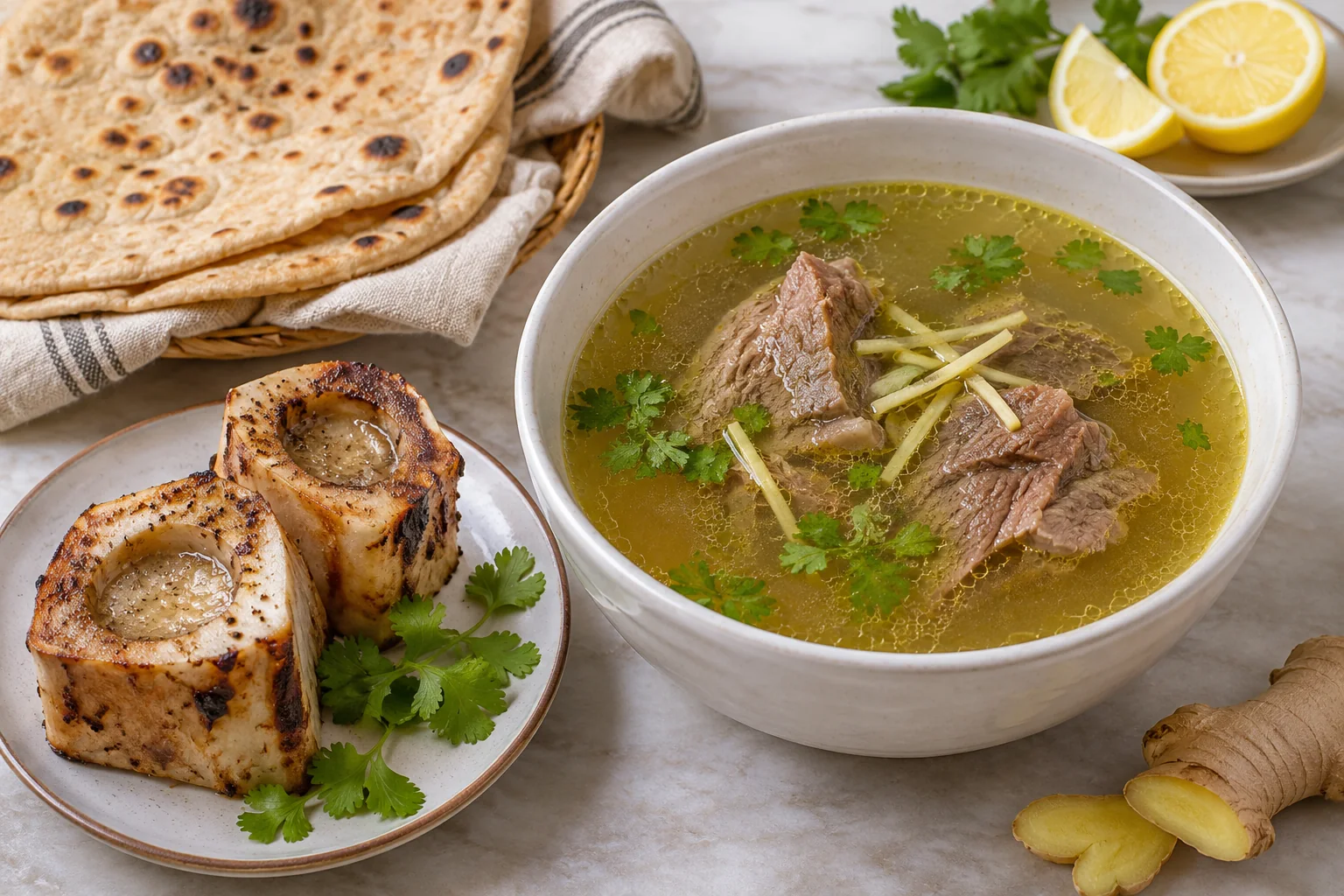
Marrow is a rich fatty addition inside selected bones. In yakhni, joints and connective tissue can add body, while actual meat contributes more to the edible meat portion. A stock's final nutrients depend on its ingredients and dilution; do not call every broth high-protein or calcium-rich just because it sets. Use food-grade professionally cut bones and strain the finished liquid carefully. A bowl of strained stock alone is different from a balanced soup with meat, vegetables and a suitable staple. Enjoy these foods for their culinary qualities and choose alternatives when the flavour, texture or sourcing requirements do not suit the eater.
Build a balanced meal and respect individual limits

Useful nutrients do not make an organ dish suitable for unlimited servings. Added ghee or oil changes the fat and energy of kaleji, gurday and paye; salt from masala, stock powder, achar and the serving gravy all belongs to the same meal. Let a modest organ dish sit alongside vegetables, daal and an appropriate amount of roti or rice. People can obtain protein and micronutrients from other foods if they do not eat offal. There is no requirement to choose a part merely because it has a traditional reputation for strength.
Gout is a relevant reason to review organs and rich meat preparations with the treating team. NIH gout advice identifies organ meats as a high-purine category. Chronic kidney disease has changing requirements for protein, sodium, phosphorus, potassium and sometimes fluid; NIDDK guidance says there is no single meal plan for everyone. Broth counts as fluid for someone with a prescribed fluid limit. Do not impose a universal restriction or offer personal clearance from a general food article.
For ordinary mammalian muscle meat such as cheek and the meat added to yakhni, World Cancer Research Fund advice supports moderate red-meat intake and little, if any, processed meat. Its muscle-meat recommendation should not be misrepresented as a weekly organ serving allowance. For pregnancy, immune suppression, prescribed diets or uncertainty about a medicine and supplement combination, obtain the relevant clinical advice. A shared family pot does not remove individual needs or food preferences.
Cool in small portions and use the individual guides

Plan storage before beginning a large slow cook. Keep raw organs contained low in the refrigerator away from ready-to-eat food and thaw frozen packages there in a leakproof dish. Marinate and soak under refrigeration. Keep serving spoons separate from raw preparation tools. At the table, check bones and hard fragments, use clean garnishes and reheat only the amount that will be served.
Divide cooked meat, curry and stock into small shallow containers and refrigerate promptly, within two hours or one hour when the air is above 32°C. A large paye or yakhni pot should never sit out overnight to cool or set. Properly handled refrigerated leftovers generally keep 3–4 days; reheat thoroughly to 74°C, stirring and bringing soups or gravy to a boil. USDA leftover advice and FDA refrigeration guidance explain these rules. Smelling, tasting or repeatedly boiling a doubtful batch does not restart safe storage.
Explore lamb liver, chicken livers, kidneys, heart, brain, beef tripe, goat paye, beef paye, head meat and yakhni. Use the recipe collection and complete buying and storage guide alongside the meat-type library. Match the exact part to a method before shopping.
Frequently Asked Questions
Can all offal be cooked like steak?
No. Liver, kidneys, heart, brain, tripe and trotters differ in texture, preparation and controls. Use the organ and species guidance, a thermometer where appropriate and a separate tenderness check.
Does paye provide the same usable meat as boneless cuts?
No. Paye contains substantial bone and connective tissue. It creates gelatinous gravy but does not provide the same clean meat yield as a boneless cut or establish a joint-healing benefit.
How we know this
- Type Explainer
- Sources 3 (3 official/academic)
- Reviewed November 2026
- Disputed points None
3 sources
- Refrigerator storage times for meat, USDA FSIS
- Cooking beef organs, USDA FSIS
- Cooking chicken liver, CDC
