
Meat kitchen • Pakistan
BuyingStoring and Cooking Meat in Pakistan
A practical illustrated plan for choosing cuts, checking quality, buying sensible quantities and cooking safely through everyday meals and Eid.
DailyLife.pk meat kitchen
Start with the dish, species and cut
Start with the meal you intend to cook. Nihari needs a different cut from quick boti; a whole raan needs different equipment from keema. Tell the seller the animal, anatomical cut, piece size, bone allowance and how much visible fat to leave. Ask whether the price includes bones, skin and trimming. A vague order for gosht makes comparison difficult and may leave you with pieces that finish at different times. Keep organs in a separate order rather than mixing them into curry meat.
A chilled butcher can provide a specific cut, while a packaged supermarket purchase may make weights and instructions easier to compare. For delivery, confirm the cold transport and receiving time before paying. Shop names are starting points, not guarantees. Judge the actual handling and ask for a receipt and sourcing information.
Reference: World Cancer Research Fund meat recommendations.
Choose a shop by handling and useful information
Look for protected chilled stock, clean surfaces and equipment, pest control and separation from ready-to-eat food. Leaking packs, damaged seals and objectionable odours are reasons to reject a purchase. Normal smell and colour cannot prove that harmful bacteria are absent. Colour varies with species, packaging and exposure to air; bright red is not a complete quality test. Ask whether the meat is chilled, frozen or previously thawed and read use-by and storage instructions.
A refrigerated local butcher is useful for a precise cut, piece size and questions about the source. A supermarket counter may offer clearly packaged weights and dates. Online delivery is useful when cold transport, a receiving time and a clear substitution policy are in place. A specialist supplier may help identify an unfamiliar animal or fish. Compare the actual purchase and handling, rather than assuming one channel is always best.
Reference: FDA safe food handling.
Storage reference: official cold food storage chart.
Shopping starting points from the existing guide: METRO fresh meat, METRO stores, Carrefour Pakistan and Meatkart. Confirm current branch coverage, stock, delivery handling and terms directly; these links are not a quality guarantee or ranking.
Buy close to the cold storage and cooking plan
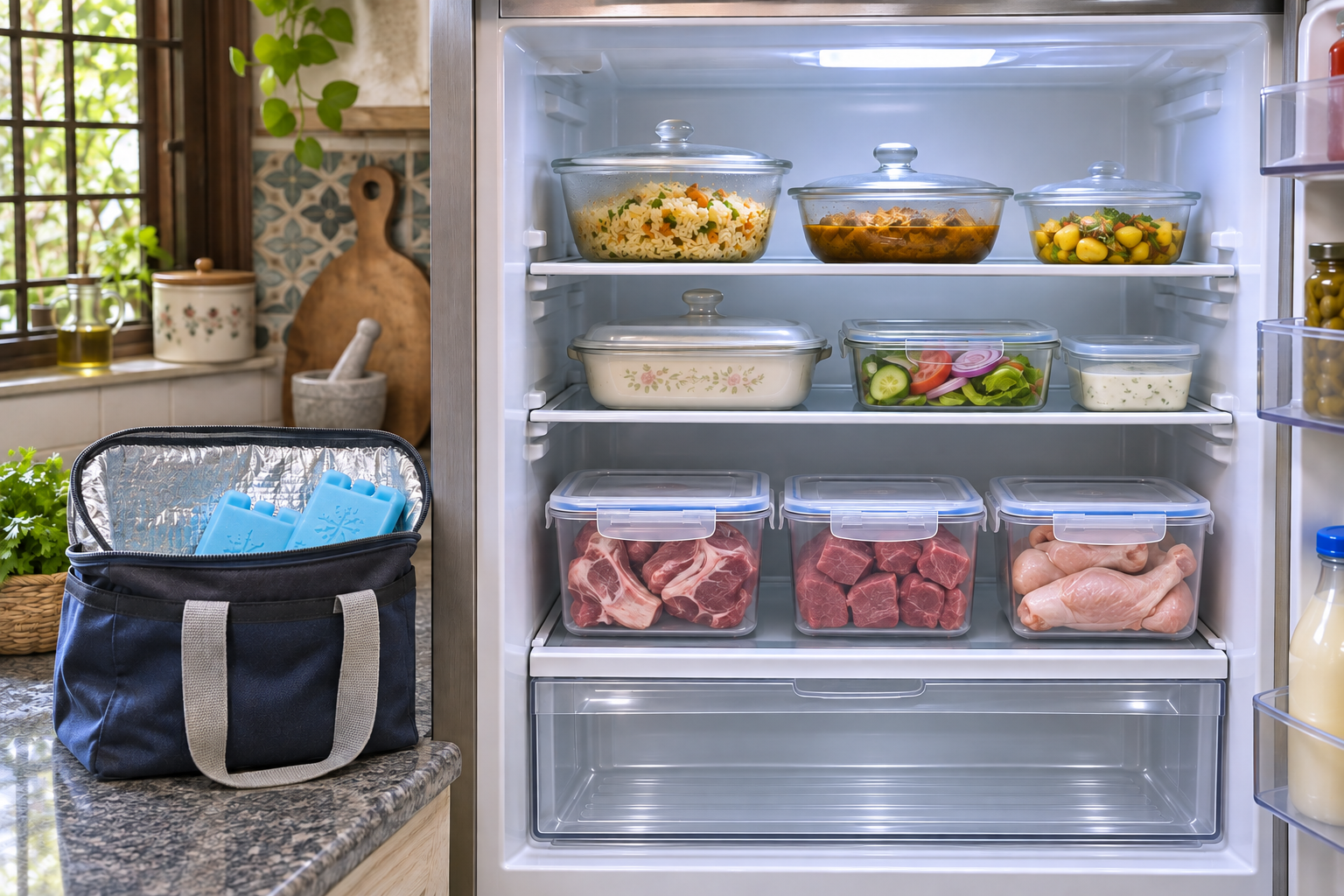
Buy meat near the end of the shopping trip. Carry an insulated bag with cold packs, go home directly and avoid leaving groceries in a parked car. Ask when chilled stock is replenished instead of relying on a universal best weekday or hour. A busy counter is useful only if handling remains controlled.
Reserve matching cuts in advance for a gathering but arrange collection around available refrigerator space and the cooking plan. Eid, holidays and supply disruptions can change demand and prices. Ask for comparable current quotes rather than relying on a fixed cheapest season. For delivery choose a window when someone can receive and refrigerate the order promptly.
Reference: FDA safe food handling.
Storage reference: official cold food storage chart.
Agree on weight, portions, bone and fat
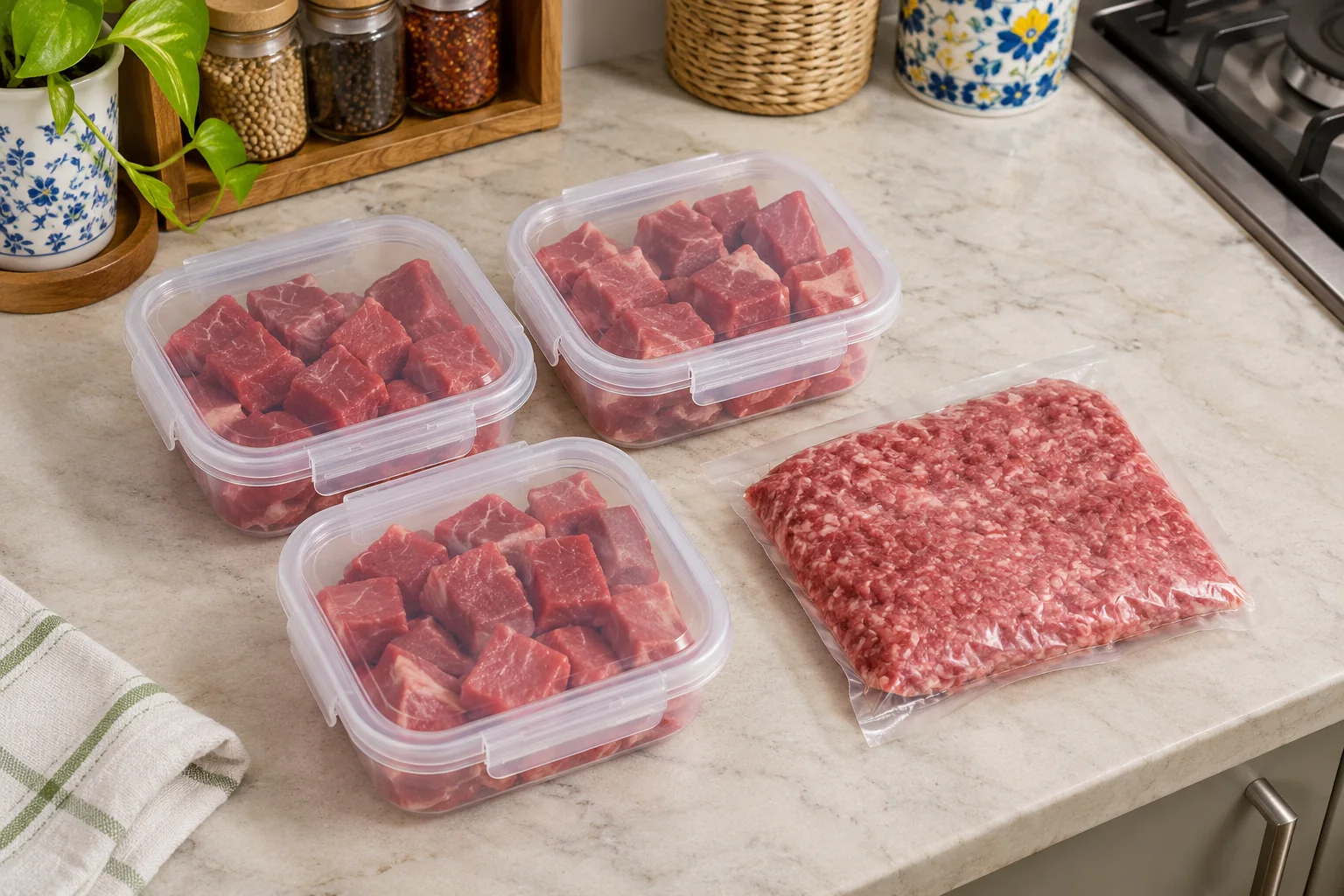
As a shopping estimate for a meal with substantial sides, start around 150–200 g raw boneless meat or 250–300 g raw bone-in pieces per adult, then adjust for appetite, bones and the menu. These are purchasing estimates, not daily dietary targets. A gathering with two meat dishes needs less of each than a meal with meat as the only main dish. Children and very bony cuts alter the calculation.
Compare the cost per usable portion. A bag containing much bone and added fat can cost more per serving than a clearly specified boneless cut. Balance the menu with vegetables, daal, beans, rice or roti. Record what guests actually ate so the next order becomes more accurate rather than automatically buying extra.
Reference: World Cancer Research Fund meat recommendations.
Keep keema cold and identify the mixture
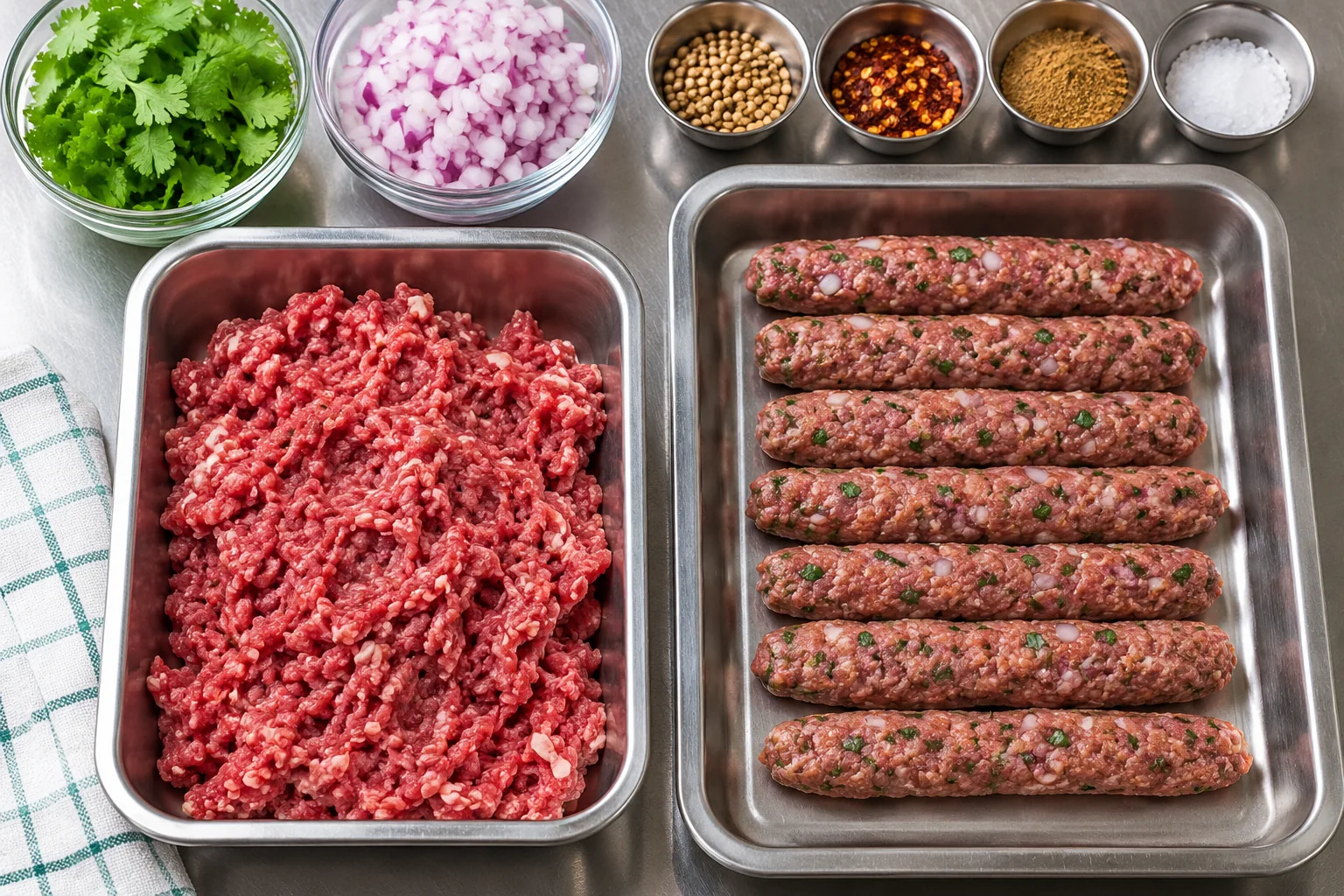
Keema describes minced meat, not a species or anatomical cut. Ask which animal is included, whether fat is added and whether the grind is coarse or fine. Choose a selected chilled piece where possible and request clean grinding equipment. Grinding distributes contamination through the mixture; it needs thorough measured cooking, not merely a surface sear.
Do not routinely wash raw meat or poultry. Splashes can carry raw juices to the sink, nearby food and utensils. Wash hands with soap after raw handling and clean boards and knives before preparing ready-to-eat food. Keep a separate clean platter and serving utensils ready before cooking. For kebabs, cook a small test patty fully before adjusting seasoning or shaping the batch.
Reference: USDA ground-meat safety.
Treat organs, trotters and stock ingredients separately
Liver, kidneys, heart, brain, tripe and trotters are different ingredients. Ask the animal and exact item, and request appropriate cleaning and trimming from a reliable chilled supplier. Nalli commonly refers to marrow or marrow bones; bones and fat do not provide the same edible yield as boneless meat. Keep organs separate from ordinary curry pieces.
Use or freeze raw offal within one to two refrigerator days, following stricter label instructions. Do not apply the longer steak-and-roast storage window to it. Poultry organs remain poultry. Follow an ingredient-specific preparation and thoroughly cook organs rather than assuming every item is safe with a quick sear. Liver and kidneys do not need the same long tenderness pathway as trotters and tripe.
Reference: USDA ground-meat safety.
Use a thermometer for safety and time for tenderness
Use a thermometer in the thickest edible part, avoiding bone, and check more than one piece. The official minimums for beef, goat and lamb steaks, chops and roasts are 63°C followed by a three-minute rest; ground red meat needs 71°C; all poultry, including mince and giblets, needs 74°C. Reheated leftovers need 74°C. Finfish generally needs 63°C. These are measured internal temperatures, not the oven setting.
A shoulder or shank may reach its minimum temperature long before connective tissue softens. Continue controlled moist cooking for tenderness. Conversely, prolonged hard boiling dries a lean quick-cooking piece. Cut even portions, avoid crowding the pan and reduce excess sauce after the meat is ready. Spices, lemon and tenderisers cannot repair spoiled meat.
Reference: official minimum cooking temperatures.
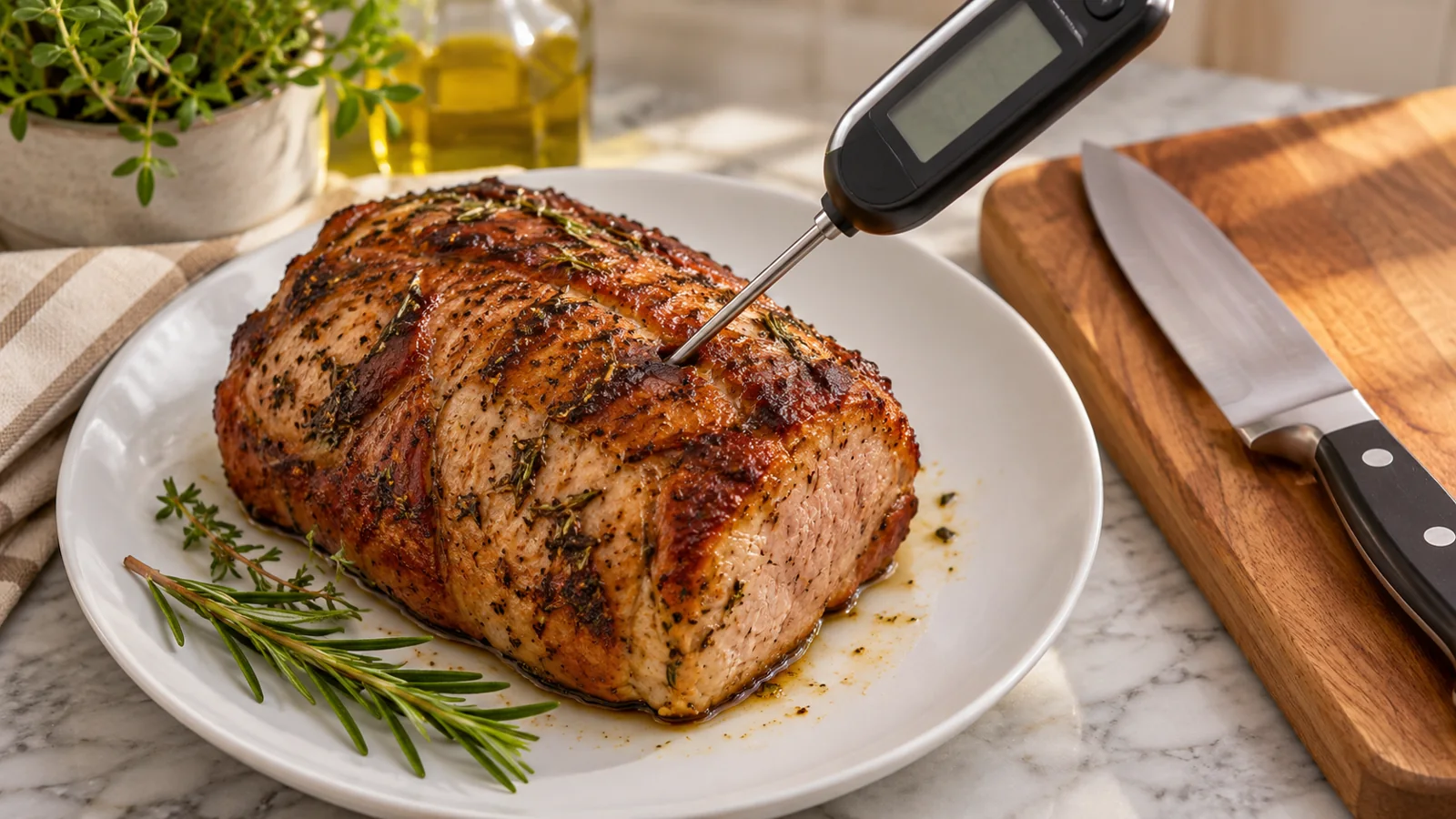
Chill, freeze and thaw in planned portions
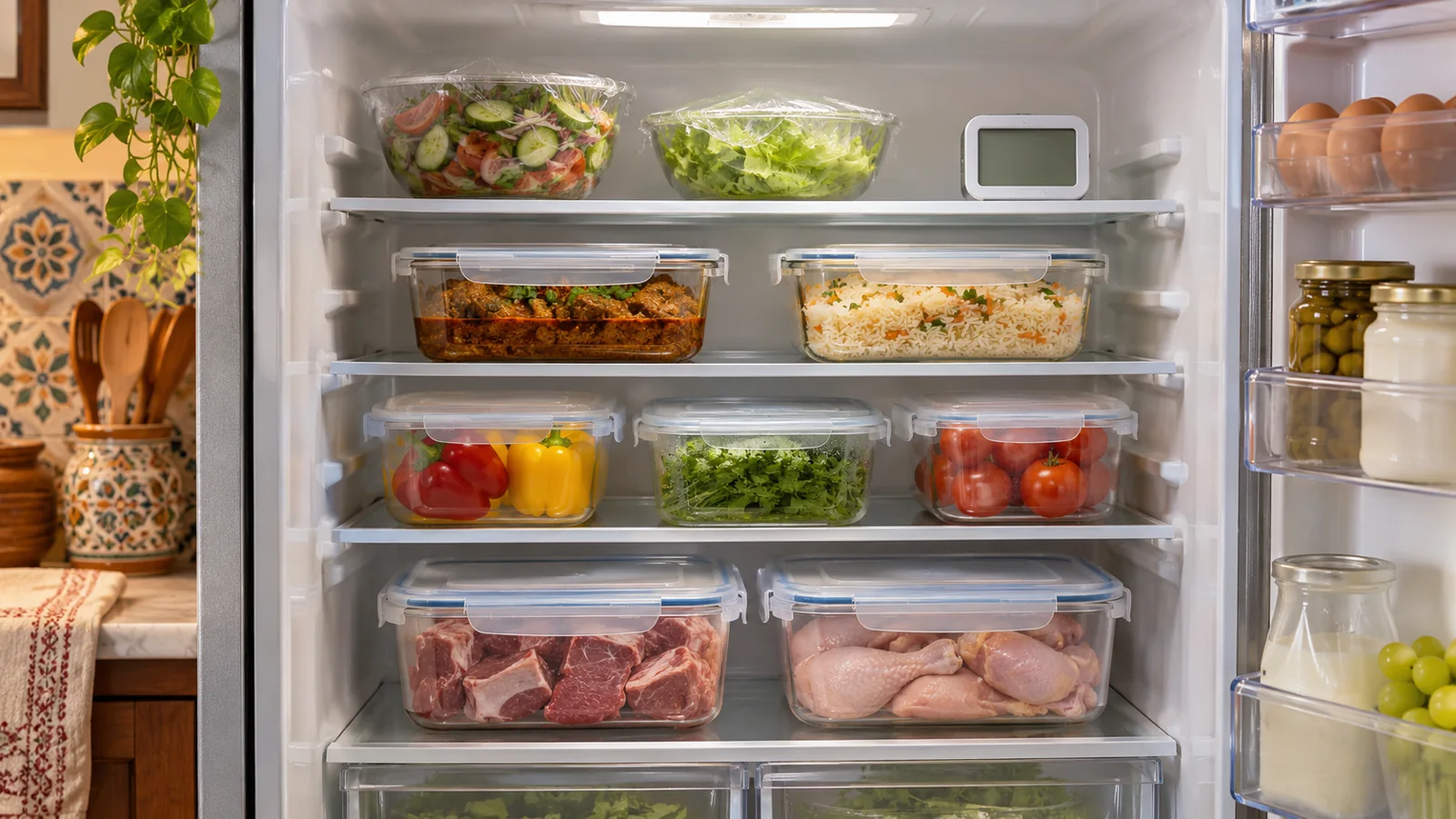
Keep the refrigerator at 4°C or below and the freezer at −18°C or below. Put raw meat in closed leakproof containers below cooked and ready-to-eat food. Use or freeze raw poultry, mince and offal within one to two refrigerator days; the usual beef and lamb steak, chop and roast window is three to five days. Follow stricter package instructions. Promptly chilled cooked meat is generally used within three to four days.
Freeze meal-sized portions with the species, cut, weight and date. A flat mince pack is more convenient than a thick frozen block. Thaw in the refrigerator; verified cold-water or microwave thawing requires immediate cooking afterward. Do not thaw on the counter or in sunshine. Freezing prevents growth while frozen but does not sterilise food.
Reference: FDA safe food handling.
Storage reference: official cold food storage chart.
Organise Eid distribution before meat arrives
Clear refrigerator space before meat arrives, prepare shallow food-safe containers and organise recipients and transport. Work in manageable batches rather than leaving all the meat warm while the last bag is filled. Include cutting, packing, travel and waiting in the time out of refrigeration. Refrigerate perishables within two hours, or within one hour when surroundings exceed 32°C.
Give recipients the species, date and storage instructions, with organs separate. Do not leave warm bags overnight to remove heat or attempt uncontrolled home ageing. Large cooked pots should be divided into shallow containers and refrigerated promptly. Chill only what the equipment can actually handle; borrowing cold capacity or reducing the batch is better than overloading a refrigerator.
Reference: World Cancer Research Fund meat recommendations.
Troubleshoot the cut and cooking method
Tough connective-tissue-rich meat generally needs controlled moist cooking and time. Lean meat dried by excessive cooking will not regain its original juices through more boiling. For watery keema or curry, avoid crowding and reduce the sauce separately once the meat is ready. For a browned outside and undercooked centre, use even pieces and gentler finishing heat.
Excess enzyme tenderiser can make boti mushy; follow a tested recipe rather than adding more to save time. Account for natural fat before adding ghee or oil. A flavour adjustment cannot fix spoiled meat, failed refrigeration or an unsafe storage history.
Reference: official minimum cooking temperatures.
Balance the menu and choose a matched recipe
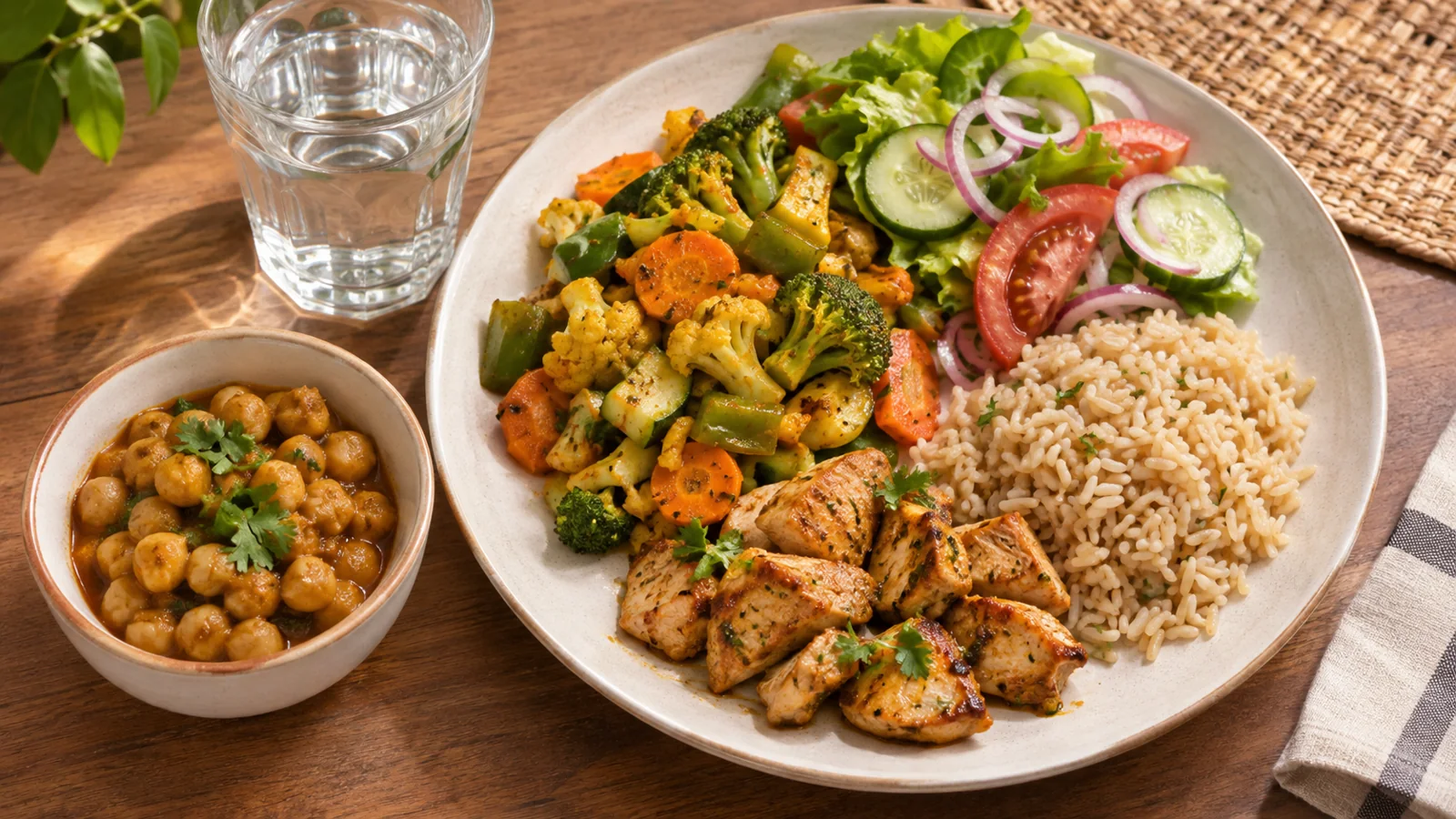
Meat contributes protein and, especially for red meat, iron, zinc and B vitamins. Its value depends on the cut, fat content and the overall diet. Trim visible fat where practical and measure added oil instead of treating fat as a necessary sign of quality. Ordinary culinary meat portions do not cure anaemia, weakness or any illness.
Keep red-meat portions moderate and vary protein sources across the week. Preserved meat that has been salted, cured or smoked belongs in the processed-meat discussion even when it is traditional or homemade. For specific dishes, consult the relevant beef, goat, lamb, chicken, offal and seafood guides, then choose a validated recipe matched to that ingredient. Ask the seller about a cut; ask a clinician or dietitian about individual medical needs.
Reference: NHS meat and nutrition guidance.
Related guides: fish buying and seasonality guide · beef mince · lamb mince · chicken mince · liver · kidneys · heart · chicken livers · tripe · goat trotters · beef trotters · stock · All meat types and cut guides · All recipes
Frequently Asked Questions
Can fresh slaughtered meat stay out overnight?
No. Fresh slaughter does not remove the need for hygienic handling and prompt chilling. Prepare cold storage and insulated transport before cutting or distribution begins.
Can smell prove meat is safe?
No. Reject objectionable odours or poor handling, but harmful bacteria can be present without obvious changes. Source, time, temperature and cooking controls matter.
Do lemon, salt or spices disinfect meat?
No. They season meat and may affect texture; they do not replace refrigeration, clean handling or the correct measured cooking temperature.
How we know this
- Type Explainer
- Sources 8 (5 official/academic)
- Reviewed November 2026
- Disputed points None
8 sources
- Safe minimum cooking temperatures, FoodSafety.gov
- Cold food storage chart, FoodSafety.gov
- Food poisoning prevention and prompt cooling, CDC
- Raw poultry washing, USDA FSIS
- Fresh meat department, METRO Pakistan
- Meat and poultry shopping, Carrefour Pakistan
- Meat delivery service area, Meatkart
- Storage times for raw meat and offal, USDA FSIS
