
Food & Drinks
Breads of Pakistan: From the Tawa to the Tandoor
Roti from the griddle, naan from the tandoor, flaky parathas, puffed puris and stone-baked kaak: the breads that sit at the centre of almost every Pakistani meal.
- Wheat, maize and gram flour
- Tawa, tandoor and karahi
- Regional breads from Hunza to Balochistan
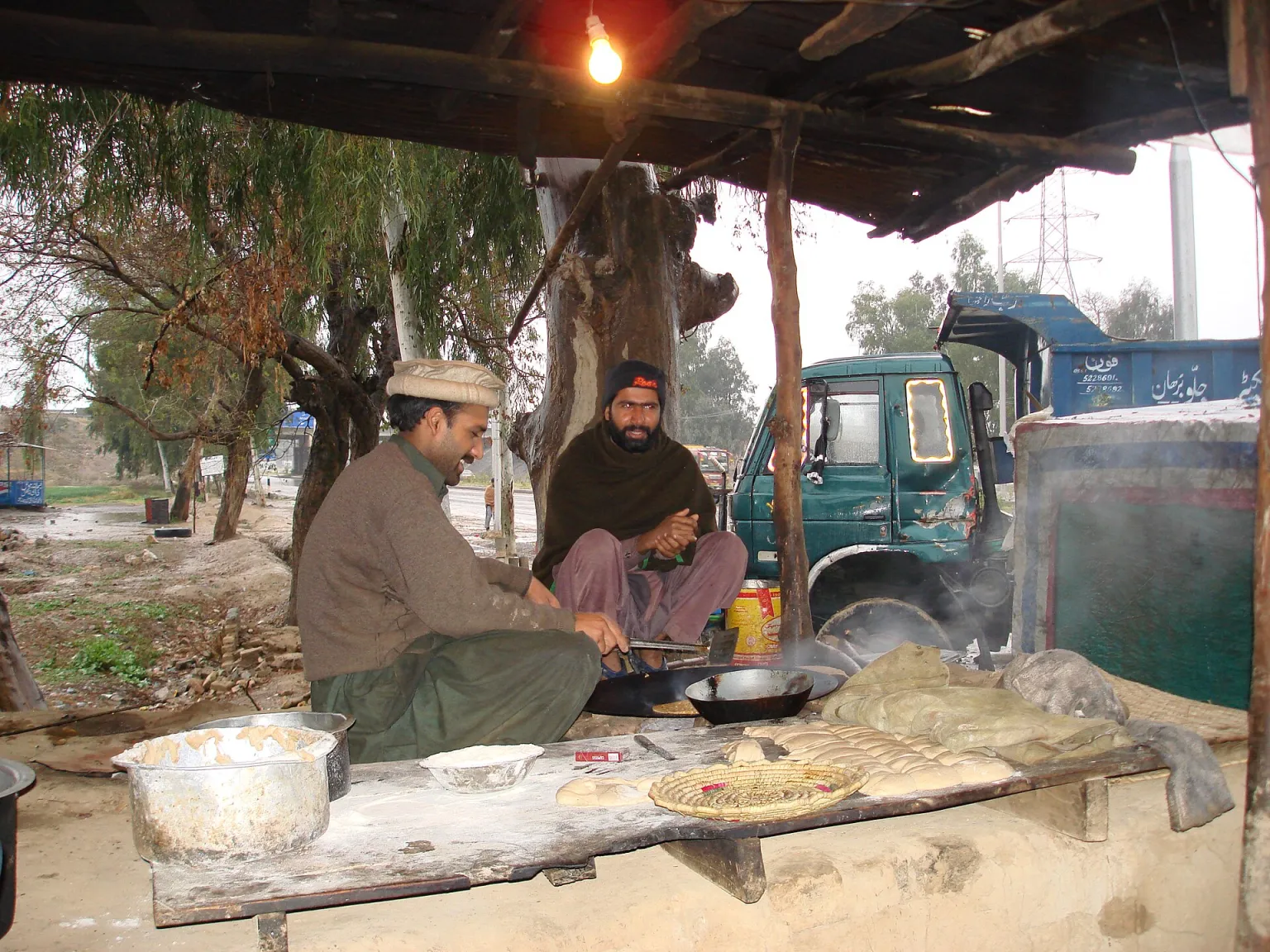
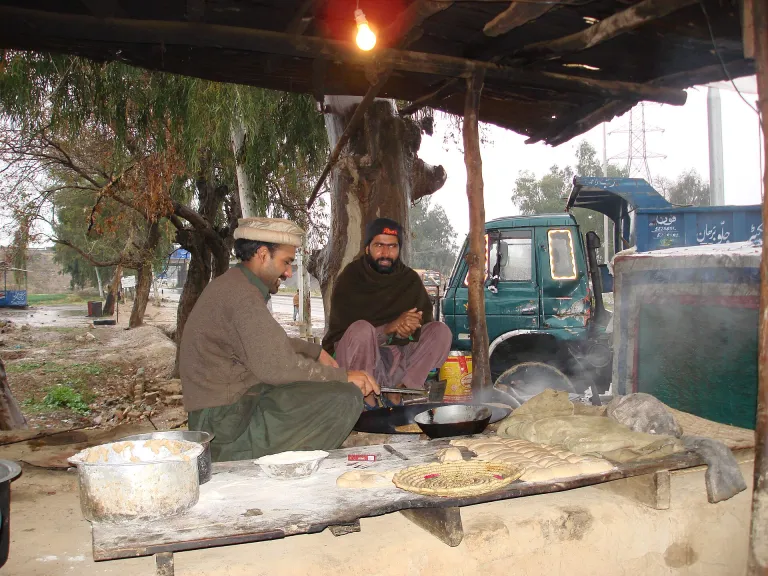
Roadside tandoor, Punjab
About Pakistani Breads
In most Pakistani homes, bread is not a side dish, it is the cutlery. A piece of roti torn with the right hand scoops up daal, curry, saag or kebab, and a meal without it feels unfinished. Rice is loved, especially in Sindh, Karachi and at celebrations, but across much of the country wheat bread is eaten two or three times a day.
Pakistani breads fall into a few broad families. Griddle breads such as roti and paratha are cooked at home on a concave iron tawa. Oven breads such as naan, tandoori roti, sheermal and kulcha come from the tandoor, a clay oven usually found at a neighbourhood bakery or naanbai rather than in the home kitchen. Fried breads such as puri and bhatura are made in a karahi of hot oil, mostly for breakfast and festive occasions. Then there are regional breads with their own techniques, from Balochistan's stone-baked kaak to the maize roti of Punjab's winter fields.
Many urban families buy tandoor bread fresh for every meal, sending a child to the local tandoor with a cloth to wrap the hot rotis. In villages, communal tandoors were long a meeting place, and in many areas they still are.
Everyday Breads
The breads you will meet at almost every table.
 Roti / chapatiThe daily bread: an unleavened round of whole-wheat atta rolled thin, cooked on the tawa and often puffed over an open flame. Called phulka when it balloons. Brushed with butter, it becomes makhan roti.
 Tandoori rotiWhole-wheat dough slapped onto the hot inner wall of a tandoor, giving a chewy round with a blistered surface. The standard bread of dhabas and karahi restaurants.NaanA leavened white-flour bread baked in the tandoor, softer and thicker than roti. Plain, buttered, sprinkled with sesame or nigella seed, or stuffed with garlic, potato or mince.
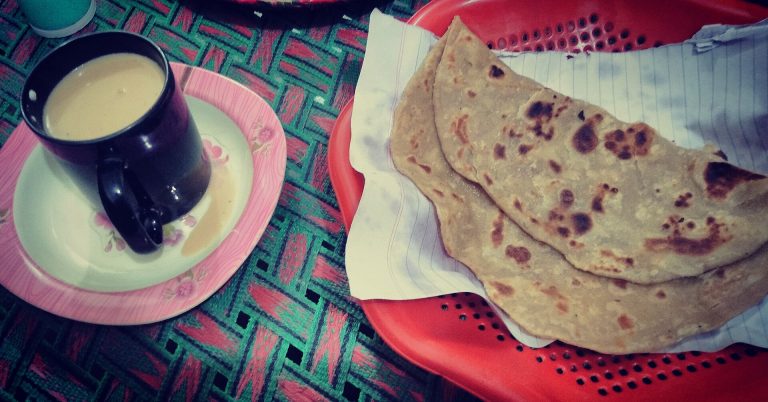 ParathaDough folded with ghee or oil, rolled and fried on the tawa so it turns layered and crisp. The heart of a Pakistani breakfast with eggs, chai or yoghurt.
 PuriSmall rounds of dough deep-fried until they puff into hollow, golden balloons, the bread of the halwa puri breakfast.
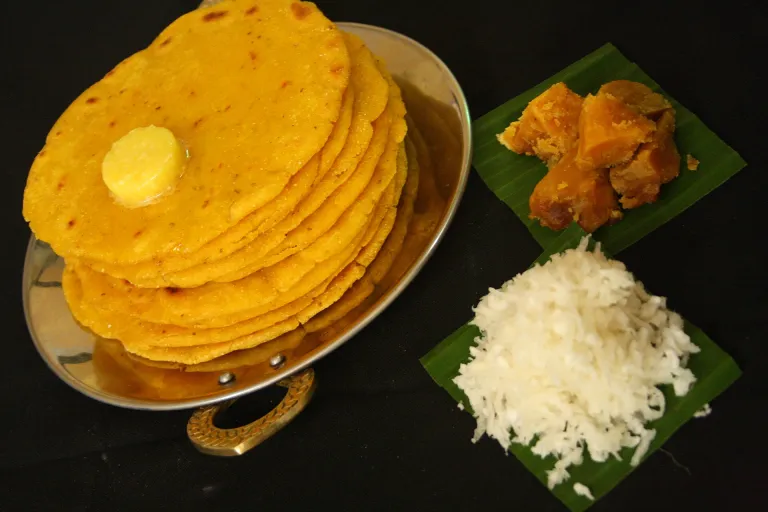 Makai ki rotiYellow maize-flour flatbread, patted by hand and cooked on the tawa, eaten with sarson ka saag and white butter in the Punjabi winter.
The Paratha Family
Plain, layered or stuffed, parathas come in as many styles as there are breakfast tables.
 Aloo parathaStuffed with spiced mashed potato, green chilli and coriander, and served with yoghurt and pickle.
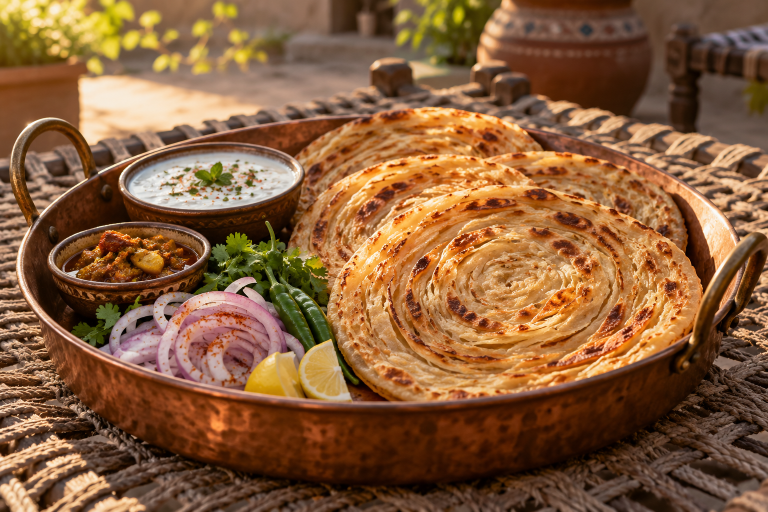 Lachha parathaDough coiled into a spiral so the cooked bread pulls apart into flaky rings.
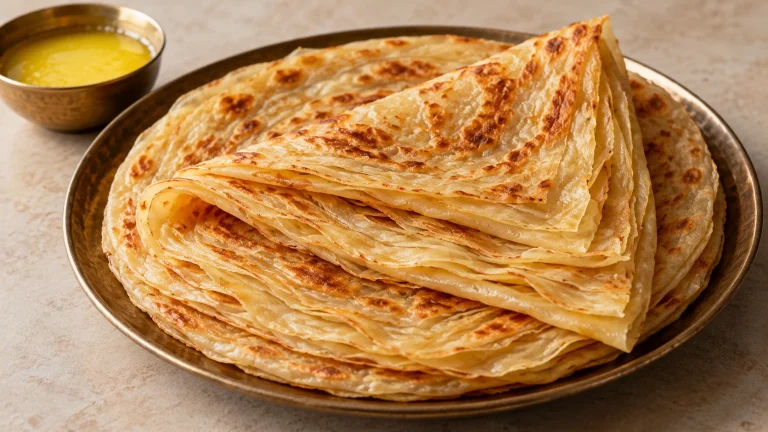 Warqi parathaMany paper-thin, ghee-brushed layers (warq means leaf), crisp outside and soft within.
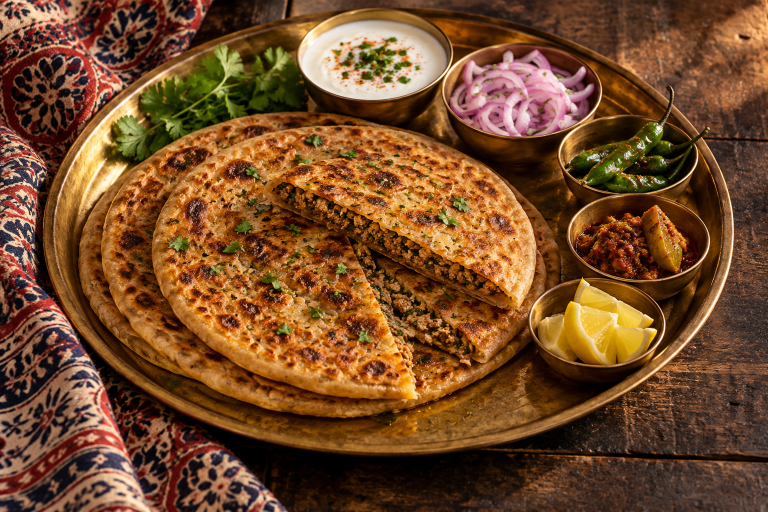 Keema and other stuffed parathasMinced meat, radish, cauliflower, cheese or egg fillings turn a paratha into a complete meal.
Festive and Bakery Breads
Richer breads for weddings, guests and slow-cooked dishes.
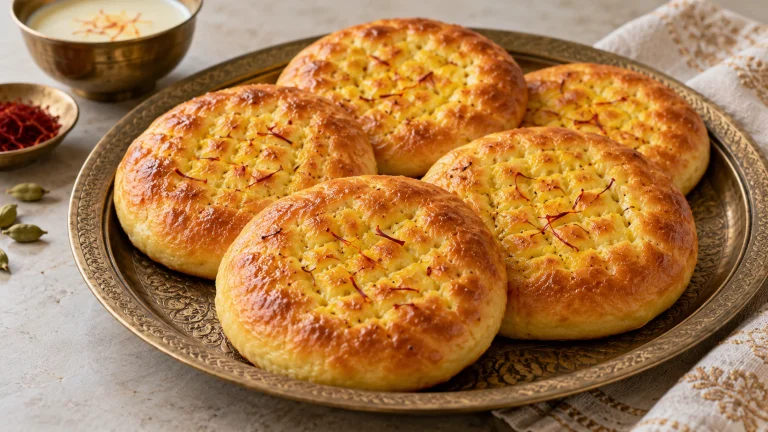 SheermalA slightly sweet, saffron-tinted bread enriched with milk and ghee, with roots in Persian baking. Served with korma at weddings and with nihari, and dunked in chai the next morning.
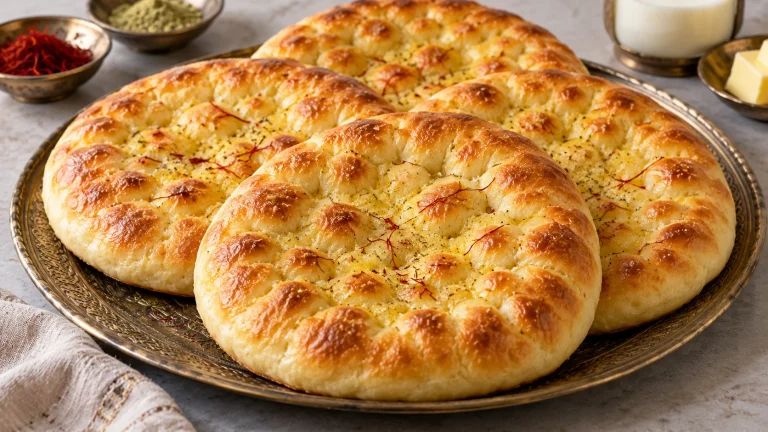 TaftanA soft, leavened tandoor bread enriched with milk and egg and often scented with saffron or cardamom, a classic partner for korma and nihari.
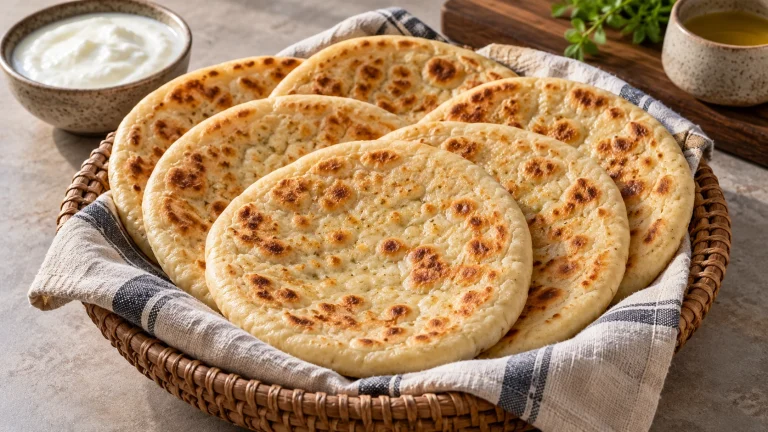 KulchaA soft, leavened bread from the tandoor, eaten with spiced chickpeas, Rawalpindi's pindi chana with kulcha is a well-known pairing.
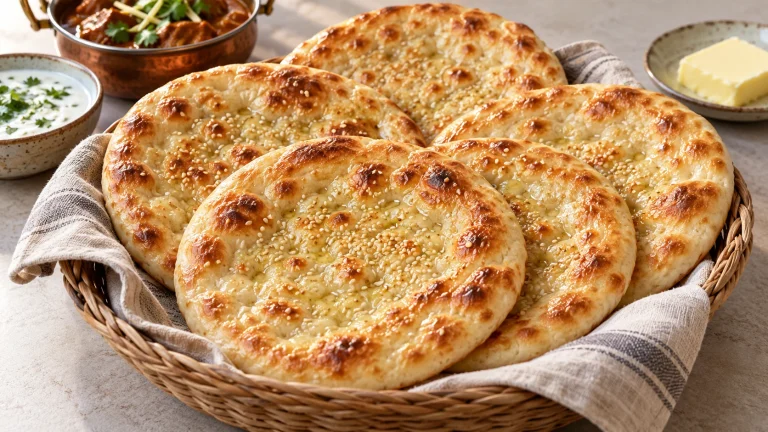 Roghni naanA naan brushed with an egg or milk glaze (roghan) and scattered with sesame seeds before baking, giving a glossy, golden top.
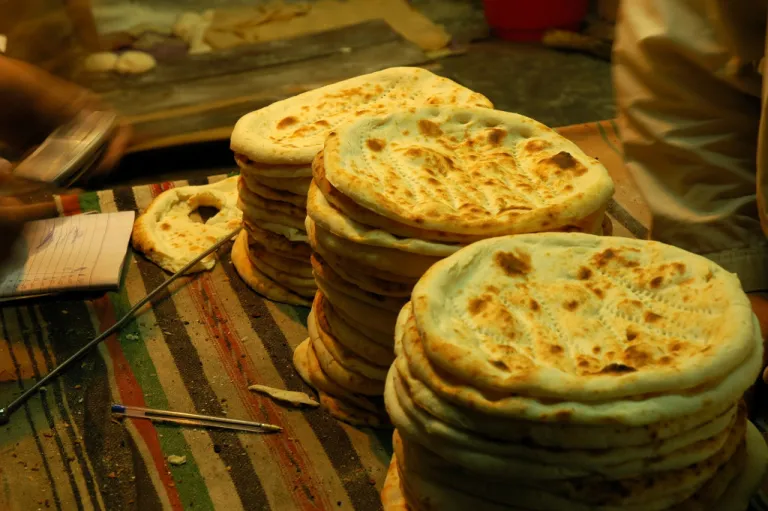 Peshawari rotiKhyber Pakhtunkhwa's large, round tandoor bread, often marked with a pattern of finger-pressed dimples, eaten with karahi, chapli kebab and tikka.
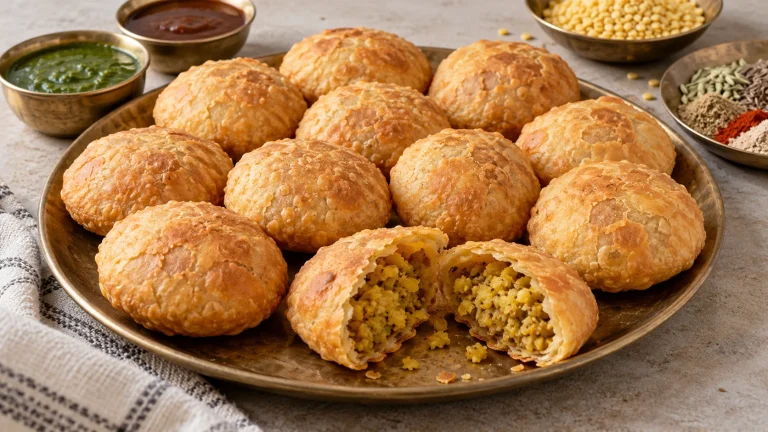 Khasta kachoriA crisp, flaky fried bread, served with potato curry, chickpeas or halwa at breakfast.
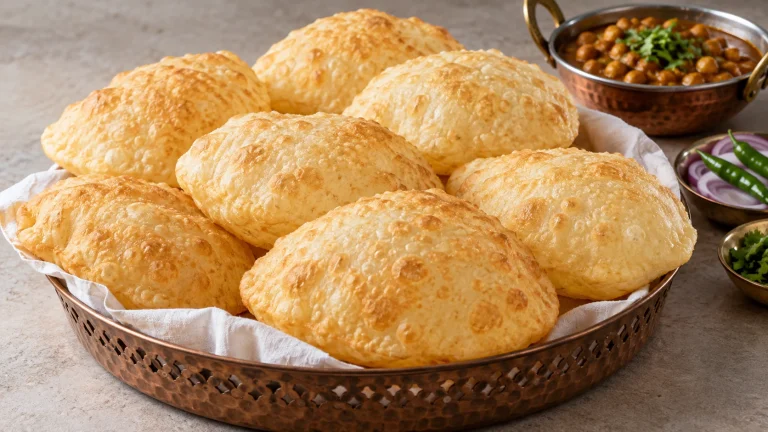 BhaturaA puffed, deep-fried leavened bread served hot with spiced chickpeas.
Regional Breads
Breads shaped by mountains, deserts and the life of herders.
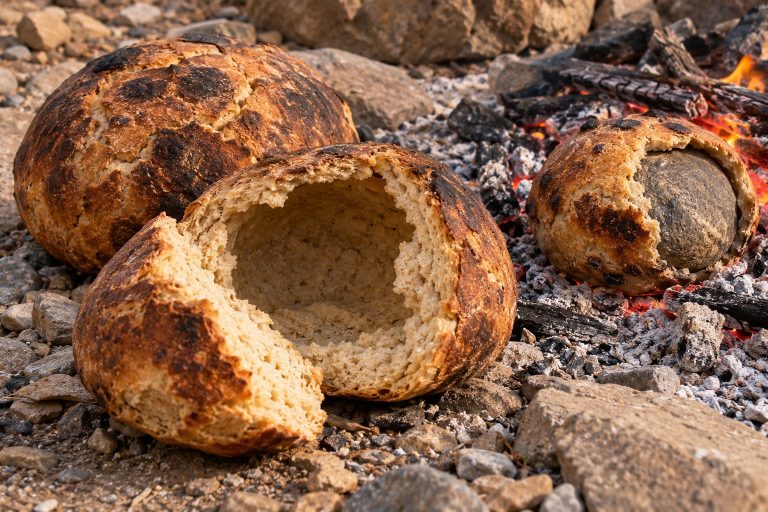 Kaak (Balochistan)Dough of flour, water and salt wrapped thickly around a stone heated in a wood fire and turned slowly until baked hard and brown, a technique credited to shepherds who travelled without cookware. The classic partner to sajji.
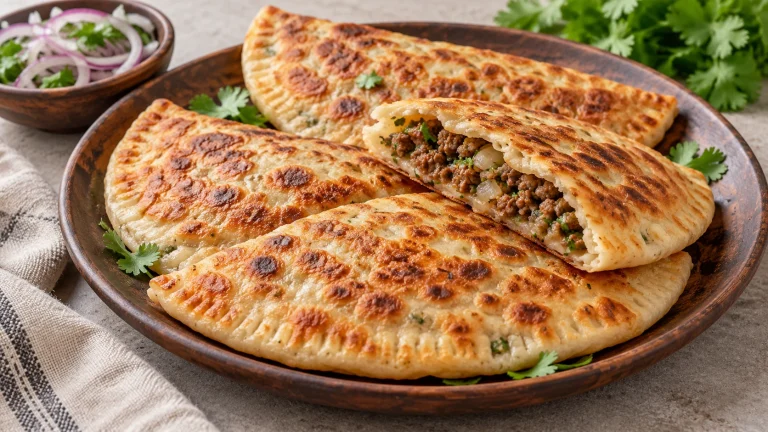 Chapshuro (Hunza)A Hunza meat pie: minced beef or mutton with onion, herbs and spices sealed inside dough and cooked until crisp. Often compared to a pasty.
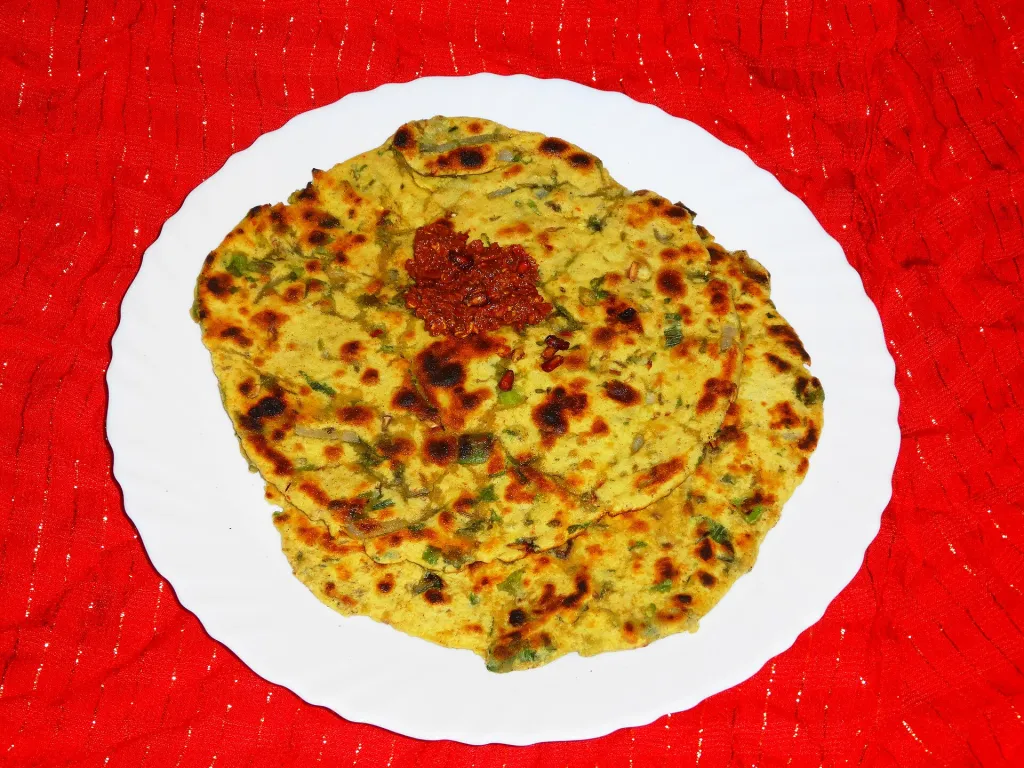
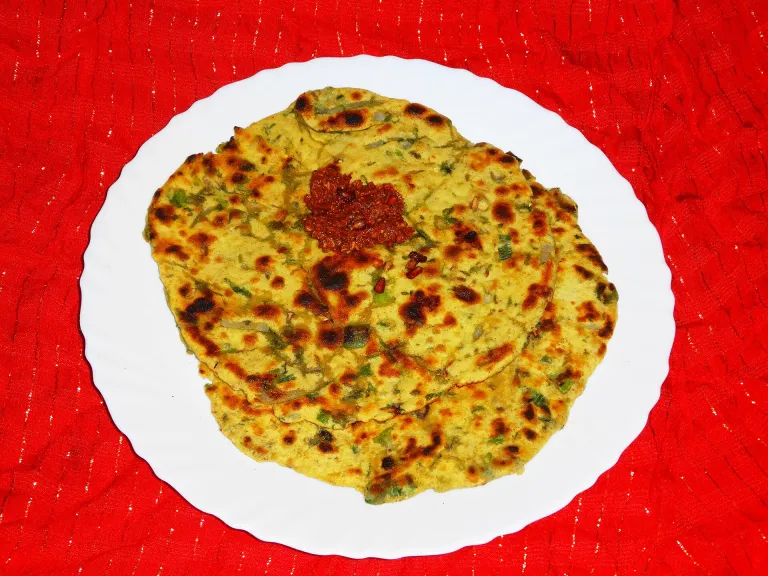 Missi roti (Punjab)A savoury flatbread of wheat and gram flour with onion, chilli and spices, eaten with yoghurt, lassi or butter.
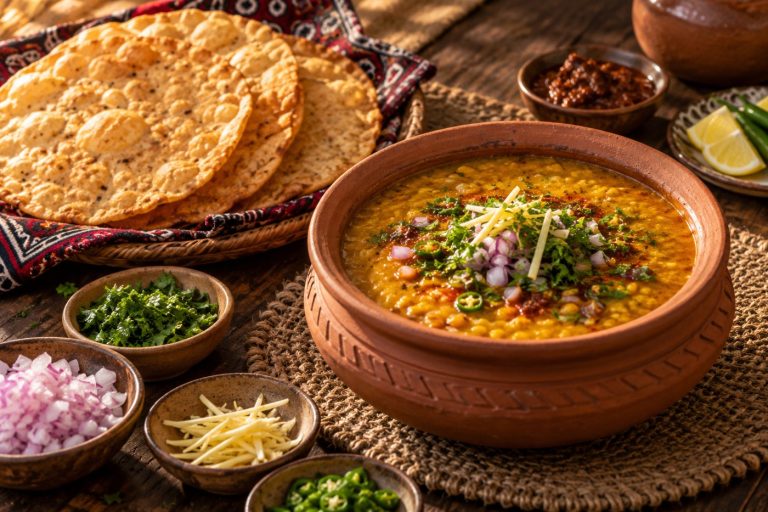 Dal pakwan (Sindh)Crisp fried pakwan served with seasoned chana dal: a distinctive Sindhi breakfast.
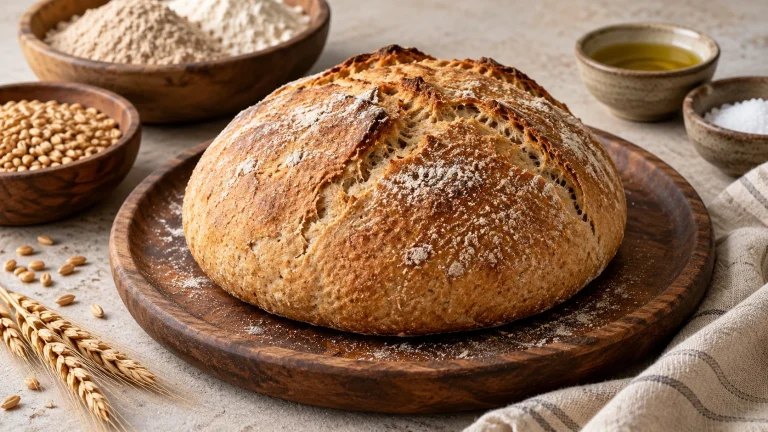 Phitti (Gilgit-Baltistan)A thick whole-wheat bread associated with Gilgit-Baltistan, baked slowly and served with tea, butter or savoury dishes.
 Sohbat (Saraiki and Pashtun belt)Not a bread itself but a bread dish: torn naan or roti soaked in rich meat broth and shared from one large platter at weddings and gatherings around Dera Ismail Khan and southern Punjab.
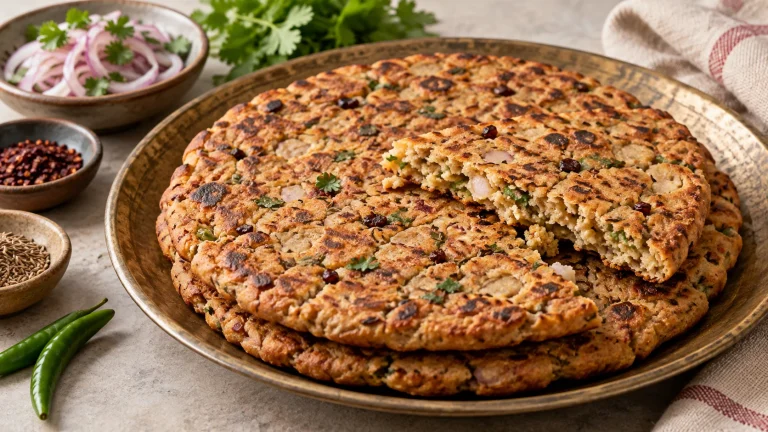 Sindhi kokiA thick savoury flatbread with onion, herbs and spices, served with yoghurt, pickle or tea.
Making Bread at Home
Home cooks in Pakistan rarely measure. Whole-wheat atta is kneaded with water (and sometimes a little salt or oil) into a soft dough, rested, divided into balls and rolled into rounds on a wooden board with a thin rolling pin. The tawa must be hot before the first roti goes on; it is flipped once when bubbles appear, again when spots brown, and then pressed or held over the flame to puff. Parathas use the same dough folded with ghee, while puris need a stiffer dough so they puff without soaking up oil.
For a step-by-step guide to dough consistency, resting times and rolling, see our guide to dough for roti, paratha and puri. Naan and tandoori roti are hard to reproduce without a tandoor; a very hot oven with a baking stone or an inverted heavy pan under the grill gets reasonably close.
Bread at the Table
- Eat with your right hand: tear a piece of roti, fold it around a mouthful of curry and eat the two together.
- Bread is treated with respect, it should not be thrown away or left on the floor; leftover roti is fed to animals or reused.
- At restaurants, bread is ordered separately and arrives hot in a basket; order more as you go rather than all at once.
- Ask for tandoori roti for whole-wheat, naan for white flour, and roghni or kalonji naan for topped versions.
- Breakfast parathas are cooked in plenty of ghee or oil, ask for kam ghee if you prefer them lighter.

Frequently Asked Questions
What is the difference between roti, chapati and naan?
Roti and chapati are the same thing: an unleavened whole-wheat flatbread cooked on a tawa at home. Naan is a leavened bread, usually of white flour, baked in a tandoor and bought from a bakery or restaurant.
What bread is eaten with nihari?
Nihari is usually eaten with naan or tandoori roti; richer breads such as sheermal and taftan are also served with it and with korma.
What is kaak?
Kaak is a dense Balochi bread made by wrapping dough around a stone heated in a wood fire and turning it until baked. It keeps well and is traditionally eaten with sajji.
What is chapshuro?
Chapshuro is a Hunza speciality: minced meat with onions, herbs and spices sealed in dough and cooked until crisp, somewhere between a pie and a stuffed flatbread.
Is paratha healthy for every day?
Parathas are cooked with ghee or oil, so they are much richer than plain roti. Many families eat roti daily and save parathas for breakfast or weekends.
Keep Exploring
Related places and stories on DailyLife.pk
 LahoreLahore travel guide: Badshahi Mosque, Lahore Fort, Shalimar Gardens, the Walled City, food streets, neighbourhoods, metro
 RawalpindiRawalpindi guide: Raja Bazaar, Saddar, the Army Museum, history from the Gakhars to 1959, food
 PeshawarPeshawar city guide: Qissa Khwani Bazaar, Mahabat Khan Mosque, Sethi House, Peshawar Museum, Pashtun food
 QuettaQuetta city guide: Hanna Lake, Urak Valley, bazaars, sajji and dry fruitDough for Roti, Paratha and PuriMake soft roti, flaky paratha and puffed puri: choosing atta, dough hydration, resting, rolling, tawa heat
 Chai Culture in PakistanChai in Pakistan: doodh patti, qehwa, Kashmiri pink chai, dhabas and tea houses, regional styles
How we know this
- Type Explainer
- Sources 8 (2 official/academic)
- Reviewed October 2026
- Disputed points None
8 sources
- Chapati, Encyclopaedia Britannica
- Naan, Encyclopaedia Britannica
- The Uniqueness of Kaak Bread, Google Arts & Culture
- Tale of sheermal: saffron-scented, sweet, milky bread, Gulf News (Falah Gulzar and Sonal Tiwari), 15 June 2022
- Cooking in Hunza, AramcoWorld, March/April 2006
- Traditional foods of Hunza, Hunza Guides Pakistan
- Makai roti and sarson ka saag: a taste straight from Punjab's mustard fields, Dawn Images (Aamir Yasin), 12 October 2015
- Breaking Bread, Building Bonds: DI Khan's Prized Sobat, The Friday Times, 15 November 2024
Photo credits (10)
- Naan cooking.JPG, Lord Mountbatten, Public domain, via Wikimedia Commons
- Punjabi Missi Roti.JPG, Miansari66, CC0, via Wikimedia Commons
- Makki Di Roti.JPG, Vsigamany, CC BY-SA 4.0, via Wikimedia Commons
- Namak Paratha with Chay Morning breakfast Pakistani Culture.jpg, MIANBASH, CC BY-SA 4.0, via Wikimedia Commons
- Halwa Puri, a traditional food made in Walled City of Lahore.jpg, Tahsin Shah, CC BY-SA 4.0, via Wikimedia Commons
- Peshawari Roti, Pakistan.jpg, Umair Mohsin from Karachi, Pakistan, CC BY 2.0, via Wikimedia Commons
- Pindi Chana.JPG, Miansari66, CC0, via Wikimedia Commons
- Aloo Paratha (illustration), DailyLife.pk, Illustrative image
- Dal Pakwan (illustration), DailyLife.pk, Illustrative image
- Sohan Halwa.JPG, Miansari66, Public domain, via Wikimedia Commons
Suggest a correction
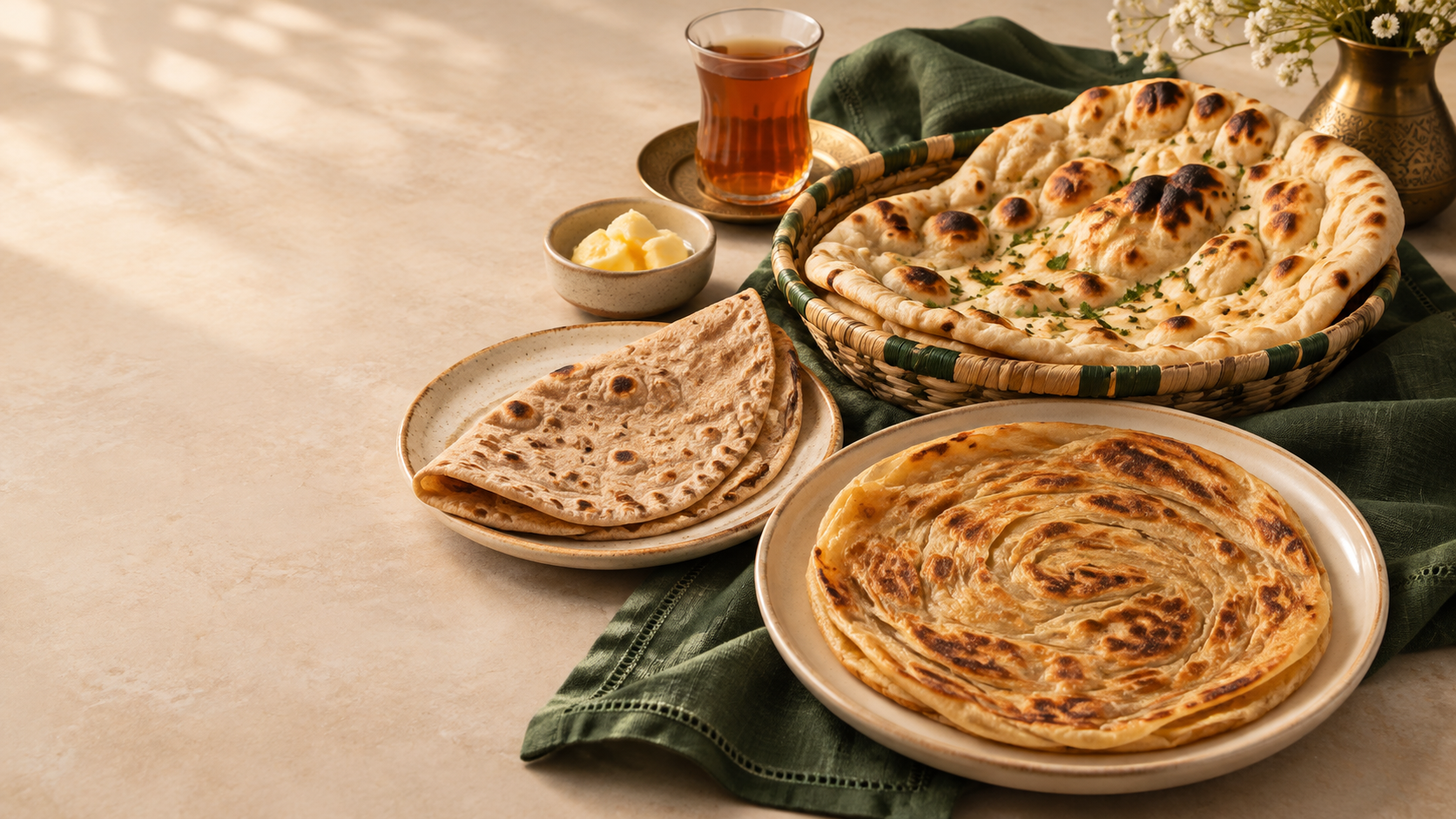
Choose a bread for your table
Soft naan, everyday chapati or a layered paratha: choose a bread to suit your meal, then check the recipe for flour, resting time and cooking method.
