
Food & Drinks
Pakistani Desserts and Mithai: A Box of Sweets for Every Occasion
Syrup-soaked gulab jamun, crisp jalebi, milky kheer, Multan's sohan halwa and the mithai box that marks every birth, exam result and wedding: a guide to Pakistan's sweet tooth.
- Mithai, halwa and milk puddings
- Sohan halwa: Multan
- Eid, weddings and good news
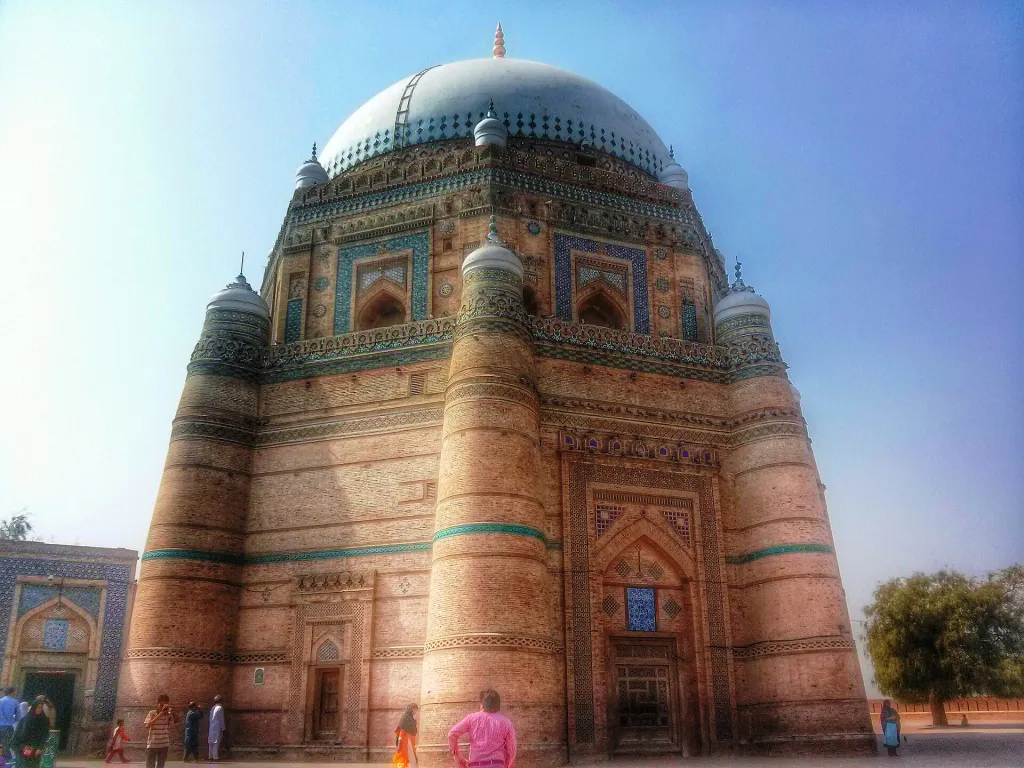
Multan, Punjab
About Pakistani Sweets
In Pakistan, good news arrives in a cardboard box. A new baby, a passed exam, an engagement, a new job or a safe return from Hajj is announced by handing round mithai, the dense, milky, often syrup-soaked sweets sold by the kilo at confectioners in every bazaar. Saying munh meetha karein (sweeten your mouth) as you offer the box is part of the ritual, and refusing a piece is almost impossible.
Most Pakistani sweets are built from a short list of ingredients: milk, often reduced for hours into thick khoya; sugar or jaggery (gurr); ghee; flours of wheat, semolina or gram; and flavourings of green cardamom, saffron, rose water and kewra. Almonds, pistachios and silver leaf (warq) finish the most festive pieces. Many of these sweets are shared with the wider subcontinent and with Persian and Arab cooking, while a few, Multan's sohan halwa above all, are firmly tied to a single Pakistani city.
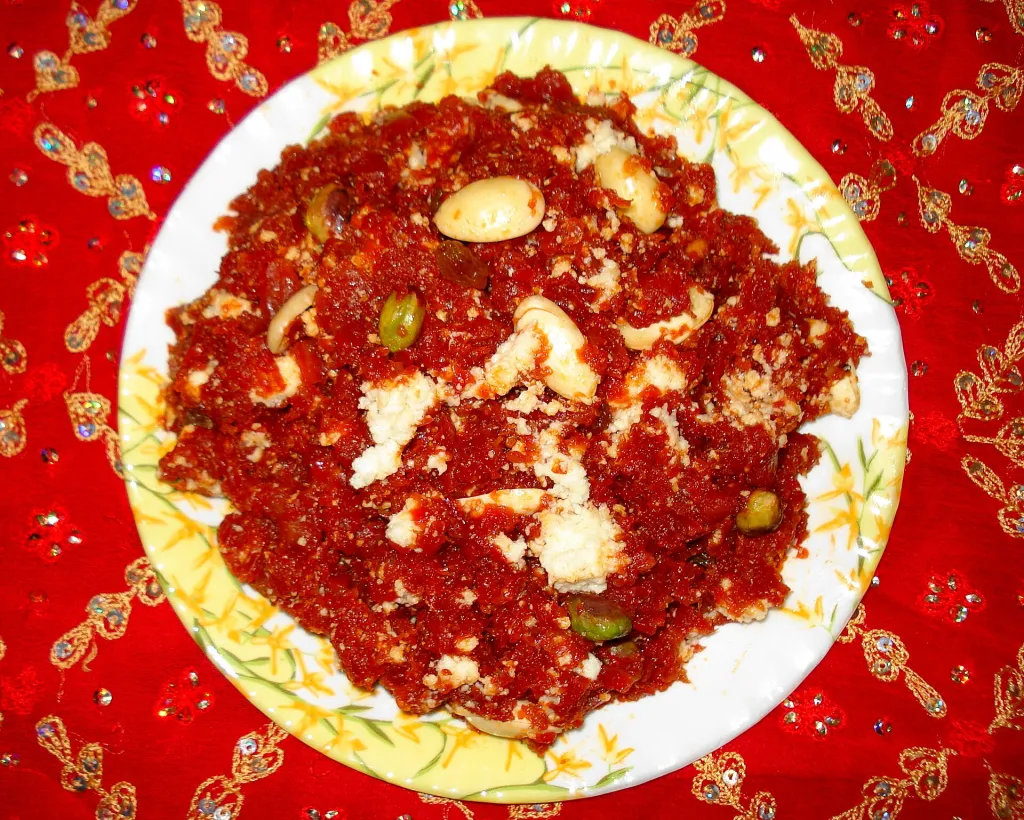
Desserts at home are simpler and more seasonal. Kheer and zarda appear at gatherings and religious occasions, sheer khurma is the taste of Eid morning, and as soon as the red winter carrots arrive in the markets, kitchens fill with the smell of gajar ka halwa.
At the Mithai Shop
What you will find behind the glass counter of a typical Pakistani sweet shop.
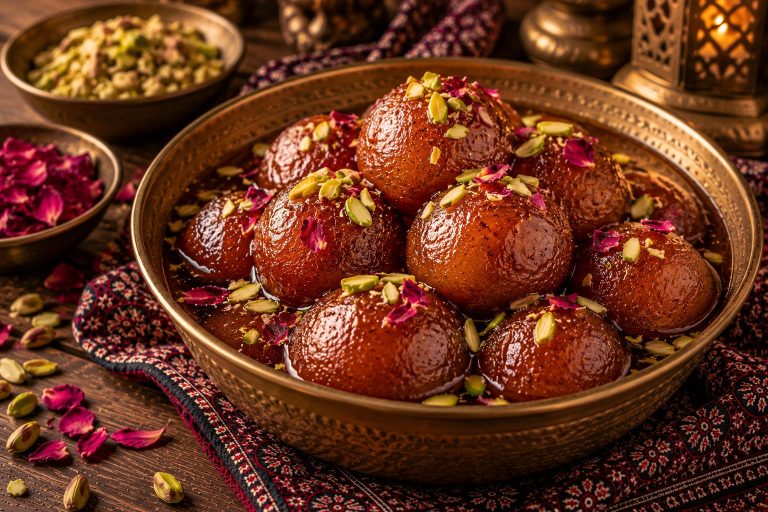 Gulab jamunBalls of khoya or milk powder dough, fried slowly until dark brown and soaked in cardamom-scented syrup. Served warm or at room temperature; the darker, drier <em>kala jamun</em> is a close cousin.
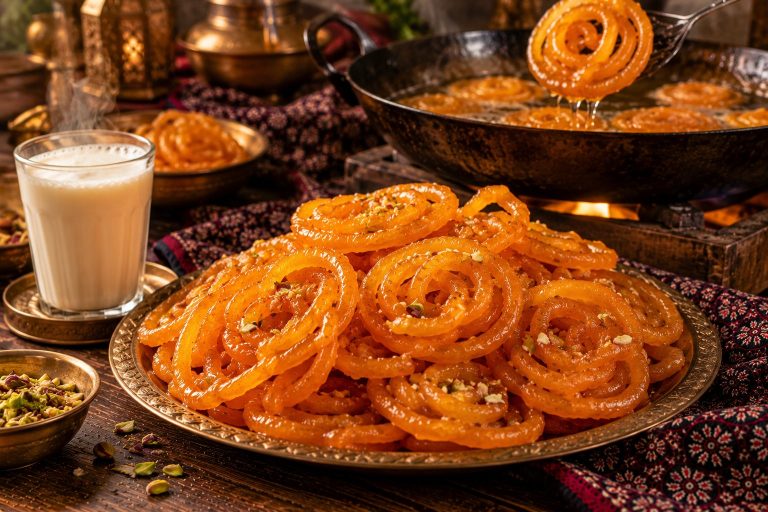 JalebiFermented batter piped in spirals into hot oil and dipped straight into syrup. Eaten hot from the karahi, with warm milk, or with rabri for breakfast.
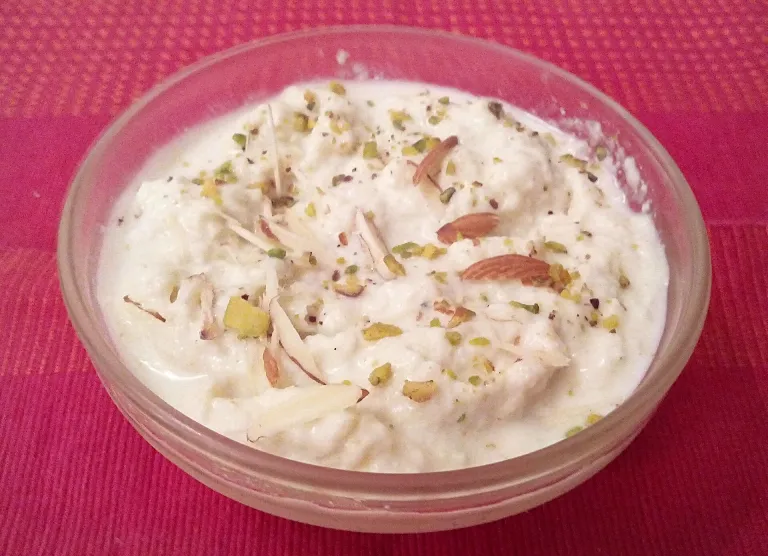 RabriMilk simmered slowly until it thickens and gathers layers of cream, then sweetened. Eaten on its own, with jalebi, or poured over falooda and kulfi.
The World of Halwa
The word <em>halwa</em> comes from the Arabic for 'sweet', and in Pakistan it covers everything from a soft pudding to a brittle slab.
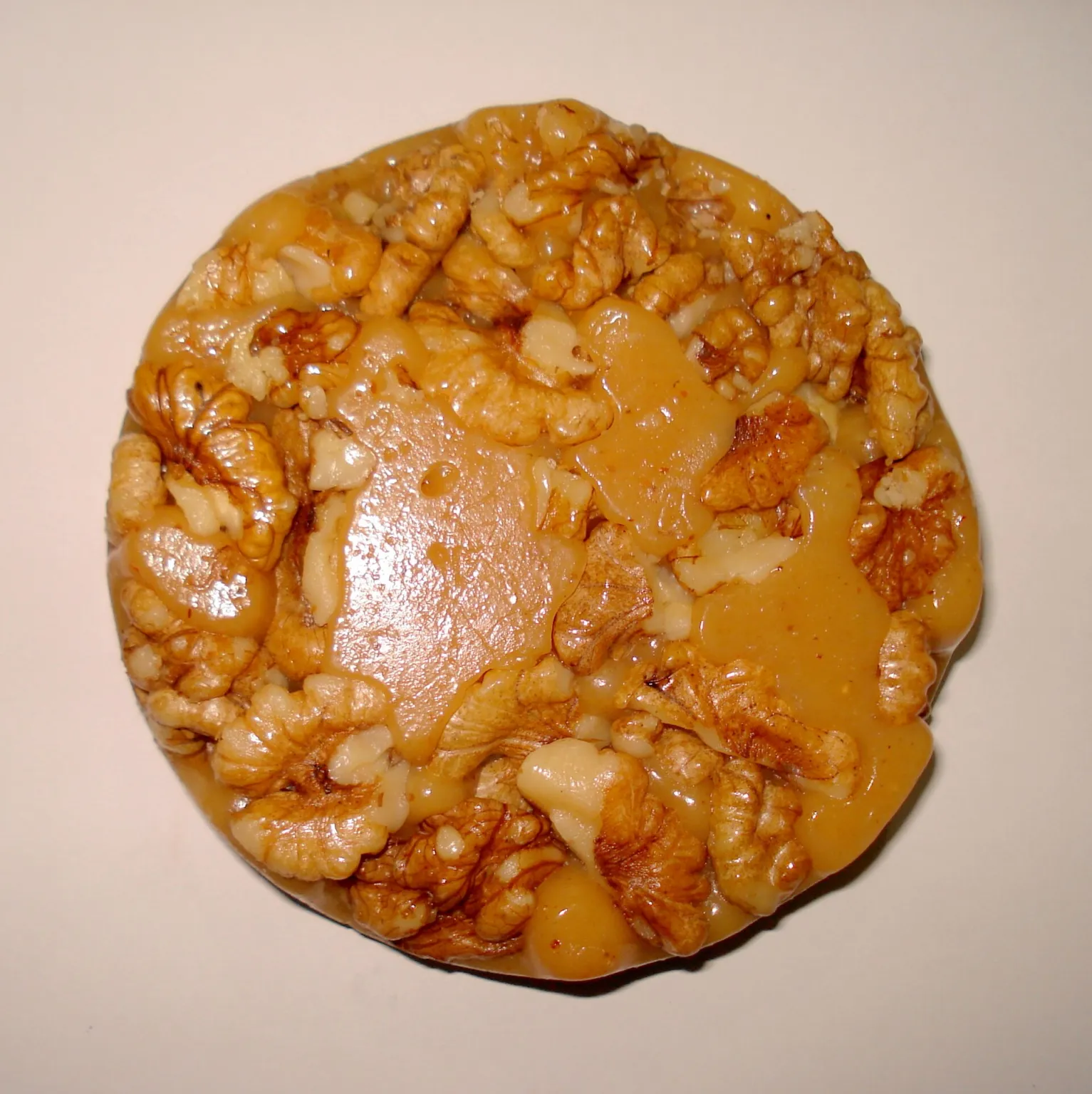
 Sohan halwaMultan's signature sweet: milk, sprouted wheat and other flours stirred for hours with sugar and ghee, then set with nuts into a firm, crunchy slab. Sold in round tins as the classic gift from the city.
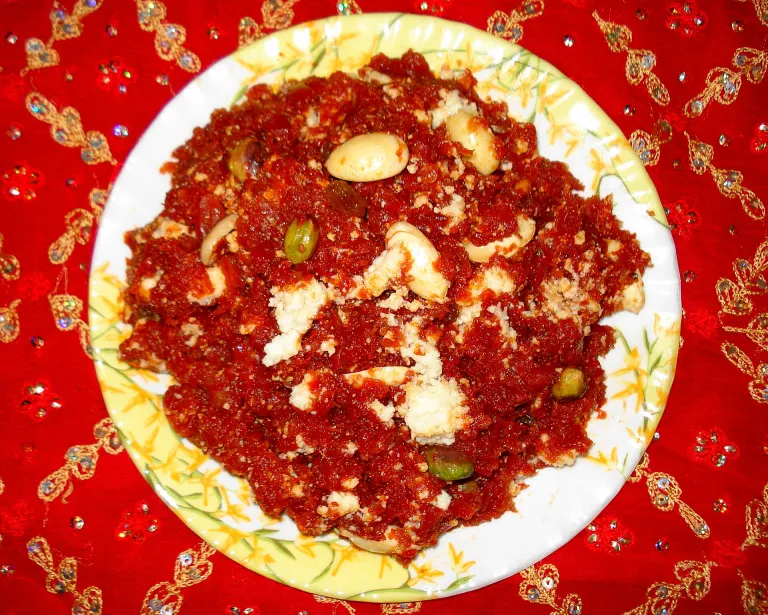 Gajar ka halwaGrated red carrots cooked down in milk with sugar, ghee and cardamom, often enriched with khoya and nuts. A winter dish.
 Suji halwaSemolina roasted in ghee and cooked with syrup, quick, soft and fragrant. The sweet half of the Sunday halwa puri breakfast.
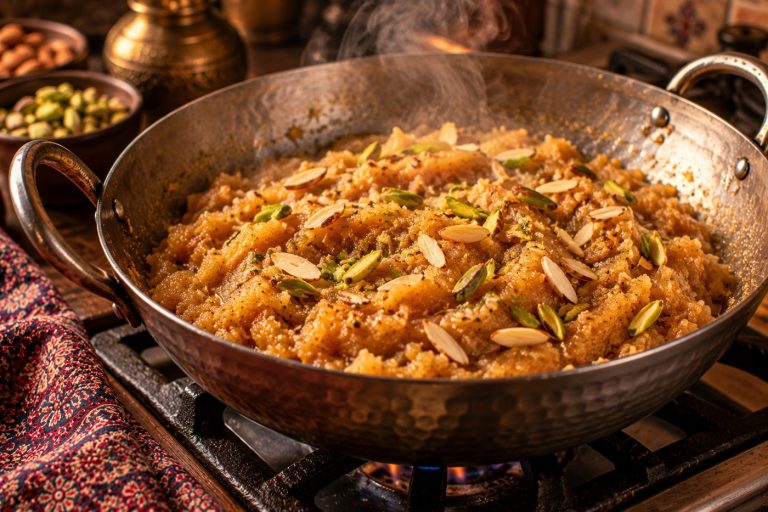 Besan halwaGram flour roasted slowly in ghee until nutty and golden, then sweetened, a homely, warming halwa.
 Regional halwasCoastal Balochistan has its glossy Gwadari halwa of cornflour, sugar and ghee, cooked over wood fires; other towns have their own local versions.
Sohan Halwa: The Sweet of Multan
Few foods are as closely identified with one place as sohan halwa is with Multan. Visitors leave the city with stacks of tins, and the sweet is counted among the 'gifts' of Multan along with its mangoes. It is also made in other towns of southern Punjab, including Dera Ghazi Khan, Bahawalpur, Uch Sharif and Mailsi, but the Multani version is the one people ask for.
Making it is slow, physical work. Milk is boiled in large pans and mixed with flours, traditionally including sprouted wheat, and stirred continuously with a flat iron or bamboo scraper for hours until it thickens. Sugar and ghee go in next, and the mixture is spread in trays and topped with almonds, pistachios and other nuts to set.
Its origin is a matter of legend. One story credits a confectioner named Sohan who boiled down unsold milk; another links the halwa to Diwan Sawan Mal, Multan's governor under the Sikh Empire; others point to Persia. None can be proven, which has never troubled anyone eating it. Dawn's reporting also carries a practical warning: halwa sold at bus and railway stations under famous Multani brand names is not always the real thing, so buy from established shops in the city.
Puddings and Festive Desserts at Home
The sweets families make themselves, for Eid, gatherings and everyday treats.
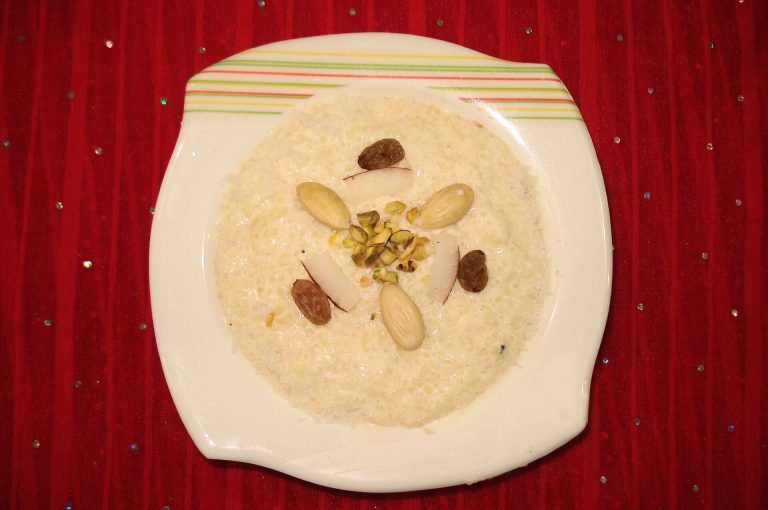 KheerRice simmered slowly in milk with sugar and cardamom until creamy, served chilled with nuts. <em>Firni</em> is its smoother, ground-rice cousin, set in clay bowls.
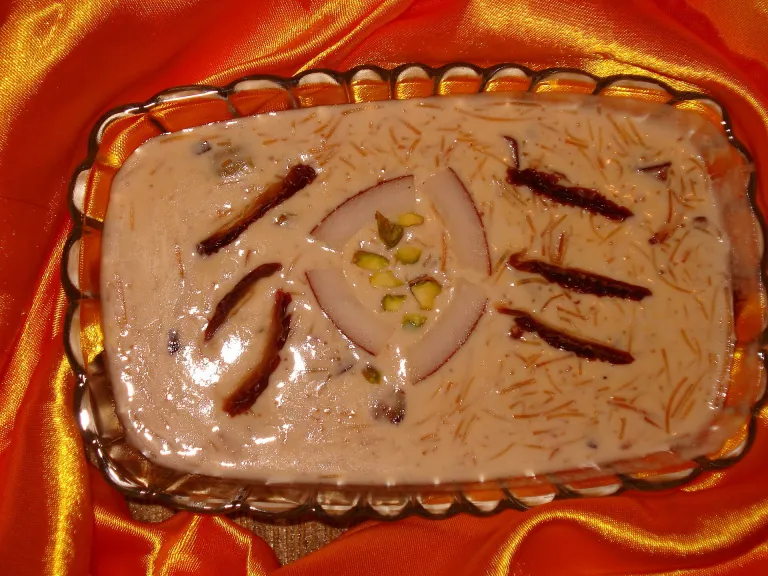 Sheer khurmaFine vermicelli cooked in milk with dates, nuts and cardamom, served to every visitor on the morning of Eid-ul-Fitr.
 ZardaSweet yellow rice with dried fruit and nuts, a wedding and celebration favourite and a dish distributed at Sufi shrines.
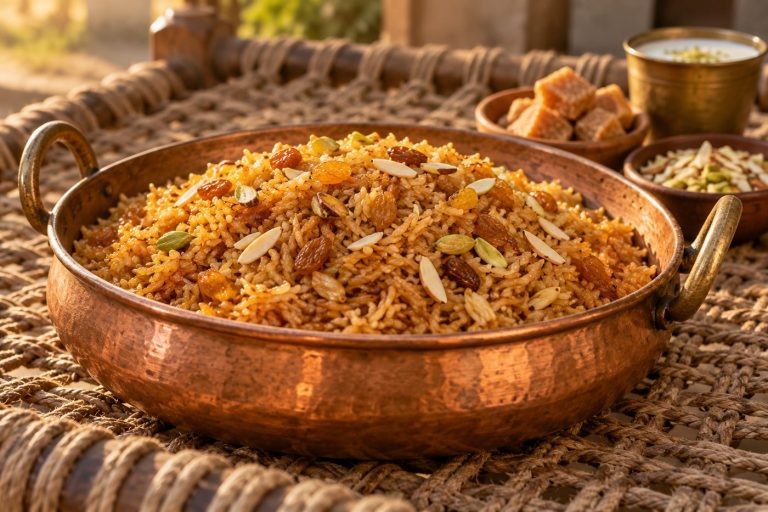 Gurr walay chawalRice cooked with jaggery and fennel or cardamom, a rustic winter sweet from rural Punjab.
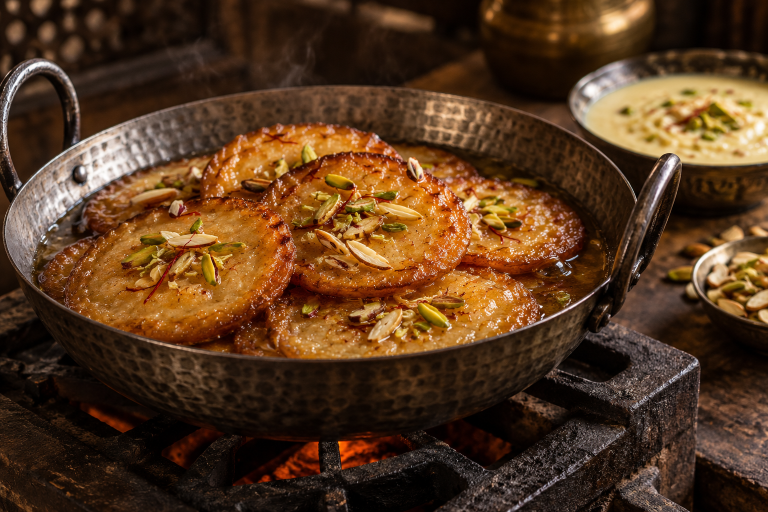 MalpuraSmall sweet pancakes fried in ghee and dipped in syrup, often made in Ramazan and on rainy days.
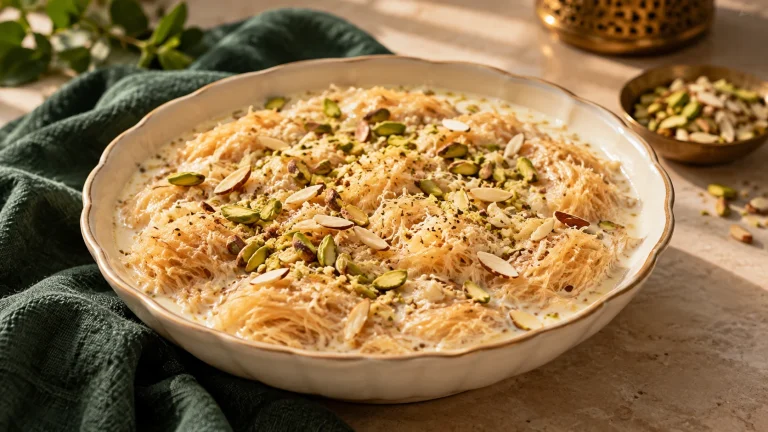 PheniFine, nest-like strands of fried dough crumbled into hot sweetened milk, a Ramazan sehri favourite.
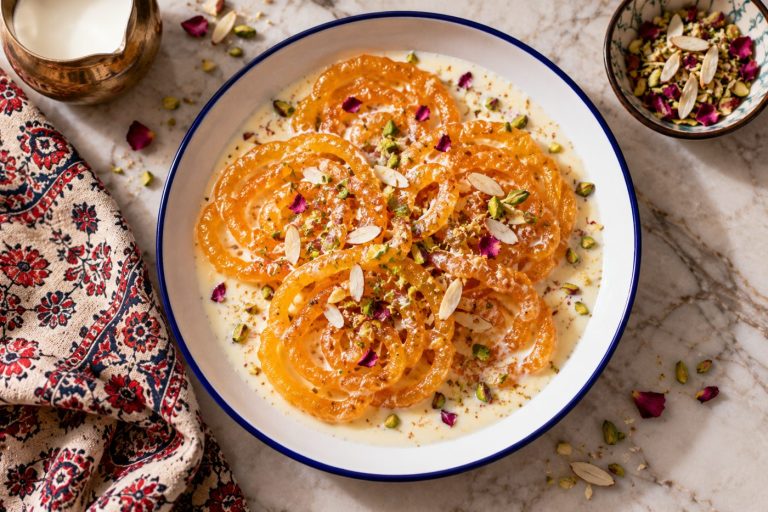 Doodh jalebiHot jalebi dropped into warm milk: a simple, comforting winter-night treat.
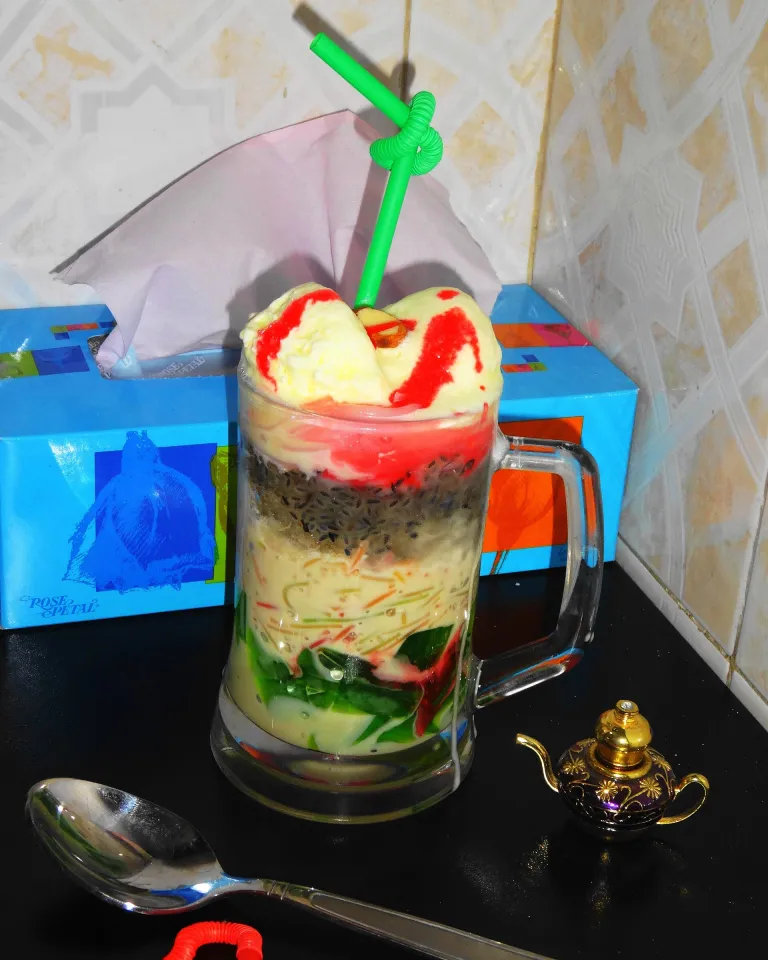 Falooda and kulfiSummer's answer: dense frozen kulfi, and falooda glasses layered with vermicelli, basil seeds, rose syrup and ice cream.
Sweets and the Calendar
| Occasion | Typical sweets | Notes |
|---|---|---|
| Eid-ul-Fitr | Sheer khurma, mithai boxes | Sheer khurma is made the night before and served from Eid morning. |
| Ramazan | Jalebi, pheni, fruit chaat, sharbat | Jalebi is a fixture of iftar spreads; pheni with milk is a sehri food. |
| Weddings | Gulab jamun, ras malai, zarda, kheer | Mithai boxes are also sent to relatives to announce an engagement or wedding. |
| Good news | Laddu, barfi, assorted mithai | Exam results, new jobs and births are celebrated by distributing sweets. |
| Winter | Gajar ka halwa, sohan halwa, doodh jalebi, gurr | Carrot halwa follows the carrot season; Multani halwa is described as a winter sweet. |
| Shrines and religious gatherings | Zarda, halwa, sweets as niaz | Food is cooked and distributed as an offering at shrines and on religious occasions. |
Customs vary by family, community and region.
Buying and Enjoying Mithai
Buy by weight
Half a kilo or a kilo
Mithai is sold by weight, usually in boxes of mixed pieces; ask for an assorted box if you are visiting a family.
Keep it cool
Milk sweets spoil
Milk-based sweets such as ras malai and barfi should be refrigerated and eaten within a few days, especially in summer.
Gifts that travel
Sohan halwa and patisa
Dry, ghee-rich sweets like sohan halwa keep longer and are the usual sweets carried abroad as gifts.
Fresh jalebi
Eat it hot
Jalebi is best straight from the karahi; look for stalls frying in front of you, especially in the evenings of Ramazan.
Frequently Asked Questions
What is the most popular Pakistani sweet?
There is no official ranking, but gulab jamun and jalebi are found in almost every sweet shop and at most celebrations, and Multani sohan halwa is the sweet most often carried home as a gift.
What is mithai?
Mithai is the general word for traditional sweets sold at confectioners, such as gulab jamun, barfi, laddu and ras malai. Boxes of assorted mithai are given to share good news and when visiting families.
What is sohan halwa made of?
It is made from milk, flours including sprouted wheat, sugar and ghee, stirred for hours and set with nuts. Multan is its home, though it is also made in other southern Punjab towns.
Which desserts are made for Eid?
Sheer khurma, a vermicelli and milk pudding with dates and nuts, is the classic dessert of Eid-ul-Fitr. Kheer, zarda and mithai boxes are also common at both Eids.
Are Pakistani sweets vegetarian?
Most are made from milk, sugar, flour and ghee, with no meat products. Silver leaf (warq) and some colourings are used on festive pieces; ask the shop if you have specific requirements.
Keep Exploring
Related places and stories on DailyLife.pk
 MultanMultan city guide: Shah Rukn-e-Alam and other Sufi shrines, the walled city, blue pottery, sohan halwa
 LahoreLahore travel guide: Badshahi Mosque, Lahore Fort, Shalimar Gardens, the Walled City, food streets, neighbourhoods, metro
 KarachiKarachi travel guide: Mazar-e-Quaid, Mohatta Palace, Clifton, Burns Road, bazaars, neighbourhoods, Green Line BRT
 BahawalpurBahawalpur city guide: Noor Mahal, Darbar Mahal, Central Library, Lal Suhanra National Park, Derawar Fort
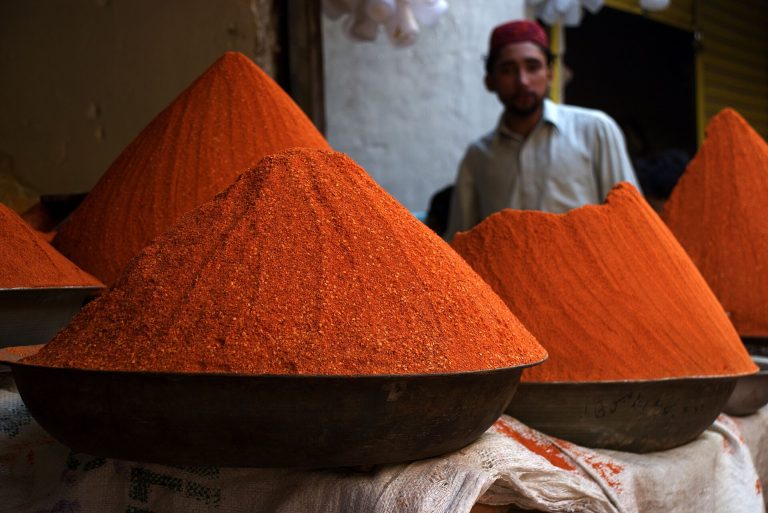 Spices of PakistanPakistani spices explained: key whole and ground spices, garam masala and other blends, Kunri red chillies
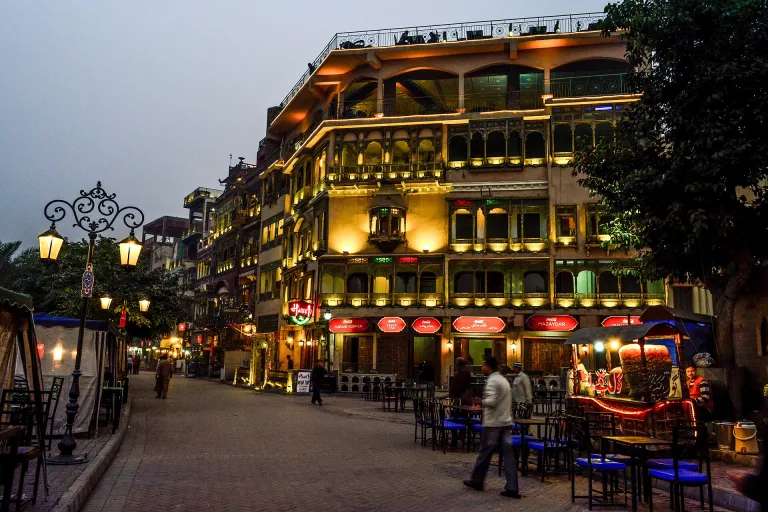 Pakistani Street FoodPakistani street food city by city: Lahore, Karachi, Peshawar, Quetta and Multan's signature dishes
How we know this
- Type Explainer
- Sources 8 (1 official/academic)
- Reviewed October 2026
- Disputed points None
8 sources
- Sohan Halwa a gift of saints' city, Dawn (APP), 16 December 2013
- Exploring the legend(s) of Sohan Halwah, Dawn (Shakeel Ahmad), 12 January 2015
- Multani Sohan Halwa: Sweetmeats of Pakistan, SOCH Outreach Foundation, Google Arts & Culture
- Jalebi: a sweet Pakistani dessert, SOCH Outreach Foundation, Google Arts & Culture
- Food Stories: Zarda, Dawn (Bisma Tirmizi), 5 May 2015
- AKHM Habshi Halva (product listing: ingredients), Pakistan Trade Portal, Trade Development Authority of Pakistan
- Ramazan, Pakistan and Rooh Afza: An ode to laal sharbats, Dawn (Fahad Naveed), 21 June 2016
- Pakistani Iftar tables remain incomplete without 'Fruit Chaat', Associated Press of Pakistan, 11 March 2025
Photo credits (14)
- Sohan Halwa.JPG, Miansari66, Public domain, via Wikimedia Commons
- Gajar Ka Halwa.JPG, Miansari66, Public domain, via Wikimedia Commons
- Halwa Puri, a traditional food made in Walled City of Lahore.jpg, Tahsin Shah, CC BY-SA 4.0, via Wikimedia Commons
- Homemade Rabri.jpg, Ravi Talwar, CC BY-SA 4.0, via Wikimedia Commons
- Kheer Special.JPG, Miansari66, Public domain, via Wikimedia Commons
- Sheer Khurma special.JPG, Miansari66, Public domain, via Wikimedia Commons
- Karachi Falooda.jpg, Miansari66, CC0, via Wikimedia Commons
- Multan - Tomb of Shah Rukn-e-Alam 2014.jpg, Amirshafiquemughal, CC BY-SA 3.0, via Wikimedia Commons
- Gulab Jamun (illustration), DailyLife.pk, Illustrative image
- Jalebi (illustration), DailyLife.pk, Illustrative image
- Zarda (illustration), DailyLife.pk, Illustrative image
- Besan Halwa (illustration), DailyLife.pk, Illustrative image
- Gurr Walay Chawal (illustration), DailyLife.pk, Illustrative image
- Doodh Jalebi (illustration), DailyLife.pk, Illustrative image
