

Cities · Khyber Pakhtunkhwa
Peshawar: The Frontier City of Storytellers
One of South Asia's oldest living cities: capital of Khyber Pakhtunkhwa, home of Gandharan treasures, Mughal mosques, merchant havelis and the legendary chapli kebab.
- Capital of Khyber Pakhtunkhwa
- Ancient Purushapura of Gandhara
- Best season: October to March
Mohallah Sethian, Walled City, Peshawar
Peshawar at a Glance
About Peshawar
Peshawar is the capital of Khyber Pakhtunkhwa and the great city of Pakistan's north-west. It lies at the western edge of the fertile Vale of Peshawar, just west of the Bara River, a tributary of the Kabul River, and close to the eastern mouth of the Khyber Pass. For most of recorded history it has been the meeting point of South Asia and Central Asia: the place where caravans unloaded, armies paused and ideas changed hands.
In antiquity the city was known as Purushapura. The Kushan emperor Kanishka made it his capital in the 1st century CE, and the Shahji-ki-Dheri mounds east of the city cover the remains of what Britannica describes as the largest Buddhist stupa in the subcontinent. The modern name, often explained as 'frontier town', is credited to the Mughal emperor Akbar. Archaeological work at Gor Khuttree in the old city has shown occupation reaching back at least to the 3rd century BCE.
The 2023 Census recorded 1,905,975 people in urban Peshawar (the Municipal Corporation, 1,837,741, plus the Cantonment) and 4,758,762 in Peshawar District, which covers 1,518 km². The city is overwhelmingly Pashtun, with a long-established Hindko-speaking community in the old city, and Urdu is widely understood.
For visitors, Peshawar is a city of contrasts: the dense, aromatic lanes of the walled city with its bazaars and merchant havelis; the green, colonial-era Cantonment; the university quarter; and newer suburbs to the west. It is a place for unhurried exploring, generous hospitality and some of the best meat dishes in Pakistan.
Few cities wear their age as lightly as Peshawar: two thousand years of history, and still the best place in the country to argue over tea.

Top Attractions in Peshawar
Mughal mosques, Sikh-era forts, Gandharan sculpture and the bazaar of storytellers.
 Mahabat Khan MosqueA gleaming white Mughal mosque of 1630, named after the Mughal governor Mahabat Khan, with a wide courtyard, ablution pool and richly painted prayer hall rising above the surrounding bazaar.
 Qissa Khwani BazaarThe 'Street of Storytellers', where caravan traders once swapped tales. Today it is lined with tea houses, dry-fruit sellers and shops selling carpets, caps and chappals.
 Sethi HousePart of a cluster of 19th- and early-20th-century havelis built by the Sethi merchant family, famous for carved wooden doors, painted ceilings, mirror-work and Central Asian-influenced design. One house is open to visitors.
 Gor KhuttreeA hilltop complex that Britannica describes as once a Buddhist monastery and later a Hindu temple; it later served as a Mughal caravanserai and as the residence of the city's Sikh-era governor. Excavations here reveal layers of Peshawar's long past.
 Peshawar MuseumHoused in the colonial-era Victoria Memorial Hall, the museum holds one of the world's great collections of Gandharan Buddhist sculpture: Buddha images, Bodhisattvas, relic caskets and narrative friezes.
 Bala Hisar FortThe massive fort overlooking the city, rebuilt by the Sikhs on the ruins of the Durrani royal residence. It remains in military use, so access is limited; its walls are best admired from outside.
 Islamia CollegePeshawar's best-known historic college, with a red-brick main building combining Mughal and colonial styles. Its image has appeared on Pakistani banknotes.
 Cunningham Clock TowerThe brick clock tower known locally as Ghanta Ghar marks the heart of the old city, near the jewellery lanes of Andar Shehr and the approach to Mohallah Sethian.
Neighbourhoods and Areas
The walled city, the Cantonment and the suburbs that stretch towards the Khyber hills.
 Walled CityOnce enclosed by walls and gates, the old city holds Qissa Khwani, Mahabat Khan Mosque, Gor Khuttree and Mohallah Sethian. Explore on foot with a local guide for the best experience.
 University TownA leafy academic and residential district around the University of Peshawar (founded 1950) and Islamia College, with cafés, bookshops and guesthouses.
Explore Peshawar by Category
 About PeshawarPeshawar is the capital of Khyber Pakhtunkhwa and the…
 Top Attractions in PeshawarMughal mosques, Sikh-era forts, Gandharan sculpture and the bazaar…
 Neighbourhoods and AreasThe walled city, the Cantonment and the suburbs that…
 Food and BazaarsPeshawar's cooking is meat-forward, lightly spiced and built around…
 History of PeshawarGateway, garrison and caravan city for more than two…
 Culture and TraditionsPeshawar's culture is shaped by Pashtunwali, the Pashtun code…
Food and Bazaars
Peshawar's cooking is meat-forward, lightly spiced and built around fire and fresh bread.
 Chapli KebabFlat, crisp-edged minced-meat patties with coriander, pomegranate seeds and chilli, shallow-fried in large pans. Peshawar's most famous export.
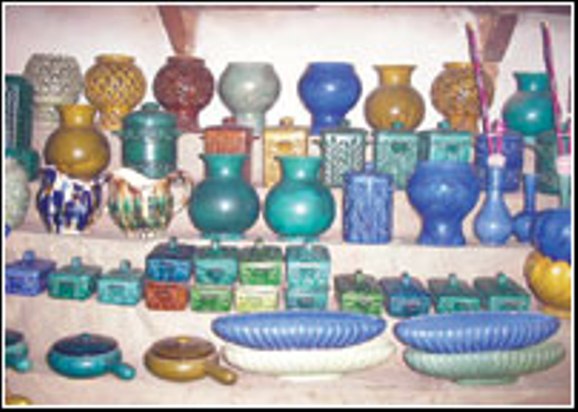 CraftsBritannica lists Peshawar's traditional crafts as chappals, glazed pottery, copperware, embroidery, carpets, turbans and carved woodwork, look for them around Qissa Khwani.
History of Peshawar
Gateway, garrison and caravan city for more than two millennia.
By 3rd century BCE
An ancient settlement
Excavations at Gor Khuttree confirm the city's foundation dates back at least to this period, making Peshawar one of the oldest living cities in South Asia.
2nd century BCE
Greco-Bactrian rule
The Vale of Peshawar was annexed by the Greco-Bactrian king Eucratides.
1st century CE
Kushan capital
Kanishka made Purushapura the capital of the Kushan empire; Buddhism and Gandharan art flourished, and a colossal stupa rose at Shahji-ki-Dheri.
988 CE
Muslim conquest
Muslim forces captured the city. By the 16th century it was held by Afghans nominally dependent on the Mughals.
1630
Mahabat Khan Mosque
The great Mughal mosque was completed in the heart of the city, a sign of Peshawar's importance as a provincial centre.
1834
Sikh authority
Sikh rule was firmly established; Bala Hisar was rebuilt as a Sikh fort.
1849–1947
British period
Peshawar became a frontier garrison and municipality (1867). The Khyber Pass railway from Peshawar opened in 1925.
1947 onward
Part of Pakistan
Peshawar became capital of the province now called Khyber Pakhtunkhwa. The University of Peshawar was founded in 1950 and the BRT opened in 2020.
Culture and Traditions
Peshawar's culture is shaped by Pashtunwali, the Pashtun code that prizes hospitality (melmastia), honour and loyalty. Guests are welcomed with qehwa and food, and a visitor who shows genuine curiosity will often find themselves invited to sit and talk. The old city also has a deep-rooted Hindko-speaking community whose traditions of trade, poetry and cuisine are woven into the bazaars.
The city has long been a centre of Pashto music and poetry. The rabab, a short-necked lute, is the defining instrument, and the verses of poets such as Rahman Baba and Khushal Khan Khattak are widely quoted. Traditional attan dances appear at weddings and celebrations across the province.
Religious life follows the Islamic calendar: Ramadan evenings are lively in the food streets, and the days before Eid see the bazaars at their busiest. Peshawar is also home to small but historic Sikh, Hindu and Christian communities, whose temples, gurdwaras and churches stand in and around the old city. Cricket is followed passionately, and the city's PSL franchise, Peshawar Zalmi, has a devoted following.

Getting Around
A single east–west BRT corridor makes Peshawar easier to navigate than its size suggests.
Airport
Bacha Khan International Airport
Peshawar's airport sits close to the Cantonment, with domestic flights and international services, mainly to the Gulf. Confirm schedules with airlines.
BRT (Zu Peshawar)
Chamkani to Hayatabad
The Bus Rapid Transit was inaugurated in August 2020 on a 27 km corridor from Chamkani to Hayatabad, plus feeder routes. Dawn reported about 60 km of feeder routes at launch.
Rail
Peshawar Cantonment station
Peshawar is a terminus of Pakistan Railways' main line, with trains towards Rawalpindi, Lahore and Karachi. Check Pakistan Railways for current timetables.
Road
M-1 and GT Road
The M-1 motorway links Peshawar with Islamabad and Rawalpindi; the historic Grand Trunk Road runs east through Nowshera and Attock.
Ride-hailing and rickshaws
Easy for short hops
App-based taxis operate in the city, and auto-rickshaws are everywhere. Agree rickshaw fares before setting off.
On foot
The only way to see the old city
The walled city's lanes are too narrow for comfortable driving. Walk, and consider hiring a licensed local guide.
Plan Your Visit
Best Time to Visit
October to March
Autumn and winter days are mild and sunny. Summers are very hot, so plan sightseeing for early mornings and evenings.
Where to Stay
Cantonment, University Town, Hayatabad
The Cantonment is central and close to the museum and airport; University Town and Hayatabad are calmer residential options along the BRT.
Etiquette
Conservative dress
Peshawar is socially conservative. Dress modestly, women may wish to carry a scarf, remove shoes at mosques, and always ask before photographing people, especially women.
Travel Advisories
Check before you go
Check your government's current travel advice and follow local authority guidance. Visiting the Khyber Pass and other border areas may require permission or be restricted for foreigners.
Local Guides
Recommended for the old city
A knowledgeable local guide helps with access to havelis, mosques and workshops, and makes the bazaars easier to read.
Language
Pashto, Hindko, Urdu
Pashto is the main language, Hindko is spoken in the old city, and Urdu is widely understood. A few words of Pashto earn warm smiles.
Read moreDay Trips from Peshawar
Gandharan monasteries, green valleys and the historic road to the Khyber.
 Takht-i-BahiA remarkably complete Buddhist monastic complex on a rocky ridge, with stupa courts, meditation cells and assembly halls.
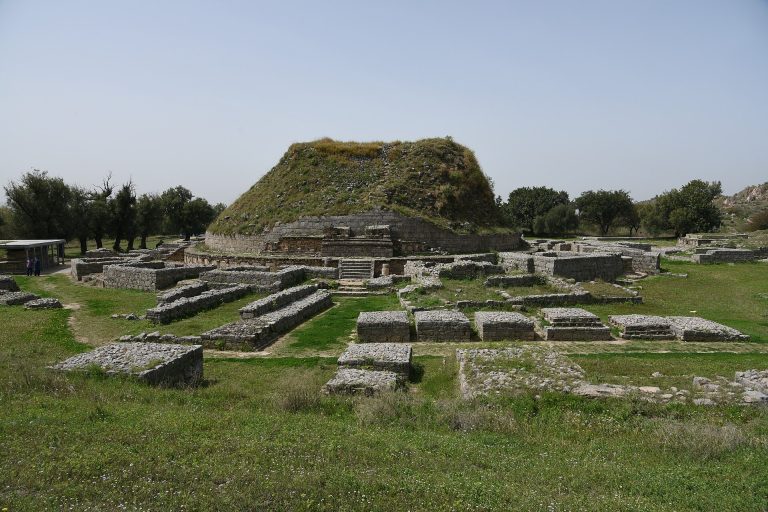 TaxilaAncient city sites, stupas and a superb museum, a natural pairing with Peshawar Museum's Gandharan collection.
 Swat ValleyGreen valleys, rivers and Buddhist sites; better as an overnight trip than a day out.
 Rawalpindi and IslamabadThe twin cities are an easy motorway journey east, combining bazaars, museums and the Margalla Hills.

Peshawar Through Time
Every dated moment our guides record about Peshawar, from its own history and from national events that touched it. Each entry links to its source page.
- c. 6th century BCE–5th century CE
Gandhara
The Peshawar valley and Swat form the heart of Gandhara, later a centre of Buddhist learning and art under the Kushans.
- 1st millennium BCE – 1st millennium CE
Gandhara
Taxila and the Peshawar valley became centres of Buddhist learning and Gandharan art, now recognised by UNESCO at Taxila and Takht-i-Bahi.
- 1st–3rd century CE
The Kushans
Kushan emperors, notably Kanishka, rule from Purushapura (Peshawar); Gandharan Buddhist art reaches its peak at sites such as Takht-i-Bahi.
- 1st–3rd century CE
The Kushan golden age
Kushan emperors, notably Kanishka, rule from Purushapura (Peshawar). Monasteries multiply and Gandharan sculpture reaches its peak.
- 1st–5th century CE
Kushan Gandhara
Ruling from Peshawar, the Kushans preside over a golden age of Buddhist monasteries and Greco-Buddhist art, until Hephthalite invasions in the 5th century.
- 1st–7th century CE
Gandhara
Buddhist monasteries, stupas and cities flourish around Peshawar, Swat and Taxila; Takht-i-Bahi is the best-preserved monastery complex.
- c. 1000 CE
Ghaznavid campaigns
Mahmud of Ghazni defeats the Hindu Shahi rulers near Peshawar, opening the region to the Ghaznavids.
- 17th century
Pashto's golden age
Khushal Khan Khattak and Rahman Baba write poetry that still defines Pashto literature, while Mughal governors build in Peshawar.
- 18th century
Durrani era
Nowshera develops under the Afghan Durrani Empire on the road between Peshawar and the Indus.
- 19th century
A British hill station
Nathia Gali becomes the summer headquarters of the Chief Commissioner of Peshawar division.
- 1818–1839
The Sikh Empire expands
Multan falls in 1818, Kashmir in 1819 and Peshawar comes under direct Sikh rule in 1834. Ranjit Singh dies in Lahore in 1839.
- 1823–1834
Towards the Khyber
Sikh armies defeat Afghan and Pashtun forces at Nowshera (1823); Peshawar is brought under direct Sikh rule in 1834.
- March 1823
Battle of Nowshera
The Sikh army of Ranjit Singh defeats Afghan forces here, opening the Peshawar Valley to Sikh rule.
- 1849
British rule
The Peshawar valley passes to the British after the Anglo-Sikh wars.
- 1849
Annexation of Punjab
After the Second Anglo-Sikh War the Sikh kingdom is annexed; Lahore becomes the capital of the new British province, which includes the Peshawar region.
- 1849–1947
Colonial era
Indo-Saracenic and Gothic Revival courts, museums, colleges and stations in Lahore, Karachi and Peshawar.
- 1849
British annexation
After the fall of the Sikh Empire, Peshawar and its region pass to British India as part of Punjab.
- May 1857 – 1858
The War of 1857 in Punjab, Sindh and the Frontier
The uprising of 1857 against the East India Company reached the lands that are now Pakistan through mutinies and disarmings in Peshawar, Mardan, Jhelum, Sialkot and Karachi, and through rural risings in the Ravi country around Gogera and in the hills near Murree. The Company…
- 22 May 1857
Disarming at Peshawar
Two British infantry regiments with artillery disarm the four Bengal regiments considered most disaffected. Many local chiefs then side with the Company.
- 1913
Islamia College Peshawar
Admissions open on 1 October.
- 1937
A separate district
Mardan, until then part of Peshawar District, becomes a district in its own right.
- December 1945 – August 1946
The 1945–46 Elections and Direct Action Day
In the central and provincial elections of winter 1945–46 the Muslim League won about 87% of the seats reserved for Muslims, a mandate for Pakistan. After the Cabinet Mission plan broke down, the League called a 'Direct Action Day' on 16 August 1946; in Calcutta…
- 3 June 1947
The 3 June Plan
On 3 June 1947 the British government announced that power would be transferred to one or two successor states on a dominion basis well before June 1948, with Punjab and Bengal divided if their legislators chose, and Sindh, Balochistan, the Frontier and Sylhet given their…
- 1969-06-15
Birth of Jansher Khan
Jansher Khan: Peshawar squash great, record eight World Open titles, six British Opens, 97 months at world No. 1, rivalry with Jahangir and Hall of Fame.
- 15 June 1969
Born in Peshawar
Born in Peshawar, Khyber Pakhtunkhwa.
- 7 December 1970
The 1970 General Election
On 7 December 1970 Pakistan held its first general election on adult franchise. Sheikh Mujibur Rahman's Awami League won 160 of the 300 general seats, all but two of East Pakistan's 162, and an overall majority, while Zulfikar Ali Bhutto's Pakistan Peoples Party won 81,…
- 1987–1996
Jansher Khan's eight World Opens
Peshawar's Jansher Khan won his first World Open in 1987 and went on to a record eight, adding six British Open titles.
- Early 2000s
Kohat Tunnel
A Japanese-financed tunnel opens under the Kohat Pass on the Indus Highway, transforming road links between Peshawar and the south.
- 21st century
New research
Pakistani–British teams return to Bala Hisar to study its long sequence and the ancient environment of the Peshawar Valley.
- 2009
National coach
Serves for a year as chief coach of the Pakistan Squash Federation; later coaches young players in Peshawar.
- 16 December 2014
Army Public School Attack, Peshawar
On 16 December 2014 militants of the Tehrik-i-Taliban Pakistan attacked the Army Public School in Peshawar, killing about 147 people, most of them children. The attack united the country in grief and led to the 20-point National Action Plan against terrorism.
- 16 December 2014
The attack
Gunmen attack the Army Public School in Peshawar; about 147 people are killed.
- February 2016
Launch in the UAE
Five franchises, Islamabad United, Karachi Kings, Lahore Qalandars, Peshawar Zalmi and Quetta Gladiators, played the first season, which opened at the Dubai International Cricket Stadium. Islamabad United beat Quetta Gladiators by six wickets in the final on 23 February.
- March 2017
A final in Lahore
The second season's final was staged at Gaddafi Stadium, Lahore, under heavy security. Peshawar Zalmi, captained by Darren Sammy, beat Quetta Gladiators by 58 runs.
- 2018
Multan joins, Karachi hosts
Multan Sultans entered as the sixth team. Eliminators were played in Lahore and the final in Karachi, where Islamabad United won their second title against Peshawar Zalmi.
- 12 October 2018
Judicial commission
On the Supreme Court's order, the Peshawar High Court forms a one-member commission under Justice Mohammad Ibrahim to inquire into the attack.
- 2019
Quetta's turn
Most matches were still in the UAE, but the final stages moved to Karachi, where Quetta Gladiators beat Peshawar Zalmi by eight wickets.
- 2020–2021
Metro rail and BRT
Peshawar's BRT opens on 13 August 2020 and Lahore's Orange Line metro train on 25 October 2020; Karachi's Green Line BRT begins commercial service on 25 December 2021.
- 2021
Split season
Virus cases interrupted the sixth season in Karachi; it resumed in Abu Dhabi, where Multan Sultans beat Peshawar Zalmi by 47 runs to take their first title.
- 2026
Eight teams and an auction
The league expanded to eight teams, with new franchises in Hyderabad and Sialkot, and replaced its player draft with an auction. Peshawar Zalmi beat debutants Hyderabad Kingsmen by five wickets in the final in Lahore on 3 May.
Do you remember Peshawar as it used to be? Share a memory or an old photo, our editors review every story before it appears.
Frequently Asked Questions
What is the population of Peshawar?
The 2023 Census recorded 1,905,975 people in urban Peshawar and 4,758,762 in Peshawar District as a whole. The Peshawar Municipal Corporation alone counted 1,837,741.
Why is Peshawar called the city of storytellers?
Its most famous bazaar, Qissa Khwani, means 'Street of Storytellers', a reminder of the caravan traders who once gathered here to share news and tales.
What is Peshawar famous for?
Its ancient history as Purushapura, Gandharan Buddhist art in the Peshawar Museum, the Mughal-era Mahabat Khan Mosque, the Sethi havelis, Pashtun hospitality and dishes such as chapli kebab and Namak Mandi karahi.
Is there public transport in Peshawar?
Yes. The BRT (Zu Peshawar) runs along a 27 km corridor between Chamkani and Hayatabad, with feeder routes. Rickshaws and app-based taxis are also widely used.
Can visitors go to the Khyber Pass from Peshawar?
Access depends on the current security situation and permit rules, which change. Check your government's travel advice and local authority guidance before planning a visit.
When is the best time to visit Peshawar?
October to March, when the weather is mild. Summer temperatures are very high.
Keep Exploring
Related places and stories on DailyLife.pk
 Swat ValleyPlan a trip to Swat Valley: Kalam, Mahodand Lake, Malam Jabba
 TaxilaVisit Taxila: Dharmarajika stupa, Jaulian monastery, Sirkap and Taxila Museum.
 ChitralPlan a Chitral trip: Chitral Fort, Shahi Mosque, Tirich Mir views, Chitral Gol, Garam Chashma
 RawalpindiRawalpindi guide: Raja Bazaar, Saddar, the Army Museum, history from the Gakhars to 1959, food
 IslamabadIslamabad travel guide: Faisal Mosque, Pakistan Monument, Margalla Hills trails, Saidpur, markets, sectors, Metrobus
 MingoraMingora city guide: Saidu Sharif, the Swat Museum, Butkara I, Fizagat and the White Palace, bazaars
How we know this
- Type Place guide
- Sources 6 (5 official/academic)
- Reviewed October 2026
- Disputed points None
6 sources
- Population Census 2023 – Table 1: Khyber Pakhtunkhwa districts, Pakistan Bureau of Statistics
- Population Census 2023 – Table 2: Urban localities by population size, Pakistan Bureau of Statistics
- Peshawar, Encyclopaedia Britannica
- Khyber Pass, Encyclopaedia Britannica
- PM inaugurates much-awaited Peshawar BRT project, Dawn
- UNESCO World Heritage List: Taxila, UNESCO World Heritage Centre
Photo credits (20)
- Sethial street - Sethi House Complex, Peshawar.jpg, Teseum, CC BY-SA 4.0, via Wikimedia Commons
- Oldpeshawarcity.jpg, Omer Wazir, CC BY-SA 2.0, via Wikimedia Commons
- Masjid Muhabat Khan.jpg, Hafeezburki, CC BY-SA 4.0, via Wikimedia Commons
- Qissa Khwani Bazaar, Peshawar, Pakistan - panoramio.jpg, franek2, CC BY-SA 3.0, via Wikimedia Commons
- Sethi House Peshawar.jpg, Asmar Hussain110, CC BY-SA 4.0, via Wikimedia Commons
- Main Entrance of the Gorkhatree Historical Place.jpg, Ali Nawaz Khattak, CC BY-SA 4.0, via Wikimedia Commons
- Peshawar Museum.JPG, Khalid Mahmood, CC BY-SA 3.0, via Wikimedia Commons
- Peshawar Museum Hall.jpg, Batool Nasir, CC BY-SA 2.0, via Wikimedia Commons
- Bala Hisar-Peshawar.JPG, Ammad Malik-101, CC BY-SA 3.0, via Wikimedia Commons
- Main Building side view, Islamia College Peshawar, Pakistan.jpg, Jawad Ali, CC BY-SA 3.0, via Wikimedia Commons
- Cunningham clock tower Peshawar KPK.jpg, Wisalahmad523, CC BY-SA 4.0, via Wikimedia Commons
- Qissa Khwani Bazaar, Peshawar, Pakistan - panoramio - franek2 (2).jpg, franek2, CC BY-SA 3.0, via Wikimedia Commons
- University of Peshawar.jpg, Askhokhar66, CC BY-SA 3.0, via Wikimedia Commons
- Chapli Kebab.jpg, Murcotipton, CC BY-SA 3.0, via Wikimedia Commons
- Glazed Pottery Art of Peshawar.jpg, Pashttonkhwa, CC0, via Wikimedia Commons
- Takht-i-Bahi Buddhist Monastery.jpg, Muzamil Hassain Toori, CC BY-SA 4.0, via Wikimedia Commons
- Dharmarajika stupa & Monastery Taxila.jpg, Mhtoori, CC BY-SA 4.0, via Wikimedia Commons
- Swat River in Kalam town, Swat.jpg, Shahzaib Damn Cruze, CC BY-SA 4.0, via Wikimedia Commons
- Rawalpindi from above.jpg, Omer Wazir from Tucson, AZ, USA, CC BY-SA 2.0, via Wikimedia Commons
- Mohabbat Khan Mosque.jpg, Abdul Samad khan sherwani, CC BY-SA 4.0, via Wikimedia Commons
