Plain Paratha
سادہ پراٹھا
Heavy tawa / skillet
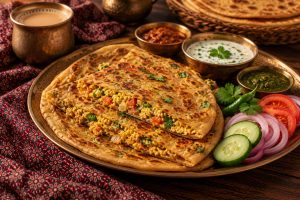
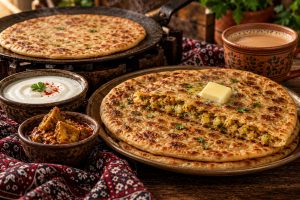
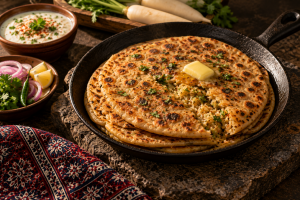
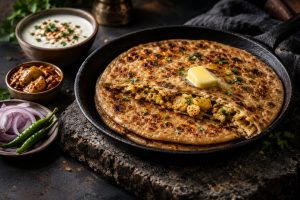
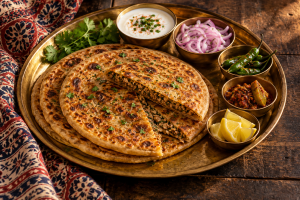
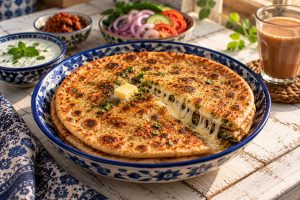
An everyday Pakistani tawa bread: a tender, cooked-through centre with modest golden flaky patches. Folded plain parathas suit eggs, chai, achar and homemade curries. Households use different fold shapes and amounts of ghee; this is one measured everyday version.

Total includes 20 min of passive time described in the preparation and method. One tablespoon = 15 ml; one teaspoon = 5 ml.
About Plain Paratha
An everyday Pakistani tawa bread: a tender, cooked-through centre with modest golden flaky patches. Folded plain parathas suit eggs, chai, achar and homemade curries. Households use different fold shapes and amounts of ghee; this is one measured everyday version.
Personally cooked and tested by Zohair Fakhar for DailyLife.pk. Cooking times can vary with your stove, cookware and batch size; follow the texture and doneness cues in the method.
Make it work for your kitchen
Also known as Sada Paratha, Saada Paratha, سادہ پراتھا, Simple Paratha.
Original quantities serve 4. Cooking times, pan size and frying-oil depth do not scale, cook in extra batches instead.
Before you start
Before you start
Set out portions Weigh the flour and ghee, keep water nearby and clear the rolling board. Divide the offered ghee into four equal portions; fat is not guaranteed to remain entirely in the bread. 3 min No heat Prepare a medium-hot tawa Have the skillet and spatula ready before rolling so thin disks do not dry out. 2 min No heat
Set up the equipment
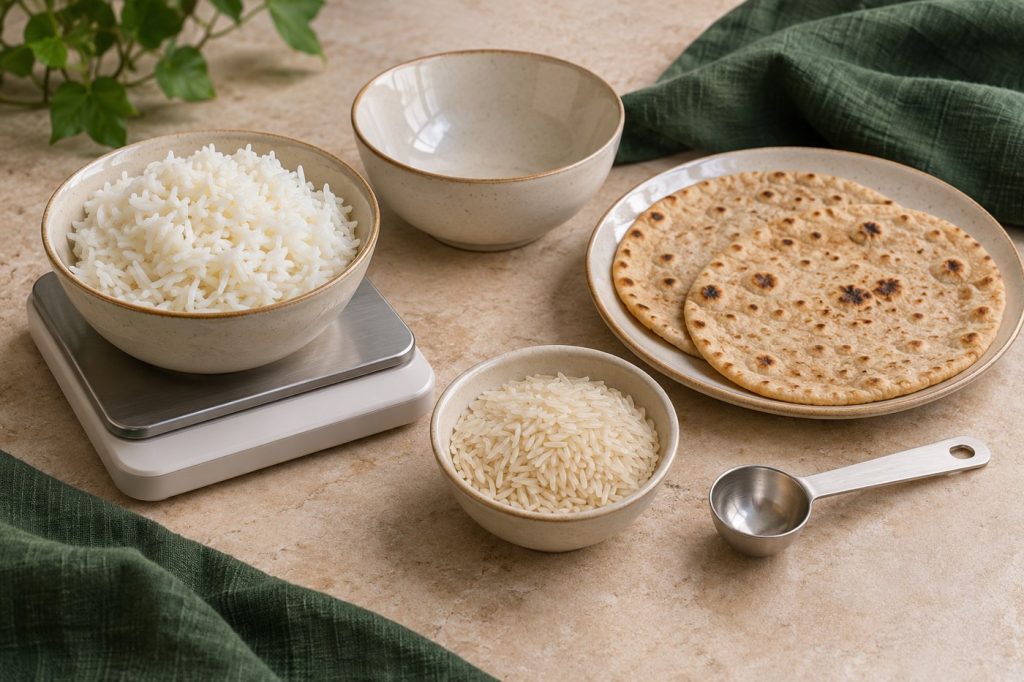
Have the following tools ready before starting: Tawa or heavy skillet; Mixing bowl; Rolling pin and rolling board; Digital kitchen scale; Spatula; Cover or clean kitchen cloth.
Clean workspaceMeasure the ingredients
Measure the ingredient quantities for your selected servings before applying heat. Keep separately listed groups, such as dough, filling, sauce or garnish, in separate containers; keep any optional additions separate.
Use the ingredient list aboveCheck allergens and substitutions
Check ingredient labels and any substitutions against these notes: Contains wheat/gluten; contains milk if ghee is used (verify labels and individual tolerance).
Before cooking
Step-by-step cooking method
1 Make a soft, workable dough
Mix 260 g atta and ½ tsp salt with 2 tsp oil. Add 155 ml water first, then up to 170 ml total until a soft, non-sticky dough forms. Knead 5–7 minutes until smooth.
2 Rest under cover
Cover the dough and leave for 20 minutes. This rest relaxes the dough; use it to prepare the tawa and accompaniments.
3 Divide and start the folds
Divide into four equal balls. Roll one to roughly 15 cm with a little of the 20 g rolling flour. Brush some of its 8 g ghee allocation onto the sheet, fold into a semicircle, brush very lightly, then fold into a triangle. Keep other balls covered.
4 Roll the folded triangle
Dust sparingly and roll to about 16–18 cm at a moderate thickness without forcing the corners. Repeat sequentially as cooking proceeds; reserve ghee for the skillet.
5 Cook the first side
Warm the tawa over medium heat. Put on one paratha and cook uncovered 45–70 seconds until small dry bubbles appear and underside spots form.
6 Turn, grease and finish
Flip; spread the reserved ghee for this bread lightly over the surface and edges.
7 Turn, grease and finish (continued)
Cook roughly 60–90 seconds; turn again if needed, pressing thick points gently until no raw dough remains and both sides show golden-brown marks. Repeat for four, rolling the next while each cooks when possible.
8 Serve while warm
Place the parathas in a clean cloth-lined container just long enough to finish cooking; serve promptly for better crispness.
Chef’s tips
- If the dough shrinks, allow another 5 minutes of rest rather than adding a large amount of flour.
- A little oil between the triangle folds separates layers; more oil on the hot tawa mainly changes browning.
- Roll one paratha while its predecessor cooks to reduce elapsed time.
Common mistakes & quick fixes
- Tough or shrinking dough
- Rest longer and avoid excess dusting flour.
- Burnt spots with raw interior
- Reduce to medium-low and cook a little longer; do not use a smoking tawa.
- No visible layers
- Brush the folds lightly and avoid flattening aggressively.
Variations & serving ideas
Variation: Round paratha Keep the dough round instead of triangle folding for a less-layered result.
Variation: Oil instead of ghee Use the same offered weight of neutral oil; flavor changes and dairy allergen can be avoided with suitable handling.
Variation: Serve Plain yoghurt, achar, scrambled egg or chai; these are not included in nutrition.
Perfect result check
| Check | Inside Fully cooked, flexible and not sticky or floury. |
|---|---|
| Check | Surface Scattered golden spots, no widespread black scorching. |
| Check | Shape Folded edges hold without a doughy ridge. |
Storage & reheating
| Best texture | Best quality Eat fresh. Folded bread loses crispness as it cools; allow steam to escape if crispness is preferred. | |
|---|---|---|
| Cooling and refrigeration | Refrigeration safety For cooked leftovers, cool and refrigerate in a covered container within 2 hours (1 hour above 32°C). Store at 4°C or lower. | |
| Fridge | 3–4 days | Refrigerator duration USDA general cooked-leftovers guidance: 3–4 days maximum if handled safely; bread-specific texture deteriorates sooner. |
| Freezer | Freezer Freeze separated in airtight wrapping promptly. No recipe-specific quality period verified; label with freezing date. | |
| Reheating | Reheating Use a moderate tawa until thoroughly hot; USDA conservative reheating guidance for cooked leftovers is 74°C (165°F) internally. Thick folded breads need extra care to heat the middle. |
Know when to change the heat
| Stage | Heat | What to look for |
|---|---|---|
| Tawa readiness | Medium heat | The tawa should be hot without smoking. The first side should develop dry patches and small bubbles before turning. |
| Cooked paratha | Medium; lower if browning too fast | Look for golden spots and fully set folded seams, with no sticky or raw dough inside. Adjust heat to let thick edges cook without blackening the surface. |
Helpful answers before you cook
Can I make this without ghee?
Yes. Substitute a measured quantity of vegetable oil; the flavor and crispness differ.
Why does it turn hard?
A tight dough, too much dusting flour or excessively long cooking can dry it out.
Why are the folded edges still doughy?
Uneven rolling can leave thick ridges at the corners. Roll the folded bread evenly and press thick areas gently while cooking. If the outside darkens before the seams set, lower the heat and continue cooking rather than relying on surface colour alone.