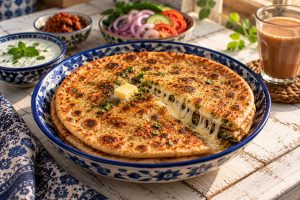
Lachha Paratha
لچھا پراٹھا
Heavy tawa / skillet
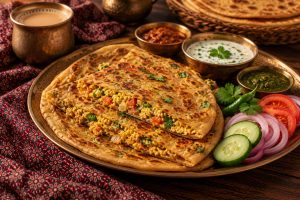
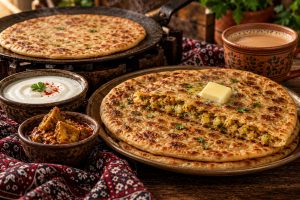
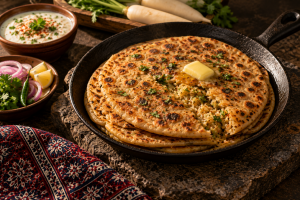
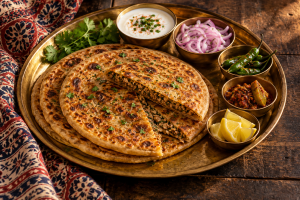
A Pakistani-style layered tawa paratha made by pleating a thin, ghee-brushed sheet and coiling it before a gentle final roll. Its characteristic rings can separate into crisp edges and soft inner layers. Whole-wheat is used here; flour blends and richer restaurant preparations vary.

Total includes 30 min of passive time described in the preparation and method. One tablespoon = 15 ml; one teaspoon = 5 ml.
About Lachha Paratha
A Pakistani-style layered tawa paratha made by pleating a thin, ghee-brushed sheet and coiling it before a gentle final roll. Its characteristic rings can separate into crisp edges and soft inner layers. Whole-wheat is used here; flour blends and richer restaurant preparations vary.
Personally cooked and tested by Zohair Fakhar for DailyLife.pk. Cooking times can vary with your stove, cookware and batch size; follow the texture and doneness cues in the method.
Make it work for your kitchen
Also known as Laccha Paratha, Lacha Paratha, Layered Lachha Paratha, لچھا پراتھا.
Original quantities serve 4. Cooking times, pan size and frying-oil depth do not scale, cook in extra batches instead.
Before you start
Before you start
Organise layering ingredients Melt ghee only until fluid, not hot. Set aside the 48 g layering portion separately from 20 g for the skillet. 3 min No heat Allocate workspace Keep the rolling surface lightly floured; arrange a plate for four finished coils under a cloth. 2 min No heat
Set up the equipment
Have the following tools ready before starting: Tawa or heavy skillet; Mixing bowl; Rolling pin and rolling board; Digital kitchen scale; Spatula; Cover or clean kitchen cloth.
Clean workspaceMeasure the ingredients
Measure the ingredient quantities for your selected servings before applying heat. Keep separately listed groups, such as dough, filling, sauce or garnish, in separate containers; keep any optional additions separate.
Use the ingredient list aboveCheck allergens and substitutions
Check ingredient labels and any substitutions against these notes: Contains wheat/gluten; contains milk if ghee is used (verify labels and individual tolerance).
Before cooking
Step-by-step cooking method
1 Knead a soft dough
Combine 280 g atta, ¾ tsp salt and 2 tsp oil. Add 165 ml water, gradually up to 180 ml as needed; knead about 7–8 minutes until pliable.
2 Rest and divide
Cover for 25–30 minutes. Divide into four balls; keep them covered. Use part of the rest period to ready ghee and tawa.
3 Roll thin and layer
Roll the first ball into a thin approximately 25 cm circle/oval using only a little of the 28 g dusting flour. Spread 12 g ghee for layering thinly and sprinkle just a little dry flour.
4 Pleat, coil and relax
Accordion-fold the sheet into a long strip approximately 2 cm wide. Coil gently into a spiral, tuck the tail underneath. Repeat for all four; let the coils relax under cover about 8–10 minutes.
5 Roll without flattening the coil
Roll one coil carefully to about 16–18 cm, keeping visible spiral lines. Do not press hard enough to fuse the layers; roll the remainder while previous breads cook.
6 Cook until spotted
Preheat a heavy tawa on medium. Cook the first side uncovered approximately 60–90 seconds until the underside sets; flip and add some of the allocated 5 g tawa ghee.
7 Cook until spotted (continued)
Turn another 1–2 times over a further 2–3 minutes until well browned and cooked through, pressing thicker areas gently. Each needs its own skillet time.
8 Open layers and serve
When cool enough to handle, very gently pat or flex the edges to separate some layers, avoiding force that tears the bread. Serve immediately.
Chef’s tips
- Ghee must be spread to the very edge of the sheet for more even rings.
- If the coil resists rolling, cover for another five minutes.
- Use the medium tawa setting; very high heat browns the outside before the coil centre cooks.
Common mistakes & quick fixes
- Layers fused
- Thin layering ghee and little dry flour help; do not over-compress after coiling.
- Uncooked centre
- Roll a touch thinner and extend medium-heat skillet time.
- Dense or rubbery bread
- Dough may be too stiff or under-rested; add water cautiously and allow the full rest.
Variations & serving ideas
Variation: Half maida Replace up to half the atta by weight with maida for a different, potentially lighter bite.
Variation: Herbed layer A little finely chopped coriander can be sprinkled into the ghee as a variation.
Variation: Serving Nihari, omelette, yoghurt or chai (excluded from nutrition).
Perfect result check
| Check | Layers Distinct spiral lines and some separable edges. |
|---|---|
| Check | Texture Cooked-through flexible centre with small crisp flaky ridges. |
| Check | Color Golden spots and no raw folded seams. |
Storage & reheating
| Best quality | Best quality Eat fresh. Folded bread loses crispness as it cools; allow steam to escape if crispness is preferred. | |
|---|---|---|
| Cooling | Refrigeration safety For cooked leftovers, cool and refrigerate in a covered container within 2 hours (1 hour above 32°C). Store at 4°C or lower. | |
| Fridge | 3–4 days | Refrigerator duration USDA general cooked-leftovers guidance: 3–4 days maximum if handled safely; bread-specific texture deteriorates sooner. |
| Freezer | Freeze cooled breads promptly in airtight wrapping with separators between them. Label with the freezing date; thaw in the refrigerator and reheat thoroughly. The layers may be less crisp after storage. | |
| Reheating | Reheating Use a moderate tawa until thoroughly hot; USDA conservative reheating guidance for cooked leftovers is 74°C (165°F) internally. Thick folded breads need extra care to heat the middle. |
Know when to change the heat
| Stage | Heat | What to look for |
|---|---|---|
| Tawa readiness | Medium or medium-low | The surface is hot but not smoking. Lower the heat if the first side colours before the dough begins to set. |
| Cooked paratha | Medium, adjusting as needed | Golden spots form while the centre stays flexible and the folded seams cook through; turn as needed for even heating. |
Helpful answers before you cook
Why is it called lachha?
The name refers to the layered, ringed structure formed by a pleat-and-coil technique.
Is this the same as Warqi Paratha?
No. This version relies on pleats and a spiral coil; Warqi uses repeated flat folded layers.
Why are my layers sticking together?
Spread the layering ghee thinly, use only a light dusting of the separating flour and form the pleats without compressing them. Let the coils rest under cover, then roll gently so the spiral remains visible. Heavy pressure can fuse the layers; cook the thicker seams through before gently flexing the edges.