
City guide
Charsadda: Ancient Pushkalavati
A river-plain town north-east of Peshawar where the mound of Bala Hisar hides the 'Lotus City' of Pushkalavati, an early capital of Gandhara, and the home of Bacha Khan's non-violent movement.
- Khyber Pakhtunkhwa (Peshawar Division)
- Swat, Jindi and Kabul rivers
- Altitude about 276 m
- Best season: October–March
Charsadda, Khyber Pakhtunkhwa
Charsadda at a Glance
About Charsadda
Charsadda lies on the flat, well-watered plain of the Peshawar Valley, about 29 km from Peshawar and 276 metres above sea level. Three rivers, the Swat, the Jindi and the Kabul, run through the district and feed its canals, making it one of the most intensively farmed corners of Khyber Pakhtunkhwa. The name is usually explained as "four roads", from char (four) and sadda (road). The town has grown together with neighbouring Prang.
The 2023 Census counted 120,170 people in Charsadda city and 1,835,504 in Charsadda District, which has three tehsils: Charsadda, Tangi and Shabqadar. Almost everyone speaks Pashto as a first language.
Charsadda's fame is twofold. Archaeologically, it is the site of Pushkalavati, the "Lotus City", one of the earliest capitals of Gandhara. The great mound of Bala Hisar on the edge of town holds a 24-metre-deep sequence of occupation from the middle of the second millennium BCE to the later first millennium CE, explored by Sir John Marshall in 1902, Sir Mortimer Wheeler in 1958 and joint Pakistani–British teams in recent decades.
Politically, Charsadda is the home of Abdul Ghaffar Khan, known as Bacha Khan, whose village of Utmanzai was the heart of the Khudai Khidmatgar ("Servants of God") movement, a non-violent Pashtun movement that opposed British rule. Bacha Khan University in the town bears his name. Today Charsadda is a busy farming and market town, known across the province for its jaggery sweets.
Under Charsadda's fields lies one of the deepest archaeological records in the north-west, a city that was old when Alexander came.
A Short History of Charsadda
Mid-2nd millennium BCE
First settlement
People settle on the site of the Bala Hisar mound; occupation continues for some two thousand years.
6th century BCE – 2nd century CE
Pushkalavati
The Lotus City serves as one of the early capitals of Gandhara under a succession of rulers.
327 BCE
Alexander's campaign
Alexander's forces take Peukelaotis, the Greek name for Pushkalavati, on their march towards the Indus.
1902 and 1958
Excavations
Sir John Marshall and later Sir Mortimer Wheeler excavate at Bala Hisar; Wheeler suggests a Persian-era foundation.
1929 onwards
Khudai Khidmatgar
Bacha Khan's non-violent movement, based at Utmanzai, mobilises Pashtuns against British rule.
12 August 1948
Babara
Police open fire on a Khudai Khidmatgar rally at Babara near Charsadda; the number killed remains disputed, with some accounts putting it at around 600.
21st century
New research
Pakistani–British teams return to Bala Hisar to study its long sequence and the ancient environment of the Peshawar Valley.
Getting There and Around
By road
From Peshawar or Mardan
Charsadda is a short drive from Peshawar across the plain, and roads link it with Mardan, Nowshera and the motorway network.
By air
Via Peshawar
Bacha Khan International Airport in Peshawar is the nearest airport.
By wagon
Frequent minibuses
Minibuses and wagons run regularly between Charsadda, Peshawar and Mardan.
Around town
Rickshaws
Rickshaws and Qingqis serve the town, Prang, Utmanzai and Rajjar.
Plan Your Visit
Best time to visit
October to March
Winter is mild and the season for jaggery sweets. Summers are hot and humid, and the monsoon can bring river floods.
Where to stay
Peshawar
Charsadda is best visited as a half-day trip from Peshawar, which has a wide choice of hotels.
Etiquette
Conservative society
Charsadda is a traditional Pashtun town; dress modestly, ask before photographing people and never photograph women without permission.
Advisories
Check before you go
The district has seen militant attacks in the past. Check current travel advisories and local authority guidance, and heed flood warnings in July and August.


Frequently Asked Questions
What was Charsadda called in ancient times?
Pushkalavati, the 'Lotus City', one of the early capitals of Gandhara. The Greeks called it Peukelaotis.
What is the population of Charsadda?
The 2023 Census counted 120,170 people in Charsadda city and 1,835,504 in Charsadda District (Pakistan Bureau of Statistics).
What is Charsadda famous for?
The Bala Hisar mound of ancient Pushkalavati, Bacha Khan and the Khudai Khidmatgar movement, and Rajjar's jaggery sweets.
How far is Charsadda from Peshawar?
About 29 km, across the plain of the Peshawar Valley.
Keep Exploring
Related places and stories on DailyLife.pk
 TaxilaVisit Taxila: Dharmarajika stupa, Jaulian monastery, Sirkap and Taxila Museum.
 PeshawarPeshawar city guide: Qissa Khwani Bazaar, Mahabat Khan Mosque, Sethi House, Peshawar Museum, Pashtun food
 MardanMardan city guide: Takht-i-Bahi, Shahbazgarhi's Ashoka edicts, the Guides Memorial, local food
 NowsheraNowshera city guide: the Kabul River, Akora Khattak and Khushal Khan Khattak's tomb, RisalpurGandharaGandhara in Pakistan: Taxila, Takht-i-Bahi, the Kushans, Greco-Buddhist art in schist and stucco, key museum pieces
 The Pakistan MovementThe Pakistan Movement explained: Sir Syed and Aligarh, the Muslim League (1906), Iqbal's 1930 address
How we know this
- Type Place guide
- Sources 7 (2 official/academic)
- Reviewed October 2026
- Disputed points None
7 sources
- Pakistan: Khyber Pakhtunkhwa – cities, towns and districts (Census 2017 and 2023), City Population (Thomas Brinkhoff), citing Pakistan Bureau of Statistics
- Census 2023 – Table 2: Population of urban localities, Khyber Pakhtunkhwa, Pakistan Bureau of Statistics
- Bala Hisar, Charsadda – research aims (PAK-UK Pushkalavati project), University of Cambridge, Department of Archaeology
- The Babara massacre, then and now, The News on Sunday
- Winter in KP tastes sweeter with DI Khan's Sohan Halwa, Charsadda's Rajar methai, Associated Press of Pakistan
- Charsadda, Wikipedia (used to locate primary sources)
- Charsadda District, Pakistan, Wikipedia (used to locate primary sources)
Photo credits (1)
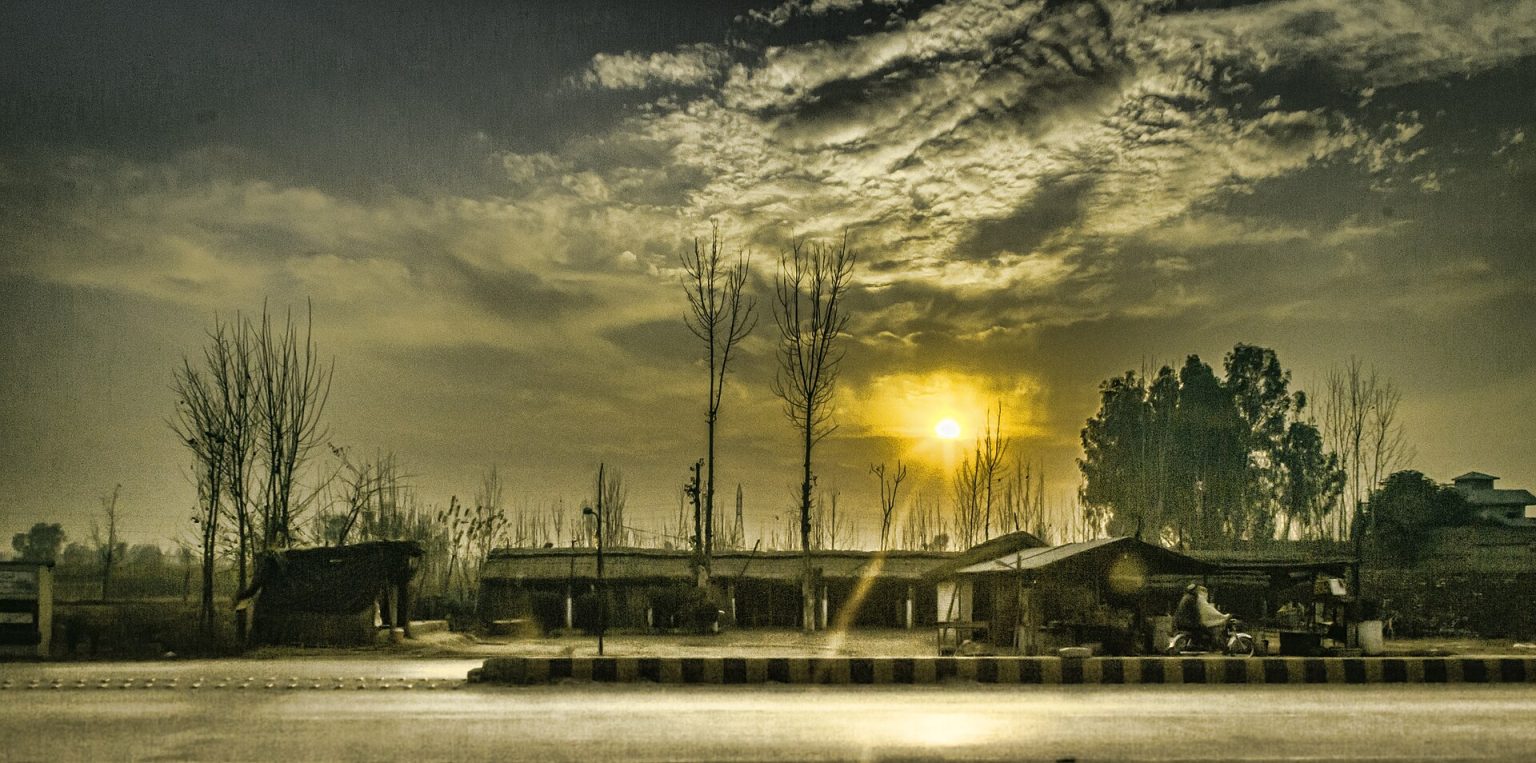
- Charsadda sunset Pakistan MG 6982-Edit.jpg, Rakonline, CC BY-SA 3.0, via Wikimedia Commons
