
City guide
Islamabad: The Green Capital
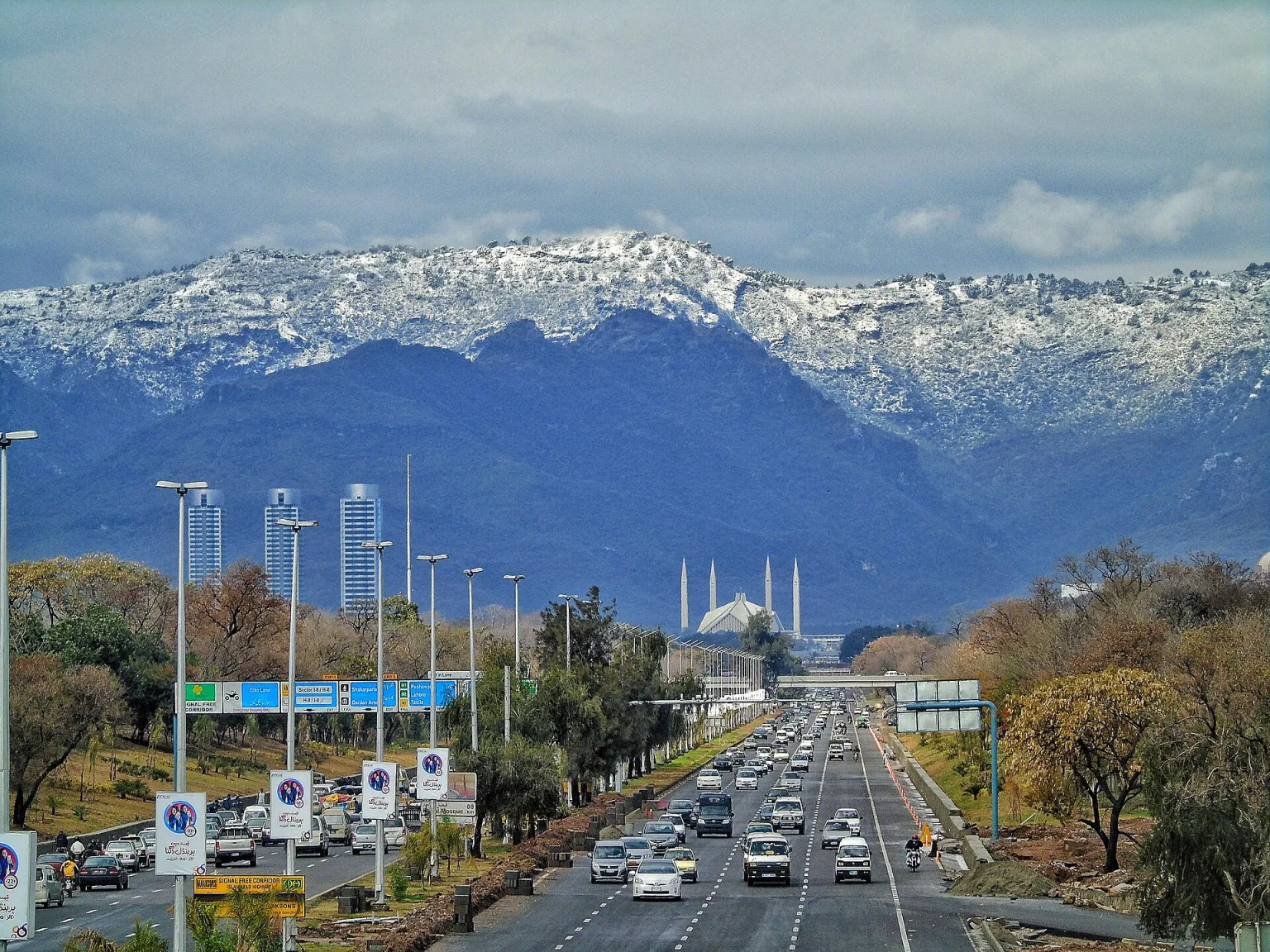
A planned capital set against the Margalla Hills: wide avenues, leafy sectors, hiking trails from the city's edge and the soaring Faisal Mosque.
- Islamabad Capital Territory
- At the foot of the Margalla Hills
- Best seasons: March–April, October–November
- About 450–600 m above sea level
Faisal Mosque, Islamabad
Islamabad at a Glance
About Islamabad
Islamabad is Pakistan's capital and its most deliberately planned city. When Karachi was judged unsuitable as a long-term seat of government, a commission chose a site on the Potohar Plateau north-east of Rawalpindi in 1959. A master plan by the Greek planner Konstantinos Doxiadis followed in 1960, building began in 1961, and Islamabad was formally established as the capital on 14 August 1967.
The plan is visible everywhere. The city is laid out in a grid of lettered and numbered sectors, E, F, G, H and I, from E-7 and F-6 in the north to the newer sectors in the west, each with its own markaz (commercial centre), schools, parks and green belts. Along the northern edge, the Margalla Hills rise to between 900 and 1,500 metres and form part of a national park established in 1980, giving the city its famously green backdrop.
The 2023 Census counted 2,363,863 people in the Islamabad Capital Territory, which covers 906 km² and includes rural areas and villages beyond the planned city; 1,108,872 people live in urban Islamabad. Together with neighbouring Rawalpindi, the older garrison and market city, it forms one of Pakistan's largest metropolitan areas.
Islamabad is calmer, cleaner and more spread out than other Pakistani cities. Visitors come for the Faisal Mosque and the national monuments, for the hiking trails and viewpoints in the hills, and as a gateway to Taxila, Murree and the mountains of the north.
Few capitals let you leave a government office and reach a forest trail in a quarter of an hour.
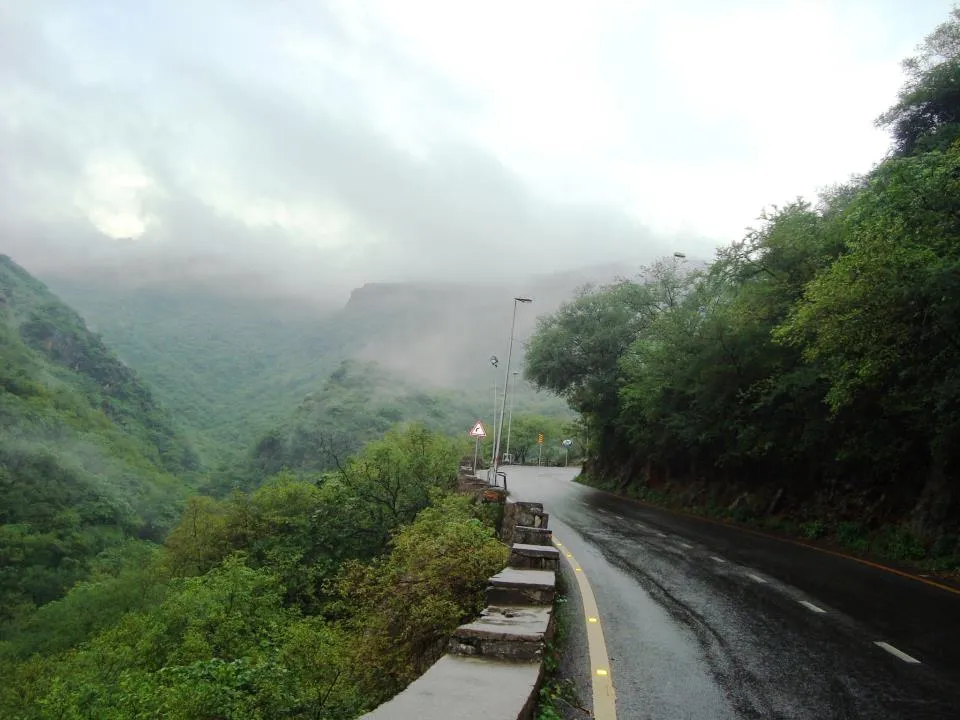
Which guide do you need? This page covers Islamabad as a city. For trails and viewpoints in the hills, see Margalla Hills National Park.
Top Attractions in Islamabad
Landmark architecture, national museums and green spaces at the edge of the hills.
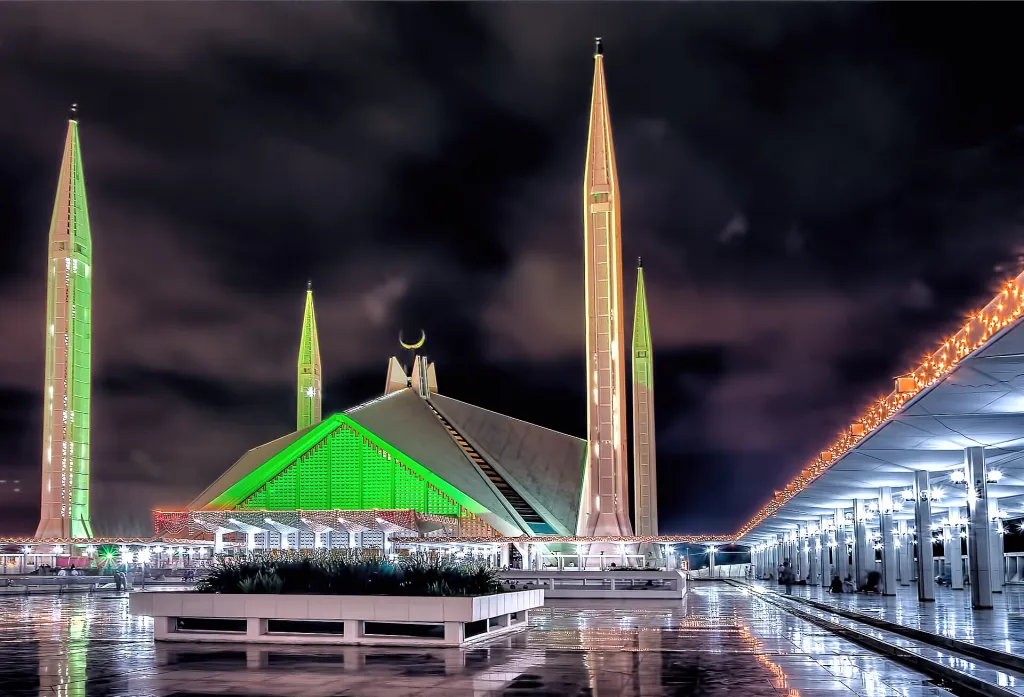
 Faisal MosqueCompleted in 1986 to a design by the Turkish architect Vedat Dalokay, the tent-like mosque with four slender minarets sits at the foot of the hills at the end of Faisal Avenue. It can hold up to 74,000 worshippers.
 Pakistan MonumentOpened in 2007 on Shakarparian hill, the monument's four large petals and three smaller ones symbolise the provinces and territories; inside the petals are murals of national landmarks. A museum next door tells the story of the Pakistan Movement.
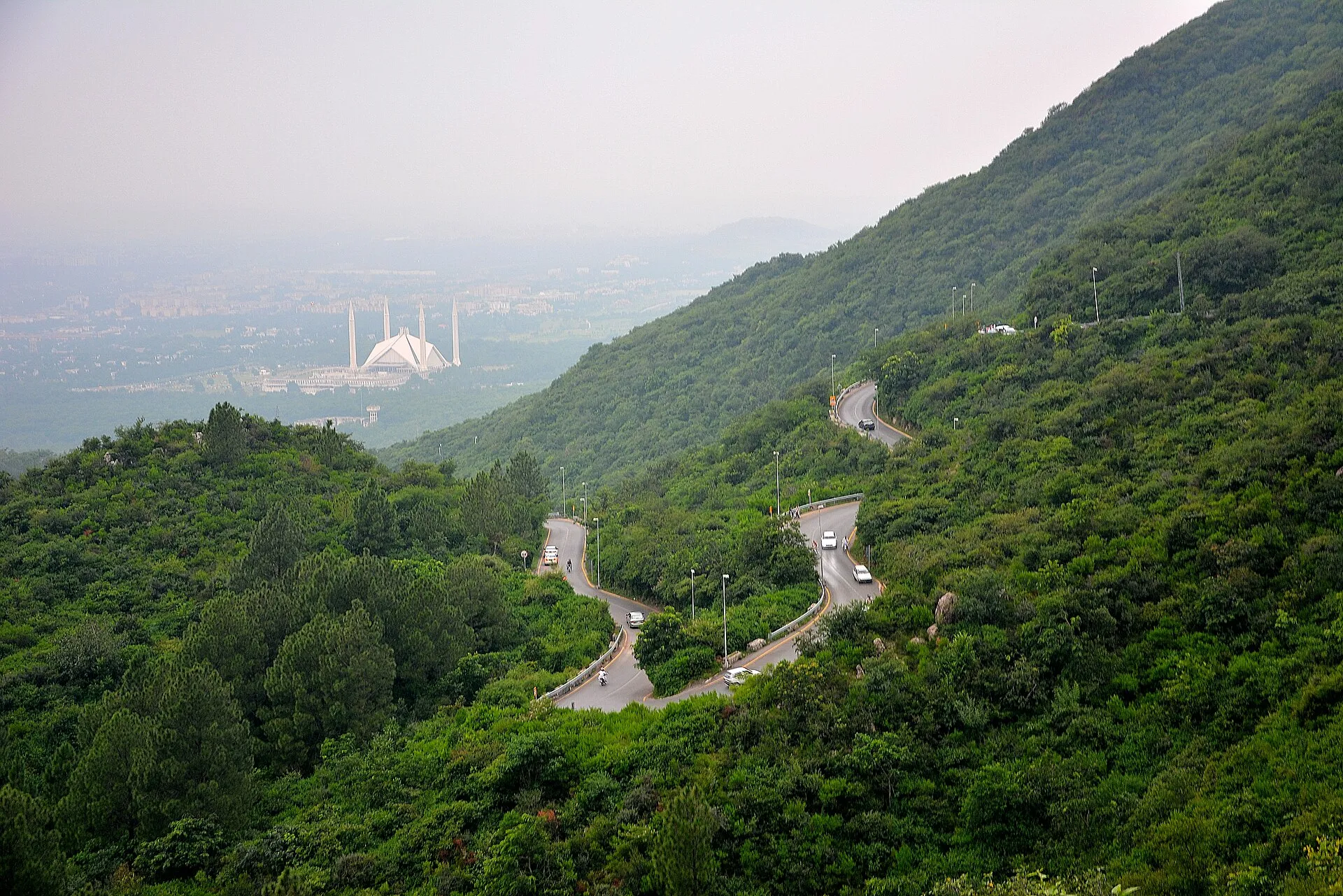
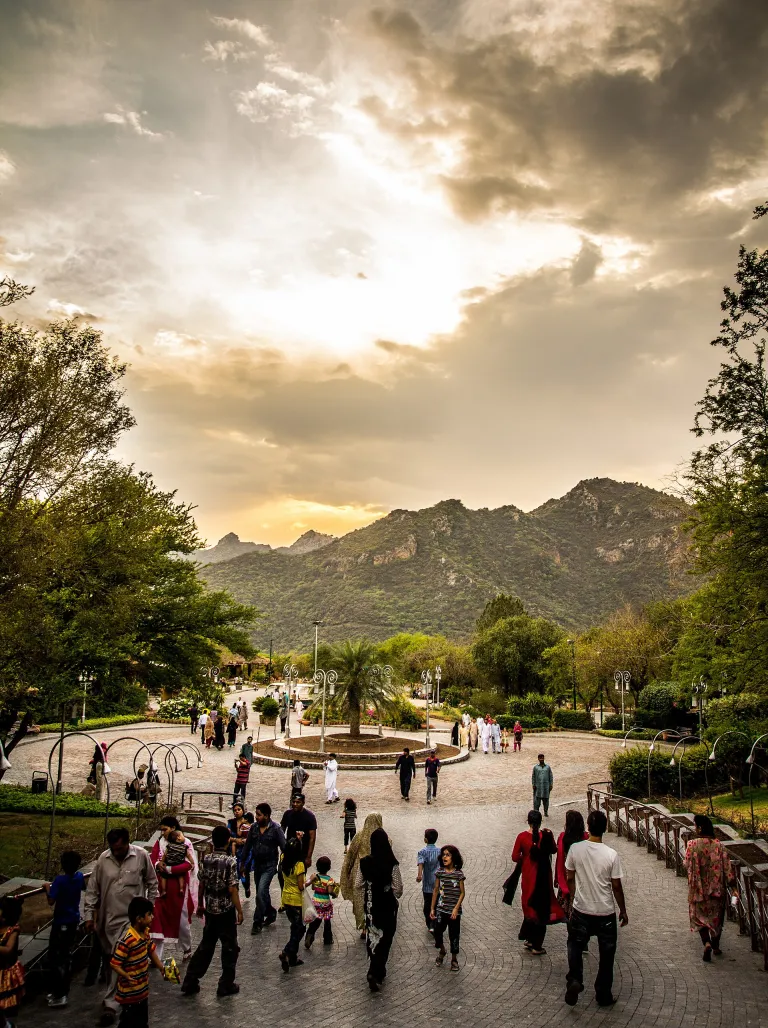 Daman-e-KohA terraced viewpoint and garden in the Margalla Hills overlooking the city grid, Faisal Mosque and Rawal Lake. Pir Sohawa, higher up the hill road, offers wider views.
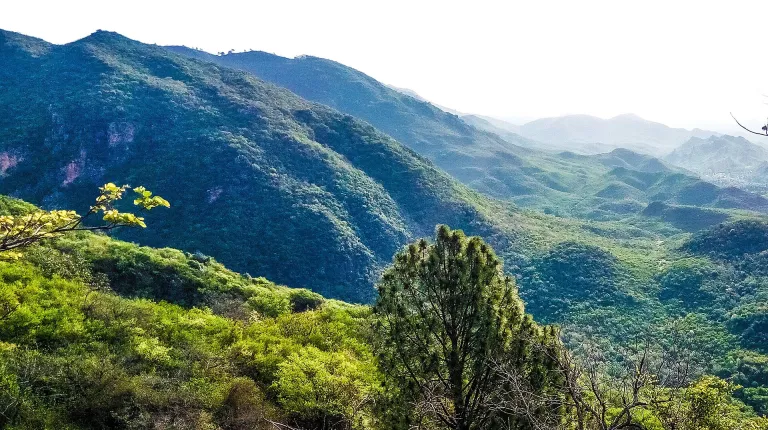 Margalla Hills trailsSeven numbered trails climb from the city's northern sectors into forest; Trails 3 and 5 are the most popular. Start early, carry water and stick to marked paths, the park's wildlife includes barking deer, goral and leopards.
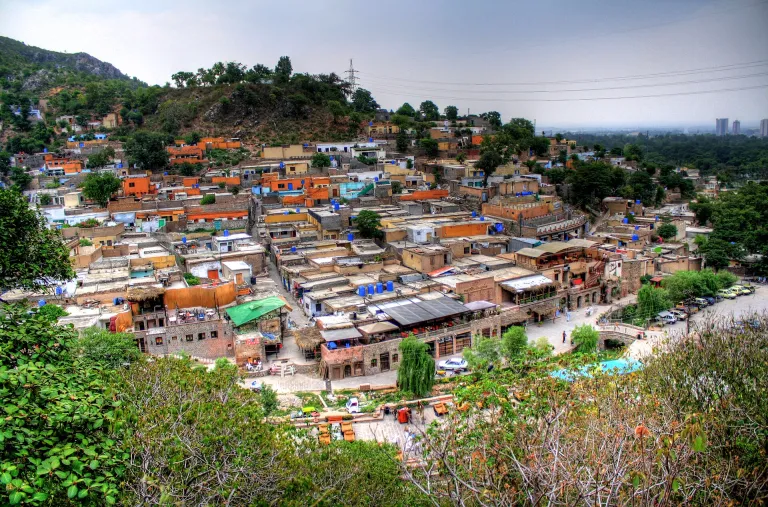 Saidpur VillageA centuries-old village at the foot of the hills, once a Hindu place of worship associated with the Mughal commander Raja Man Singh. Restored temple and village buildings now house galleries and restaurants.
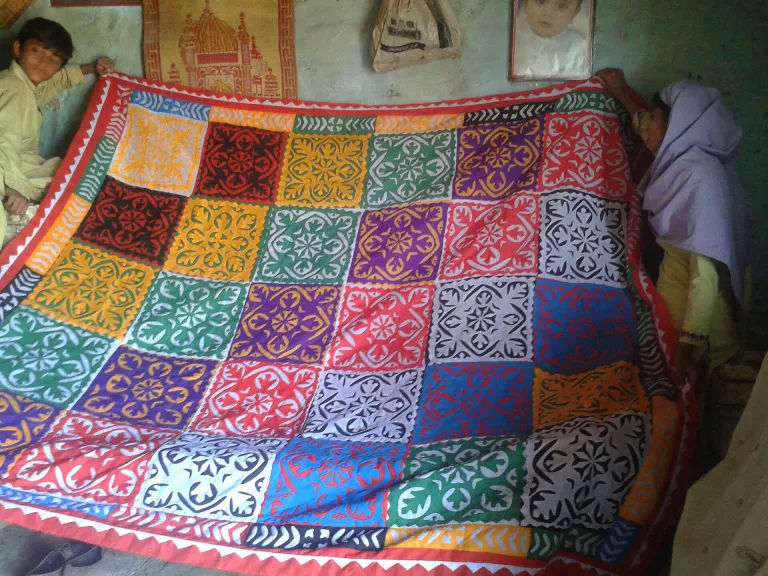 Lok Virsa Heritage MuseumThe National Institute of Folk and Traditional Heritage runs one of Pakistan's best museums of everyday culture, costumes, crafts, music and village life from every region, near Shakarparian.
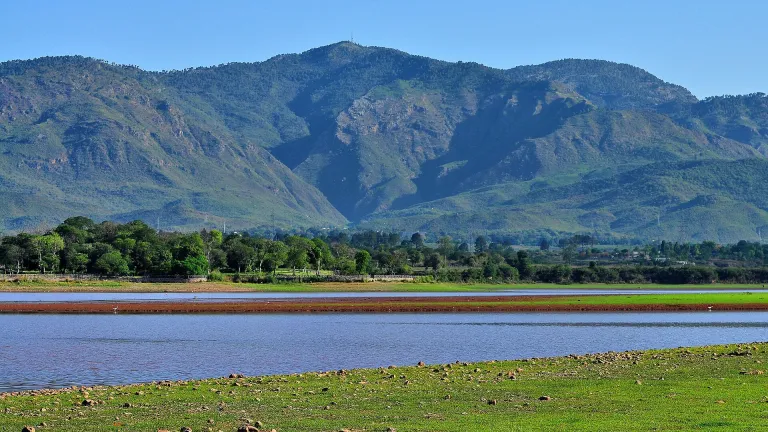 Lake View Park and Rawal LakeRawal Dam on the Korang River, inaugurated in 1962, holds back the lake that supplies water to Rawalpindi and Islamabad. The lakeside park offers boating, picnic lawns and sunset views.
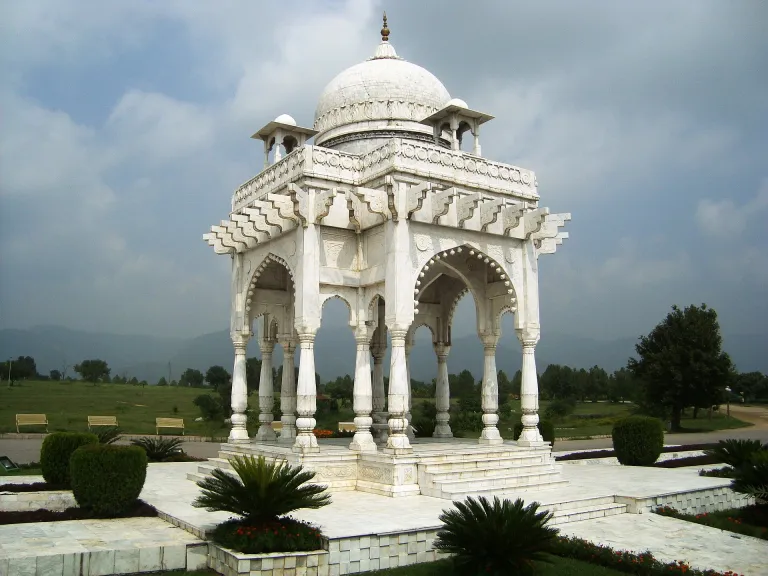 Fatima Jinnah Park (F-9)One of the largest urban parks in the country, filling the whole of sector F-9 with lawns, woodland, jogging tracks and a baradari-style pavilion.
Sectors and Neighbourhoods
In Islamabad, your address is a grid reference, here are the ones visitors meet most.
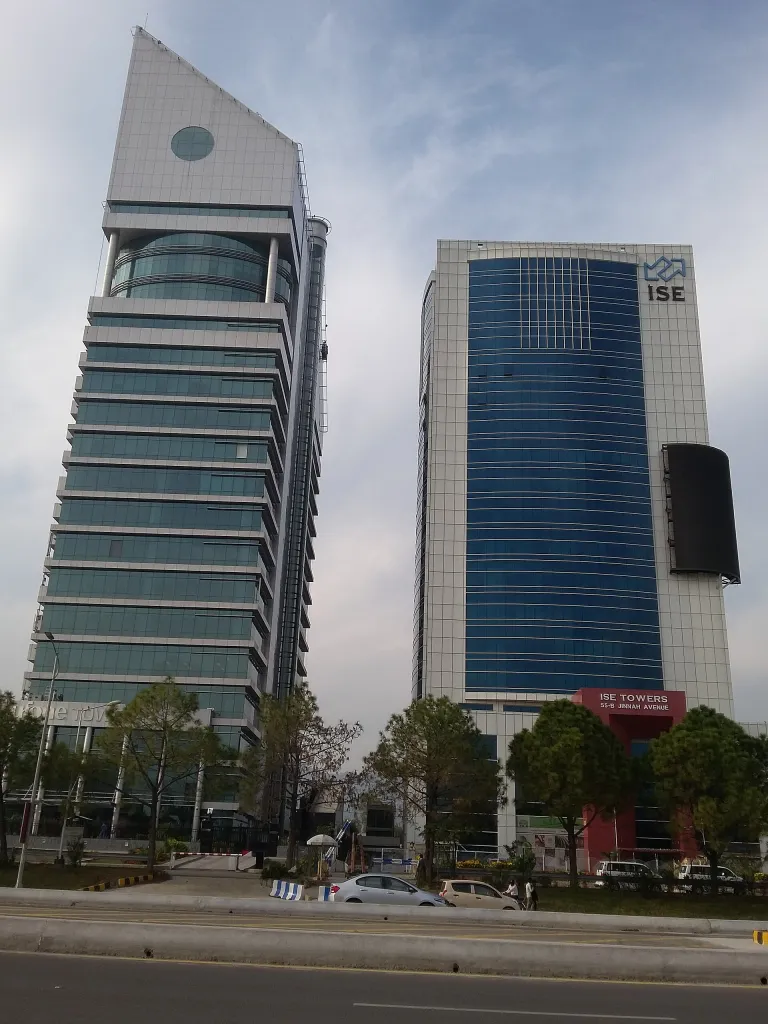 Blue AreaThe commercial spine along Jinnah Avenue: office towers, banks, hotels and the main Metrobus corridor towards the Pak Secretariat.
 Constitution AvenueThe government quarter: Parliament House, the Supreme Court, the Presidency and the Pak Secretariat line the avenue at the city's eastern end. Security is tight and photography may be restricted.
Explore Islamabad by Category
 About IslamabadIslamabad is Pakistan's capital and its most deliberately planned…
 Top Attractions in IslamabadLandmark architecture, national museums and green spaces at the…
 Sectors and NeighbourhoodsIn Islamabad, your address is a grid reference, here…
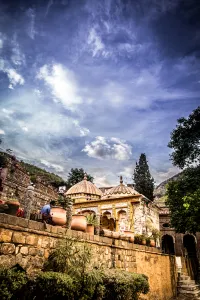 Food, Markets and BazaarsIslamabad eats in its markaz markets, and Rawalpindi's old…
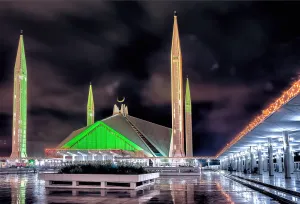 Culture and FestivalsAs the capital, Islamabad hosts national institutions that make…
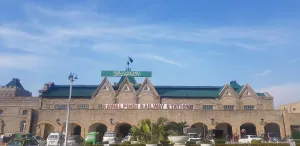 Day Trips from IslamabadAncient Gandhara, cool hill stations and Mughal-era forts within…
Food, Markets and Bazaars
Islamabad eats in its markaz markets, and Rawalpindi's old bazaars are next door.
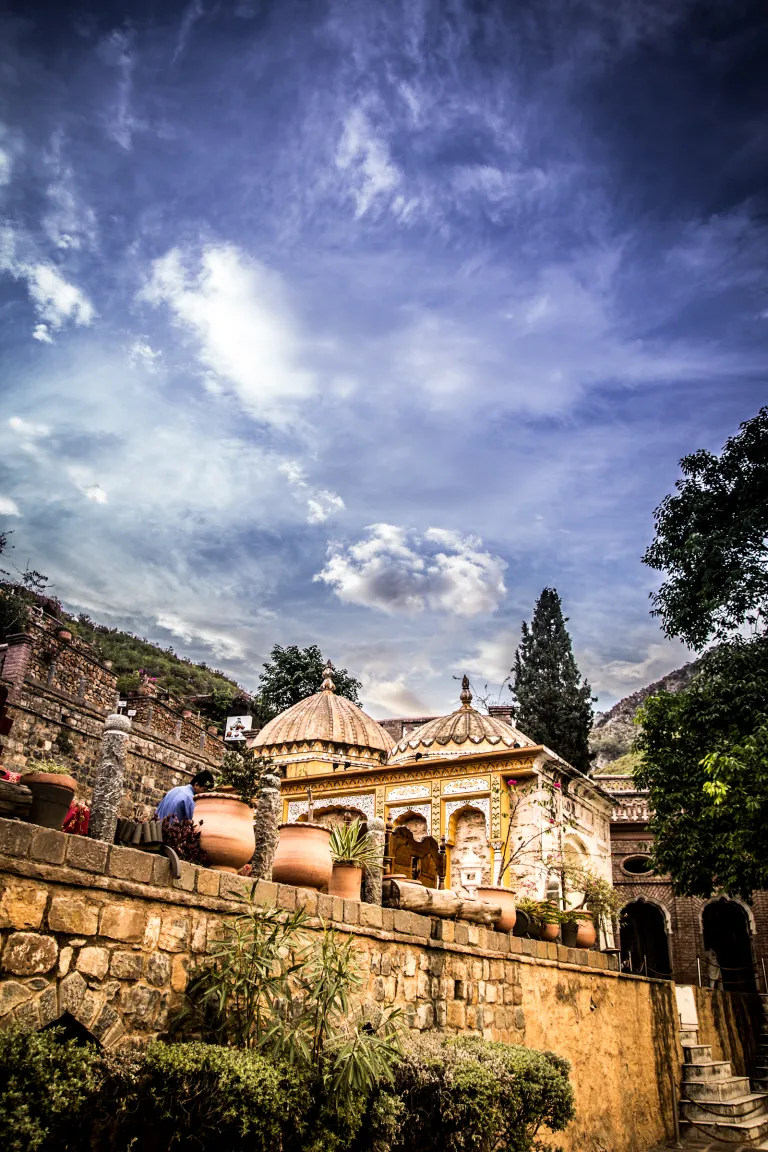 Saidpur VillageRestaurants in restored village buildings at the foot of the Margallas, best in the cool of the evening, with the hills behind.
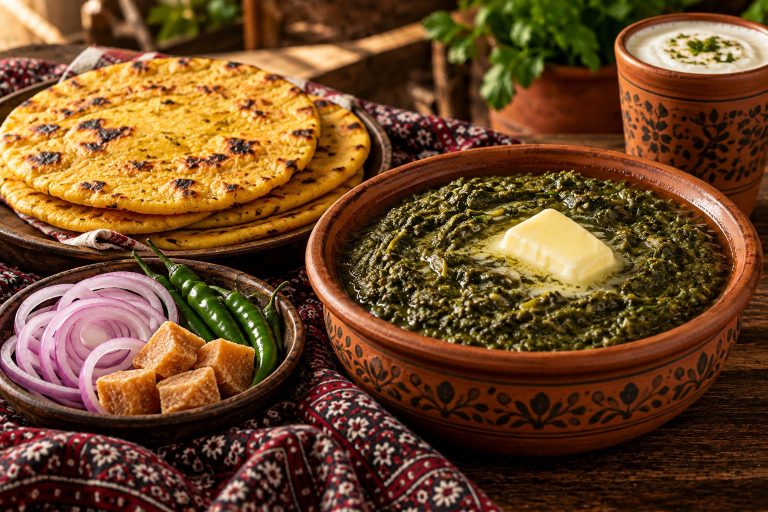 Melody and AabparaOlder G-6 markets for traditional Pakistani food, tikka, karahi, chapli kebab, and everyday shopping at lower prices.
 Raja Bazaar, RawalpindiFor an old-city bazaar experience, cross into Rawalpindi: Raja Bazaar and Saddar are crowded, noisy and full of fabrics, spices and street food.
A Short History of Islamabad
Antiquity
An ancient landscape
The Potohar Plateau has a long human history. The Buddhist cities of Taxila, to the north-west, flourished in the Gandhara era, and the region lay on routes between Central Asia and the plains.
Mughal era
Saidpur and the hills
Saidpur, now inside the city, is several centuries old; tradition links its temple and ponds to the Mughal commander Raja Man Singh.
1958–1959
Choosing a capital
A commission recommends a new capital near Rawalpindi, which serves as the interim capital while the new city is built.
1960–1961
Master plan and first works
Doxiadis Associates draw up a master plan of sectors on a grid with its apex towards the Margalla Hills. Construction begins in 1961.
1967
Capital established
Islamabad is formally established as the capital of Pakistan on 14 August 1967. The 1971 war briefly slows construction.
1980
Margalla Hills National Park
The hills along the city's northern edge are protected as a national park.
1986
Faisal Mosque completed
Vedat Dalokay's mosque, partly financed with Saudi support and named after King Faisal, gives the city its defining landmark.
2007
Pakistan Monument
The national monument on Shakarparian hill opens.
2015–2022
Modern transit
The Rawalpindi–Islamabad Metrobus opens in 2015; Islamabad International Airport opens in 2018; Orange, Green and Blue Metrobus lines follow in 2022.
Culture and Festivals
As the capital, Islamabad hosts national institutions that make it a quiet cultural powerhouse. Lok Virsa preserves Pakistan's folk heritage and holds an annual Lok Mela, a festival of crafts, music and dance from every province. The Pakistan National Council of the Arts runs the National Art Gallery, and the city has a lively scene of book launches, concerts and theatre.
Festivals and events
- Pakistan Day (23 March), the national parade is traditionally held in Islamabad, with flypasts over the city.
- Independence Day (14 August), government buildings and Blue Area are lit up, and Daman-e-Koh and the Pakistan Monument fill with families.
- Urs of Bari Imam, the annual gathering at the shrine of the 17th-century saint at Nurpur Shahan, near the Diplomatic Enclave, draws very large crowds.
- Literature and arts, the Islamabad Literature Festival and regular exhibitions at the National Art Gallery bring writers and artists together.
- Eid and Ramadan, the Faisal Mosque is spectacular on Eid mornings and during Ramadan nights, especially the 27th night.
Islamabad also has an unusually international feel for a Pakistani city: embassies, international organisations and universities such as Quaid-i-Azam University and Allama Iqbal Open University bring students and professionals from around the world.
Getting There and Around
By air
Islamabad International Airport (ISB)
The airport opened in 2018 south-west of the city, with domestic flights across Pakistan, including to Gilgit and Skardu (weather permitting), and international connections.
Metrobus
Red, Orange, Green and Blue lines
The original Red Line (2015) links Pak Secretariat through Blue Area to Saddar in Rawalpindi, 22.5 km. The Orange Line (April 2022) and the Green and Blue Lines (July 2022) extend the network, including towards the airport.
By rail
Rawalpindi station
Most long-distance Pakistan Railways services to Lahore, Karachi and Peshawar use Rawalpindi station; Islamabad's own station is in sector I-9. Check current timetables before travelling.
By road
Motorways to Lahore and Peshawar
Islamabad sits at the junction of the M-1 to Peshawar and the M-2 to Lahore, and is the starting point for the Karakoram Highway journey north.
Ride-hailing and taxis
The easiest way to cover the sectors
Distances between sectors are long and walking is limited. App-based services such as Careem, inDrive and Yango are widely used; agree fares in advance with street taxis.
Security zones
Red Zone and checkpoints
The government quarter and Diplomatic Enclave have restricted access and checkpoints. Carry ID and check current advisories and local authority guidance.
Plan Your Visit
Best time to visit
Spring and autumn
March–April and October–November are mild and clear, ideal for hiking. Autumn colours in the city's trees are a highlight; spring pollen can be very high, so allergy sufferers should come prepared.
Weather by season
Five distinct seasons
Winters (November–February) are cool, with chilly nights; May and June are hot, June being the hottest month; July–August bring the monsoon, July being the wettest month, with heavy downpours.
Where to stay
Blue Area, F-6/F-7, E-7
Blue Area and the central F sectors put you close to markets and the Metrobus; guesthouses in the F and E sectors are quieter. Rawalpindi offers more budget options.
Hiking tips
Margalla Hills
Start trails early, carry water, go with company, and avoid the hills after heavy rain or at dusk. Follow Islamabad Wildlife Management Board guidance and fire bans.
Etiquette and dress
Modest and respectful
Dress is a little more relaxed than elsewhere, but cover up for mosques and shrines and carry a scarf. At Faisal Mosque, follow the dress rules at the entrance.
Photography
Mind official buildings
Do not photograph checkpoints, military or sensitive government sites. Ask before photographing people.
Day Trips from Islamabad
Ancient Gandhara, cool hill stations and Mughal-era forts within reach.
RawalpindiIslamabad's twin city: old bazaars, the Saddar cantonment, Liaquat Bagh and some of the region's best street food, linked by the Metrobus. TaxilaA UNESCO World Heritage Site of ancient cities and Buddhist monasteries from the Gandhara era, with an excellent site museum.
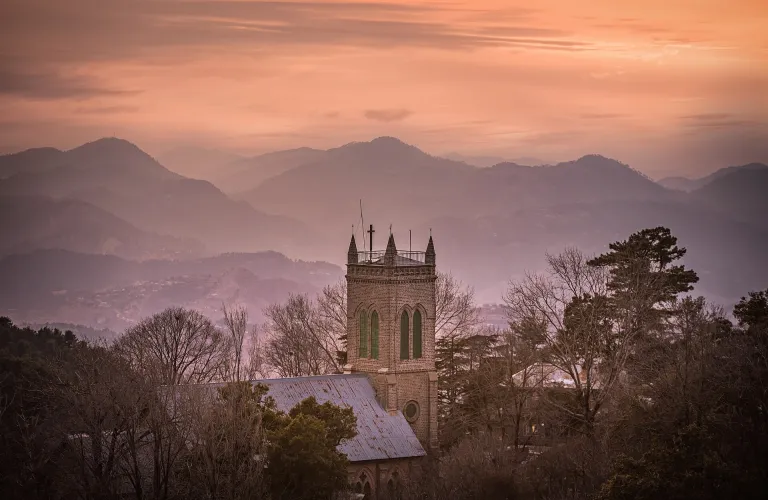 Murree and the GaliyatThe colonial-era hill station and the pine-covered Galiyat beyond it are the classic escape from summer heat. Roads are very busy in peak season and can be hazardous in snow, check road advisories.
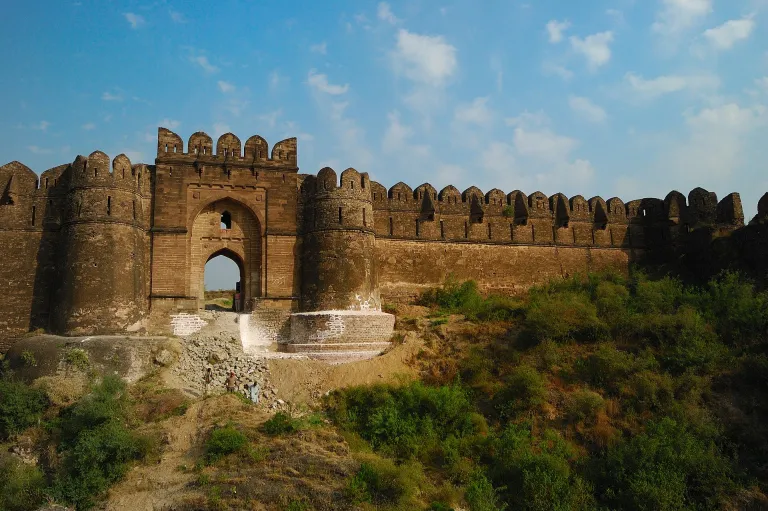 Rohtas FortSher Shah Suri's 16th-century fortress near Dina, built under the supervision of Raja Todar Mal and a UNESCO World Heritage Site since 1997.
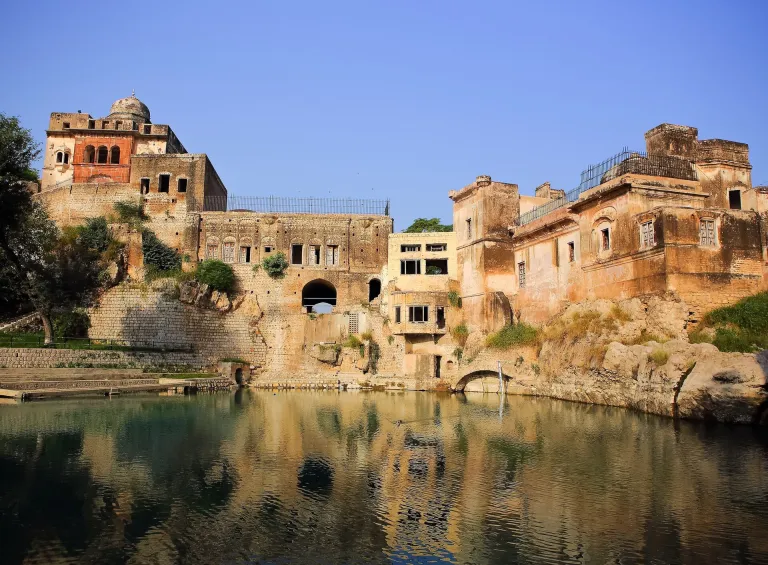 Katas Raj and KhewraCombine the Hindu temple complex around the sacred pool at Katas Raj with a tour of the Khewra Salt Mine in the Salt Range.
 AbbottabadA pleasant hill town in Khyber Pakhtunkhwa and a gateway to the Galiyat and the Karakoram Highway, home to some of Pakistan's best-known schools.
Islamabad Through Time
Every dated moment our guides record about Islamabad, from its own history and from national events that touched it. Each entry links to its source page.
- Late 1950s–1960s
The capital moves north
A new capital site near Rawalpindi is chosen in 1959, and Islamabad is formally established as capital in 1967. Karachi remains the commercial capital.
- 1958–1969
Ayub Khan
Martial law in October 1958 brings General Ayub Khan to power. The Indus Waters Treaty (1960), the choice of Islamabad as capital (1959, construction from 1961) and the 1962 constitution follow; he resigns in 1969.
- 1959–1961
A new capital
A commission chooses the site of Islamabad below the Margalla Hills in 1959; construction begins in 1961, with Rawalpindi as the interim capital.
- 1959–1969
National capital
Rawalpindi served as Pakistan's capital while Islamabad was planned and built on its doorstep.
- 1960s–1980s
A new nation's landmarks
Minar-e-Pakistan (completed 1968), Mazar-e-Quaid (inaugurated 1971) and the Faisal Mosque (completed 1986); Islamabad is built as a planned capital from 1961.
- 1963
Capital in operation
Islamabad began functioning as the capital, and ordinances separated Rawalpindi and its cantonment from the Islamabad master plan area.
- Passed 10 April 1973; in force 14 August 1973
Constitution of 1973
On 10 April 1973 the National Assembly unanimously passed a new constitution, which came into force on 14 August 1973. It created a federal parliamentary republic with a two-house Parliament and, though suspended and amended many times, remains Pakistan's constitution.
- 19 April 1974
Death
Dies at his home near Islamabad aged 66.
- 5 July 1977
1977 Military Coup
On 5 July 1977, after months of protest over disputed elections, army chief General Zia-ul-Haq removed Prime Minister Zulfikar Ali Bhutto, suspended the Constitution and imposed martial law. Promised elections within 90 days did not take place, and Bhutto was later tried and executed in…
- 10 February 1979
The Hudood Ordinances and Islamisation (1979)
On 10 February 1979 General Zia-ul-Haq's government promulgated the Hudood Ordinances, introducing Islamic punishments for theft, adultery and fornication, false accusation and intoxicants. They were central to his Islamisation programme and remained the subject of intense debate until major reforms in 2006.
- 16 November 1988 (election); government formed early December 1988
1988 Return to Elected Government
After General Zia-ul-Haq died in an air crash on 17 August 1988, Pakistan held party-based general elections on 16 November 1988. The Pakistan Peoples Party won the most seats and Benazir Bhutto formed a government in December, the first woman to lead a modern Muslim-majority…
- 1989
Islamabad Stock Exchange
The capital gained its own exchange, making three in all.
- 26 November 1997
The first motorway
Prime Minister Nawaz Sharif inaugurates the M-2 between Lahore and Islamabad, the start of today's motorway network.
- 12 October 1999 (emergency proclaimed 14 October)
1999 Military Takeover
On 12 October 1999, after Prime Minister Nawaz Sharif tried to replace army chief Pervez Musharraf while Musharraf was flying back from Sri Lanka, the army removed the government. Musharraf proclaimed an emergency, held the Constitution in abeyance and ruled as Chief Executive, later as…
- 8 October 2005, 8:50 a.m.
2005 Kashmir Earthquake
On the morning of 8 October 2005 a magnitude 7.6 earthquake struck near Muzaffarabad, devastating Azad Jammu and Kashmir and northern Khyber Pakhtunkhwa. More than 73,000 people were killed in Pakistan by official count (other estimates exceed 86,000) and about 3 million were left homeless,…
- 6 February 2009
Released
The Islamabad High Court ends his house arrest.
- Passed 8 and 15 April; signed 19 April 2010
Eighteenth Amendment
Passed by the National Assembly on 8 April and the Senate on 15 April 2010, and signed into law on 19 April, the Eighteenth Amendment rewrote about a third of the Constitution. It restored a parliamentary system, removed the President's power to dissolve the National…
- 2015
Metrobus opens
The Rawalpindi–Islamabad Metrobus began running on 4 June 2015, linking Saddar with Islamabad along a partly elevated corridor.
- 2015
Local government
The Islamabad Local Government Act divided the city into 50 union councils under a Metropolitan Corporation.
- 2016
Recognition
The physics centre at Quaid-i-Azam University, Islamabad, is named after him.
- February 2016
Launch in the UAE
Five franchises, Islamabad United, Karachi Kings, Lahore Qalandars, Peshawar Zalmi and Quetta Gladiators, played the first season, which opened at the Dubai International Cricket Stadium. Islamabad United beat Quetta Gladiators by six wickets in the final on 23 February.
- 2018
Multan joins, Karachi hosts
Multan Sultans entered as the sixth team. Eliminators were played in Lahore and the final in Karachi, where Islamabad United won their second title against Peshawar Zalmi.
- 1–3 May 2018
New Islamabad airport
The new Islamabad International Airport is inaugurated on 1 May and takes over from the old Benazir Bhutto airport in Rawalpindi, with capacity for about 15 million passengers a year.
- 2021-10-10
Death of Abdul Qadeer Khan
- 10 October 2021
Death
Dies in Islamabad aged 85; state funeral at the Faisal Mosque and burial in the H-8 graveyard.
- October 2023
A historic win
Pakistan beat Cambodia 1–0 in Islamabad, Harun Hamid scoring, to win a World Cup qualifier for the first time and reach the second round.
- 2024
Islamabad's record third
Islamabad United beat Multan Sultans by two wickets in Karachi on 18 March. Imad Wasim took five wickets, the first five-wicket haul in a PSL final.
Do you remember Islamabad as it used to be? Share a memory or an old photo, our editors review every story before it appears.
Frequently Asked Questions
What is the population of Islamabad?
The 2023 Census counted 2,363,863 people in the Islamabad Capital Territory, which covers 906 km² and includes rural areas. Of these, 1,108,872 live in urban Islamabad.
When did Islamabad become the capital of Pakistan?
The site was chosen in 1959, construction began in 1961, and Islamabad was formally established as the capital on 14 August 1967. Rawalpindi served as the interim capital while the city was built.
What is the best time to visit Islamabad?
Spring (March–April) and autumn (October–November) are the most pleasant. June is the hottest month and July the wettest, with monsoon downpours.
How are Islamabad's sectors named?
The city is divided into lettered rows (E, F, G, H, I and others) and numbered sectors, such as F-6 or G-9. Each sector has its own markaz (commercial centre) and is usually split into four sub-sectors, for example F-6/3.
How do I get from the airport to the city?
Islamabad International Airport lies south-west of the city. Taxis and ride-hailing apps are the simplest option, and the Metrobus Orange Line links the airport area with the rest of the network.
Can I hike in the Margalla Hills?
Yes. The national park has seven numbered trails starting from the city's northern sectors; Trails 3 and 5 are the most popular. Start early, carry water and follow park guidance.
Keep Exploring
Related places and stories on DailyLife.pk
TaxilaVisit Taxila: Dharmarajika stupa, Jaulian monastery, Sirkap and Taxila Museum. MurreeMurree travel guide: Mall Road, Holy Trinity Church, Patriata, Nathia Gali and Ayubia, with seasons, routes
 Rohtas FortExplore Rohtas Fort near Jhelum: Sohail Gate, ramparts, Haveli Man Singh, Shahi Masjid and stepwells
 Katas Raj TemplesVisit the Katas Raj Temples in Chakwal: the sacred pond, Satgarha temples, Hari Singh Nalwa's haveli
 Khewra Salt MineVisit Khewra Salt Mine, Jhelum District: history, the mine train, salt mosque and brine poolsRawalpindiRawalpindi guide: Raja Bazaar, Saddar, the Army Museum, history from the Gakhars to 1959, food
How we know this
- Type Place guide
- Sources 10 (2 official/academic)
- Reviewed October 2026
- Disputed points None
10 sources
- Population Census 2023 – Table 1, Islamabad (area, urban and rural population), Pakistan Bureau of Statistics
- Pakistan: Cities and Municipalities – 2023 Census, City Population (Thomas Brinkhoff)
- Islamabad, Encyclopaedia Britannica
- Islamabad, Wikipedia (used to locate primary sources)
- Margalla Hills National Park, Wikipedia (used to locate primary sources)
- Rohtas Fort, Wikipedia (used to locate primary sources)
- Katas Raj Temples, Wikipedia (used to locate primary sources)
- Rawal Lake, Wikipedia (used to locate primary sources)
- Taxila, Wikipedia (used to locate primary sources)
- Murree, Wikipedia (used to locate primary sources)
Photo credits (21)
- Faisal Mosque, Islamabad III.jpg, Fassifarooq, CC BY-SA 4.0, via Wikimedia Commons
- Faisal Masjid seen from Margalla Hills.jpg, Obaid747, CC BY-SA 3.0, via Wikimedia Commons
- Faisal mosque on the eve of 27th Ramadan.jpg, Alighazanfarz, CC BY-SA 3.0, via Wikimedia Commons
- Margalla Hills Islamabad.jpg, Ctrlpk, CC BY-SA 3.0, via Wikimedia Commons
- Blue Hour at Pakistan Monument.jpg, Muhammad Ashar, CC BY-SA 4.0, via Wikimedia Commons
- Daman-E-Koh.jpg, Xubayr Mayo, CC BY-SA 3.0, via Wikimedia Commons
- Trail 3 Margalla Hills Islamabad.jpg, Khaanimraan, CC BY-SA 4.0, via Wikimedia Commons
- Saidpur Village View.jpg, a8junea, CC BY-SA 3.0, via Wikimedia Commons
- Said Pur Village.jpg, Xubayr Mayo, CC BY-SA 3.0, via Wikimedia Commons
- Fatima Jinnah Park baradri By @ibneazhar (62).jpg, Ibnazhar, CC BY-SA 3.0, via Wikimedia Commons
- Ufone and ISE Tower Islamabad.jpg, King Eliot, CC BY-SA 4.0, via Wikimedia Commons
- Parliament House, Islamabad by Usman Ghani.jpg, Usman.pg, CC BY-SA 3.0, via Wikimedia Commons
- Kabuli Gate - Rohtas Fort by Usman Ghani.jpg, Usman.pg, CC BY-SA 3.0, via Wikimedia Commons
- Katas Raj Temples 2.JPG, ClicksByMohammadOmer, CC BY-SA 3.0, via Wikimedia Commons
- Rawal Lake Eastern Bank.jpg, ZILL NIAZI, CC BY-SA 4.0, via Wikimedia Commons
- Dharmarajika stupa,Taxila.jpg, Sasha Isachenko, CC BY-SA 3.0, via Wikimedia Commons
- Sunset in hills - Holy Trinity Church, Murree.jpg, Usamashahid433, CC BY-SA 4.0, via Wikimedia Commons
- Ralli made by young girl.jpg, Irssa1111, CC BY-SA 4.0, via Wikimedia Commons
- Sarson Ka Saag (illustration), DailyLife.pk, Illustrative image
- Rawalpindi railway St.jpg, Ayathere19, CC BY-SA 4.0, via Wikimedia Commons
- Abbottabad-pakistan.jpg, Waqarrrr, CC BY-SA 4.0, via Wikimedia Commons
