
History · Event
1988: From Zia's Death to Benazir Bhutto's Government
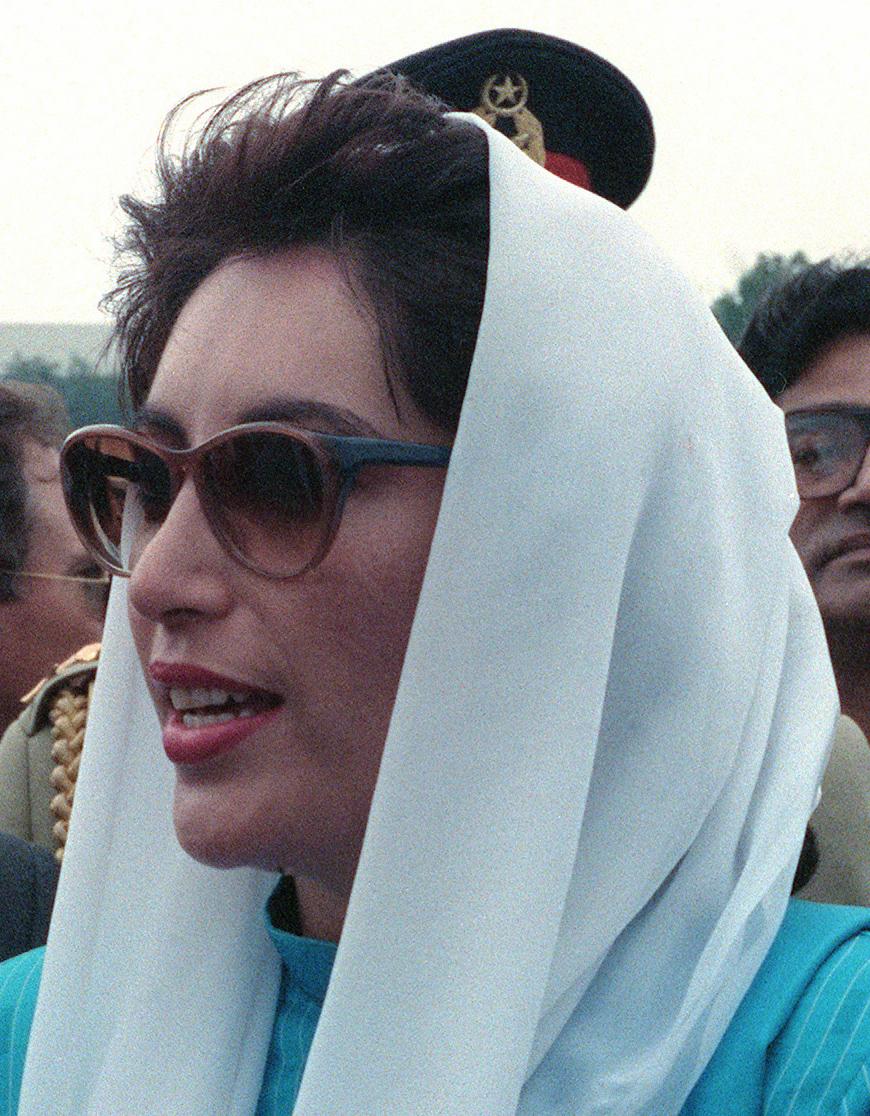
Zia's sudden death opened the way to the first party-based elections in eleven years, and to Benazir Bhutto becoming prime minister at the age of 35.
- 16 November 1988
- Turnout about 43%
- First woman PM of a Muslim-majority country
Islamabad
- When
- 16 November 1988 (election); government formed early December 1988
- Where
- Islamabad, Bahawalpur, Lahore, Karachi
- Key people
- Benazir Bhutto, Zia-ul-Haq, Nawaz Sharif
- Certainty
- Well established
What Happened
On 17 August 1988 President Zia-ul-Haq was killed when his aircraft crashed near Bahawalpur. Ghulam Ishaq Khan became acting president. Elections that Zia had already called on a non-party basis now went ahead under very different conditions: on 2 October 1988 the Supreme Court ruled that parties could take part.
Voters went to the polls on 16 November 1988. The Pakistan Peoples Party (PPP), led by Benazir Bhutto, daughter of the executed former prime minister, won the largest number of National Assembly seats but not a majority. Its main rival was the Islami Jamhoori Ittehad (IJI), an alliance of parties opposed to the PPP. Ghulam Ishaq Khan invited the PPP to form a government; with the support of smaller parties and independents, Benazir Bhutto's cabinet was announced on 4 December 1988.
She became the first woman to head the government of a Muslim-majority country in modern times. Her first government ended in 1990, beginning a decade in which elected governments alternated between her party and Nawaz Sharif's.
Background
Zia had ruled since the 1977 coup. Non-party elections in 1985 produced a parliament and a civilian prime minister, Muhammad Khan Junejo, while the Eighth Amendment gave the President power to dissolve the National Assembly. On 29 May 1988 Zia used that power to dismiss Junejo's government and announced new elections.
Timeline
1985
Non-party elections
Elections without party labels; Muhammad Khan Junejo becomes prime minister and martial law is later lifted.
29 May 1988
Assembly dissolved
Zia dissolves the National Assembly and dismisses the Junejo government.
17 August 1988
Zia killed
Zia dies in an air crash near Bahawalpur; Ghulam Ishaq Khan becomes acting president.
2 October 1988
Supreme Court ruling
The Supreme Court allows political parties to contest the elections.
16 November 1988
General election
The PPP emerges as the largest party; the IJI comes second.
4 December 1988
New government
Benazir Bhutto's cabinet is announced after the PPP is invited to form a government.
1990
First term ends
Benazir Bhutto's first government ends; she serves a second term from 1993 to 1996.
The 1988 Result
| Party | National Assembly seats (directly elected) | Note |
|---|---|---|
| Pakistan Peoples Party (PPP) | 92–94 | Largest party; formed the government with allies |
| Islami Jamhoori Ittehad (IJI) | 54–56 | Main opposition alliance |
| Independents | 37 | Many later aligned with one side or the other |
| Other parties | 19 | Including the MQM, strong in urban Sindh |
Inter-Parliamentary Union PARLINE archive; IPU and other summaries give slightly different totals for the PPP and IJI. Turnout: 43% (19,902,706 of 46,194,417 registered voters).
Consequences
- It ended eleven years of military-led rule and restored party politics.
- Benazir Bhutto's election drew worldwide attention as a first for a Muslim-majority country.
- The Eighth Amendment's presidential power to dissolve the National Assembly remained in the Constitution until the Thirteenth Amendment removed it in 1997.
- The 1990s became a decade of alternating PPP and Muslim League governments, ending with the 1999 military takeover.
How We Know
Official results were published by the Election Commission of Pakistan and compiled by the Inter-Parliamentary Union and independent groups such as Gallup Pakistan and PILDAT. Contemporary newspapers, court records of the October 1988 ruling and the memoirs of participants document the transition. Seat totals vary slightly between compilations because of postponed polls and later by-elections.
Debates
The crash. The cause of the 17 August crash has never been conclusively established, and rival theories continue to be debated.
A level playing field? The PPP and later critics argued that sections of the establishment tried to limit its victory. In a 2012 interview with DawnNews, former ISI chief Hamid Gul said he took responsibility for creating the IJI alliance, which he defended. Supporters of the IJI regarded it as a legitimate coalition of parties opposed to the PPP.
Before and After
Where this moment sits in Pakistan’s story.
Before
- 17 August 1988
Death in air crash
Killed when the aircraft Pak-1 crashes near Bahawalpur shortly after take-off.
After
- 2 December 1988
Prime Minister
Sworn in as prime minister after the PPP wins the November 1988 election.
Frequently Asked Questions
When was the 1988 general election held?
On 16 November 1988.
When did Benazir Bhutto become prime minister?
Her government was formed in early December 1988; the IPU records her cabinet being announced on 4 December 1988.
How did General Zia die?
He was killed when his aircraft crashed near Bahawalpur on 17 August 1988. The cause has never been conclusively established.
Was the 1988 election party-based?
Yes. Zia had announced non-party polls, but on 2 October 1988 the Supreme Court allowed political parties to contest.
Who won the 1988 election?
The Pakistan Peoples Party won the most seats, ahead of the Islami Jamhoori Ittehad, and formed a coalition government.
Keep Exploring
Related places and stories on DailyLife.pk
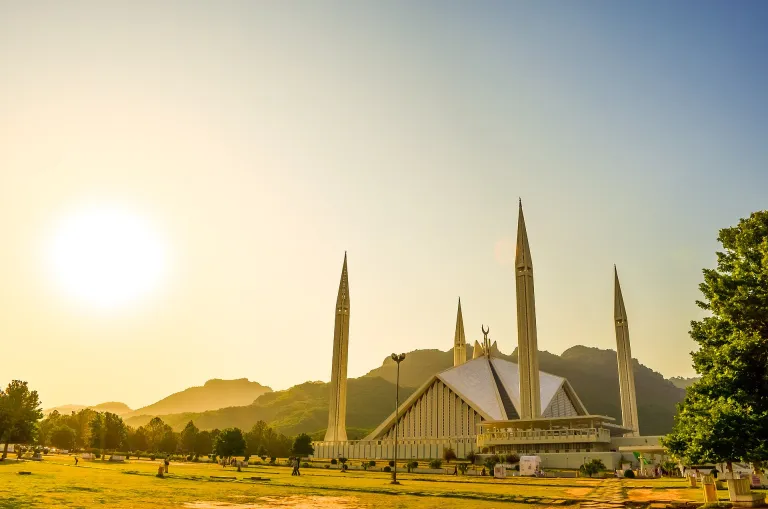
 IslamabadIslamabad travel guide: Faisal Mosque, Pakistan Monument, Margalla Hills trails, Saidpur, markets, sectors, Metrobus
 BahawalpurBahawalpur city guide: Noor Mahal, Darbar Mahal, Central Library, Lal Suhanra National Park, Derawar Fort
 History of Pakistan since 1947Pakistan's history since 1947: Jinnah and Liaquat, constitutions of 1956, 1962 and 1973, the wars
 Government and Administration of PakistanPakistan's government explained: the 1973 Constitution, President and PM, Senate and National Assembly, provinces, courts
How we know this
- Type Historical record
- Sources 6 (3 official/academic)
- Reviewed October 2026
- Disputed points Yes, see the debates
6 sources
- Pakistan: elections held in 1988 (PARLINE archive), Inter-Parliamentary Union
- Benazir Bhutto, Encyclopaedia Britannica
- Mohammad Zia-ul-Haq, Encyclopaedia Britannica
- Hamid Gul accepts responsibility for creating IJI (30 October 2012), Dawn
- 1988 Pakistani general election (results compilation, used to locate sources), Wikipedia
- Constitutional history and amendments, National Assembly of Pakistan
Photo credits (1)
- Benazir bhutto 1989 cropped.jpg, SRA Gerald B. Johnson, United States Department of Defense, Public domain, via Wikimedia Commons
