

History · Event
The Constitution of 1973: Pakistan's Consensus Charter
Drafted after the loss of East Pakistan and agreed across party lines, the 1973 Constitution set up a federal parliamentary system, and has outlasted two periods of military rule.
- 10 April 1973
- Federal parliamentary republic
- Bicameral Parliament
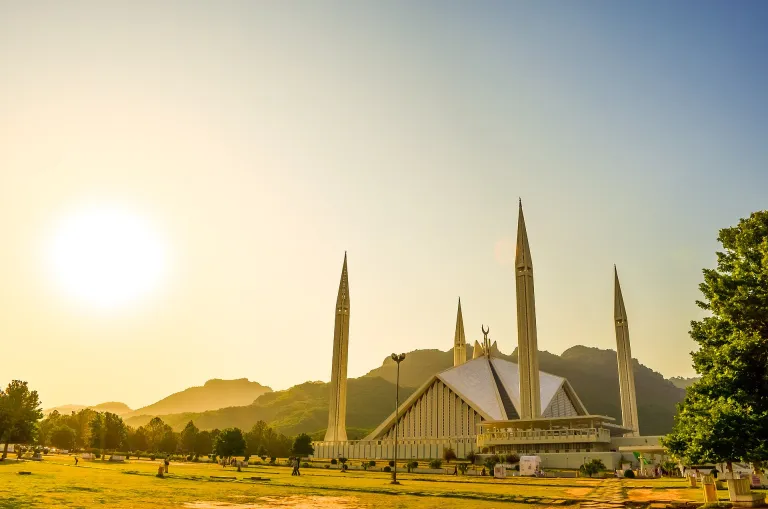
Parliament House, Islamabad
- When
- Passed 10 April 1973; in force 14 August 1973
- Key people
- Zulfikar Ali Bhutto
- Certainty
- Well established
What Happened
On 10 April 1973 the National Assembly of Pakistan passed a new constitution without a dissenting vote. The President authenticated it on 12 April, and it came into force on 14 August 1973, the 26th anniversary of independence. It was Pakistan's third constitution, after those of 1956 and 1962, and the first drafted by an assembly elected on adult franchise.
The document created a federal, parliamentary republic. Executive authority lies with the Prime Minister and cabinet, answerable to Parliament, while the President is head of state. For the first time Parliament had two houses: a National Assembly elected by population and a Senate giving equal representation to the provinces. It also set out fundamental rights and declared Pakistan an Islamic Republic.
Since 1973 the Constitution has been held in abeyance twice, after the military takeovers of 1977 and 1999, and amended many times. It has each time been restored rather than replaced, which is why many Pakistanis regard it as the country's foundational consensus document.

Background
Pakistan's first constitution, promulgated in 1956 after nine years of drafting, was abrogated when martial law was imposed on 7 October 1958. General Ayub Khan's 1962 constitution was issued by executive order. The general elections of December 1970, the first held on adult franchise, were followed by civil war and the secession of East Pakistan, which became Bangladesh in December 1971.
Zulfikar Ali Bhutto, whose Pakistan Peoples Party had won most West Pakistan seats, took over as president and civilian martial law administrator. The members elected in 1970 from West Pakistan acted as the constituent assembly. An interim constitution was adopted in 1972 while the Assembly drafted the permanent text.
Timeline
February 1956
First constitution
Pakistan's first constitution is promulgated after nine years of drafting.
7 October 1958
Martial law
The 1956 Constitution is abrogated and martial law imposed; General Ayub Khan takes power.
June 1962
Second constitution
Ayub Khan introduces a presidential constitution by executive order.
December 1970
First general elections
The first nationwide elections on adult franchise produce the assembly that would later frame the 1973 text.
December 1971
Loss of East Pakistan
East Pakistan secedes after civil war and war with India; Bhutto becomes president.
1972
Interim constitution
An interim constitution governs the country while the permanent constitution is drafted.
10 April 1973
Constitution passed
The National Assembly passes the Constitution unanimously; it is authenticated on 12 April.
14 August 1973
In force
The Constitution comes into force; Bhutto becomes Prime Minister under the new system.
5 July 1977
First suspension
General Zia-ul-Haq suspends the Constitution after a military takeover.
November 1985
Eighth Amendment
Restores the Constitution with major changes, including a presidential power to dissolve the National Assembly (Article 58(2)(b)).
October 1999
Second suspension
General Pervez Musharraf holds the Constitution in abeyance.
19 April 2010
Eighteenth Amendment
Restores the parliamentary character of the Constitution and devolves major powers to the provinces.
Consequences and Later History
The Constitution has proved durable but contested. Military rulers twice suspended it and, on restoring it, changed the balance of power: the Eighth Amendment (1985) gave the President the power to dissolve the National Assembly, used several times in the 1990s, and the Seventeenth Amendment (2003) incorporated General Musharraf's Legal Framework Order. Elected parliaments in turn reversed those changes: the Thirteenth Amendment (1997) removed the dissolution power, and the Eighteenth Amendment (2010) restored a parliamentary system and devolved power to the provinces.
Other amendments reflect the political debates of their time, from the declaration in 1974 that Ahmadis are non-Muslims under Pakistani law to the creation of military courts after the 2014 Peshawar school attack. For a full overview, see our guide to the Constitution of Pakistan.
How We Know
The text of the Constitution and its amendments is published by the National Assembly of Pakistan, which also records the dates of passage, authentication and entry into force. The debates of the Assembly in 1972–73 are part of the parliamentary record. Comparative overviews such as ConstitutionNet (International IDEA) summarise its structure and its suspensions, while scholars of Pakistani politics analyse how amendments shifted power between Prime Minister, President and provinces.
Before and After
Where this moment sits in Pakistan’s story.
Before
- 1973
The current Constitution
A cross-party Constitution creating a federal parliamentary system is passed on 10 April and takes effect on 14 August 1973.
- 1973
Article 251
The constitution names Urdu the national language and calls for arrangements for its official use within fifteen years, allowing English meanwhile and provincial languages alongside.
- 1973
Current Constitution
Passed by the National Assembly in April and in force from 14 August 1973, creating a bicameral federal parliament.
After
- 14 August 1973
Prime Minister
Becomes prime minister as the new constitution comes into force.
Frequently Asked Questions
When was the 1973 Constitution passed?
The National Assembly passed it on 10 April 1973; it was authenticated on 12 April and came into force on 14 August 1973.
Was the 1973 Constitution passed unanimously?
Yes. The National Assembly records that it was passed unanimously.
Is the 1973 Constitution still in force?
Yes. It was suspended in 1977 and 1999 but restored each time, and it has been amended many times, including by the 18th Amendment in 2010.
How many articles did the 1973 Constitution have?
As adopted it had 280 articles and seven schedules, according to ConstitutionNet.
Who framed the 1973 Constitution?
It was drafted by a committee of the National Assembly elected in 1970 (members from West Pakistan), under Zulfikar Ali Bhutto's government, with support from opposition parties.
Keep Exploring
Related places and stories on DailyLife.pk
 IslamabadIslamabad travel guide: Faisal Mosque, Pakistan Monument, Margalla Hills trails, Saidpur, markets, sectors, Metrobus
 The Constitution of PakistanPakistan's constitutions of 1956, 1962 and 1973: how the 1973 Constitution works, fundamental rights, Islamic provisionsGovernment and Administration of PakistanPakistan's government explained: the 1973 Constitution, President and PM, Senate and National Assembly, provinces, courts
 History of Pakistan since 1947Pakistan's history since 1947: Jinnah and Liaquat, constitutions of 1956, 1962 and 1973, the wars
How we know this
- Type Historical record
- Sources 6 (2 official/academic)
- Reviewed October 2026
- Disputed points None
6 sources
- Constitutional history and amendments, National Assembly of Pakistan
- Constitutional history of Pakistan, ConstitutionNet (International IDEA)
- Zulfikar Ali Bhutto, Encyclopaedia Britannica
- The 18th Amendment: Historical Developments and Debates in Pakistan (Imran Ahmed, Insights No. 641, 2020), Institute of South Asian Studies, NUS
- Ouster of Zulfiqar Ali Bhutto, Story of Pakistan
- Pakistani physicist linked to 'God particle' shunned at home (1974 amendment context), CBC News
Photo credits (1)
- Parliament House, Islamabad by Usman Ghani.jpg, Usman.pg, CC BY-SA 3.0, via Wikimedia Commons
