
Travel planning
What to Buy in Pakistan: and Where to Find It
Ajrak from Sindh, blue pottery from Multan, Peshawari chappals, onyx, carpets, truck art, Kashmiri shawls and gemstones from the north: a region-by-region guide to souvenirs, with bargaining tips and the rules on exporting antiques.
- Bargaining expected in bazaars
- Regional crafts in every province
- Antiquities need an export licence
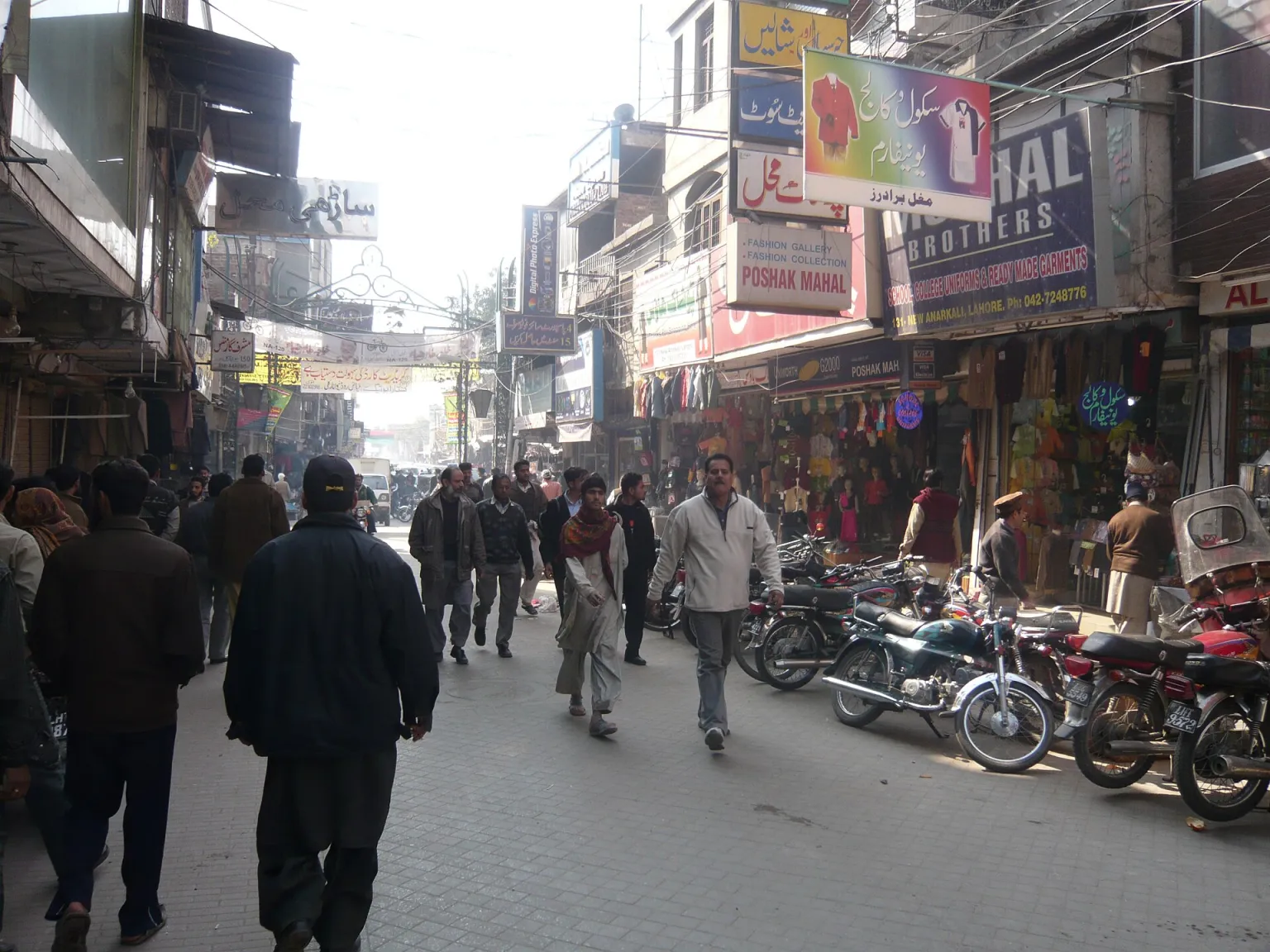
Anarkali Bazaar, Lahore
Shopping in Pakistan
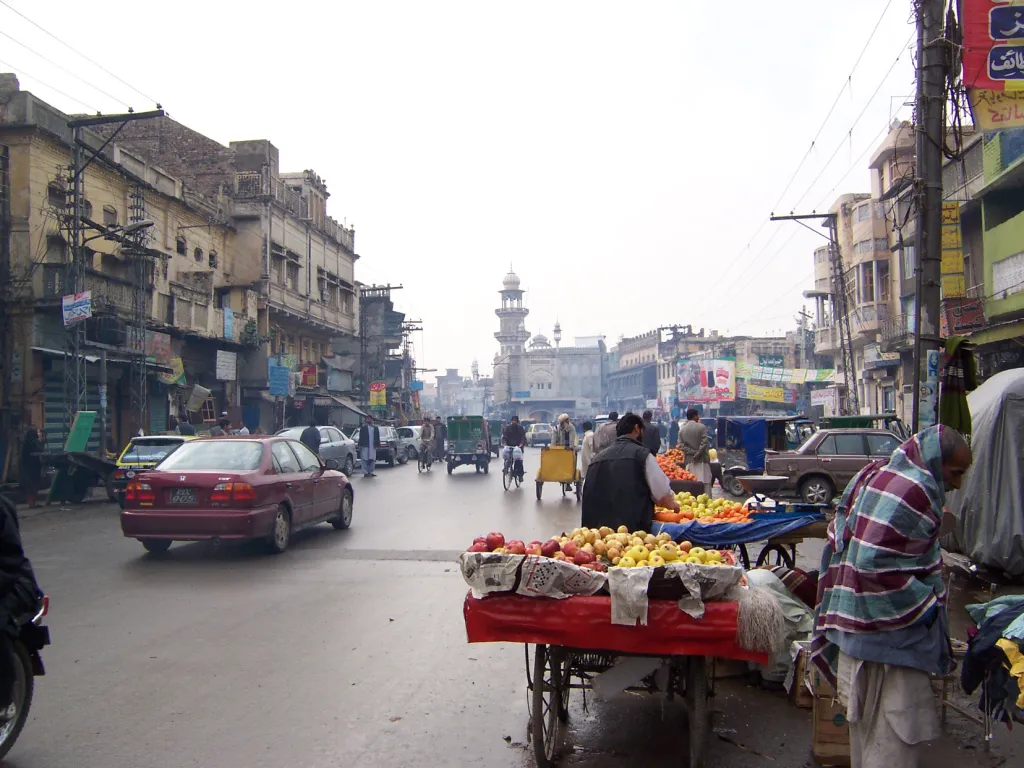
Shopping in Pakistan is as much about the bazaar as the purchase. Old-city markets in Lahore, Rawalpindi, Multan, Hyderabad and Karachi are organised by trade, a lane of cloth merchants, a street of shoemakers, a square of spice sellers, and buying something usually involves tea, conversation and good-natured haggling.
The best souvenirs are regional. Each province has crafts tied to particular towns and families: block-printed cloth in Sindh, glazed pottery in Multan, leather sandals in Peshawar, woollen shawls and caps in the mountains. Many are made by hand in small workshops, often by women working at home, so buying directly from makers or from fair-trade outlets helps the money reach them.
Most of these crafts are also sold in the big cities, so you can shop even if you do not travel to their home regions. Lok Virsa in Islamabad, the National Institute of Folk and Traditional Heritage, is a good place to see the range before you buy.
What to buy, and where
 AjrakCotton block-printed with carved wooden blocks and resist-dyed in deep indigo and crimson, the emblem of Sindh, worn as a shawl or turban and given as a mark of respect.
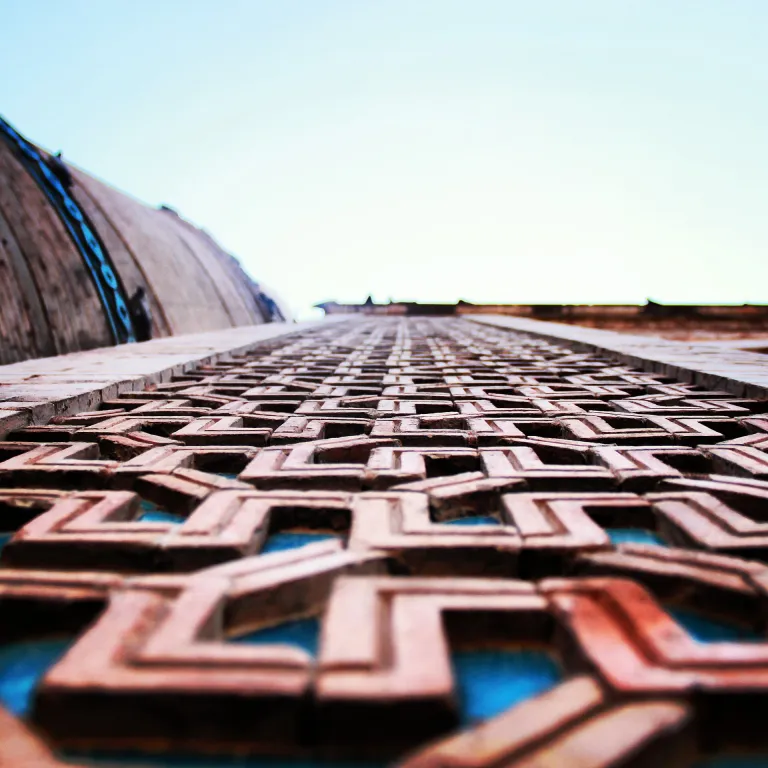 Multani blue potteryHand-painted cobalt and turquoise designs on a white ground, from the kashigar families whose tiles also clad Multan's shrines. Look for vases, plates and tiles.
 Camel-skin lampsTranslucent camel hide shaped into lamps and vases and painted in gold and bright colours (naqqashi), a classic Multan souvenir.
 Peshawari chappalThe sturdy, hand-stitched leather sandal of Khyber Pakhtunkhwa, now sold across Pakistan. Try several pairs: sizing and comfort vary by maker.
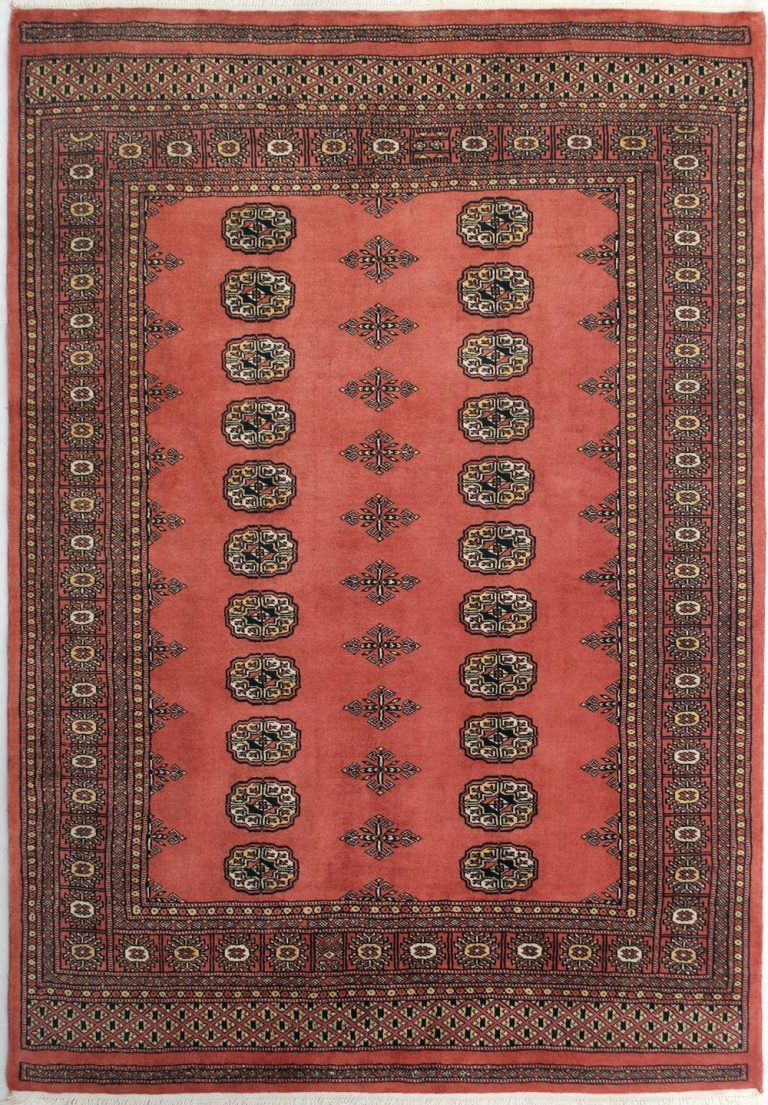 Carpets and rugsHand-knotted carpets and tribal rugs are sold by dealers in the big cities. Check the back for knot density, ask about dyes and origin, and take your time.
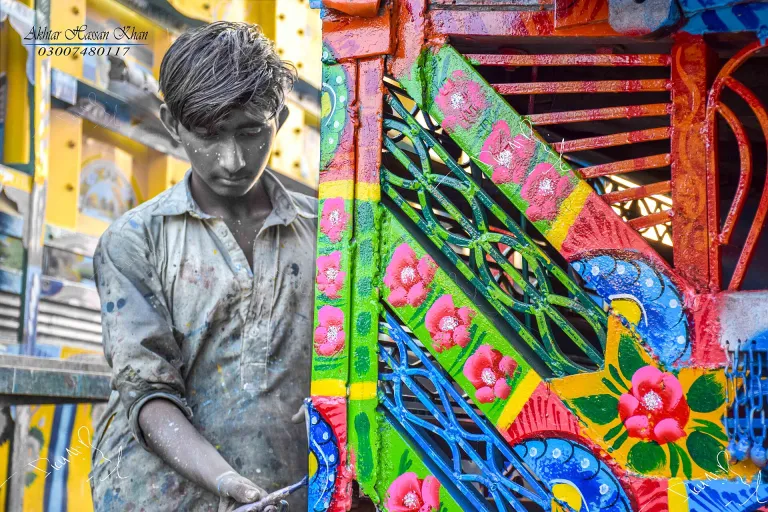 Truck artThe painters who decorate Pakistan's trucks also make kettles, trunks, trays and signboards in the same riotous style, easy-to-pack pieces of pop culture.
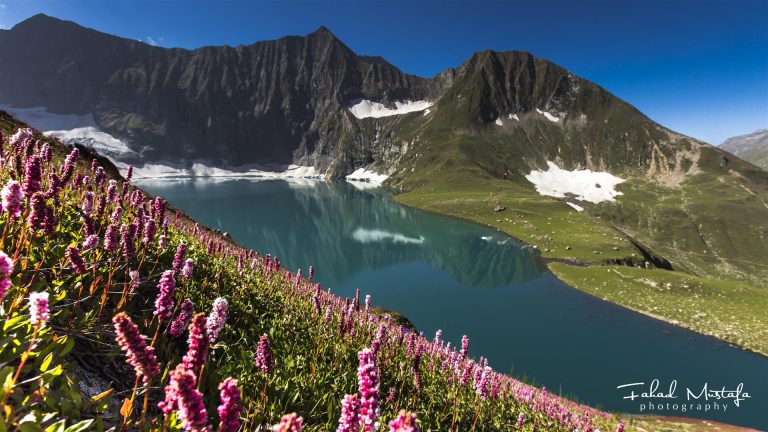 Kashmiri shawls and craftsAzad Kashmir's crafts include loom-woven kani and needle-embroidered sozni shawls, papier-mâché boxes, walnut-wood carving and namda felt rugs.
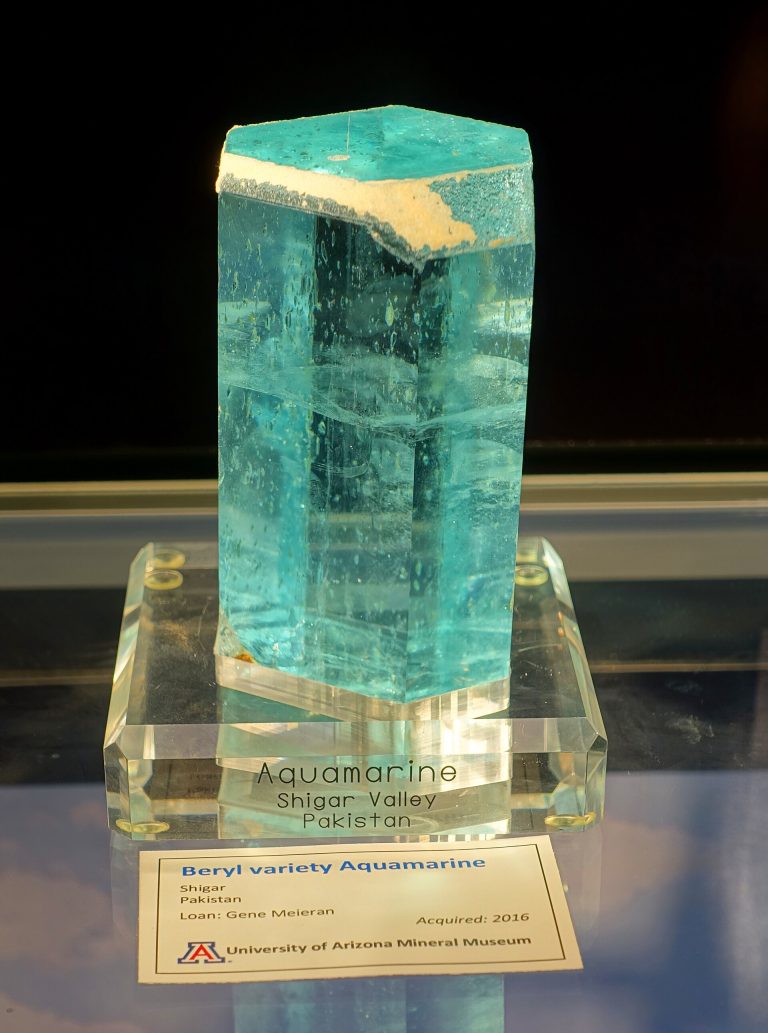 GemstonesGilgit-Baltistan is a source of aquamarine, and Khyber Pakhtunkhwa of Swat emerald and pink topaz from Mardan. Buy only from reputable dealers and get valuable stones tested.
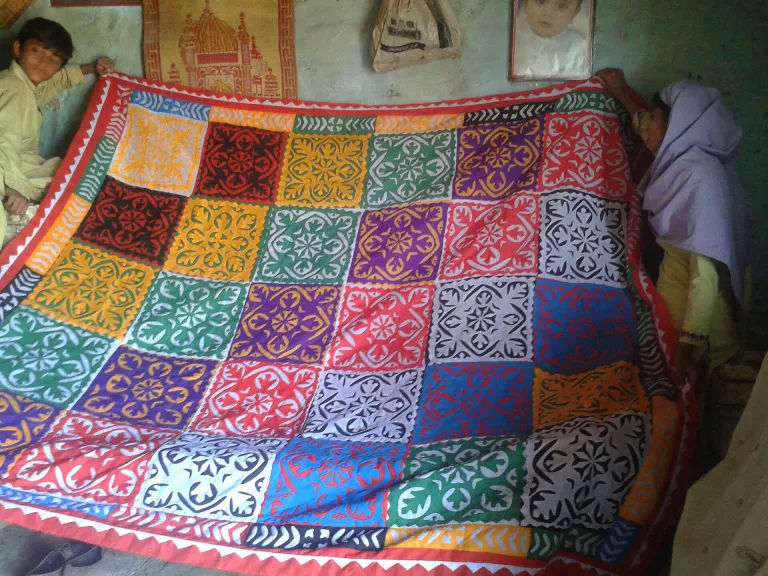 Hala pottery and lacquerworkThe Sindhi town of Hala is known for glazed kashi pottery, lacquered woodwork (jandi) and striped susi cloth.
 Woollen caps and shawlsHand-rolled pakol caps and woven woollen shawls from Chitral, Gilgit-Baltistan and the hill districts of Khyber Pakhtunkhwa.
 Clothes and fabricReady-made or tailored shalwar kameez, embroidered fabrics and lawn prints are excellent value, and a tailor can make clothes to measure in a few days.
How to bargain
- Bargaining is expected in bazaars and for crafts, less so in shops with fixed, marked prices.
- Ask the price first, then offer what you would be happy to pay; settle somewhere between with a smile.
- Compare a few shops before buying anything expensive.
- Walking away politely is part of the process and often brings a better offer.
- Do not start bargaining unless you intend to buy at a price you name.
- Carry small notes; shopkeepers may not have change for large ones.
- Ask for a receipt for expensive items such as carpets and gems, describing what you bought.
Antiques and export rules
Pakistan protects its archaeological heritage strictly. Under the Antiquities Act 1975, no one may export an antiquity except under a licence, and dealers in antiquities must themselves be licensed. The Act treats an antiquity as "ancient" when it is at least 75 years old. Following the 2010 constitutional changes, archaeology became largely a provincial subject and the provinces have their own versions of the law, but the principle is the same everywhere.
- Do not buy Gandharan sculpture, coins or Indus-era objects offered in bazaars or by roadside sellers. Genuine pieces are illegal to export without a licence; many others are modern fakes.
- Keep receipts for anything that looks old, such as carpets, jewellery or woodwork, stating that it is a modern reproduction where that is the case.
- Check your home country's rules too for importing wood, plants, food, leather and animal products. Avoid products from wild animals entirely, including shahtoosh, which comes from a protected antelope.

Buying gemstones
Know before you buy. A 2021 field report in GIA's journal Gems & Gemology describes Peshawar's Namak Mandi as Pakistan's largest trading centre for rough gemstones, with stones from Gilgit-Baltistan, Khyber Pakhtunkhwa, Balochistan and Afghanistan. It also notes that coloured stones have no standard pricing, that dealers may inflate claimed costs, and that some online sellers misrepresent stones with edited photos. Inspect stones in daylight, compare prices across shops, and have anything valuable tested independently. Note that the UK FCDO advises against all travel to Peshawar.

Frequently Asked Questions
What is the best souvenir to buy in Pakistan?
Popular choices are an ajrak from Sindh, Multani blue pottery, a Peshawari chappal, onyx pieces, truck-art kettles and trays, and woollen shawls from the north or Kashmir.
Is bargaining expected in Pakistan?
Yes, in bazaars and for crafts. Shops with marked prices, malls and branded stores usually have fixed prices.
Can I take antiques out of Pakistan?
Only with an export licence. Under the Antiquities Act 1975, exporting any antiquity without a licence is prohibited. Avoid buying Gandharan or other archaeological objects.
Where can I buy Pakistani gemstones?
Gem dealers operate in Peshawar's Namak Mandi, in the main cities and in Gilgit-Baltistan's towns. Buy from reputable dealers, compare prices and get valuable stones independently tested.
Where can I see all of Pakistan's crafts in one place?
Lok Virsa in Islamabad, the National Institute of Folk and Traditional Heritage, showcases crafts and artisans from every province in its museum and festivals.
Keep Exploring
Related places and stories on DailyLife.pk
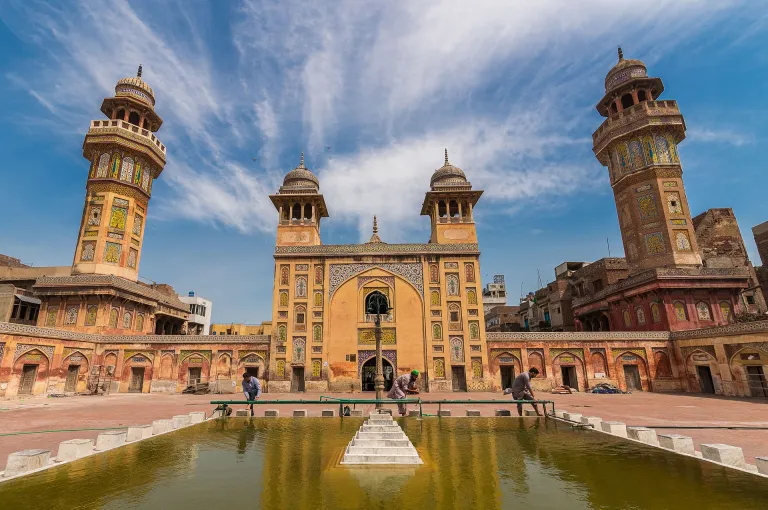 Walled City of LahoreExplore the Walled City of Lahore: Delhi Gate, the Royal Trail, Wazir Khan Mosque, Shahi Hammam
 Hunza ValleyPlan a Hunza Valley trip: Baltit and Altit forts, Attabad Lake, Passu Cones, Hussaini bridge
 MultanMultan city guide: Shah Rukn-e-Alam and other Sufi shrines, the walled city, blue pottery, sohan halwaPeshawarPeshawar city guide: Qissa Khwani Bazaar, Mahabat Khan Mosque, Sethi House, Peshawar Museum, Pashtun food
 LahoreLahore travel guide: Badshahi Mosque, Lahore Fort, Shalimar Gardens, the Walled City, food streets, neighbourhoods, metro
 RawalpindiRawalpindi guide: Raja Bazaar, Saddar, the Army Museum, history from the Gakhars to 1959, food
How we know this
- Type Practical guide
- Sources 9 (3 official/academic)
- Reviewed October 2026
- Disputed points None
Rules and fees change, confirm with the official links below before you act.
9 sources
- The Antiquities Act 1975, Advocatetanmoy Law Library (text of the Act as applied in Punjab)
- Antiquities Act, 1975, Khalid Zafar & Associates
- Pakistan: cultural heritage laws, UNESCO World Heritage Centre
- Namak Mandi: Pioneering the Gemstone Market of Pakistan (Gems & Gemology, Summer 2021), Gemological Institute of America
- Handicrafts of Azad Jammu and Kashmir, AJ&K Small Industries Corporation
- Stone Craft of Pakistan, Global InCH, International Journal of Intangible Cultural Heritage
- History of Lok Virsa, Lok Virsa
- Reinventing tradition (Pakistani craft motifs: ajrak, rilli, Swati embroidery, naqqashi), Dawn
- Pakistan travel advice: Regional risks, UK Foreign, Commonwealth & Development Office
Photo credits (19)
- Anarkali Pakistan.jpg, TheWazir, CC BY 2.0, via Wikimedia Commons
- Rawalpindi Bazaar.jpg, Trueblood786 at English Wikipedia, CC BY-SA 3.0, via Wikimedia Commons
- Ajrak.jpg, Ahub1988, CC BY-SA 3.0, via Wikimedia Commons
- Close up detail of the facade of the tomb of shah rukn e alam.jpg, Kkashaff, CC BY-SA 4.0, via Wikimedia Commons
- Bottle with two handles, Pakistan, Multan, 1850-1900 AD, quartz frit ceramic - Linden-Museum - Stuttgart, Germany - DSC03889.jpg, Daderot, Public domain, via Wikimedia Commons
- Pakistani Bokhara rug.jpg, Yasirhussain, CC BY-SA 3.0, via Wikimedia Commons
- Truck art Pakistan.jpg, Akhtar Hassan Khan Photography, CC BY-SA 4.0, via Wikimedia Commons
- Aquamarine, Shigar Valley, Pakistan - University of Arizona Mineral Museum - University of Arizona - Tucson, AZ - DSC08519.jpg, Daderot, CC0, via Wikimedia Commons
- Dharmarajika stupa,Taxila.jpg, Sasha Isachenko, CC BY-SA 3.0, via Wikimedia Commons
- Sethial street - Sethi House Complex, Peshawar.jpg, Teseum, CC BY-SA 4.0, via Wikimedia Commons
- Ratti Gali Lake Neelum Valley.jpg, Fobak, CC BY-SA 4.0, via Wikimedia Commons
- Ralli made by young girl.jpg, Irssa1111, CC BY-SA 4.0, via Wikimedia Commons
- Tirich Mir (The Kingdom Of Djinns And Fairies).jpg, KaleemUllah550, CC BY-SA 4.0, via Wikimedia Commons
- Wazir Khan Mosque by Moiz.jpg, Moiz Ismaili, CC BY-SA 4.0, via Wikimedia Commons
- Rawalpindi railway St.jpg, Ayathere19, CC BY-SA 4.0, via Wikimedia Commons
- Multan - Tomb of Shah Rukn-e-Alam 2014.jpg, Amirshafiquemughal, CC BY-SA 3.0, via Wikimedia Commons
- Karachi Skyline 1.jpg, Ktownboy103, CC0, via Wikimedia Commons
- Autumn color in Hunza Valley.jpg, Ghazi Ghulamraza, CC BY-SA 3.0, via Wikimedia Commons
- Faisal Mosque, Islamabad III.jpg, Fassifarooq, CC BY-SA 4.0, via Wikimedia Commons
