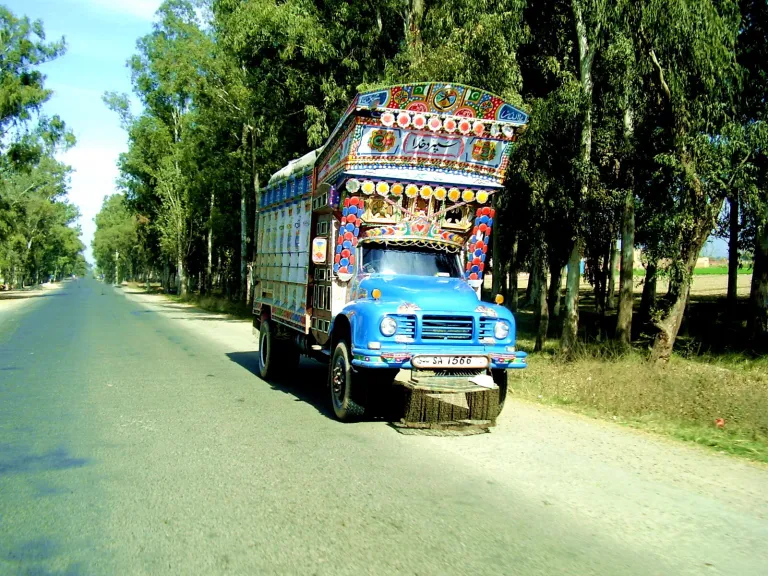
A decorated Pakistani truck on the N-5 highway

Culture

Truck Art: Pakistan's Gallery on Wheels

Painted panels, mirror-work, carved doors and jingling chains: how the country's working lorries became one of its most recognisable folk art forms.

  • Folk art
  • Karachi, Rawalpindi, Peshawar, Quetta, Lahore
  • Seen on highways nationwide

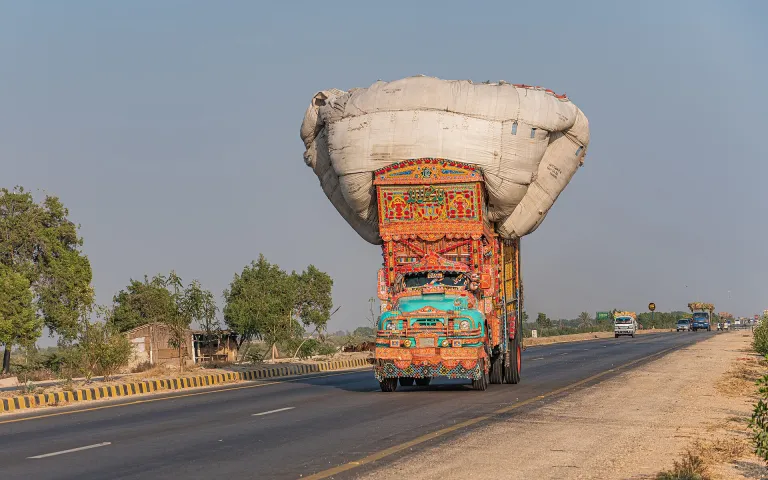
Decorated truck on the N-5 near Thatta, Sindh

1920sRoots of the traditionImported trucks decorated in the colonial era
KarachiHistoric centre of the craftAnadolu Agency, 2023
2002Haider Ali at the Smithsonian Folklife FestivalKarachi truck painter
Tens of thousandsLivelihoods linked to the tradeAnadolu Agency, 2023

About Pakistani Truck Art

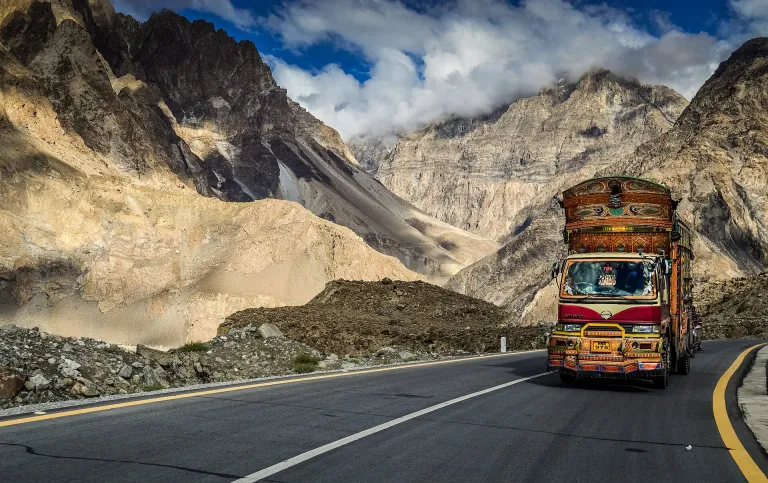
Drive any of Pakistan's highways, the N-5 along the Indus, the Karakoram Highway through the mountains, the coastal roads out of Karachi, and you will share the road with some of the most elaborately decorated working vehicles on earth. Pakistani goods trucks, buses and rickshaws are routinely covered from bumper to roof crest with painted landscapes, flowers, birds, portraits, calligraphy, mirror mosaics, hammered steel, reflective tape and carved wood. Chains and pendants hang from the front bumper, which is why foreign soldiers in neighbouring Afghanistan nicknamed them “jingle trucks”.

For the people who own and drive them, the decoration is not an indulgence. A truck may be a family's main asset and a driver's home for weeks at a time; spending heavily on its appearance is a matter of pride, piety, identity and reputation. The anthropologist Martin Sökefeld, writing in Himal Southasian, described a second economy of honour and aesthetics running alongside the economy of freight.

The craft grew out of the colonial period. Trucks imported in the 1920s, British Bedfords among the earliest, began to carry company logos on wooden panels, and as transport firms competed for business, the decoration became steadily more ambitious. Karachi, where General Motors began assembling trucks in the 1930s, became the hub, and the city's painters, especially masters such as Haji Hussain, helped define the style. Visitors in the 1960s and 1970s photographed the trucks, and the art slowly acquired an international reputation.

Today truck art lives in two worlds at once. On the road it remains a working tradition practised by teams of specialists in industrial yards. Off the road, its colours and motifs have moved onto kettles, furniture, fashion, shop signs, wedding décor and gallery walls, at home and abroad.

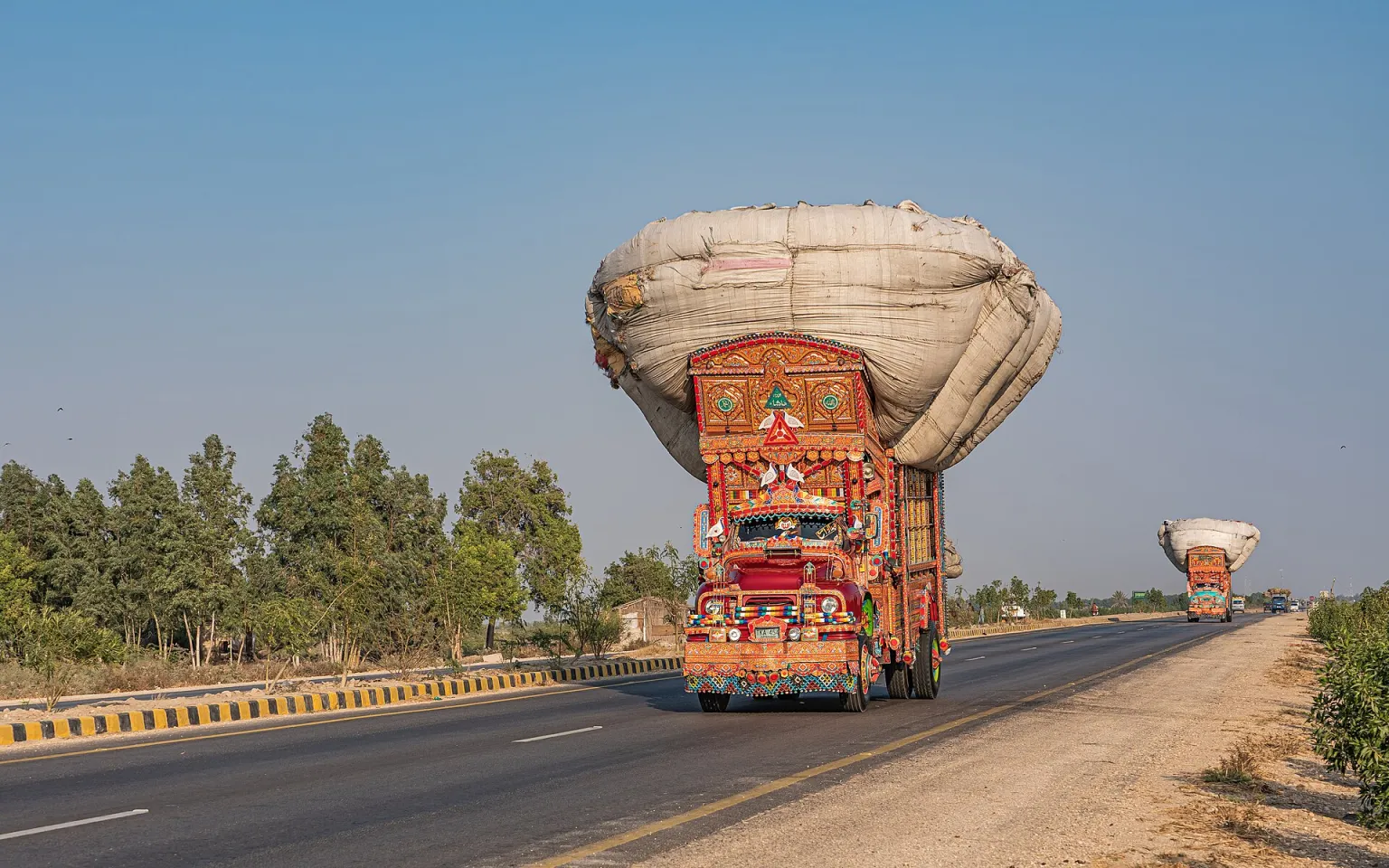
A truck in Pakistan is a working machine, a moving shrine and a family's calling card all at once.
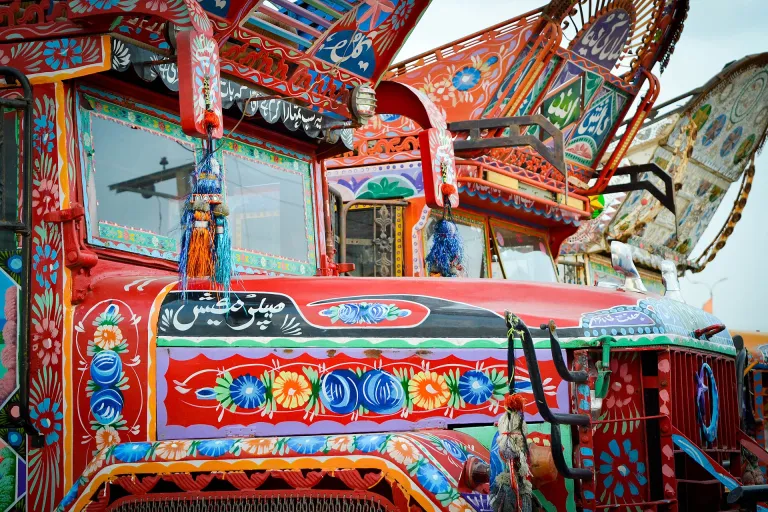
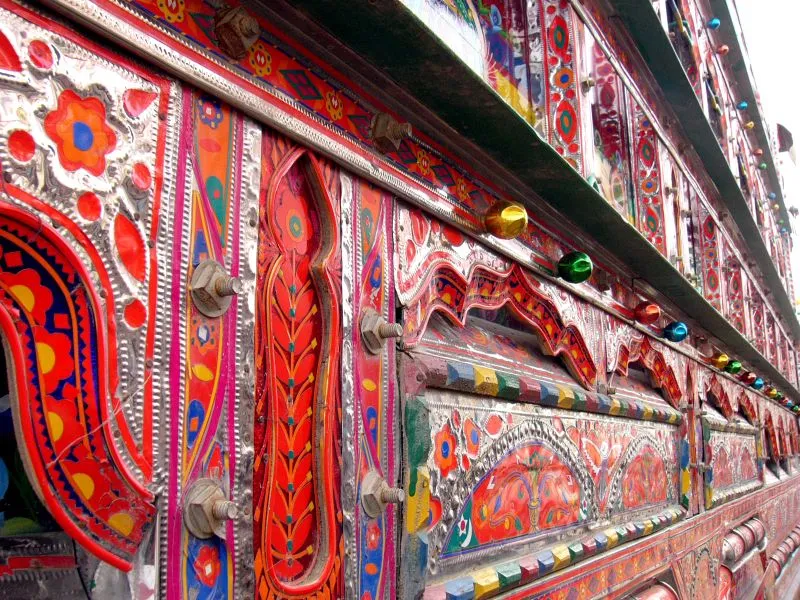
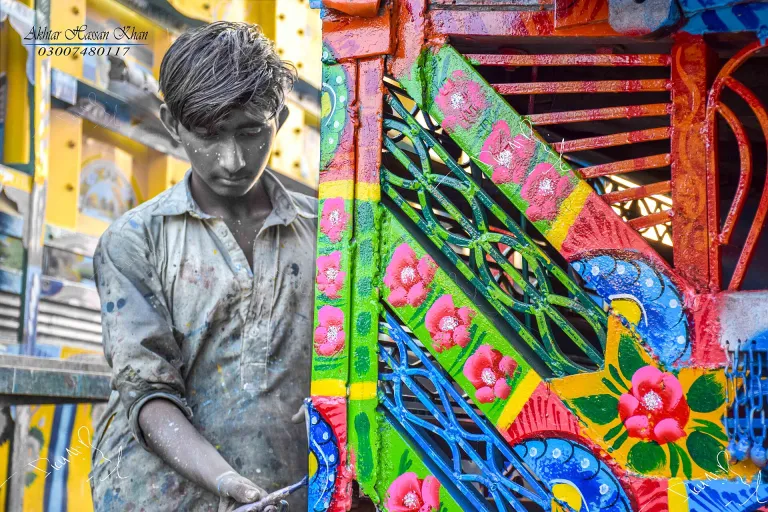
Close view of colourful painted truck panels in Pakistan
Painted panels, mirror-work and steel trim on a Pakistani truck

Reading a Decorated Truck

Every part of the vehicle has its own craft and, often, its own kind of imagery.

The crown (taj)The tall wooden crest above the cab is the highest point and is usually reserved for religious imagery, calligraphy of sacred names, the Kaaba or mosque domes.
Cab and doorsCab sides are often clad in hammered or embossed steel, studded with small painted ornaments; doors may be finely carved wood, especially in the north-west.
Side panelsIron struts divide the cargo body into frames, each holding a separate painting, mountain lakes, cottages, tigers, birds, airliners, famous figures.
Mirror and reflector workCut mirror, reflective tape and coloured plastic create mosaics that glitter in headlights; Karachi trucks are known for this flashy finish.
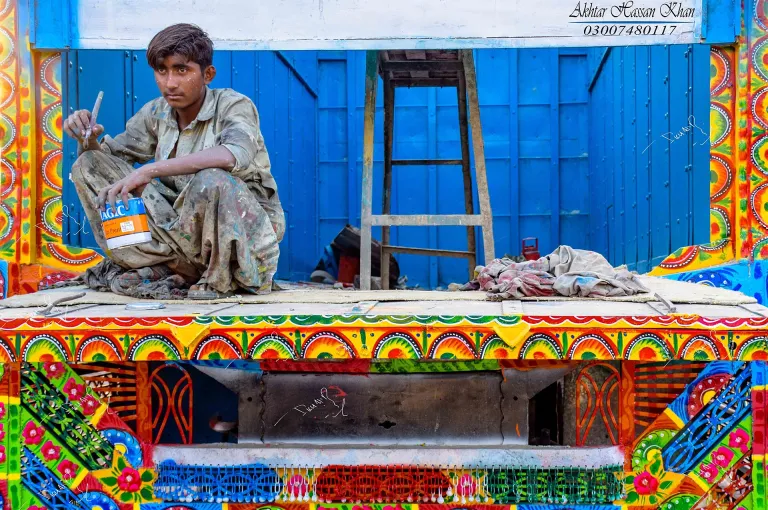
Rear boardThe back of the truck is the public billboard: a large portrait or scene, plus verse, proverbs, prayers and wry one-liners for the driver behind.
Chains and lightsBumper chains, bells and pendants give the jingle; strings of lights and chrome add drama after dark.

Motifs, Messages and Poetry

Truck art draws on a shared visual vocabulary. Religious imagery sits at the top; below it, almost anything goes. Recurring subjects include idealised landscapes of pine forests, snowy peaks and still lakes; cottages and waterfalls; tigers, eagles, peacocks, parrots and fish; flowers in dense borders (the phool-patti style); fighter jets, airliners and steam trains; portraits of national heroes, film stars, cricketers and poets; and the large, kohl-eyed faces of women that have become a signature of the genre.

Words matter as much as pictures. Rear boards and bumpers carry prayers for safe travel, verses of Urdu and Punjabi poetry, couplets about longing and separation, warnings against the evil eye and humorous slogans aimed at tailgaters. Regional and political identities appear too, provincial symbols, party colours and hometown names, so that a truck tells you something about its owner before you ever meet him.

Scholars have noted how these layers coexist without contradiction: devotional calligraphy, romantic imagery and everyday humour share the same vehicle, reflecting the mixed realities of the people who commission them.

Detail of painted floral borders and panels on a Pakistani truck
Floral borders and painted panels in detail

How a Truck Is Decorated

Decoration is a team effort, usually done in specialist yards when a truck is new or being rebuilt.

  1. 1

    Body and woodwork

    Carpenters build or rebuild the cargo body and the crest above the cab. In the north-west, much of the decoration is carved at this stage.

  2. 2

    Metalwork

    Metalworkers hammer and emboss steel sheets for the cab, bumpers and trims, and fit chains, pendants and fittings.

  3. 3

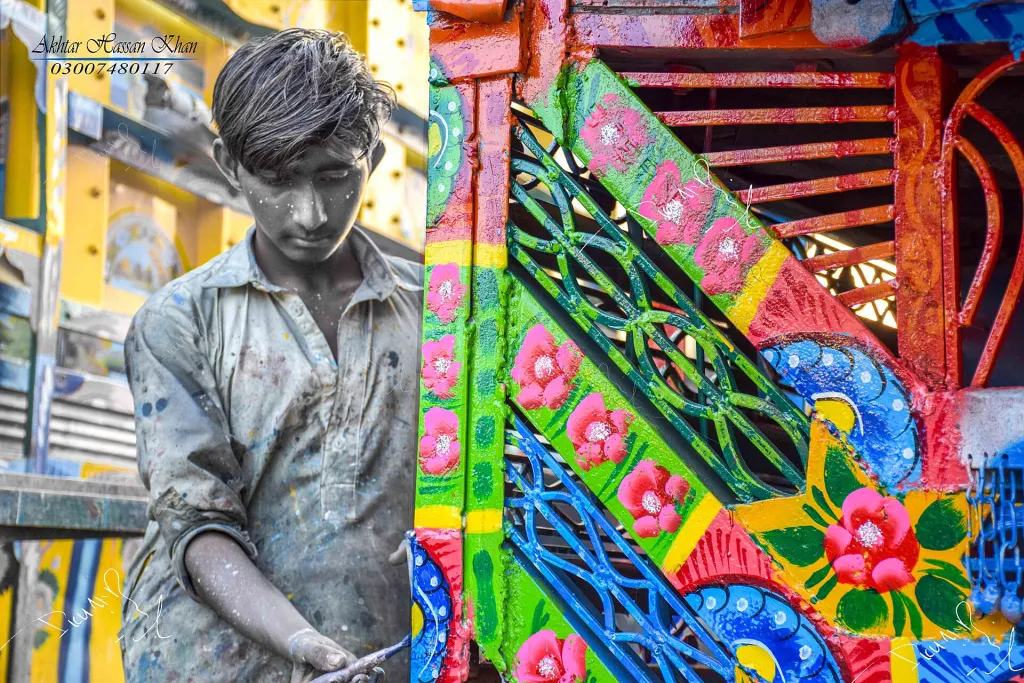
    Painting

    Painters prime the panels and then work freehand, often in brilliant enamel colours. Master painters do the portraits and scenes; apprentices fill borders and backgrounds.

  4. 4

    Mirror, plastic and tape

    Specialists cut mirror, coloured plastic and reflective tape into geometric and floral mosaics, especially around the cab.

  5. 5

    Lights and finishing

    Electricians add lighting and horns; final touches include verse, the owner's name and route, and protective prayers.

Beyond the Highway

From lorries to living rooms

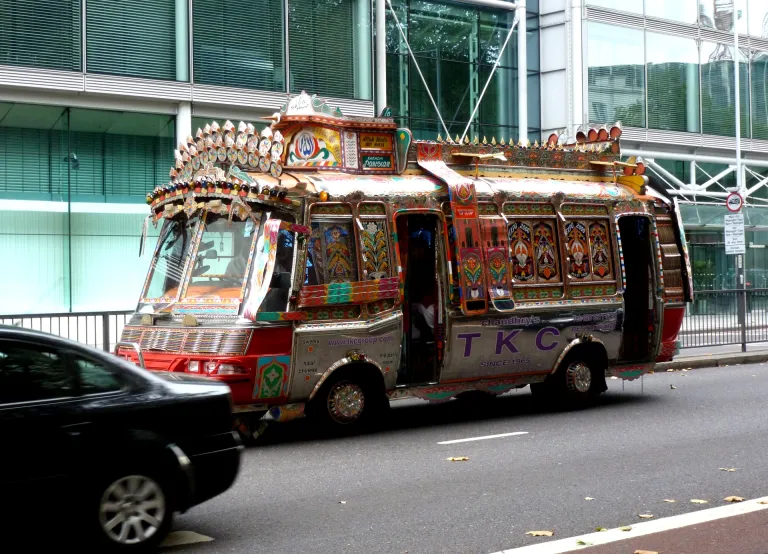
Since the 1990s truck-art motifs have moved onto everything from tin trunks, kettles and lanterns to furniture, rickshaws, cafés and fashion collections. Painters who trained in truck yards now take commissions for murals and gallery shows, and decorated buses and trucks have been shipped abroad as cultural ambassadors, including a decorated bus that toured London.

Many artists now combine hand-painting with digital printing and vinyl stickers, which are cheaper and quicker, a change that some masters see as a threat to hand skills.

A bus decorated in Pakistani truck-art style on a London street

International recognition

Karachi painter Haider Ali, who learnt the craft from his father, brought Pakistani truck art to a global audience when he decorated a truck at the Smithsonian Folklife Festival in Washington DC in 2002. Since then, Pakistani truck artists have been invited to festivals, museums and public-art projects in many countries.

At home, the art remains a source of livelihood for a large workforce of painters, welders, carpenters and electricians.

Richly painted rear and side of a Pakistani truck

Where to See Truck Art

On the highways

N-5, M-routes, Karakoram Highway

Truck stops and roadside dhabas are the best places to admire decorated trucks up close, ask before photographing drivers.

Workshop districts

Karachi, Rawalpindi, Peshawar

Truck art is produced in industrial and transport areas of the big cities. These are working yards; visit with a local contact.

Craft shops

Souvenirs and décor

Truck-art kettles, trays, boxes and signboards are widely sold in craft bazaars and at folk festivals.

Photography etiquette

Be courteous

Owners are usually proud of their vehicles, but always ask first and avoid photographing near security installations.

Frequently Asked Questions

Why are Pakistani trucks so decorated?

Decoration is a matter of pride, faith and reputation. Owners and drivers spend long periods with their vehicles, and an eye-catching truck signals the owner's status, devotion and taste. Competition among transport companies since the colonial era also pushed decoration to become ever more elaborate.

Where did truck art start?

The tradition is generally traced to the 1920s, when imported trucks began to be decorated with painted panels and company logos. Karachi became its main centre, and other hubs developed in Rawalpindi, Peshawar, Quetta, Lahore and Swat.

What is a “jingle truck”?

It is a nickname coined by foreign troops in Afghanistan, referring to the chains and pendants that hang from the bumpers of decorated trucks and jingle as they move.

Is truck art still hand-painted?

Much of it is, especially the scenes and portraits, but many workshops now also use vinyl stickers and digital graphics, which are cheaper and faster. Hand-painting is still prized and commands higher prices.

Can I buy truck art as a souvenir?

Yes. Painted kettles, trays, boxes, signboards and furniture in truck-art style are sold in craft markets and at folk festivals across Pakistan. Small items travel well; larger painted pieces can be shipped by many sellers.

How we know this

  • Type Historical & cultural research
  • Sources 5
  • Reviewed October 2026
  • Disputed points None
5 sources
  1. Pakistan's art on wheels, Anadolu Agency
  2. Pakistani Truck Art (Martin Sökefeld), Himal Southasian
  3. Truck art in South Asia, Wikipedia (used to locate sources)
  4. Culture of Pakistan, Wikipedia (used to locate sources)
  5. Reinventing tradition (truck art as design inspiration), Dawn
Photo credits (9)
Suggest a correction

Stay updated

Stay Connected with DailyLife.pk

Get new travel guides, recipes and stories from across Pakistan, no spam, unsubscribe any time.

Your Pakistan journey starts here

From majestic mountains to vibrant cities, rich cuisine to timeless traditions — discover the real Pakistan with DailyLife.pk.