
Heritage trail
Following Gandhara: A Buddhist Heritage Trail
A route through the stupas and monasteries of ancient Gandhara, from the Taxila valley and Haripur to Mardan, Buner and Swat, with museums in Peshawar and Swat to see what the ruins gave up.
- Punjab and Khyber Pakhtunkhwa
- 3 UNESCO-listed groups of sites
- Best October to April
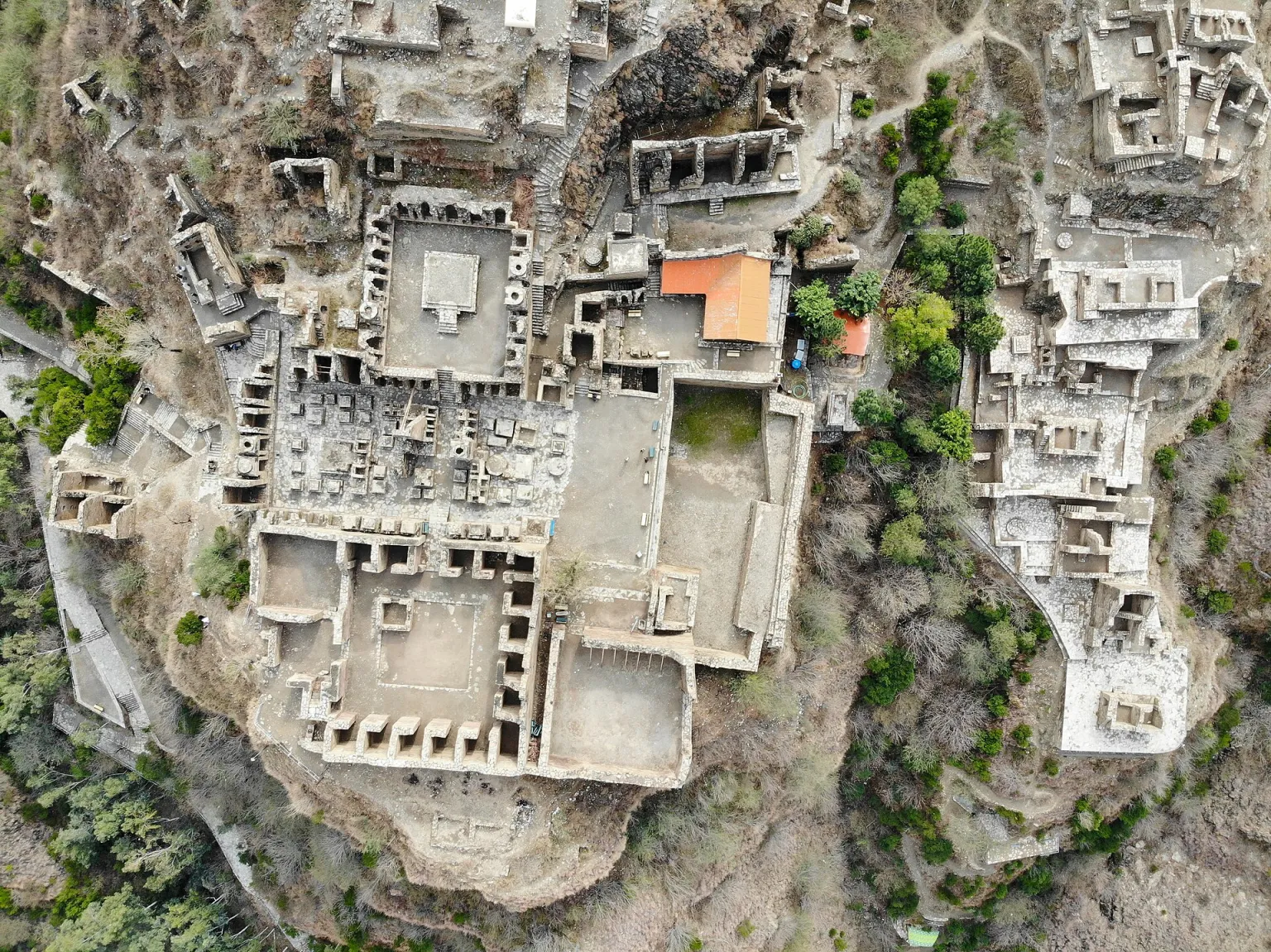
Takht-i-Bahi, Mardan District, Khyber Pakhtunkhwa
About the trail
Gandhara was the Buddhist heartland of the north-west of the subcontinent in the first centuries of the Common Era, a region of monasteries and stupas whose sculptors blended Indian Buddhist subjects with Greek, Roman and Persian styles. Its ruins are scattered across the Potohar plateau, the Peshawar basin and the valleys of Buner and Swat, which means a Gandhara trip is really a series of short journeys from Islamabad and Peshawar rather than a single road.
This page links those journeys. It is organised in clusters: the Taxila valley, the Haripur hills around Bhamala, the Mardan plain with Takht-i-Bahi and Jamal Garhi, Buner and Swat, and finally the museums in Peshawar, Taxila and Swat where much of the sculpture now sits. For the wider history, read the Gandhara topic page first. For stories behind individual objects, see Buddhist art and museums.
Most of these places are protected archaeological sites run by provincial or federal archaeology departments, and some are still venerated by visiting Buddhist pilgrims. Opening hours, ticketing and road conditions change, so confirm opening and access locally before you set out.

Sites on the trail
Ordered roughly from Islamabad towards Swat. Dates are those given by UNESCO or the managing departments.
 Dharmarajika StupaThe Taxila Museum describes it as the oldest and largest Buddhist complex in Taxila, with Buddhist activity from the 3rd century BCE to the 7th century CE. A tradition links the main stupa to Emperor Ashoka's share of the Buddha's relics.
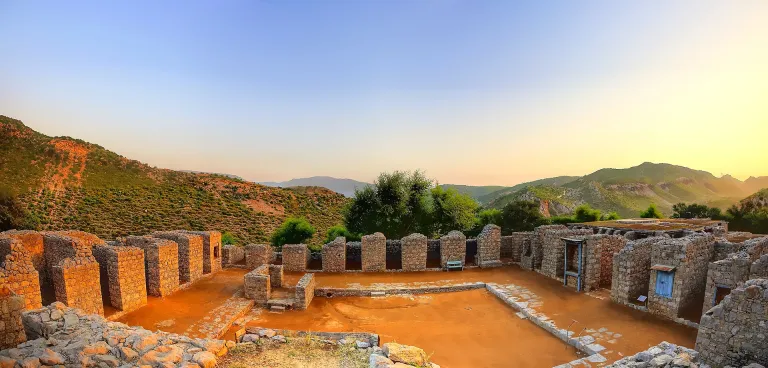 Jaulian and Mohra MoraduTwo Kushan-period monasteries in the Taxila valley, famous for stucco sculpture now mostly kept in the Taxila Museum.Bhamala Buddhist ComplexA cruciform stupa, monastery and a roughly 14 m Buddha of the Mahaparinirvana near Khanpur Dam, dated by UNESCO's Tentative List entry to the 2nd to 5th centuries CE.
 Takht-i-BahiThe most complete Buddhist monastery in Pakistan according to UNESCO, in use from the early 1st century CE to the 7th and crowning a rocky ridge.
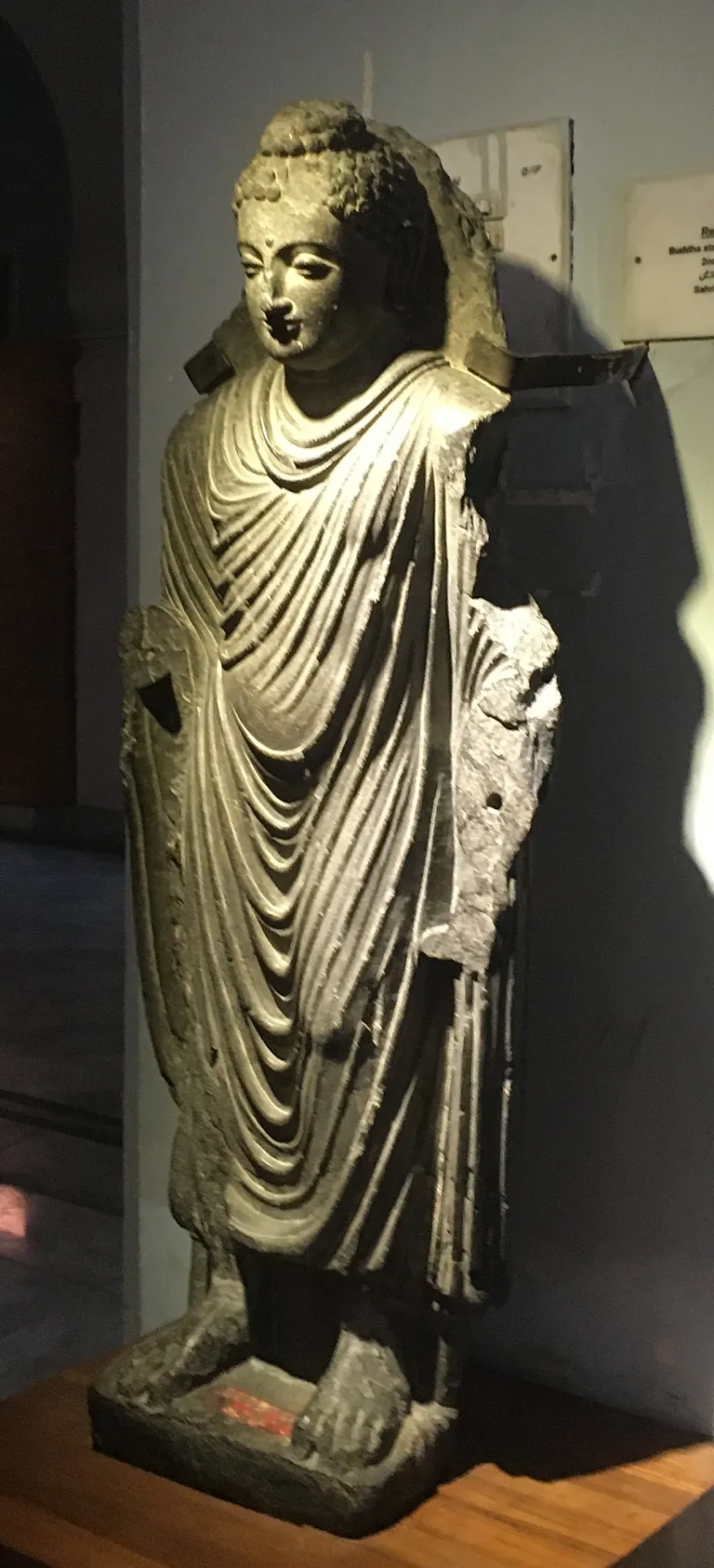 Sahr-i-BahlolThe remains of a small fortified Kushan-period town on the plain about 5 km from Takht-i-Bahi, covering 9.7 hectares and inscribed together with the monastery. Little is visible compared with the monastery above.
 Butkara I and Swat MuseumA stupa enlarged five times, excavated by an Italian mission from 1956, beside a museum holding Gandharan sculpture from Swat.
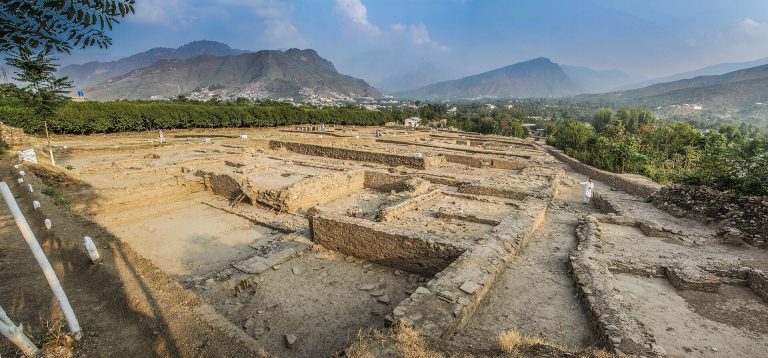 Bazira-BarikotAn ancient town on the Swat River with remains from the 2nd millennium BCE onward, a Late Kushan temple and an early Buddhist shrine. UNESCO's Tentative List entry says Alexander the Great captured its citadel in 327 BCE.
 Peshawar MuseumOpened in November 1907 to house Gandharan sculpture from sites including Shah-Ji-Ki-Dheri, Sahri Bahlol, Takht-i-Bahi and Jamal Garhi.
Trail at a glance
| Site | Area | Period as stated by the source | Status |
|---|---|---|---|
| Dharmarajika | Taxila | 3rd century BCE to 7th century CE | UNESCO World Heritage, 1980 |
| Jaulian | Taxila | Founded in the Kushan period, 2nd century CE; abandoned by the end of the 5th | UNESCO World Heritage, 1980 |
| Mohra Moradu | Taxila | Built in the 2nd century, renovated in the 4th and 5th | UNESCO World Heritage, 1980 |
| Bhamala | Haripur | 2nd to 5th century CE | Tentative List, 11 May 2026 |
| Takht-i-Bahi | Mardan | Early 1st to 7th century CE | UNESCO World Heritage, 1980 |
| Sahr-i-Bahlol | Mardan | Kushan period | UNESCO World Heritage, 1980 |
| Jamal Garhi | Mardan | Sources give roughly the 1st to 5th century CE | Protected archaeological site |
| Ranigat | Buner | Sources give the 1st or 2nd to 6th century CE | Tentative List, 30 January 2004 |
| Butkara I | Swat | Generally dated from the 2nd century BCE | Excavated site; museum nearby |
| Bazira-Barikot | Swat | From the 2nd millennium BCE; Buddhist phases later | Tentative List, 11 May 2026 |
Sources: UNESCO World Heritage Centre, Taxila Museum (Punjab Department of Archaeology), UNESCO Tentative List entries, Dawn. Dating differs between sources for some sites.
Suggested routes
Day plans built around the clusters. Allow for road conditions, weather and any local advisories; none of these should be treated as a fixed timetable.
- 1
A Taxila day from Islamabad
Start at the Taxila Museum to see the sculpture, then visit Dharmarajika, Sirkap and one of the hill monasteries (Jaulian or Mohra Moradu). Taxila is the easiest cluster to reach and has railway and road links to Rawalpindi.
- 2
Add Bhamala
From Taxila or Hasan Abdal, Bhamala lies in the Khanpur area of Haripur District. Check the road condition and whether the site is staffed on the day you plan to go.
- 3
A Mardan day
Takht-i-Bahi and Sahr-i-Bahlol sit close to each other north-west of Mardan. Jamal Garhi lies on the Katlang road. Start early to climb Takht-i-Bahi in cooler light.
- 4
Buner and Swat
Ranigat in Buner and the Swat sites need more planning. Buner and Swat are in Khyber Pakhtunkhwa: check current advisories and local authority guidance, and whether foreign visitors need a no-objection certificate for the district.
- 5
Finish at a museum
Peshawar Museum and the Swat Museum are the best places to see the sculpture that came from these sites. Confirm their opening days first.
Visiting respectfully
- Treat these as religious and archaeological sites. Keep voices low near stupas, dress modestly and follow any staff instructions.
- Do not climb on walls or stupa bases, touch stucco or sculpture, or remove stones. Several sites are fragile and exposed to weather.
- Never buy antiquities, coins or sculpture offered near a site. Trading antiquities is illegal and many items are fake.
- Photography is usually fine outdoors, but ask before photographing staff, visiting monks or worshippers, and check whether drones need permission.
- Carry water and sun protection. Hill monasteries involve climbs on uneven steps, and there are few facilities.
- Buddhist pilgrims from abroad visit some of these sites; give them space if you meet a group.
Access, hours and advisories
Best season
October to April
Summers are hot on the plains and monsoon rain can make hill paths slippery. Swat and Buner can be cold in winter.
Opening hours
Confirm locally
The Taxila Museum website lists winter hours of 9 am to 4 pm and summer hours of 8:30 am to 5 pm, closed on the first Monday of each month and on Islamic holidays (as of October 2026). Other sites may not publish hours.
Advisories
Check before you go
Conditions differ by district and change over time. Check current advisories and local authority guidance, particularly for Buner, Swat and the Peshawar region.
Permits
Foreign visitors
Some districts of Khyber Pakhtunkhwa have required no-objection certificates for foreign tourists. See the permits page and confirm with the provincial tourism authority.
Read more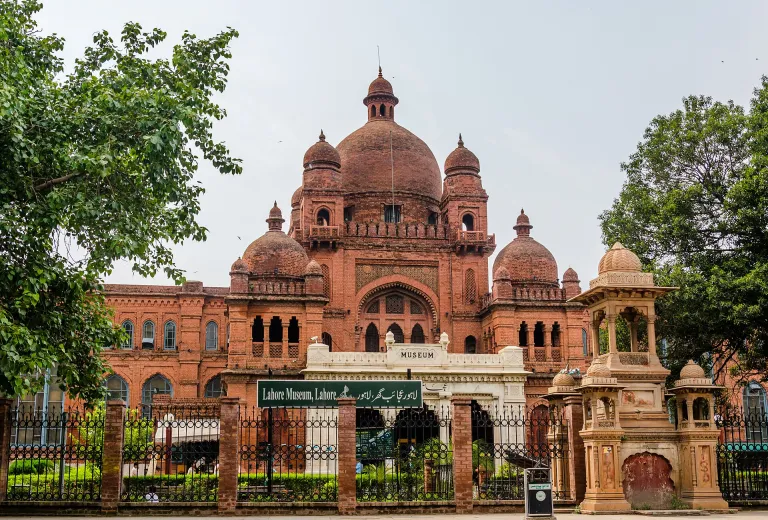
Frequently Asked Questions
Where should a first-time visitor start a Gandhara trip?
In Taxila, which is close to Islamabad and Rawalpindi. The Taxila Museum helps you read the ruins, and the monasteries and city sites are within a short drive of each other.
Are Gandhara sites open to foreign visitors?
Most are public archaeological sites, but access arrangements vary by district and can change. Check current advisories and local authority guidance, and ask the provincial tourism authority whether a no-objection certificate is needed.
Is Bhamala a World Heritage Site?
Not yet. It was added to Pakistan's Tentative List on 11 May 2026, according to UNESCO. Taxila and Takht-i-Bahi are inscribed World Heritage Sites.
Where can I see Gandharan sculpture?
At the Taxila Museum, Peshawar Museum, Swat Museum and Lahore Museum, among others. Confirm opening days before visiting.
Keep Exploring
Related places and stories on DailyLife.pk
TaxilaVisit Taxila: Dharmarajika stupa, Jaulian monastery, Sirkap and Taxila Museum.Takht-i-BahiVisit Takht-i-Bahi near Mardan: the UNESCO-listed Gandhara monastery, stupa courts, monks' cells, Sahr-i-Bahlol, history, best seasonButkara Stupa and the Swat MuseumButkara stupa and the Swat Museum, Saidu Sharif: Gandharan history, Italian excavations since 1956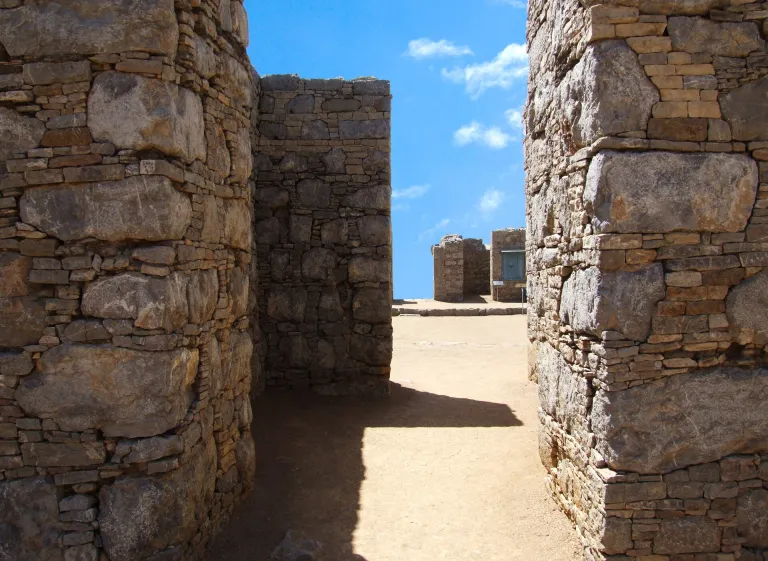 Jaulian and Mohra MoraduVisit Jaulian and Mohra Moradu near Taxila: Kushan-period Buddhist monasteries, stupas, cells, stucco finds, history, accessBhamala Buddhist ComplexVisit Bhamala near Khanpur Dam: cruciform stupa, monastery and a roughly 14 m reclining BuddhaRanigat and the Buddhist Sites of BunerRanigat in Buner, Khyber Pakhtunkhwa: Gandharan monastic complex, UNESCO Tentative List 2004
How we know this
- Type Practical guide
- Sources 13 (9 official/academic)
- Reviewed October 2026
- Disputed points None
Rules and fees change, confirm with the official links below before you act.
13 sources
- Taxila, UNESCO World Heritage Centre
- Buddhist Ruins of Takht-i-Bahi and Neighbouring City Remains at Sahr-i-Bahlol, UNESCO World Heritage Centre
- Bhamala Buddhist Complex (Tentative List), UNESCO World Heritage Centre
- Archaeological Site of Ranigat (Tentative List), UNESCO World Heritage Centre
- Bazira-Barikot (Tentative List), UNESCO World Heritage Centre
- Dharmarajika Stupa, Taxila Museum, Punjab Government
- Jaulian Monastery, Taxila Museum, Punjab Government
- Mohra Moradu, Taxila Museum, Punjab Government
- Taxila Museum: history, collection and timings, Taxila Museum, Punjab Government
- Peshawar Museum, Directorate of Archaeology and Museums, Khyber Pakhtunkhwa
- Swat Museum, Directorate of Archaeology and Museums, Khyber Pakhtunkhwa
- Jamal Garhi: the monastery and its lost finds, Dawn
- Jamal Garhi, Wikipedia (used to locate primary sources)
Photo credits (10)
- Takht-i-Bahi Buddhist Monastery.jpg, Muzamil Hassain Toori, CC BY-SA 4.0, via Wikimedia Commons
- Dharmarajika stupa,Taxila.jpg, Sasha Isachenko, CC BY-SA 3.0, via Wikimedia Commons
- Jaulian Buddhist Monastery in Taxila.jpg, ClicksByMohammadOmer, CC BY-SA 3.0, via Wikimedia Commons
- Peshawar Museum Sahri Bahlol Buddha, excavated 1909-1910.jpg, Batool Nasir, CC BY-SA 2.0, via Wikimedia Commons
- Butkara 1 Stupa Swat.jpg, Zainul Abideen, CC BY-SA 4.0, via Wikimedia Commons
- Bazira Panorama 2.jpg, Fazal.Khaliq, CC BY-SA 4.0, via Wikimedia Commons
- Peshawar Museum.JPG, Khalid Mahmood, CC BY-SA 3.0, via Wikimedia Commons
- Pirali checkpost, Khunjerab Pass.jpg, Bernard Gagnon, CC BY-SA 4.0, via Wikimedia Commons
- Front View of Lahore Museum.jpg, Muhammad Ashar, CC BY-SA 3.0, via Wikimedia Commons
- Sohail Gate - Rohtas Fort by Hassan.jpg, Hassantahir6009, CC BY-SA 4.0, via Wikimedia Commons
