
Travel destination
Takht-i-Bahi: Gandhara's Hilltop Monastery
The most complete Buddhist monastery of ancient Gandhara, climbing a rocky ridge above the Mardan plain, with stupa courts, meditation cells and an assembly hall still standing after nearly two thousand years.
- Mardan District, Khyber Pakhtunkhwa
- UNESCO World Heritage Site (1980)
- Best season October to April
Takht-i-Bahi, Mardan District, Khyber Pakhtunkhwa
About Takht-i-Bahi
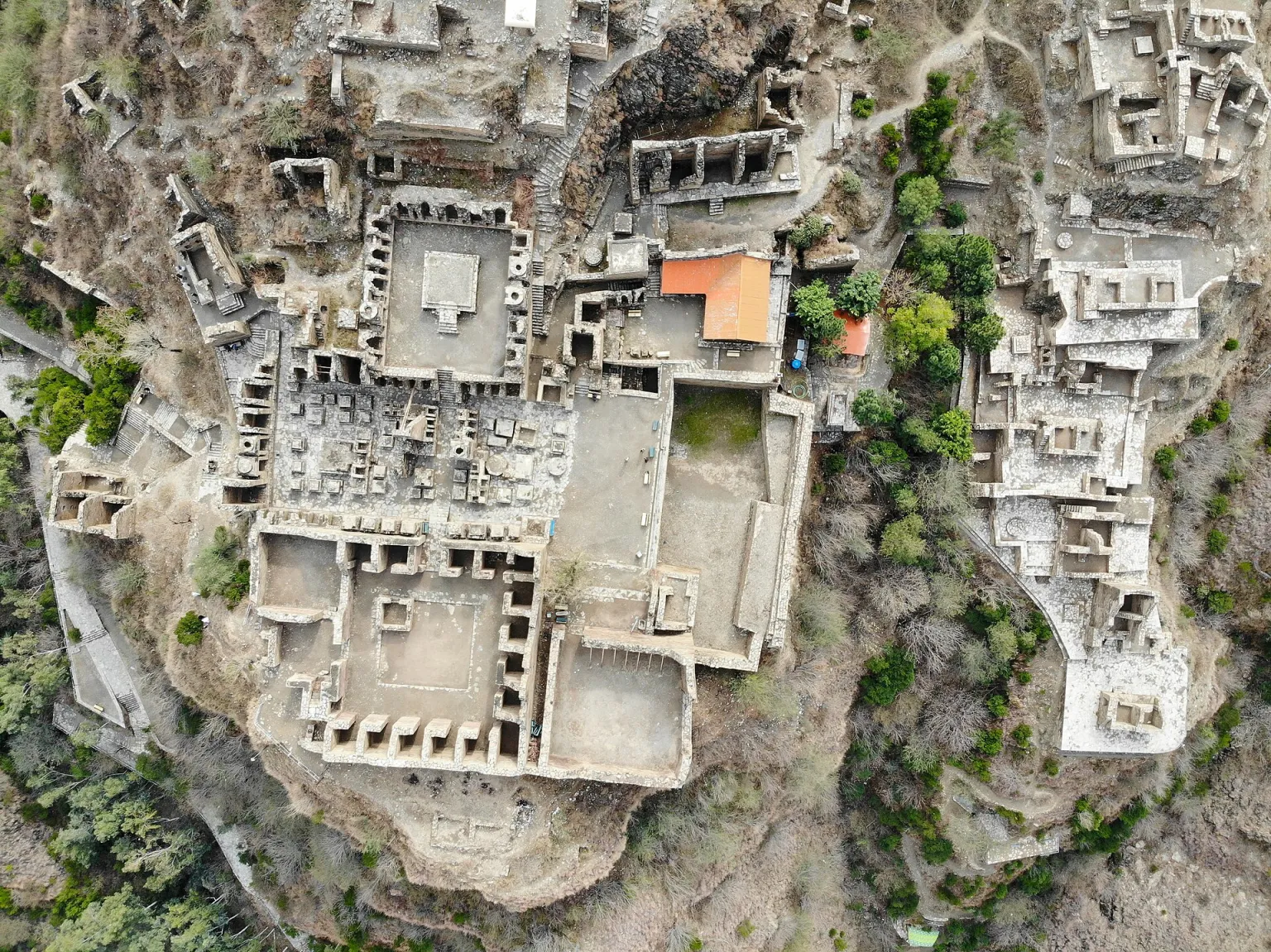
Two thousand years ago the valley of Peshawar and Mardan was the heart of Gandhara, a land where Buddhism flourished under the Kushan kings and where artists fused Indian, Greek and Central Asian traditions into a distinctive sculptural style. Of all the monasteries they built, Takht-i-Bahi is the most complete to survive. It sits on a rocky ridge about 16 km north-west of Mardan, its stone buildings stepping up the slope between 36 and 152 metres above the surrounding plain.
According to UNESCO, which inscribed the site in 1980 together with the nearby fortified town of Sahr-i-Bahlol, the monastery was founded in the early 1st century CE and remained in use until the 7th century. Its hilltop position probably saved it from the destruction that befell monasteries on the plains. What survives is a full monastic ensemble: a main stupa court surrounded by chapels that once held statues, a court of votive stupas, a group of three stupas, a quadrangle of monks' cells, an assembly or conference hall, covered stepped passages and service buildings. The masonry is the characteristic Gandharan 'diaper' style, with large stones framed by small packing stones.
Many sculptures excavated here in the 19th and early 20th centuries are now in museums, notably in Peshawar and Lahore, so the site today is about architecture and atmosphere: climbing through narrow passages, looking into the dark cells where monks meditated, and gazing from the ridge over a patchwork of sugarcane fields. The site is managed by the Khyber Pakhtunkhwa Directorate of Archaeology and Museums and draws pilgrims from Sri Lanka, Thailand and other Buddhist countries as well as students and families.
Climb early: in the morning light the honey-coloured stone and the plain below look much as the monks must have seen them.
What to See
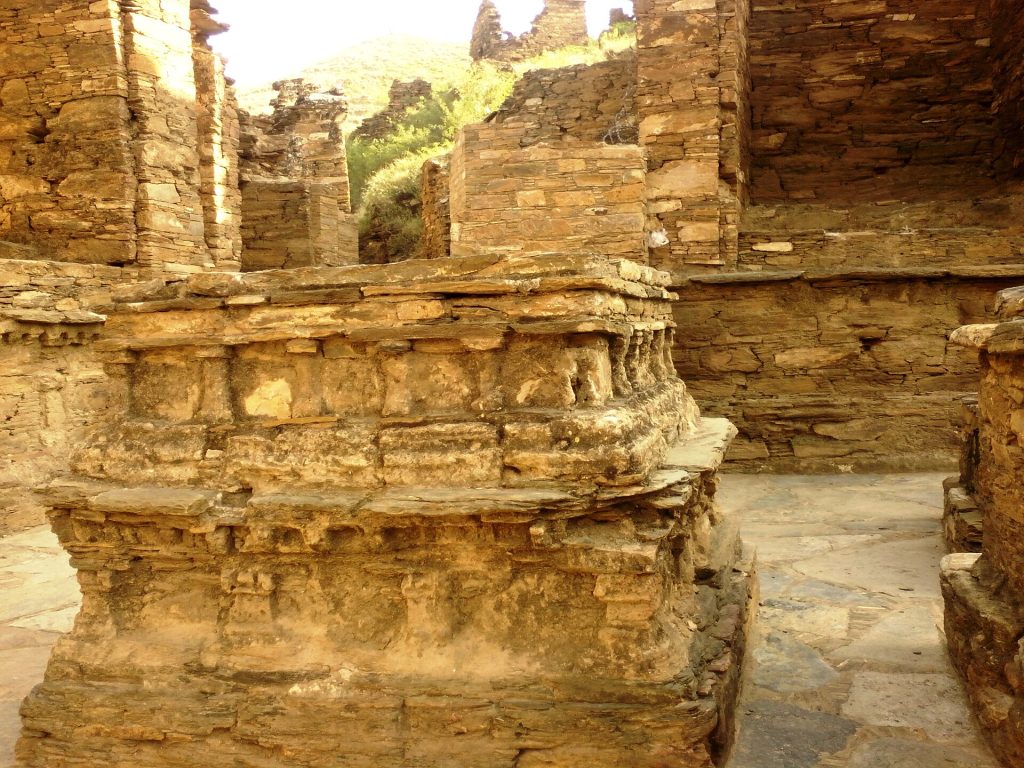
 Main stupa courtThe ritual heart of the monastery, where the base of the principal stupa is surrounded by niches and chapels that once held large statues.
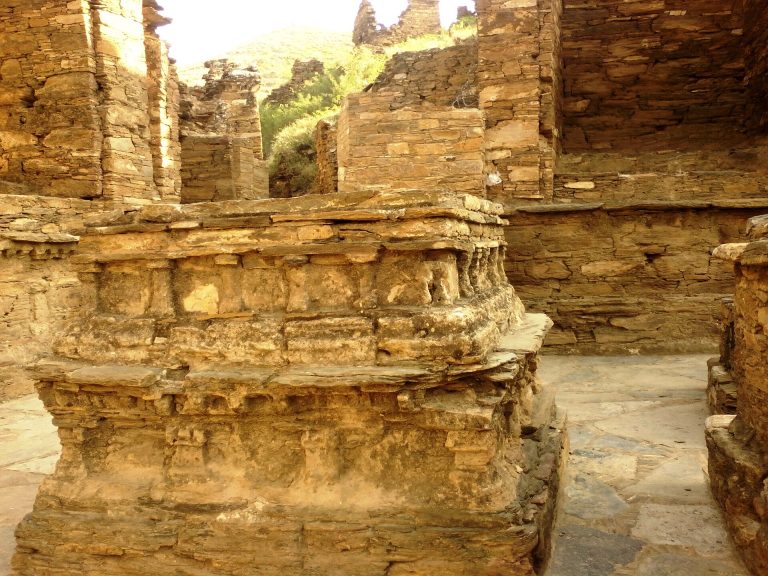 Court of votive stupasA court crowded with the bases of small stupas offered by pilgrims, many with traces of decoration.Ridge-top viewpointsPaths beyond the main complex lead to higher ruins and broad views over the plain.
Plan Your Trip
Best Time to Visit
October to April
Mild weather for the steep climb. Summers in the Mardan plain are very hot; go at opening time if visiting then.
How to Reach
Via Mardan
Takht-i-Bahi is about 16 km north-west of Mardan and roughly 80 km from Peshawar by road. Hire a car from Peshawar or Islamabad; from Islamabad allow most of a day for the return trip.
Where to Stay
Mardan or Peshawar
Mardan has a modest range of hotels; Peshawar and Islamabad offer more choice.
Food
Pashtun cooking
Try chapli kebabs, karahi and green tea in Takht Bhai town or Mardan.
Culture
Conservative region
Dress modestly; women should carry a scarf. Ask permission before photographing local people.
Advisories
Check before you go
The UK FCDO advises against all but essential travel to Mardan district. Check current advisories and local authority guidance; foreigners may need to register or travel with an escort.
Suggested Visit Plan
- 1
Check fees, timings and advisories
Confirm opening hours and ticket prices with the Khyber Pakhtunkhwa Culture and Tourism Authority, and read the UK FCDO and US State Department advice for Khyber Pakhtunkhwa.
- 2
Morning drive
Leave Peshawar or Islamabad early and drive via Mardan to Takht Bhai town.
- 3
Climb to the monastery
Walk up the stepped path; allow two hours to explore the courts, cells and hall.
- 4
Ridge and views
If you have energy, follow the paths higher up the ridge for views.
- 5
Lunch and onward
Eat in Mardan, visit the Guides Memorial, or continue north towards Swat.
Visit Responsibly
- Do not climb on stupa bases or walls, or remove stones.
- Respect Buddhist visitors who come to pray and meditate.
- Carry out litter; there are few bins on the hill.
- Never buy 'antiquities' offered by sellers; illicit trade has damaged Gandharan sites.
- Hire local guides and use local transport where possible.
Nearby Places
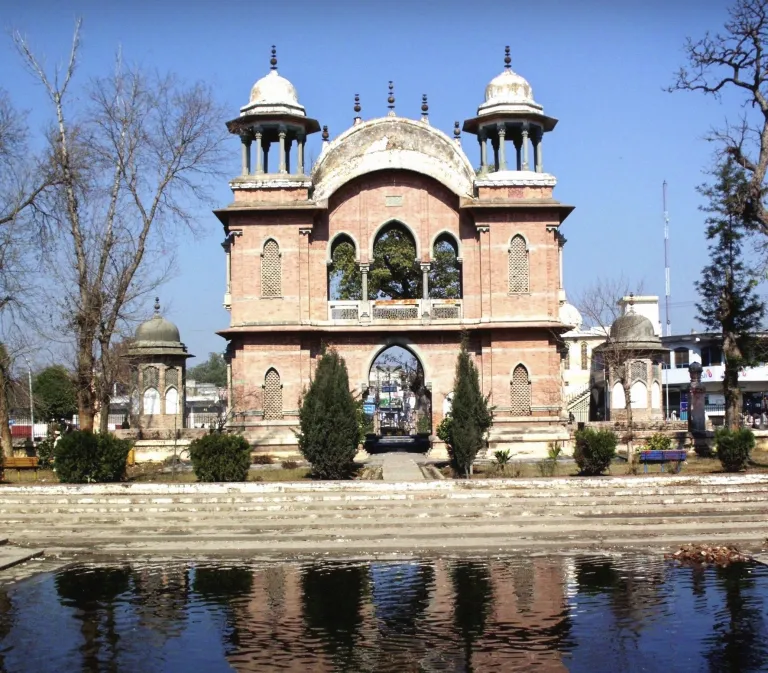 MardanThe district town, with the Guides Memorial and nearby Ashokan rock edicts at Shahbazgarhi.
 TaxilaGandhara's great city of stupas and monasteries near Islamabad, another World Heritage Site.
 Swat ValleyGreen valleys rich in Buddhist remains north of the Malakand Pass.GandharaOur guide to the history and art of ancient Gandhara.
Takht-i-Bahi Through Time
Every dated moment our guides record about Takht-i-Bahi, from its own history and from national events that touched it. Each entry links to its source page.
- 1st millennium BCE – 1st millennium CE
Gandhara
Taxila and the Peshawar valley became centres of Buddhist learning and Gandharan art, now recognised by UNESCO at Taxila and Takht-i-Bahi.
- 1st–3rd century CE
The Kushans
Kushan emperors, notably Kanishka, rule from Purushapura (Peshawar); Gandharan Buddhist art reaches its peak at sites such as Takht-i-Bahi.
- 1st–7th century CE
Takht-i-Bahi monastery
A monastery is founded on the ridge at Takht-i-Bahi and grows over centuries; the walled town of Sahr-i-Bahlol flourishes below in the Kushan era.
- 1st–7th century CE
Gandhara
Buddhist monasteries, stupas and cities flourish around Peshawar, Swat and Taxila; Takht-i-Bahi is the best-preserved monastery complex.
- 7th century CE
Last monastic phase
Takht-i-Bahi remains in use until about the 7th century; Gandhara's distinctive art fades out.
- 1st–7th centuries CE
Takht-i-Bahi
The hilltop monastery near Mardan is founded and remains in use for six centuries.
- 1980
Three sites inscribed
Moenjodaro, Taxila, and the Buddhist ruins of Takht-i-Bahi with Sahr-i-Bahlol join the World Heritage List.
- 1980
World Heritage
UNESCO inscribes the Buddhist ruins of Takht-i-Bahi and the neighbouring remains at Sahr-i-Bahlol on the World Heritage List.
Do you remember Takht-i-Bahi as it used to be? Share a memory or an old photo, our editors review every story before it appears.
Frequently Asked Questions
How old is Takht-i-Bahi?
UNESCO dates its foundation to the early 1st century CE; it remained in use until the 7th century.
Is Takht-i-Bahi a World Heritage Site?
Yes. The Buddhist ruins of Takht-i-Bahi and the neighbouring city remains at Sahr-i-Bahlol were inscribed together in 1980.
How far is Takht-i-Bahi from Mardan and Peshawar?
About 16 km north-west of Mardan and roughly 80 km from Peshawar by road.
How long should I allow at the site?
Two to three hours, including the climb. Bring water and wear good shoes.
Where are the sculptures from Takht-i-Bahi?
Many pieces excavated here are displayed in museums, especially the Peshawar Museum and the Lahore Museum.
Keep Exploring
Related places and stories on DailyLife.pk
TaxilaVisit Taxila: Dharmarajika stupa, Jaulian monastery, Sirkap and Taxila Museum. Swat ValleyPlan a trip to Swat Valley: Kalam, Mahodand Lake, Malam JabbaMardanMardan city guide: Takht-i-Bahi, Shahbazgarhi's Ashoka edicts, the Guides Memorial, local food
 PeshawarPeshawar city guide: Qissa Khwani Bazaar, Mahabat Khan Mosque, Sethi House, Peshawar Museum, Pashtun food
 CharsaddaCharsadda city guide: the Bala Hisar mound of ancient Pushkalavati, Bacha Khan and Utmanzai, Rajjar sweets
 SwabiSwabi city guide: Hund and its museum on the Indus, GIK Institute at Topi
How we know this
- Type Travel guide
- Sources 7 (6 official/academic)
- Reviewed October 2026
- Disputed points None
Rules and fees change, confirm with the official links below before you act.
7 sources
- Buddhist Ruins of Takht-i-Bahi and Neighbouring City Remains at Sahr-i-Bahlol, UNESCO World Heritage Centre
- Takht Bhai: UNESCO world archaeological site attracts tourists, archaeology lovers, Associated Press of Pakistan
- Gandhara, Encyclopaedia Britannica
- Gandhara art, Encyclopaedia Britannica
- Mardan (Pakistan), Encyclopaedia Britannica
- Foreign travel advice: Pakistan, UK Foreign, Commonwealth & Development Office
- Pakistan Travel Advisory, US Department of State
Photo credits (5)
- Takht-i-Bahi Buddhist Monastery.jpg, Muzamil Hassain Toori, CC BY-SA 4.0, via Wikimedia Commons
- Takht-i-Bahi stupa.jpg, Shahabuddin648, CC BY-SA 3.0, via Wikimedia Commons
- Guides Memmorial.JPG, Adil Shah of Mardan at English Wikipedia, CC0, via Wikimedia Commons
- Dharmarajika stupa,Taxila.jpg, Sasha Isachenko, CC BY-SA 3.0, via Wikimedia Commons
- Sunset over the Mingora City, Swat Valley, Pakistan.jpg, Imranrashid26, CC BY-SA 3.0, via Wikimedia Commons
