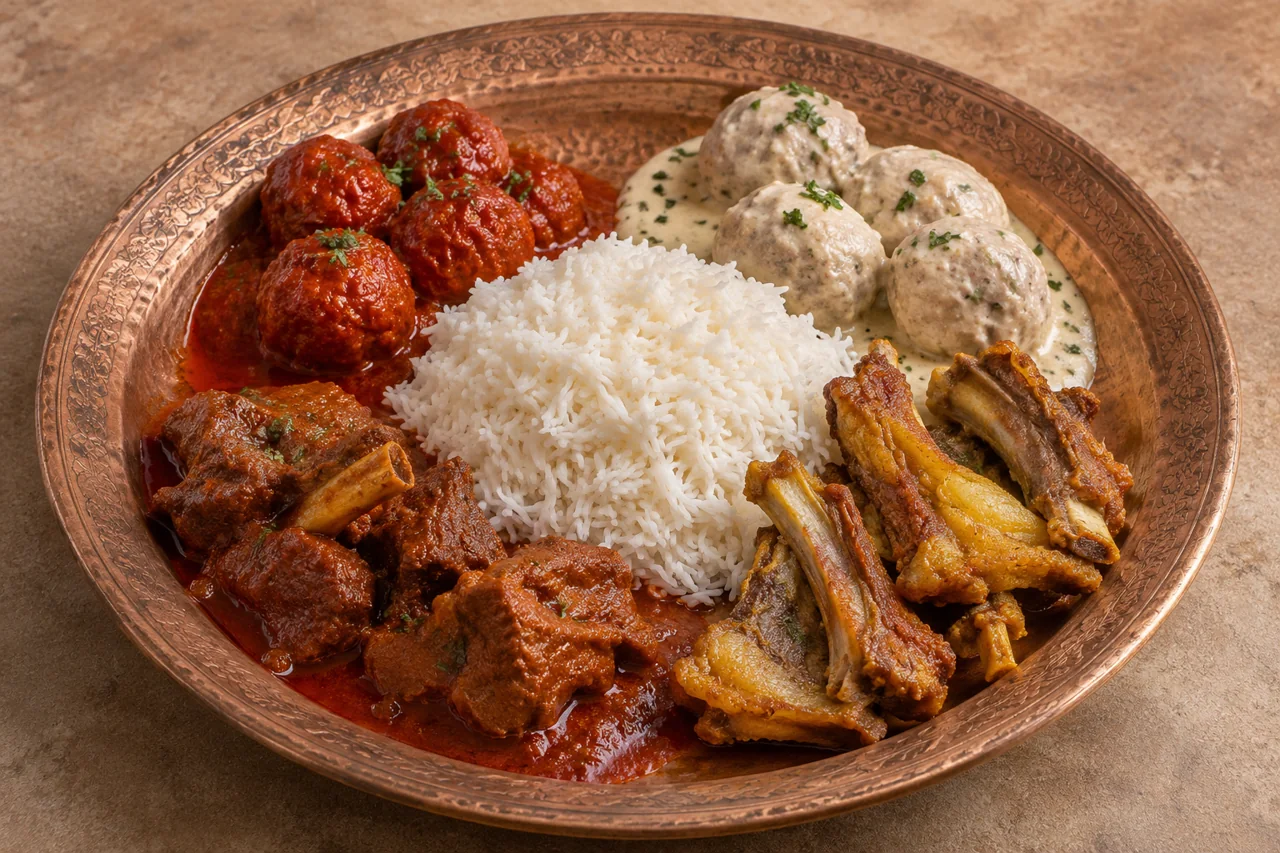
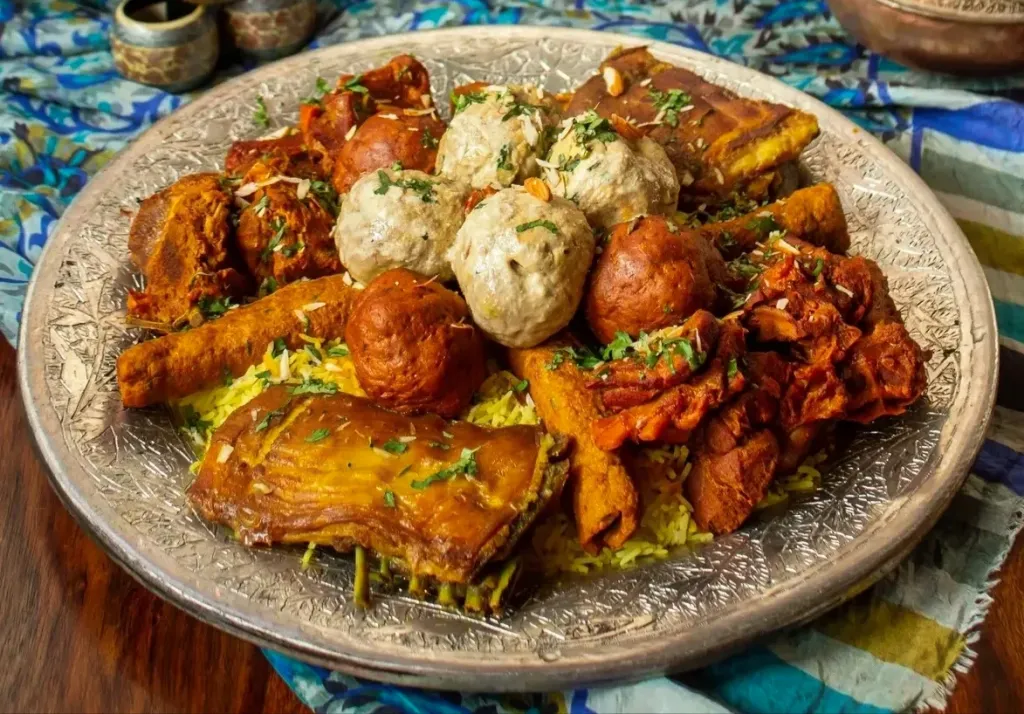
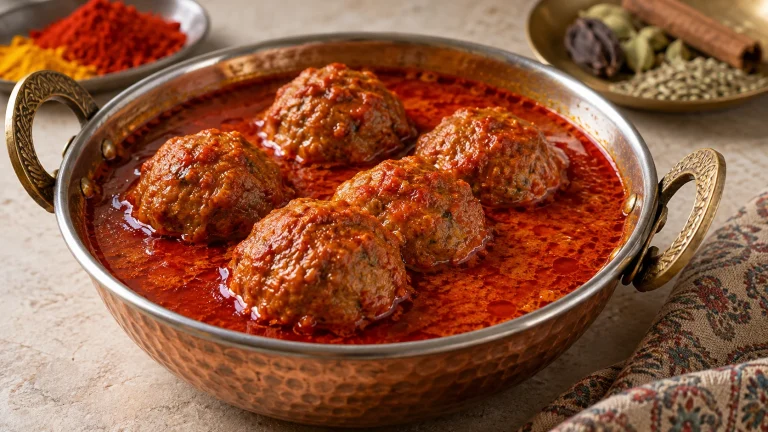
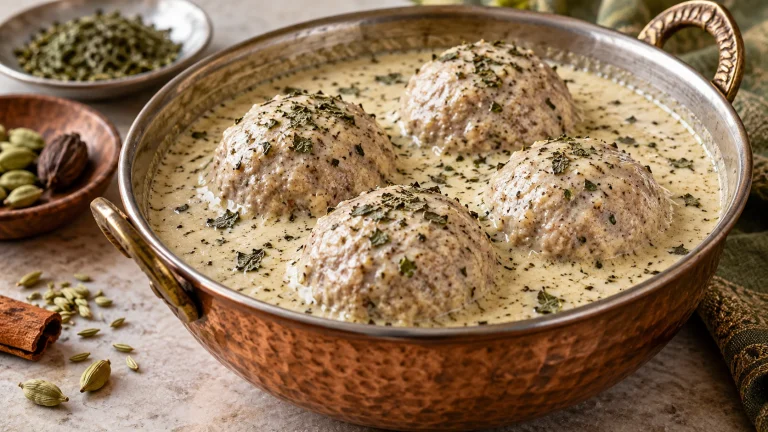
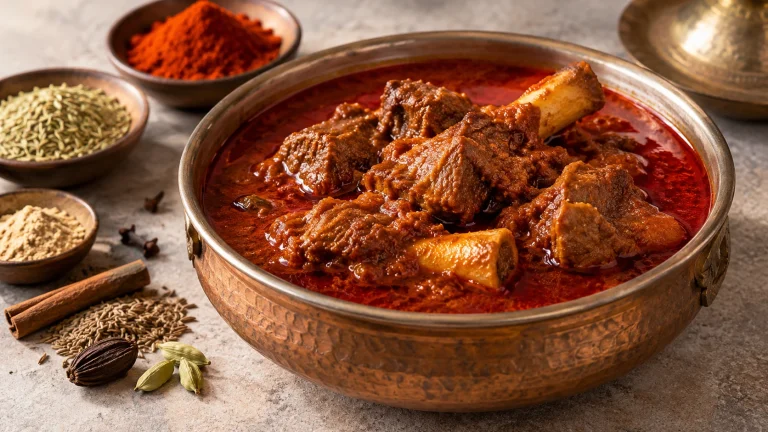
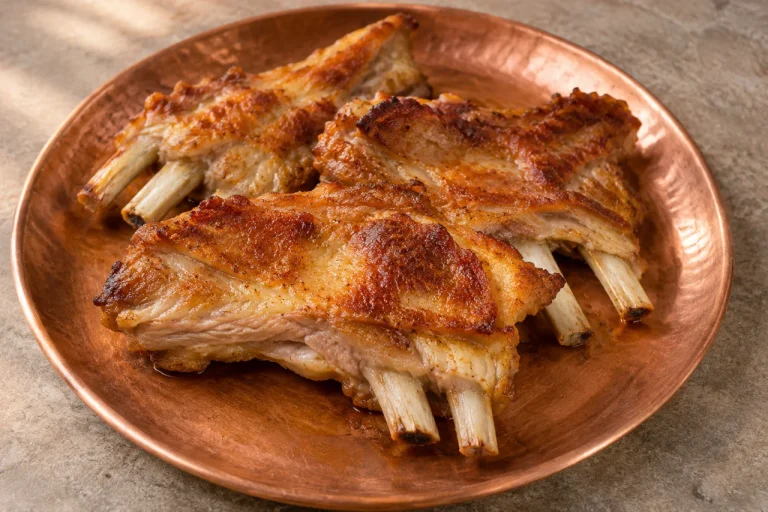
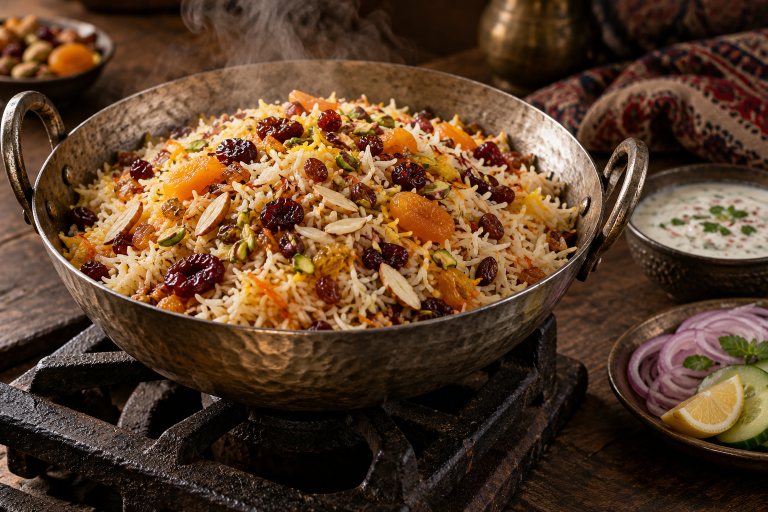
Kashmiri trami platter with rice, rista, gushtaba, rogan josh and fried ribs

Regional cuisine

Kashmiri Cuisine: WazwanHareesa and Pink Tea

Slow-cooked mutton dishes of the wazwan feast, winter hareesa and pink salted tea: the Kashmiri kitchen as it is cooked in Azad Kashmir and by Kashmiri families across Pakistan.

  • Azad Jammu and Kashmir
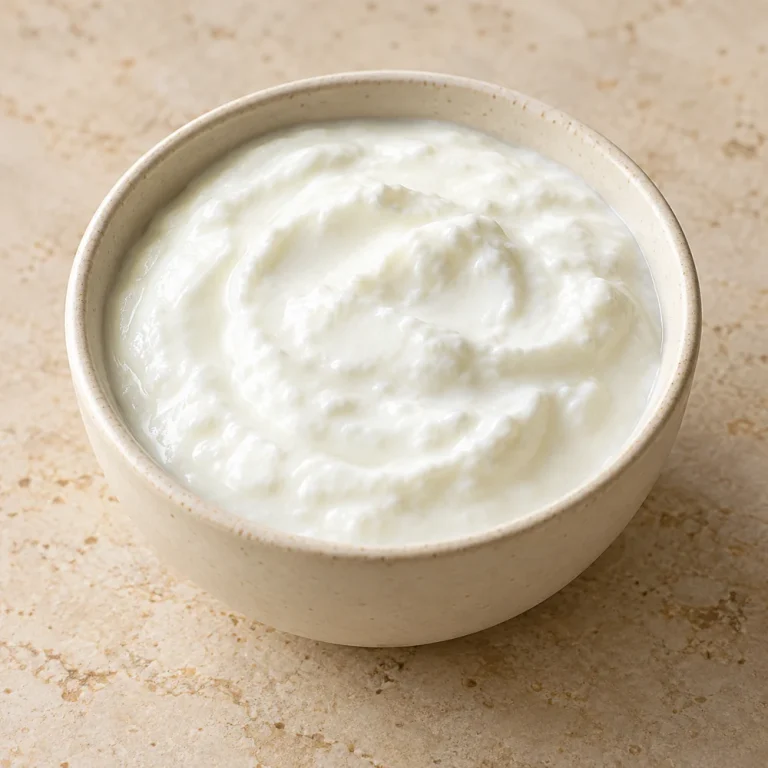
  • Mutton, yoghurt and slow cooking
  • Pink noon chai and kahwa

Kashmiri feast

14th centuryWhen wazwan's cooks are traditionally said to have arrived in Kashmir from Central AsiaAl Jazeera, 2026, traditional account
7 → about 20Growth in a wazwan's mutton dishes over the centuries, per a veteran wazaAl Jazeera, 2026
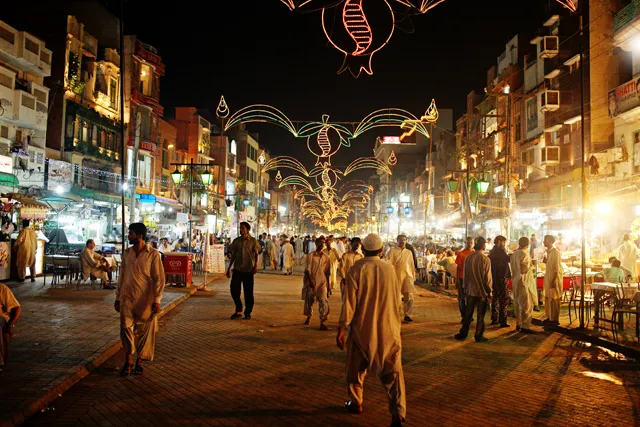
Upper AddaInformal food street in Muzaffarabad, AJK's capitalDawn Images, 2017

About Kashmiri Cuisine

Kashmiri cooking is the food of a cold mountain valley: mutton cooked slowly for hours, yoghurt and milk used to build sauces, dried chillies chosen for colour as much as heat, and warming drinks for long winters. Its grandest expression is the wazwan, the multi-course wedding feast of the Kashmir valley, but just as important are humble daily dishes and the endless cups of pink, salted noon chai.

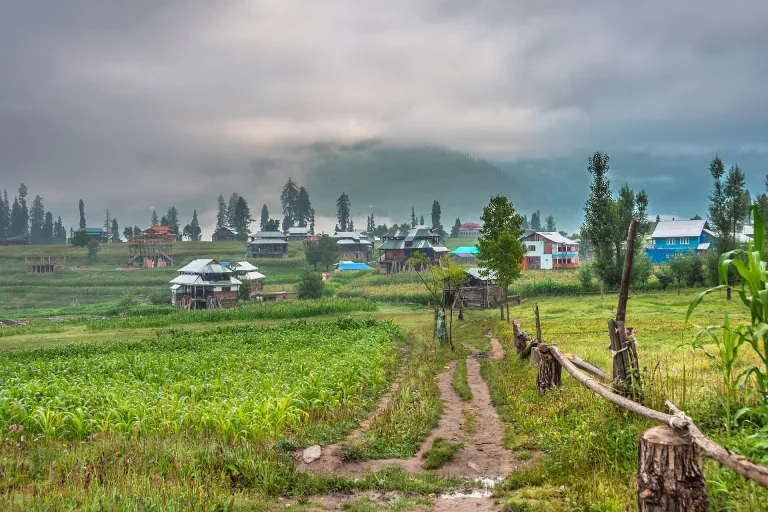
Kashmir is a disputed region, divided between Pakistani and Indian administration since 1947. In Pakistan, Kashmiri food lives on in two ways. In Azad Jammu and Kashmir (AJK), which is administered by Pakistan with its own government, Kashmiri dishes sit alongside everyday cooking that shares much with neighbouring Punjab and Khyber Pakhtunkhwa, wheat roti, daal, rice and seasonal vegetables. And across Punjab, families of Kashmiri descent have carried their recipes for generations, most famously the winter dish hareesa.

That shared heritage shows in the menus. A small shikara-shaped kiosk that opened on Muzaffarabad's Upper Adda food street in 2017 set out to promote Kashmiri food and culture with pink salted tea and goshtaba yakhni, and planned to add hareesa once winter arrived.

A wazwan trami, a copper platter of rice and meat dishes
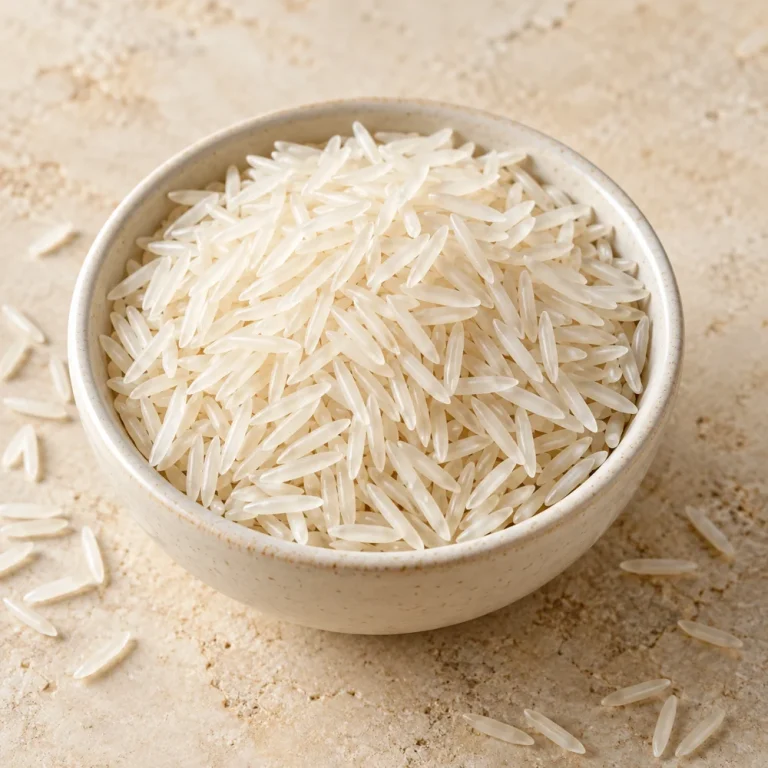
A wazwan trami: rice crowned with kebabs and meat dishes, shared from one copper platter.

The Wazwan Feast

The wazwan is Kashmir's ceremonial banquet, cooked for weddings and major celebrations. Tradition holds that it came to the Kashmir valley from Central Asia in the 14th century, when rulers arrived with skilled cooks alongside carpet and shawl weavers. The cooks' descendants, the wazas, still guard the craft, and some trace their families to a single cooks' neighbourhood in old Srinagar.

The methods have changed remarkably little. Meat is pounded by hand with wooden mallets to make rista and gushtaba, and dishes are simmered slowly in heavy copper pots (degchis) over wood fires. Diners share a trami, a large copper platter of rice topped with kebabs and meat, and the courses keep coming. One veteran waza told Al Jazeera that the number of mutton dishes has grown from seven to around twenty over the centuries, and that the scale of a wazwan, how many dishes, how much meat, has long reflected a family's wealth.

Gushtaba, in its yoghurt gravy, is always served last. Its arrival tells guests the feast is over.

Today the tradition is adapting: younger chefs increasingly open restaurants rather than work the exhausting round-the-clock schedule of wedding catering, which brings wazwan dishes to everyday diners.

When the gushtaba arrives, the feast is over.

Food Culture & Hospitality

Tea, all day long

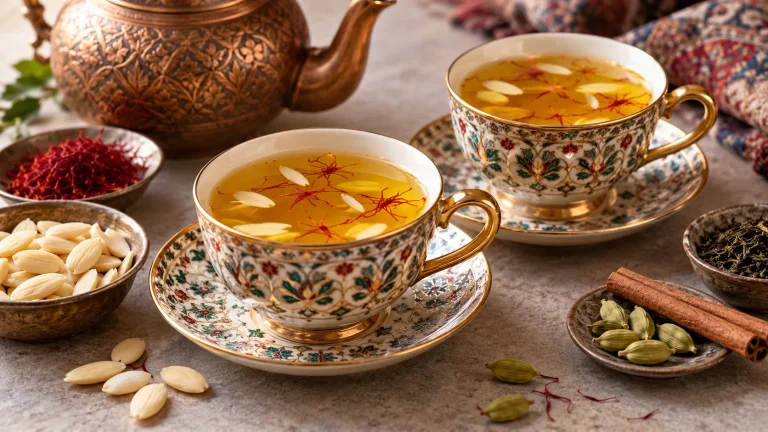
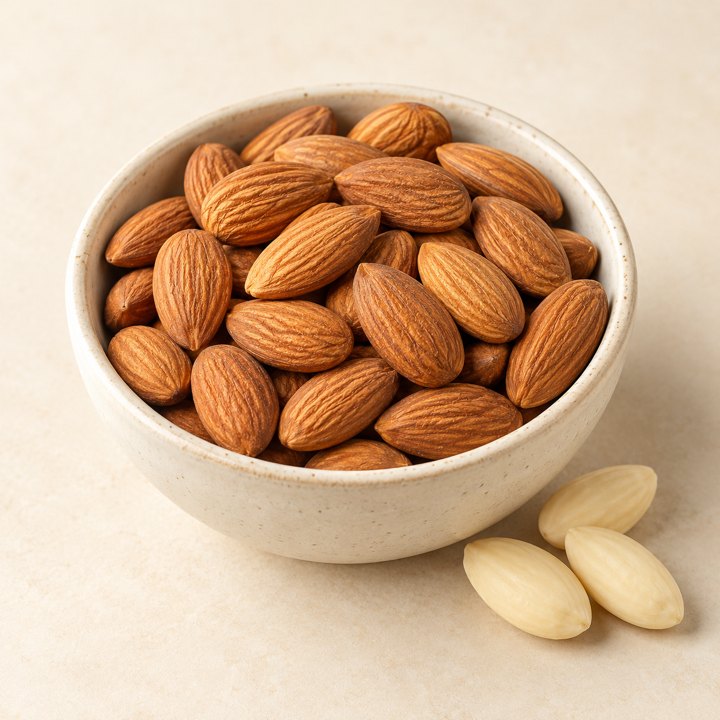
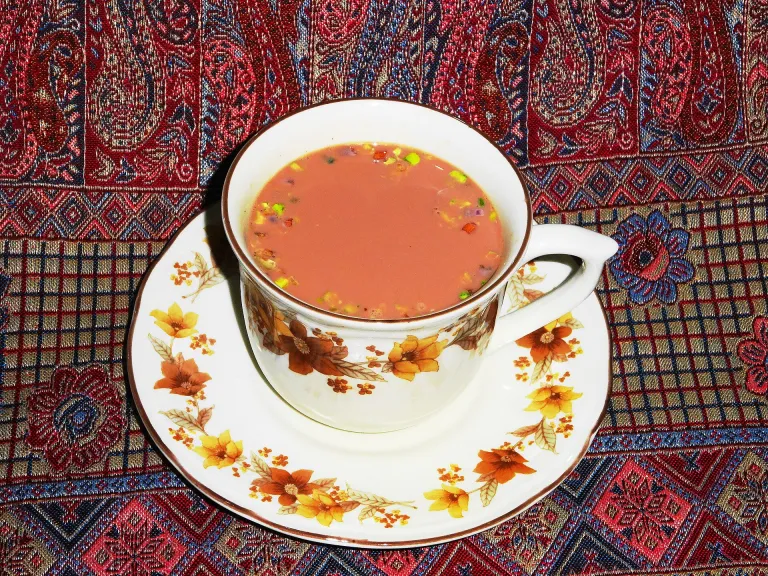
Few things are more Kashmiri than tea. Noon chai, pink, salted and milky, often finished with crushed almonds, is drunk from morning to night in the cold months, while kahwa, a fragrant green tea, is offered to guests and after meals. In Muzaffarabad, pink tea made with fresh local milk is sold from kiosks on the city's informal food street.

Offering tea is the first act of hospitality; refusing a second cup takes determination.

Cook kashmiri chai

Explore
Kashmiri Chai: styled serving suggestion (illustration)

Hareesa: a Kashmiri gift to Punjab

Hareesa traces a long route. Shopkeepers in Rawalpindi say it came to South Asia from the Middle East with Muslim settlers and became especially popular in Jammu and Kashmir, where local cooks adapted it; others credit migrants from Iran and Central Asia. What is clear is that the version cooked in Pakistan today follows Kashmiri recipes.

One Rawalpindi hotel says its founder brought his recipes from Srinagar before Partition, and in Lahore, Kashmiri families are credited with making hareesa a fixture of Gawalmandi Food Street.

Explore Rawalpindi

Cook hareesa

Explore
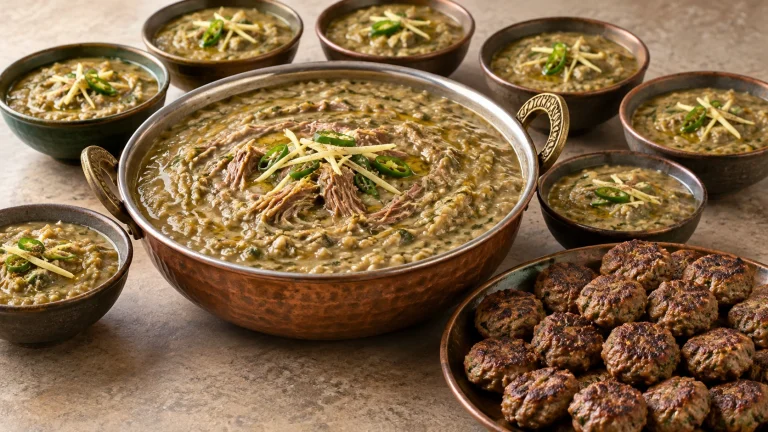
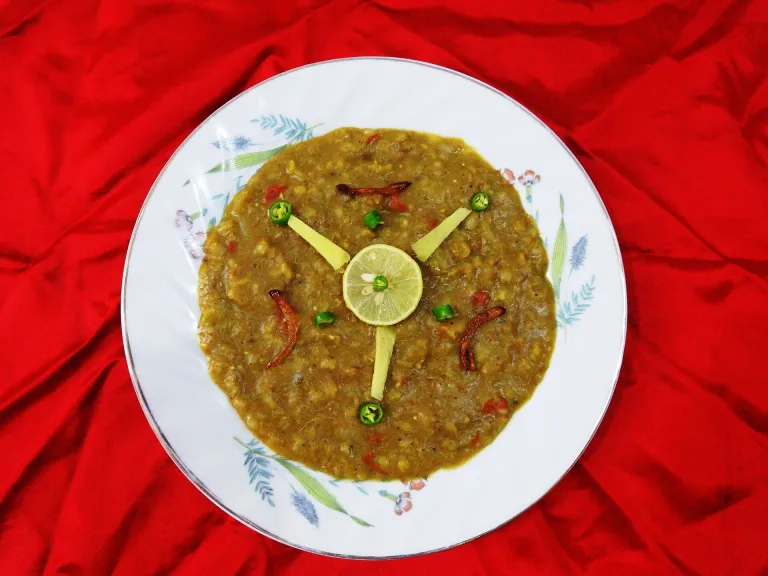
Hareesa — finished dish

Frequently Asked Questions

What is wazwan?

Wazwan is the multi-course mutton feast of the Kashmir valley, cooked by hereditary chefs called wazas for weddings and major celebrations. Dishes include rista, rogan josh, tabak maaz and kebabs, with gushtaba served last.

Why is Kashmiri tea pink?

Noon chai's colour comes from the way it is made: green tea leaves are boiled for a long time, usually with a pinch of baking soda and plenty of aeration, before milk is added. It is salted rather than sweet, and often topped with crushed nuts.

Is hareesa the same as haleem?

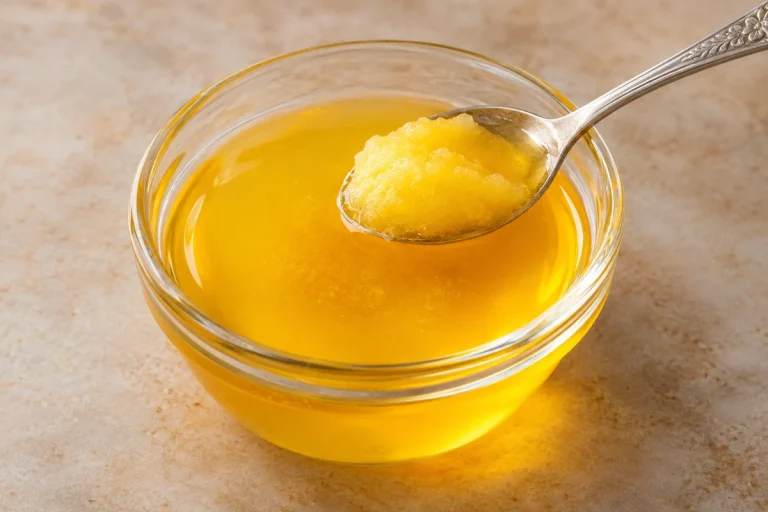
They are related, both combine meat and grain, cooked until very soft, but hareesa as made in Pakistan follows Kashmiri recipes, is usually smoother and is finished with hot ghee. It is mainly a winter breakfast dish.

Can I find wazwan in Azad Kashmir?

Kashmiri dishes such as gushtaba, yakhni and pulao are served in Muzaffarabad and at family celebrations, but a full wazwan is usually cooked for weddings rather than ordered at restaurants. Ask locally for current options.

What is yakhni?

Yakhni is a broth-based, usually yoghurt-enriched style of Kashmiri cooking in which meat is simmered gently with aromatic spices rather than chillies. In Muzaffarabad, a gushtaba (pounded-meat ball) served in a bowl of yakhni is a popular way to try it, often alongside pulao.

Is Kashmiri food spicy?

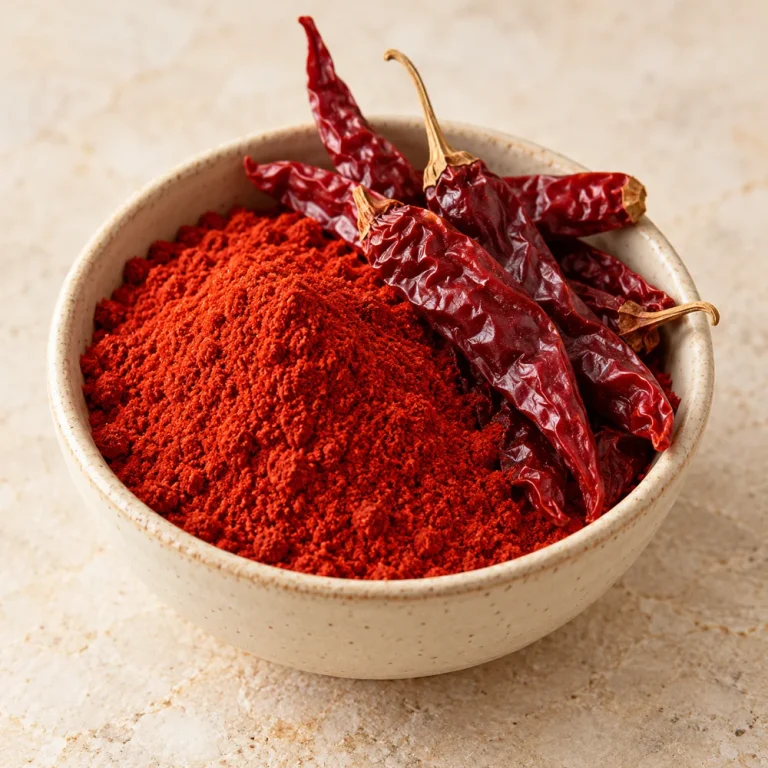
It is aromatic rather than fiery. Kashmiri red chillies are prized more for their deep colour than their heat, and many dishes rely on yoghurt, fennel, ginger and cardamom.

How we know this

  • Type Food history
  • Sources 5
  • Reviewed October 2026
  • Disputed points None
5 sources
  1. Photos: Kashmir's 600-year-old wazwan wedding feast adapts to modern life, Al Jazeera, 30 September 2026
  2. Pakistanis enjoy a taste of Kashmir at this shikara-shaped kiosk in Muzaffarabad, Dawn Images (Tariq Naqash), 7 October 2017
  3. Kashmiri Hareesa: slowcooked for generations, Dawn (Aamir Yasin), 18 January 2016
  4. Gawalmandi: A taste of history, Dawn (Suhail Yusuf and Muhammad Umar), 9 December 2014
  5. Sheer Khurma remains highlight of Eid table across all three days in Capital, Associated Press of Pakistan, 23 March 2026
Photo credits (9)
Suggest a correction

Stay updated

Stay Connected with DailyLife.pk

Get new travel guides, recipes and stories from across Pakistan, no spam, unsubscribe any time.

Your Pakistan journey starts here

From majestic mountains to vibrant cities, rich cuisine to timeless traditions — discover the real Pakistan with DailyLife.pk.