
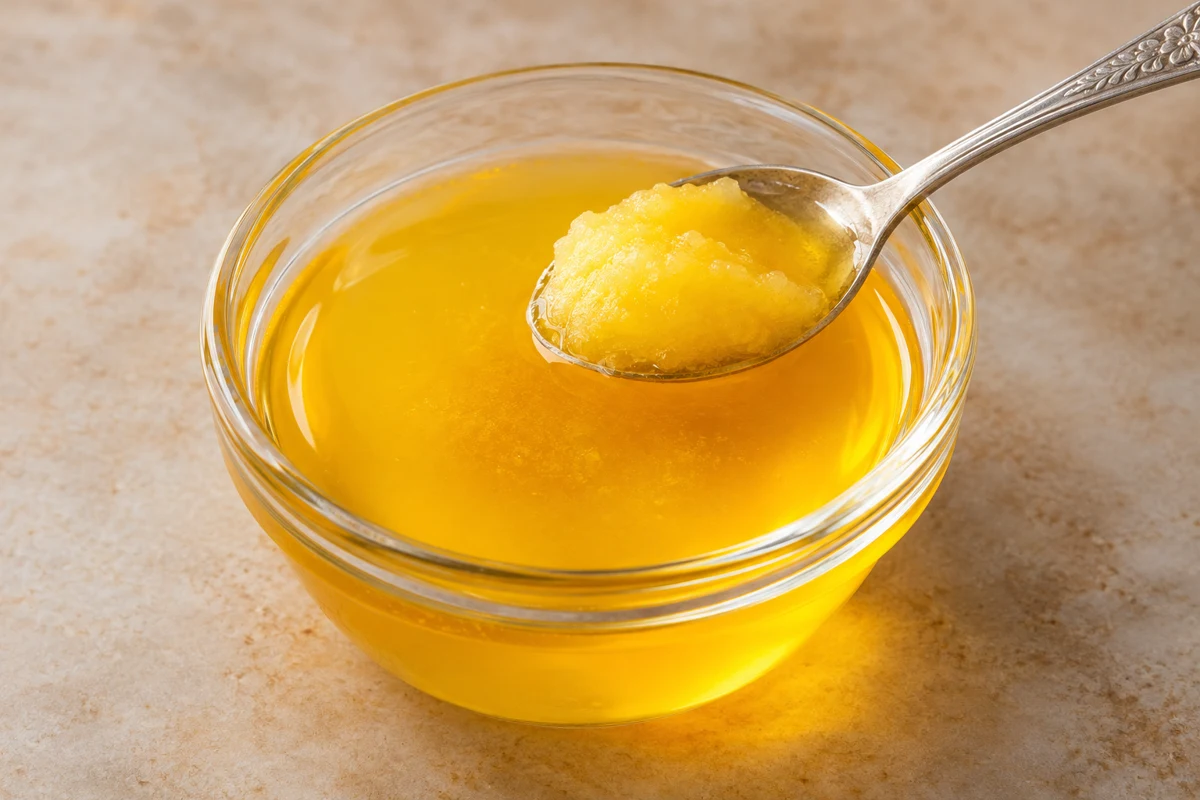
Ingredients & Spices · The complete guide
Ghee (Desi ghee)
Ghee is clarified milk fat made by heating butter or cream-derived fat to remove water and separate milk solids. Desi ghee is dairy fat; vegetable ghee or vanaspati is a different manufactured product.
What it is and what to ask for
Ghee is clarified milk fat made by heating butter or cream-derived fat to remove water and separate milk solids. Desi ghee is dairy fat; vegetable ghee or vanaspati is a different manufactured product.
Read whether it is pure dairy ghee, a blend or vegetable ghee. Buy sealed products from a traceable producer; aroma alone cannot establish authenticity.
History, production and the Pakistan context
Clarifying butter is a long-established South Asian preservation and cooking practice. Its history is regional and cumulative, rather than a documented invention by one cook.
Pakistan and India produce dairy ghee, while butterfat and ghee are also traded by other dairy-exporting countries. A local or imported label should identify the source fat clearly.
How to use it successfully
Use a measured spoon for tadka, paratha or finishing rice. Its low water content changes frying behaviour compared with butter, and a browned aroma can become harsh if the fat is overheated.
Removing milk solids means ghee behaves differently from butter when heated, but it can still deteriorate with excessive heat, air and contamination. Keep utensils dry and return the lid promptly. Natural firmness varies with temperature and milk-fat composition; a grainy or smooth texture by itself is not a reliable test for adulteration.
Nutrition, benefits and limits
Ghee is concentrated saturated-fat-rich dairy fat. It is not automatically safe for milk allergy, and its low lactose content should not be turned into a blanket promise for every person or brand.
Choosing a replacement
Neutral cooking oil gives a lighter aroma. Butter introduces water and milk solids and can brown sooner; using it in pastry may change texture as well as flavour.
When changing a cooking fat, compare flavour, water content, solidity and the method of heating. Preserve the recipe’s functional balance rather than only the apparent spoonful size. A substitute should meet the household’s actual dietary requirement, and its own food-grade and storage instructions remain relevant even when the quantity is small.
Safe handling and storage
Identify the actual fat before applying a storage rule. Butter, clarified dairy ghee, raw lamb trimmings and rendered animal fat differ in water content and processing. Follow the producer’s directions, keep utensils clean and dry, and do not store a homemade fat indefinitely at room temperature simply because a commercial sealed product permits cupboard storage.
Solid and liquid fats measure differently and may behave differently after a cooked dish cools. Butter contains water and milk solids, while clarified fat is more concentrated; rendered meat fat brings a distinct savoury aroma. Use the recipe’s specified form and amount, and avoid overheating until the fat smokes. Rendering improves usability but is not a way to rescue rancid or badly handled raw material.
Fat contributes tenderness, flavour delivery and richness, but it is not a substantial protein serving. Consider saturated fat and the overall meal when choosing portions. Dairy-derived fats remain relevant to milk allergy even when lactose is low. A fat described as natural, desi or traditional is not automatically lower in energy or suitable for every dietary requirement. Keep flavours and nutritional claims separate when comparing dairy ghee, vegetable oils and animal fats.
Planning, portions and serving
For a tadka, prepare the spices in advance because their aromatic compounds can change quickly in hot fat. Pour the finished tempering onto the dish carefully, avoiding water splashes into the pan. For bread, brushing a modest amount after cooking gives a different effect from incorporating a large quantity into the dough. Record which approach the recipe uses, since flavour, tenderness and total fat all change when the method is altered.
Recipes and pantry links
Use ghee according to the form specified in the linked recipe: raw versus cooked, bone-in versus boneless, sweetened versus plain, and the stated cut or processing style all affect the result. The ingredient discussion above explains which differences matter most here. Read the complete recipe before shopping, then measure the prepared usable quantity rather than assuming every package has the same yield.
For related ingredient names, local terminology and flavour pairings, browse the Pakistani ingredients and spices pantry guide.
Names and forms used in our recipes
View the recipe names covered by this guide
- desi ghee
- ghee
- ghee (about 4 tbsp)
- ghee between folded layers
- ghee for layering
- ghee for tawa
- ghee for tempering
- ghee in dough
Frequently Asked Questions
Is vegetable ghee the same as desi ghee?
No. Dairy ghee is clarified milk fat, while vegetable ghee is a manufactured vegetable-fat product. Their ingredients, flavour, dietary suitability and fat composition differ, so read the label.
What should I check before buying ghee for these recipes?
Read whether it is pure dairy ghee, a blend or vegetable ghee. Buy sealed products from a traceable producer; aroma alone cannot establish authenticity. Match the stated plain or flavoured form and read the storage directions before opening the pack.
What is a practical substitute for ghee?
Neutral cooking oil gives a lighter aroma. Butter introduces water and milk solids and can brown sooner; using it in pastry may change texture as well as flavour. Make a small test where binding, melting or a delicate final texture is central, and adjust the recipe rather than treating different ingredients as identical.
Keep Exploring
Related places and stories on DailyLife.pk

How we know this
- Type Explainer
- Sources 7 (2 official/academic)
- Reviewed November 2026
- Disputed points None
