
Ingredients & Spices · The complete guide
Walnuts (Akhrot)
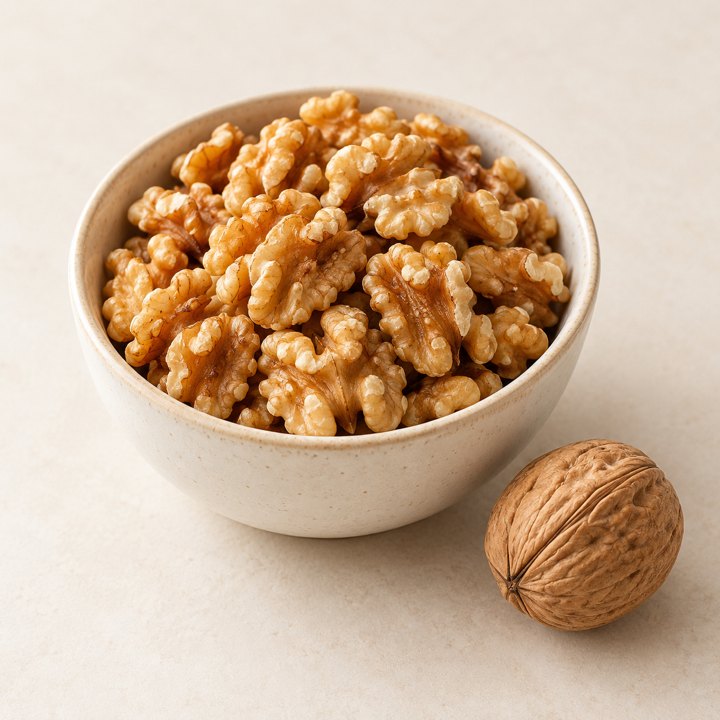
Walnuts, akhrot, generally means the kernels of Persian or English walnut, Juglans regia. The English name describes a trade tradition, not an English botanical origin.
What it is and what to buy
Walnuts, akhrot, generally means the kernels of Persian or English walnut, Juglans regia. The English name describes a trade tradition, not an English botanical origin. Halves, quarters and broken pieces all work when fresh. Their thin brown skin has a mild bitterness that is often desirable in sauces, while the creamy interior is rich in oil. Black walnuts from other Juglans species have a stronger flavour and are not the usual Pakistani market product.
Culinary nuts are valued for their crisp bite, rich oils and ability to turn into a smooth paste. Botanical categories differ: some foods sold as nuts are seeds inside a fruit, and peanuts are legumes. Whole, split, chopped, blanched, roasted and ground forms change how quickly flavour develops and how much texture survives in a dish. A recipe asking for a pale, unsalted paste needs a different purchase from one asking for a salted snack or a bright decorative garnish.
Origins and food history
Juglans regia has a broad Asian and southeastern European cultivation history. Kew documents the accepted species, while botanical gardens distinguish its native and long-cultivated range from later introductions. Human movement of walnut trees makes a simple modern-country invention story unreliable. There is no individual discoverer. Pakistani mountain-region walnut traditions are part of this wider history of cultivation, seed exchange and local adaptation rather than a recent imported food fashion.
Reference: Kew: Juglans regia.
Growing regions, trade and Pakistan
China, the United States, Iran, Türkiye and Chile are established walnut-growing countries. The United States and Chile also participate prominently in international kernel and in-shell trade. Pakistan has walnut trees and regional production in northern growing areas, while retail supply can also include imports. A bag of halves and a bag of broken pieces can differ in price without differing in basic suitability for grinding. Check harvest freshness, kernel colour and odour rather than relying solely on large size.
Reference: International Nut and Dried Fruit Council: walnut origins.
How to prepare and cook it
Toast only gently if a deeper aroma is wanted, then cool before chopping or grinding. The oil-rich kernels can turn into a paste quickly, which suits fesenjan but is undesirable when a dry crumble is needed. In fesenjan, finely ground walnuts contribute both body and released oil during controlled simmering; that separation can be part of the dish rather than a defect. For a pulao or bread accompaniment, add pieces where their texture survives. Strongly scorched walnuts become bitter and cannot be repaired by adding sugar.
Put this form of the ingredient to work in Shurukut; Modur Pulao; Fesenjan. The method in each recipe determines whether it should be raw, soaked, ground, freshly cooked or chilled before it enters the dish.
Nutrition, benefits and their limits
Walnuts supply mainly fat, with protein, fibre and minerals. They are a notable nut source of alpha-linolenic acid, a plant omega-3 fat; this is not the same nutrient as the long-chain omega-3 fats in oily fish. Their unsaturated fats can fit within a varied diet, but walnuts remain energy dense and serving size matters. A walnut garnish and a large bowl of sweetened walnut halwa contribute very different amounts of energy, sugar and fat.
Allergies, disadvantages and safe handling
Tree-nut allergies can be serious. Identify the actual nut in a paste or mixed garnish rather than describing it simply as dry fruit. A substitute from another nut family is not automatically safe for an allergic diner. Whole nuts and large hard pieces also pose a choking risk for young children and people with swallowing difficulty; use an age-appropriate smooth or finely prepared form. Mouldy or rancid nuts should be discarded, not disguised with heavy roasting or spices.
Practical substitutions
Pecans can provide a similar rich texture with a different flavour, though they are another tree-nut allergen. Almonds and cashews do not reproduce walnut’s characteristic bitterness and sauce behaviour. Suitable seeds can make a different sauce but require adjusted liquid and honest labelling. Never use rancid kernels simply because a recipe has strong spices.
Keeping it fresh
Buy from a seller with good stock rotation and keep nuts sealed away from light, heat, moisture and strong smells. Shelled and especially ground nuts lose freshness faster than intact in-shell nuts because more oil is exposed. Refrigeration or freezing is useful in a hot Pakistani kitchen. Bring a sealed container to room temperature before opening to limit condensation. Date the packet and discard kernels that smell paint-like, bitterly stale or musty; normal colour alone does not prove freshness.
For related ingredients and shopping terms, see the Pakistani ingredients and spices pantry guide.
Names and forms used in our recipes
View the recipe names covered by this guide
- walnut halves
- walnuts
- walnuts, chopped
Frequently Asked Questions
Why do walnuts taste slightly bitter?
The thin brown skin contributes natural bitterness. A harsh stale or paint-like taste suggests rancidity and calls for discarding them.
Is oil appearing on a walnut sauce always a mistake?
No. Some long-simmered walnut sauces intentionally release oil. The recipe’s method and final texture determine whether it is expected.
Keep Exploring
Related places and stories on DailyLife.pk

How we know this
- Type Explainer
- Sources 6 (3 official/academic)
- Reviewed November 2026
- Disputed points None
6 sources
Photo credits (1)
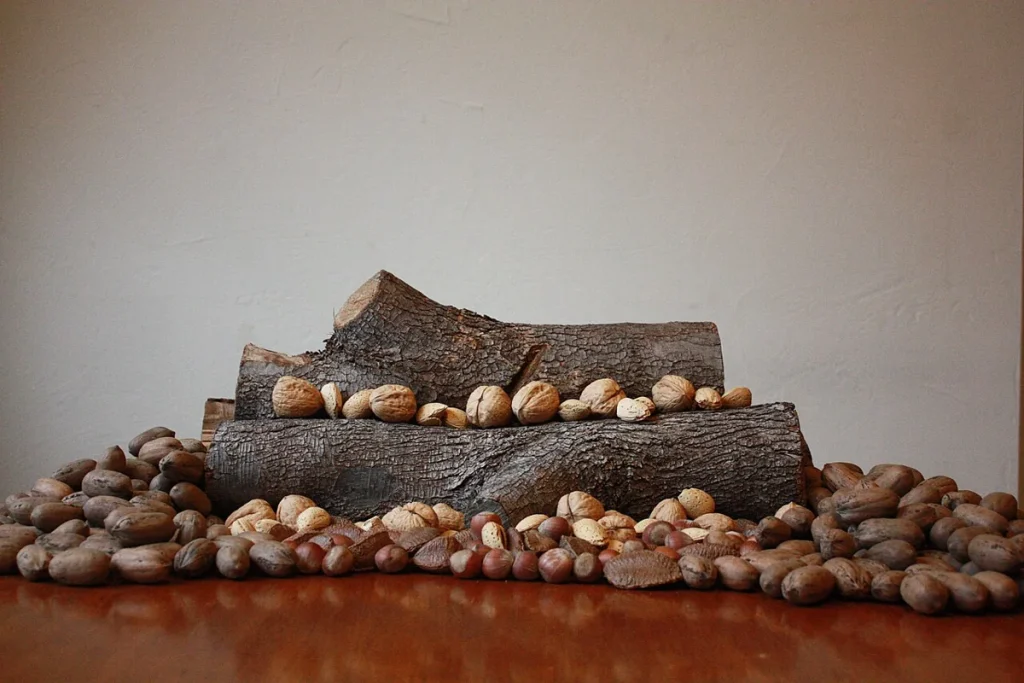
- Pecans, hazelnuts, walnuts, almonds, Brazil nuts on a table with logs 1.jpg, Baileynorwood, CC0, via Wikimedia Commons
