
Food & Culture
Haleem in Pakistan: OriginsTypes and Where It Is Eaten
How a medieval wheat and meat porridge became a Ramadan and Muharram favourite, and how it differs from khichra.
Haleem in Brief: The Quick Answer
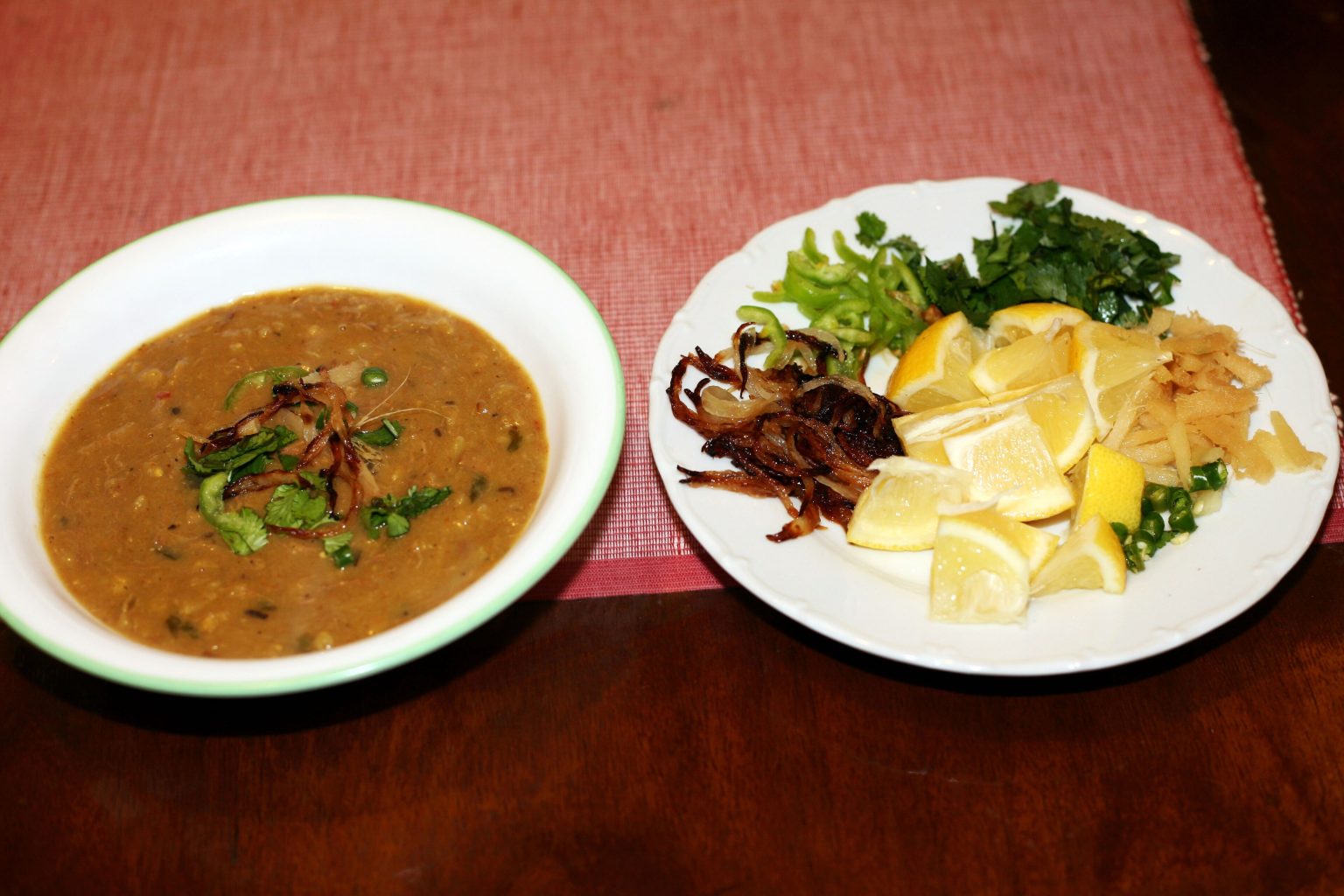
Haleem is a thick, savoury porridge-like stew made from wheat, lentils and meat, cooked for hours until it blends into a smooth, stretchy paste. In Pakistan it is sold on the street all year, but it is eaten most in Ramadan, when many families break their fast with it, and in Muharram, when it is cooked in large pots and given out as niaz. It is served with fried onions, fresh ginger, lemon, green chillies, coriander and naan.
Khichra is a close relative. It uses the same kinds of ingredients but the meat is left in pieces rather than blended in. If you are looking for a recipe, see our haleem recipe, and for the month of fasting, read about Ramadan in Pakistan.
Where Haleem Comes From
Haleem is believed to have evolved from harees, an Arab porridge of meat and wheat. A tenth-century cookbook from Baghdad records a version close to what people in the Middle East still eat, and the Daily Star cites the Kitab al-Tabikh of Ibn Sayyar al-Warraq as an early source. The dish travelled across the Islamic world, through Persia and Central Asia and into the Indian subcontinent through trade, migration and conquest. In South Asia, cooks added ghee, more spice and a smoother texture, so haleem became spicier than the Arab original.
Writers suggest that it reached India by about the seventeenth century, and Tasting Table says Muslim families from India brought it to Pakistan after 1947. In the Deccan, the haleem of Hyderabad is linked to Arab soldiers in the Nizam's army, according to the Daily Star, but several of these accounts are not tied to primary sources, so treat the dates as approximate. What historians agree on is the broad direction of travel from the Arab world into South Asia, and that cooks everywhere adapted the dish to local grain, meat and taste. The name haleem is often said to mean "patient", a nod to the long cooking, though that etymology is not cited to a reliable source. Some South Asian Muslims call the dish daleem, because of the lentils in it.
What Goes Into Haleem
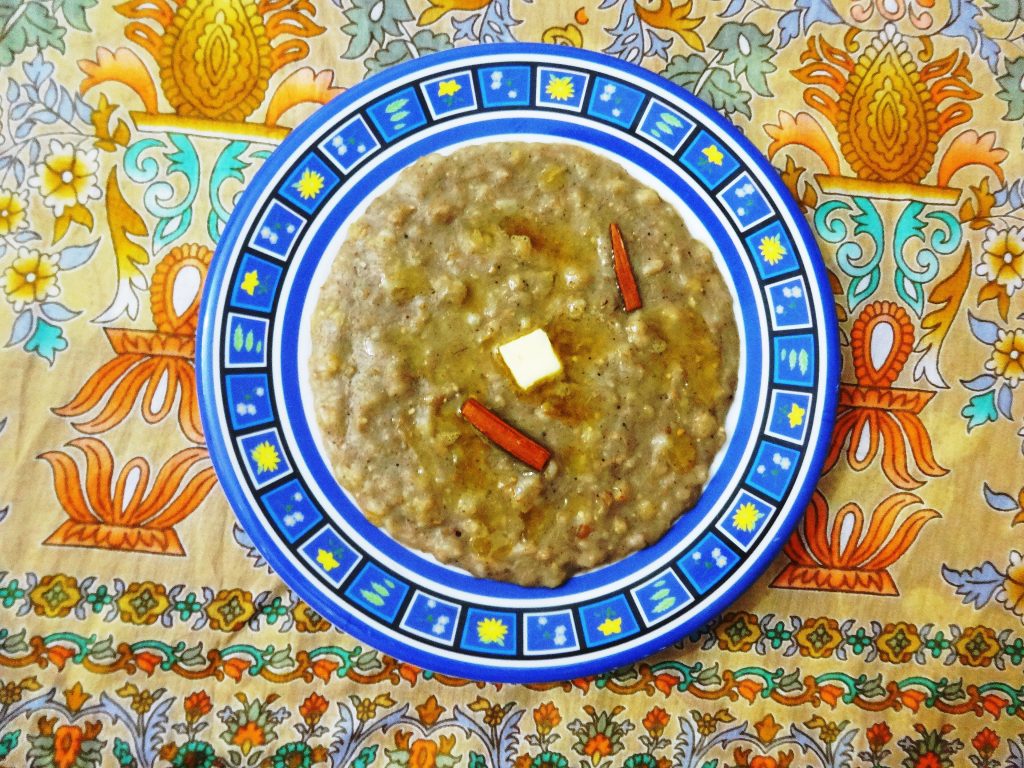
Recipes differ by region and family. A typical Pakistani haleem uses cracked or whole wheat, several lentils (chana dal is common), sometimes rice, meat, ghee and a long list of spices such as cinnamon, cassia and fennel. Goat or mutton is traditional, and beef, chicken and lamb are widely used. The meat is cooked until it falls apart, and then the whole mixture is beaten or blended to a paste.
Cooking time depends on the kitchen. Wikipedia notes 7 to 8 hours, while Tasting Table says good haleem can take as long as 24 hours, and many people therefore buy it from specialist shops rather than cook it at home. The result is a dish that sits between a stew and a porridge, high in protein and filling.
Haleem in Pakistan: Regional Styles
Karachi haleem is known for a smooth, finely blended texture and a slightly spicier flavour. One well-documented Karachi maker, Karachi Haleem, runs on a family method: dal and wheat are boiled separately for about 45 minutes until paste-like, a separate qorma of chicken, mutton or beef is added, and a high-powered blender produces the thin consistency. The business began as a cart outside schools in the 1960s, according to the SOCH Outreach Foundation, and has shops in Hussainabad, DHA, North Nazimabad and Hyderi. It has been canned since the 1990s, so it is also sent abroad. Founding dates differ within the same source, so we do not quote one.
In Lahore, haleem is closely tied to Muharram. The News describes how hundreds of cauldrons are cooked and handed out through the day, mainly in the old city, with naan. Elsewhere, beef haleem and khichra are sold as street food in most cities all year. Texture, spice level and the proportion of lentils to wheat vary from stall to stall, so try more than one. Where a shop sells a canned or packed version, check the date and storage instructions.
Haleem is one of several slow-cooked dishes in Pakistani cooking; compare it with nihari, and see Pakistani street food for where it sits among other street dishes. Karachi and Hyderabad are both known for haleem sellers: read the Hyderabad Sindh city guide and Burns Road food street.
Types of Haleem and Related Dishes
Names vary by city and family. This table gives the common distinctions.
| Name | What it is | Notes |
|---|---|---|
| Beef haleem | Most common street version | Sold all year in many cities |
| Mutton or goat haleem | Traditional meat for the dish | Also made with lamb |
| Chicken haleem | Widely used for the dish | Common in restaurants and for home cooking |
| Khichra | Meat, lentils and grains with the meat left in pieces | Closely linked to Ashura in some places |
| Daleem | Alternative name for haleem | Used by some South Asian Muslim communities |
Haleem vs Khichra: What Is the Difference?
The two dishes use the same ingredients. Haleem is cooked until the meat is shredded and blended into the lentils and grain, giving a uniform paste. Khichra keeps the meat as chunks or cubes, so you can see and chew it. Khichra is cooked all year but is especially associated with Ashura. The News notes that khichra was a signature dish of Kashmiris in Lahore's Walled City but has become rare there.
Haleem in Muharram and Ramadan
In Muharram, haleem is one of the most widely distributed niaz, food offered to mourners, usually after a majlis. In Lahore it is called bhandara when handed out, and it is cooked in large degs. Niaz may also be rice dishes such as biryani, or qorma with bread. Please be respectful in these settings, accept food politely, and follow the instructions of the organisers. The dates of Muharram follow the Islamic calendar and move earlier each year, so the season falls at a different time of the year as time passes. Niaz is offered freely, and it is considered polite to take a modest portion and not to waste food. If you are an outsider to the tradition, ask the organisers or a local whether it is appropriate to take food, and follow their guidance on how to behave at gatherings and processions.
In Ramadan, Tasting Table calls haleem the most popular dish for breaking the fast at night in Pakistan, as it is rich in protein and fills the stomach after a long day. It is also cooked for Eid and weddings. If you travel during the month, our guide to Ramadan and Eid travel explains opening hours and what to expect.
Related reading: Ramadan in Pakistan, Ramadan and Eid travel and Eid ul Fitr and Chand Raat.
Cooking Haleem at Home
Home cooks often make haleem in two stages. First the wheat and lentils are soaked and boiled until very soft, then the meat is cooked separately with onions, ginger, garlic and spices until it falls from the bone. The two are combined and beaten or blended to the texture you like, and the pot is simmered for a further spell so the flavours join. A pressure cooker saves hours, but a slow simmer gives a better texture. Stir often, because the thick mixture catches on the bottom of the pot.
Many families cook a large batch for a gathering and freeze portions. Reheat gently with a little water. Our haleem recipe gives quantities, and you can compare it with nihari, another slow-cooked dish that is eaten at gatherings and on weekends.
Garnishes and How to Eat It
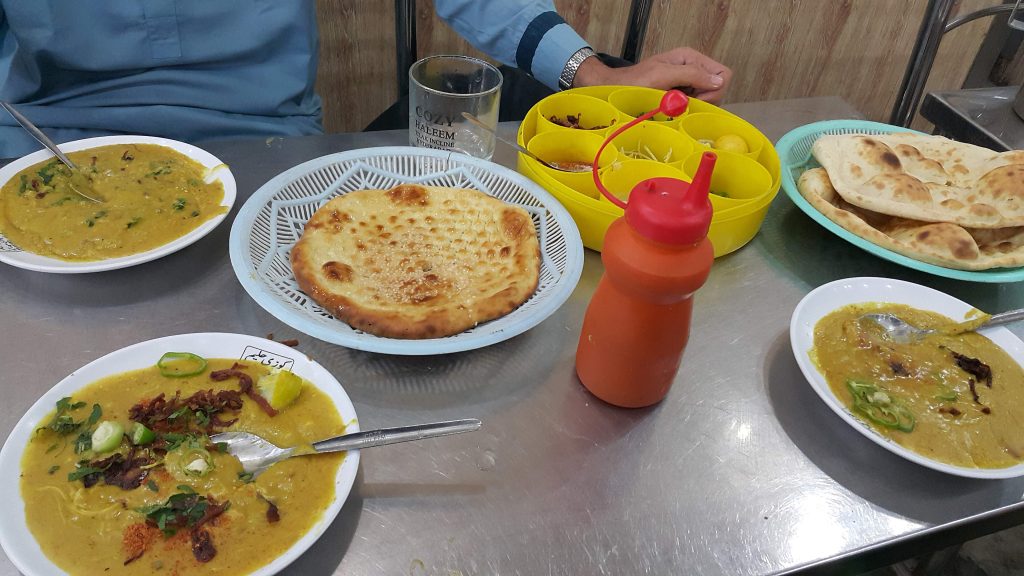
Haleem is usually served in a bowl with naan, with garnishes on the side or on top. Typical additions include fried onions, fresh ginger, coriander and mint leaves, green chillies, a squeeze of lemon and sometimes chaat masala. Each garnish changes the flavour, so build it gradually. In Iran and Uzbekistan the dish is served with cinnamon and sugar, which is a different custom from Pakistan's. In practice, most diners add a little of everything: the sharp lemon cuts through the richness, the ginger adds freshness, and the crisp onions give a contrast to the soft base. Some people stir everything together, while others scoop with torn naan and add garnish bite by bite. There is no single correct way, so follow what the stall or your host does.
How to Find and Order Good Haleem: Step by Step
- Choose the season. In Ramadan, stalls and shops sell haleem in the afternoon for iftar. In Muharram, look for niaz stalls and community distribution.
- Pick a busy stall. High turnover means a fresh pot.
- Specify the meat. Ask whether it is beef, mutton or chicken.
- Request the garnish. Fried onion, ginger, lemon and green chilli are the usual options.
- Pick the bread. Naan is traditional.
- Eat it hot. If you take it home, reheat it with a splash of water.
Eating Haleem Sensibly
Haleem is a heavy, rich dish. If you have a medical condition such as diabetes or heart disease, or you are managing your weight, ask your doctor how often to eat it, particularly at iftar. Choose clean, busy stalls and follow our food and water safety advice. Street haleem is often reheated through the day, so ask when the pot was made.
Official Sources and Where to Get Help
Food hygiene is the responsibility of provincial food authorities, and consumers can complain to the authority in their province. For Muharram arrangements, follow the notices of local administrations, as processions and distribution points may be regulated, and for Ramadan hours see local announcements. If you want to understand regional food customs more widely, our guide to regional cuisines is a good next page. The start of Ramadan and Muharram depends on moon sighting, so dates are confirmed only shortly before.
Checked October 2026. Origins are traced differently by different writers, and the niaz traditions described here are customs, not rules. Stall locations and prices change, so check locally.
Frequently Asked Questions
What is haleem?
Haleem is a thick stew of wheat, lentils and meat that is cooked for hours and blended into a paste. It is served with fried onions, ginger, lemon and naan.
Where does haleem come from?
It likely evolved from the Arab dish harees and spread through Persia and Central Asia into South Asia. Exact dates and routes are uncertain.
What is the difference between haleem and khichra?
Both use similar ingredients, but haleem shreds and blends the meat into the lentils, while khichra keeps the meat in chunks.
Why is haleem eaten in Muharram?
It is cooked in large pots and distributed as niaz, food offered to mourners, especially in Lahore. It is a common offering at gatherings.
Why is haleem popular in Ramadan?
It is rich in protein and filling, which suits breaking a fast. Tasting Table calls it the most popular dish for iftar in Pakistan.
How long does haleem take to cook?
Sources say about 7 to 8 hours, and some kitchens take up to 24 hours. Many people buy it from specialist shops.
Is haleem available all year in Pakistan?
Yes. Beef haleem and khichra are sold as street food in most cities throughout the year, though demand peaks in Ramadan and Muharram.
What do you eat haleem with?
It is usually eaten with naan, with fried onions, ginger, green chilli, mint, coriander and lemon on top.
How we know this
- Type Explainer
- Sources 5
- Reviewed October 2026
- Disputed points None
5 sources
- Haleem, Wikipedia (used to locate primary sources)
- Khichra, Wikipedia (used to locate primary sources)
- Haleem: The Origin and Cultural Significance, Google Arts & Culture (SOCH Outreach Foundation)
- The Moharram niaz, The News on Sunday
- The haleem evolution, The Daily Star
