
Bread
Khameeri roti, a soft leavened bread, is the favourite pairing in Lahore, and Dawn's reporting quotes shop owners who say naan can spoil the dish. Naan and roti are the usual alternatives elsewhere.
Food & Culture
The slow-cooked beef or mutton stew that Pakistan eats at breakfast, where it came from, and how to order it well.
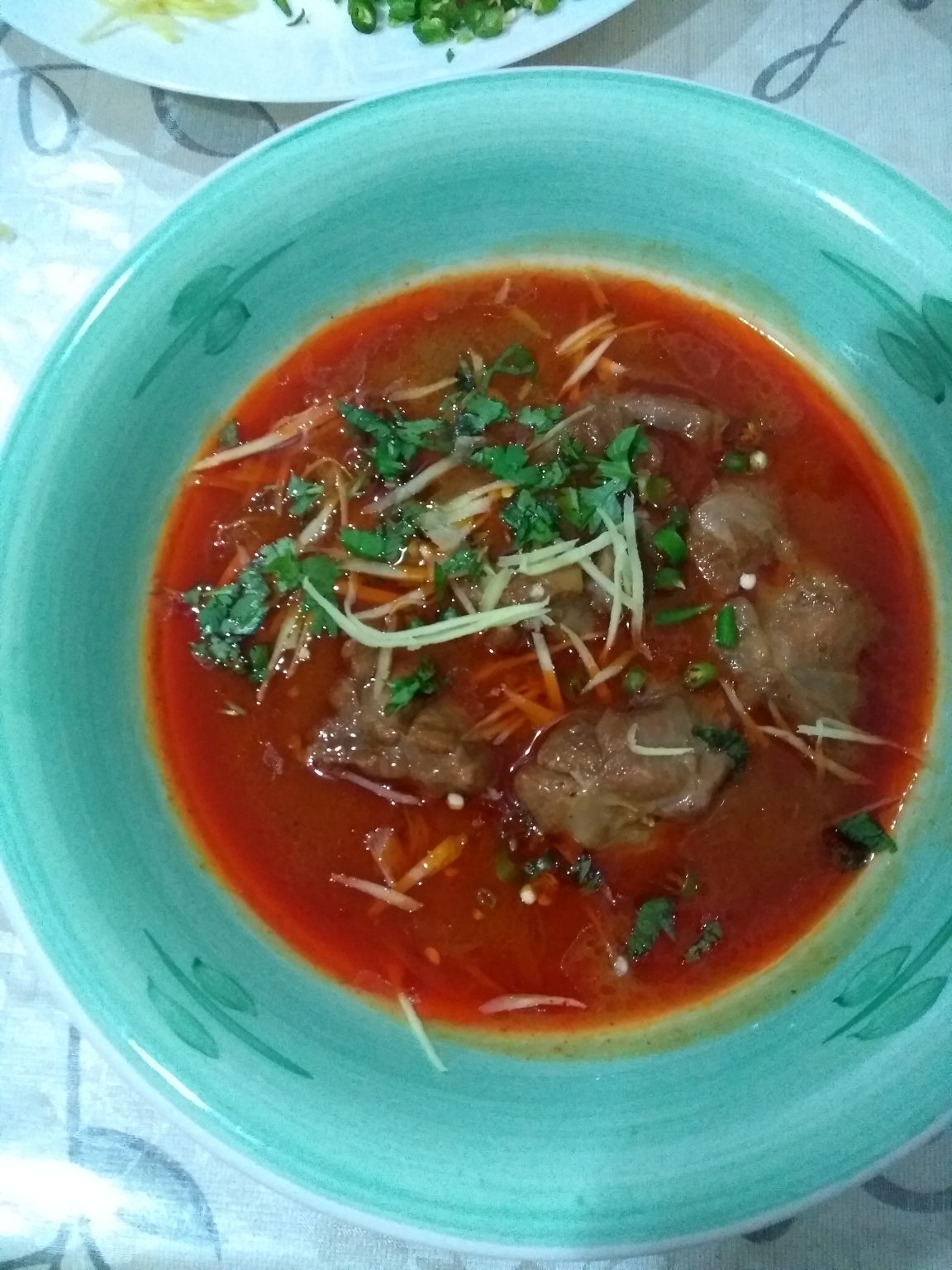
Nihari is a rich, slow-cooked stew of beef, mutton or chicken in a thick, spiced gravy, served hot with bread and a pile of fresh garnishes. The name comes from the Arabic nahar, meaning "morning", because it was traditionally eaten for breakfast after the Fajr prayer. Today people eat it at any time of day, but it still tastes best on a cool morning.
Its history is disputed. Writers place its origins in Old Delhi or in Lucknow, and after the Partition of 1947 migrants from northern India took the dish to Karachi, where it became one of the city's signature foods. From there it spread to Lahore, Rawalpindi and the rest of the country. If you want to cook it at home, start with our nihari recipe.
No single account of nihari's origin is settled. Two main stories place it in the Mughal world. One says the dish began in Old Delhi, near the Jama Masjid, in the late eighteenth century, when the Mughal court was in decline; emperors are said to have eaten it after Fajr and slept until Zuhr. The other says it was created in Lucknow, the capital of Awadh, in the late eighteenth century, with local stories linking it to labourers working on the Imambara complex under Nawab Asaf-ud-Daula, around 1784. Food historians note that both versions rely on lane stories and are hard to date. The writer Abdul Halim Sharar, in Guzishta Lucknow, calls nihari an iconic Lucknow dish, a beef stew cooked overnight.
The Arabic root nahar is the usual explanation of the name. Some writers also say it was first made for working people who needed a heavy early meal, and later reached the tables of the elite. A popular belief describes it as a remedy for colds and fever, which is a folk belief rather than medical advice.
After 1947, Urdu-speaking Muslims from northern India, including cooks from Old Delhi, settled in Karachi and opened eateries serving nihari. That is how the dish became a staple of Pakistan's food culture. There are claims that nihari is Pakistan's national dish, but Dawn notes that this is unverified.
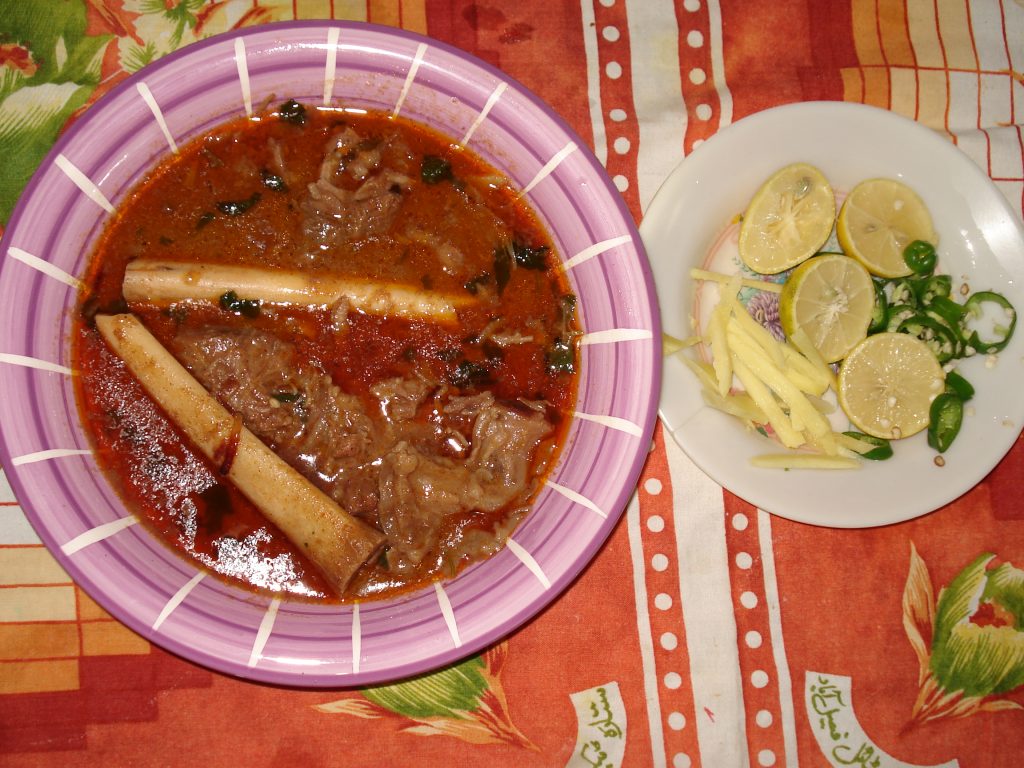
Nihari is built on time. The meat, traditionally beef shank, but now also mutton, lamb or chicken, goes into a large pot with a spice blend, oil or ghee, and flour to thicken the gravy. The pot is often sealed with a ring of dough called lai, so the steam stays in. In some kitchens the pot is called a shab degh, meaning an overnight pot, and sits on a low flame until the meat falls apart.
Cooking time varies by kitchen. One account of a Karachi eatery says the stew simmers for six to eight hours, while Dawn's reporting says one well-known Lahore shop reportedly takes about 24 hours to prepare. Spice mixes are closely guarded, and some cooks say they use up to 50 spices, including cloves and long pepper (pippali), a relative of black pepper that gives nihari its warm bite.
A tradition called taar involves adding some of yesterday's nihari to the next day's pot, which cooks believe adds depth. Some old outlets in Delhi say they have kept the taar going for over a century. Whether any given restaurant does this in Pakistan is a question to ask the cook.
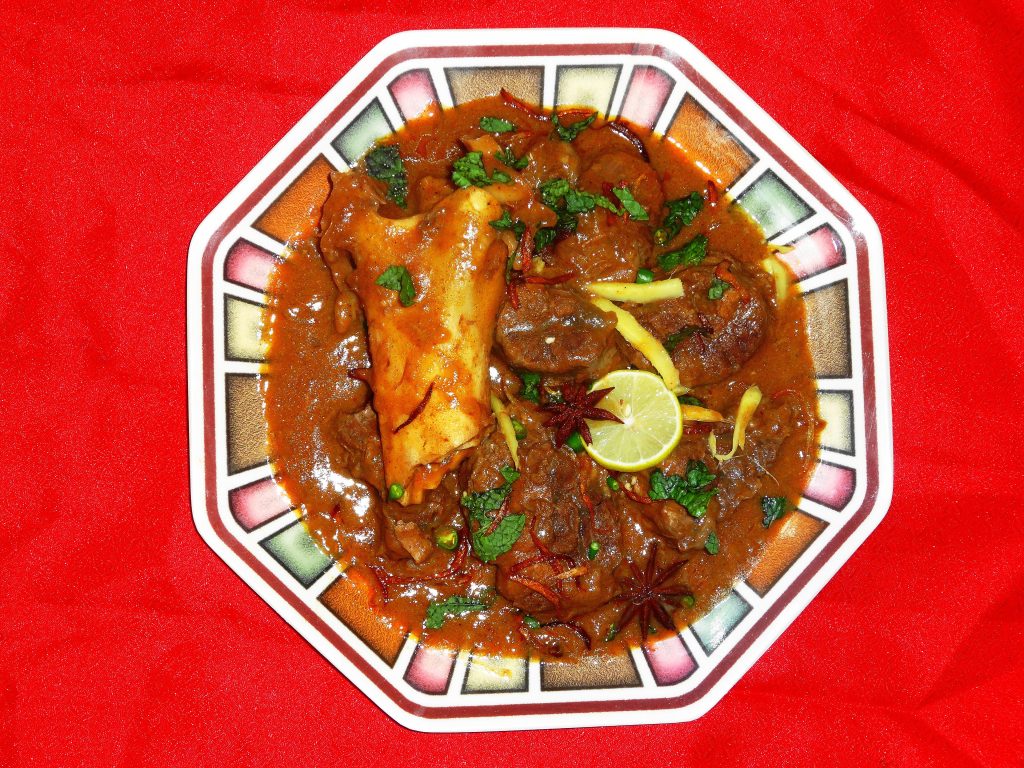
Styles differ by city and by cook, so use this as a guide rather than a rule.
| Style | What to expect |
|---|---|
| Karachi | Cooked overnight in a large sealed pot, with nalli and maghaz as popular extras. Zahid Nihari is one named example. |
| Lahore | Several well-known shops in the old city and beyond. Reported methods range from a cauldron sunk into the ground to day-long preparation. |
| Rawalpindi | Kala Khan Nihari House is cited as following the same template as Karachi's Zahid. |
| Delhi style | Often served with khameeri roti, a soft leavened bread. |
| Lucknow style | Reported to be thinner, smoother and more aromatic, with shanks and trotters added. |
The plate matters as much as the pot.
Khameeri roti, a soft leavened bread, is the favourite pairing in Lahore, and Dawn's reporting quotes shop owners who say naan can spoil the dish. Naan and roti are the usual alternatives elsewhere.
Fresh ginger cut into thin strips, coriander, mint, green chillies and lemon are served alongside. Squeeze the lemon and add ginger at the table.
Nalli, the bone marrow, and maghaz, the brain, are common additions. If you do not eat offal, ask for plain meat nihari.
One Lahore eatery sprinkles garam masala at the last moment so diners can set their own heat. Taste before you add chilli.
Karachi remains the centre of nihari. The SOCH Outreach Foundation notes that most of the nihari options in Pakistan are found on Karachi's streets, with Zahid Nihari run by a third-generation owner. Food streets such as Burns Road are famous for it, as covered in our guide to Burns Road.
For Lahore, a Dawn comparison named Haji Nihari (the original at Lohari Gate), Waris Nihari House (Aabkari Road, New Anarkali), Muhammadi Nihari in Mozang and Allama Iqbal Town, and Shahid Nihari House in Faisal Town. That article is several years old, so confirm that each place is still open, where it is, and what it charges before you go. Our Lahore food trail and the guide to the best nashta in Lahore are useful companions.
Opening hours differ widely. Traditional shops open early and sell until the pot is empty, while some places serve through the day and a few stay open all night. Prices depend on the cut and the city and rise with inflation, so we do not list them here.
Nihari is only one part of Karachi and Lahore eating: see the guide to Pakistani street food, breads of Pakistan for what to scoop it with, and our haleem and khichra guide. If you are cooking at home, the mutton nihari recipe has the method.
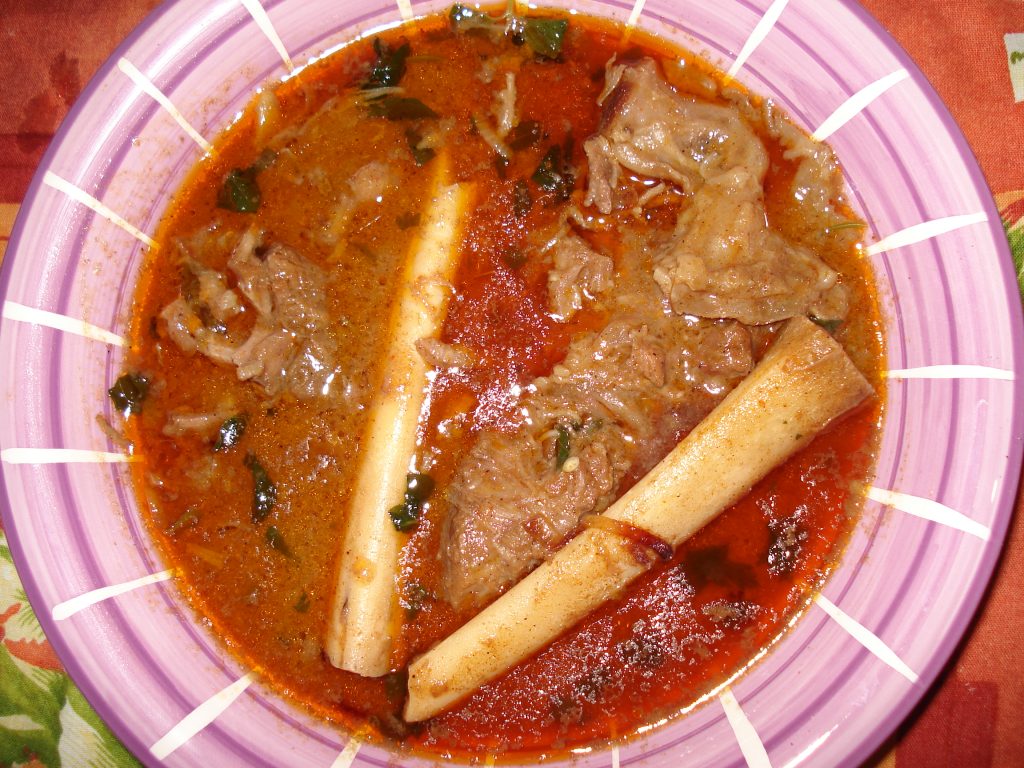
Nihari is a food of weekends, holidays and early mornings. Dawn describes it as a daily breakfast for working people and a first meal on holidays, and many families treat a nihari breakfast as a weekend outing. Because it is a heavy dish, it is usually shared, with several people ordering one large plate and bread for the table.
It is also a dish that carries memory for families who came to Pakistan in 1947. Cooks and customers in Karachi often talk about recipes handed down through generations, and shops advertise how long they have been serving. Those claims are part of the charm, but they are marketing as well as history, so enjoy the story and judge the food on the plate.
For more on how food and seasons fit together, read about Ramadan in Pakistan, and for a Sindh city with its own food traditions see the Hyderabad Sindh city guide.
Nihari is rich, oily and high in fat, so it may not suit people with certain health conditions, and a heavy meal can sit badly in hot weather. Choose busy stalls with fast turnover, eat food that is served piping hot, and read our advice on food and water safety for visitors. Dawn's reporting also noted that one eatery cooked its nihari hours before serving, which made it taste less fresh, so ask when the pot was made.
If you want to try it yourself, our recipe pages cover several versions, including mutton nihari and nalli nihari. Home cooks usually shorten the process with a pressure cooker, but a slow, low simmer gives a better result. Expect to spend several hours, and make a double batch, since nihari often tastes better the next day. A few simple points help: brown the onions and spices well before adding water, skim the surface as it cooks, and thicken the gravy gradually with a flour slurry so it does not turn lumpy. Serve with fresh ginger, green chilli, coriander and lemon, as the restaurants do. If you cannot find long pepper, ask at a spice shop for pippali, and use it sparingly, because its heat is distinctive. Offal versions are a matter of taste, so cook them separately if your family is divided.
Food safety rules are enforced by provincial food authorities, such as the Punjab Food Authority, and by local health departments. If you have a problem with a restaurant, complain to the provincial authority in your area, and keep a receipt. For heritage food research, the National Register of Intangible Cultural Heritage lists traditional foods of Pakistan, and cultural bodies such as the SOCH Outreach Foundation document cooking traditions. Because shops open and close, always check recent reviews before a long trip.
Checked October 2026. Origin stories are disputed and, as the sources say, the claim that nihari is the national dish has not been verified. Restaurant names, hours and prices change often, so check locally.
Nihari is a slow-cooked stew of beef, mutton or chicken in a thick, spiced gravy. It is eaten with bread and fresh garnishes such as ginger, coriander and green chilli.
Writers place its origin in Old Delhi or in Lucknow in the late eighteenth century. The claims rely on local stories, so the exact origin is uncertain.
It comes from the Arabic nahar, meaning day or morning, because it was traditionally eaten for breakfast after Fajr.
It is sometimes described that way, but the claim is not officially verified.
It is simmered slowly with spices, flour and ghee in a sealed pot. Cooking times vary from about six to eight hours to a full day.
Khameeri roti is the favourite pairing, though naan and other breads are common. Some Lahore cooks say naan spoils the dish.
It is nihari served with nalli, the bone marrow. The marrow is scooped out and eaten with the gravy.
Karachi is the main centre, and Zahid Nihari and the food streets such as Burns Road are known for it. Confirm opening hours before you go.
From majestic mountains to vibrant cities, rich cuisine to timeless traditions — discover the real Pakistan with DailyLife.pk.
