
Food & Culture
Dry Fruits and Nuts of Pakistan: ApricotsWalnuts, Almonds and Chilgoza
Where Pakistan's dried fruit and nuts grow, when they are harvested and how to buy them well.
Pakistan Dry Fruits and Nuts: The Quick Answer
Pakistan's best-known dried fruits and nuts come from three mountain regions: Gilgit-Baltistan (apricots and almonds), Khyber Pakhtunkhwa (walnuts and other tree crops) and Balochistan (almonds, dried fruit and chilgoza pine nuts). The Trade Development Authority of Pakistan lists dried apricots, plums, pears, almonds and walnuts among the country's dry fruit products, and names Hunza, Skardu, Swat, Chitral and Quetta among the growing areas.
The most prized nut is the chilgoza, the pine nut of Pinus gerardiana, which Pakistan has put forward as its priority export product through the FAO. Most dry fruit is harvested between late June and early winter, so the freshest crop reaches shops from roughly September onwards. This guide explains what each product is, where it comes from, when to buy it and how to check quality.
Where Pakistan's Dry Fruits Come From
<p>This table is based on the Trade Development Authority of Pakistan (TDAP) dry fruit profile and the other sources listed at the end. It shows the main product and area pairings, not an exhaustive list.</p>
| Region | Areas named in sources | Products to look for |
|---|---|---|
| Gilgit-Baltistan | Hunza, Skardu, Shigar, Khaplu, Diamer | Dried apricots, apricot kernels and oil, almonds, chilgoza (Diamer) |
| Khyber Pakhtunkhwa | Swat, Chitral, Peshawar, Mardan, Buner, Orakzai, South Waziristan | Walnuts, dried fruit, chilgoza (Chitral, South Waziristan) |
| Balochistan | Quetta, Pishin, Zhob, Kalat, Shirani | Dried fruit and nuts, chilgoza (Suleiman range) |
Hunza and Gilgit-Baltistan Apricots
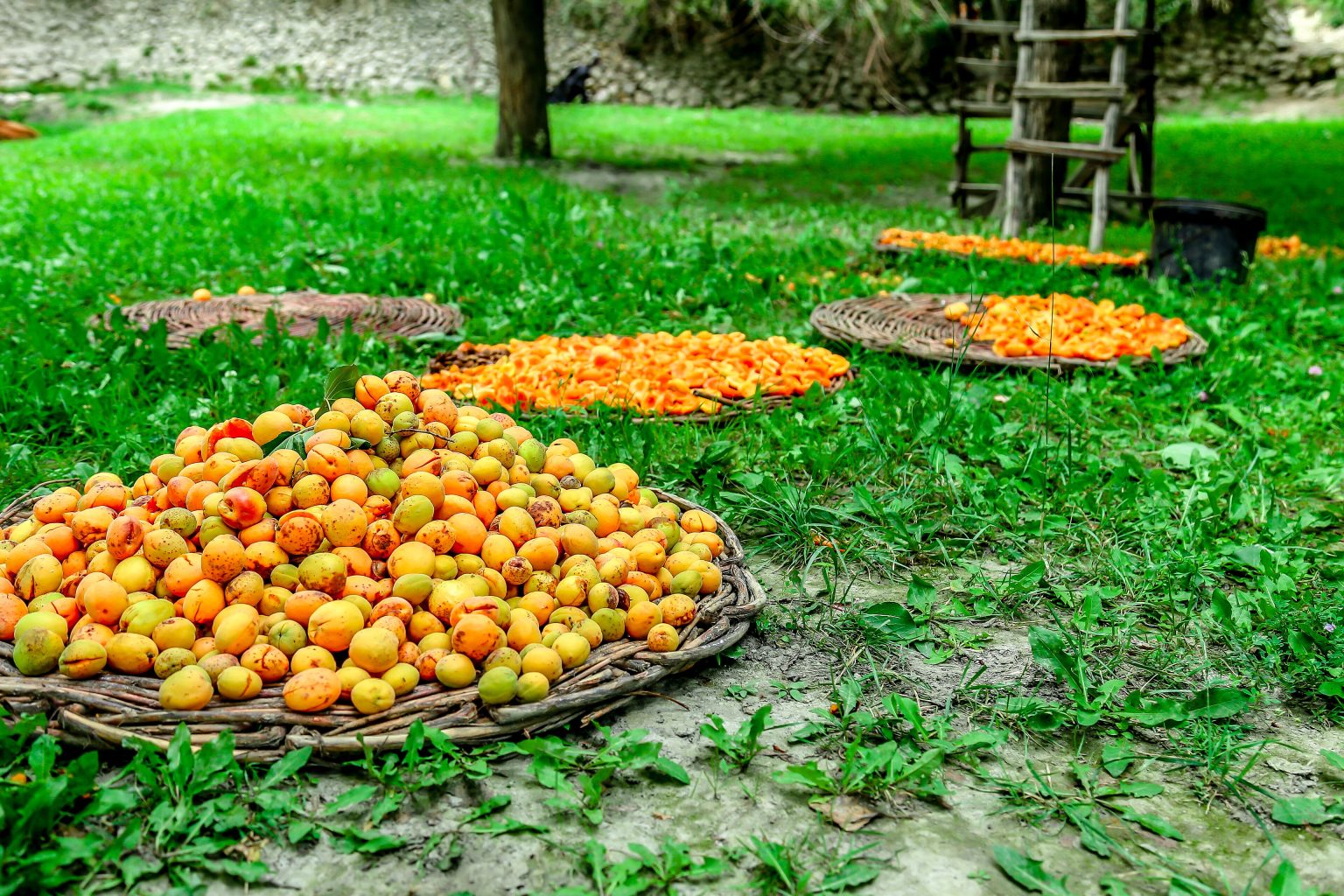
Apricots are the signature dried fruit of the far north. A 2024 account by a storyteller raised in Gilgit-Baltistan describes the harvest running from late June to mid-July, when the fruit is fully ripe. Pickers use ladders and baskets so that the fruit is not bruised.
How they are dried
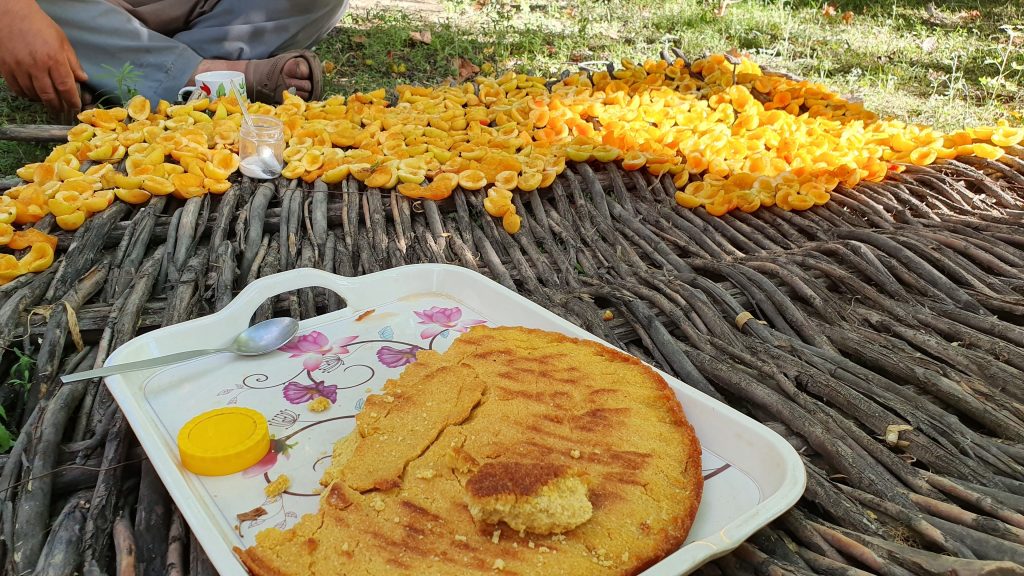
The same account describes a slow, hand-made process. Each apricot is split by hand and the stone removed. The halves are laid in a single layer on locally made trays and left in the sun for about two days, then moved into shade for around a week, and later gathered on larger trays for roughly two weeks more. Because the monsoon begins around harvest time, the fruit is sometimes moved into ventilated baskets. Methods vary among the Shinaki, Burosho and Wakhi communities, so what you see in one valley may differ from the next.
Kernels, oil and storage
The stones are not wasted. The same source says the kernels are used in traditional dishes and that apricot oil tastes similar to almond oil but smoother, with a sweet aroma. Dried apricots are stored in layers with fresh walnut leaves between them, a method used to protect the fruit through the warm months until October.
If you plan to visit during harvest, read our guides to Hunza Valley and the best time to visit Hunza. Roads, weather and the cherry and apricot seasons do not line up every year, so check conditions before you go.
For the valley itself, read about Hunza Valley, the best time to visit Hunza and how to get there on the Islamabad to Hunza by road and air page.
Chilgoza: Pakistan's Pine Nut
Chilgoza (Pinus gerardiana) grows wild on dry mountain slopes at roughly 2,000 to 3,350 metres in northern and western Pakistan. The FAO's One Country One Priority Product programme names it as Pakistan's priority product and records forests in the Suleiman range of Balochistan (including Shirani), Chitral in Khyber Pakhtunkhwa, South Waziristan, and Diamer in Gilgit-Baltistan, including Chilas, Darel and Tangir.
Harvest and processing
The FAO says harvest takes place in autumn and early winter. An Arab News report from 2019 says harvesting starts in September, that green cones are collected and dried in the sun for more than two weeks, and that each cone holds 15 to 20 nuts depending on its size. Nuts are usually eaten raw or roasted.
Trade and prices
China is now the dominant buyer. Arab News Pakistan reported in June 2026, citing Chinese customs figures, that pine nut exports to China rose from 579.8 tonnes in 2023 to 1,147 tonnes in 2025, and that traders estimate 80 to 90 percent of Pakistan's pine nut exports now go there. The same report quotes an academic estimate that North and South Waziristan account for about 80 to 85 percent of national production, with annual output typically 2,100 to 2,900 tonnes depending on weather.
Retail prices swing sharply from year to year. In 2019 traders quoted about Rs 8,500 per kilogram in Islamabad, while growers in Diamer were being paid far less. Treat any past price as a rough guide only and ask for the current rate per kilogram before you buy.
Walnuts, Almonds and Other Nuts
Walnuts
Walnuts are a mountain crop across Khyber Pakhtunkhwa. Dawn reported in September 2022 that the walnut harvest had started in Orakzai district, where tribes own large orchards and strictly prohibit cutting trees. Prices that year ranged from Rs 400 to Rs 600 per kilogram depending on size, and an agriculture officer said no authentic production estimates were available. TDAP lists Swat, Chitral and other northern districts among the areas producing dry fruit, so ask sellers where their walnuts come from. Do not assume that a shop's label is accurate.
Almonds
An older Associated Press of Pakistan report from 2017 calls the almond the most popular fruit of Gilgit-Baltistan, says almonds ripen in August and are sun-dried before being shipped to markets across Pakistan, and notes the long road to Islamabad and the lack of packaging and grading facilities. TDAP also lists Balochistan districts such as Quetta, Pishin, Zhob and Kalat as dry fruit areas.
What else is on the shelf
TDAP's profile also lists dried pears, plums, grapes and peaches in its export categories, along with mixed fruit and nut products. In a dry fruit shop in a city you will also find produce imported from other countries, so ask for the origin if it matters to you.
Quetta and the surrounding districts are a main source of dry fruit; see the Quetta travel guide and the sajji guide for more on Balochistan.
When to Buy: Harvest and Market Timing
<p>Dates move with altitude and weather. These are the timings reported in the sources, not guaranteed calendar dates.</p>
| Product | Reported harvest timing | Source |
|---|---|---|
| Apricots (fresh, for drying) | Late June to mid-July in Gilgit-Baltistan | Resonate, 2024 |
| Almonds | Ripen in August in Gilgit-Baltistan | APP, 2017 |
| Walnuts | Harvest under way by late September in Orakzai | Dawn, 2022 |
| Chilgoza | Autumn and early winter; harvest starts in September | FAO; Arab News, 2019 |
How to Buy Good Dry Fruits and Nuts
Quality varies widely between shops, and nuts spoil if they are stored badly. These steps are common-sense checks rather than an official standard.
- Buy from a busy shop. High turnover usually means fresher stock. Ask when the new crop arrived.
- Ask for the origin. A good seller can tell you whether a product is from Hunza, Swat, Chitral or abroad. If the answer is vague, be cautious about paying a premium.
- Look and smell. Nuts should smell clean and slightly sweet. A stale, bitter or paint-like smell suggests rancid oil. Avoid any mould, webbing or visible insects.
- Taste a sample. Reputable shops allow this. Reject nuts that taste bitter or sour.
- Check the shell and size. For chilgoza and walnuts, compare a few pieces. Mixed sizes are normal, but many broken or shrivelled nuts are not a good sign.
- Compare prices. A price far below the market for chilgoza or Hunza apricots should make you ask why.
- Buy small first. Take a smaller quantity for your first purchase and return for more if you are happy.
Storing Dry Fruits and Nuts at Home
Nuts contain oils that turn rancid with heat, light and air. Store them in airtight containers in a cool, dark place, and in warm weather keep shelled nuts in the fridge or freezer if you will not use them soon. Dried fruit keeps better than nuts but still benefits from a sealed container, since insects are a real problem in warm months. Traditional Hunza storage layered dried apricots with fresh walnut leaves for this reason. If you cook with dried fruit regularly, our guide to storing, freezing and reheating Pakistani food has more storage advice.
Nut Allergies, Price Swings and Conservation
Allergies: tree nuts and peanuts can cause severe reactions. If anyone in your household has a nut allergy, check labels and ask sellers about cross-contamination, since loose nuts are often stored and weighed together.
Prices: chilgoza and other premium products are volatile. Prices quoted in news reports from earlier years are not current.
Conservation: Wikipedia reports that the IUCN listed Pinus gerardiana as Near Threatened in 2011 and that forests have declined through grazing, conversion to farmland and overharvesting of cones and timber. The 2019 Arab News report mentions local committees formed to protect the trees from illegal loggers. Buying from sellers who can explain their source is one small way to support careful harvesting.
Eating, Cooking and Gifting
In northern Pakistan dried apricots are served to guests as a point of pride. The Gilgit-Baltistan account also mentions dried apricot juice and soup, and kernel dishes. Elsewhere in the country, almonds, walnuts and other nuts are used in sweets and festive food, and you can see them in our guide to Pakistani desserts and mithai. Boxed assortments are a common gift, and dry fruit shops will pack them for you. If you are buying souvenirs while travelling, see our advice on shopping and souvenirs in Pakistan.
Visitors taking dry fruit abroad should check the customs and food import rules of their destination country and their airline, because rules on plant and food products differ and are not covered by Pakistani sources. Overseas Pakistanis buying for relatives should ask whether the seller can vacuum-pack the order.
Dry fruit is a staple of winter and festival food: see Pakistani desserts and mithai, chai culture and the Ramadan in Pakistan guide. If you are carrying nuts overseas, check Pakistan airport customs and baggage rules and the rules of the country you are flying to.
Official Sources and Where to Get Help
Dry fruit is sold through ordinary markets, so there is no single authority to call about a purchase. These are the useful official and reference points:
- Trade Development Authority of Pakistan (TDAP): publishes a dry fruits product profile and lists registered exporters. Exporters are the right contacts for bulk orders.
- FAO One Country One Priority Product page: background on chilgoza forests and regions.
- Your local consumer or food authority if you suspect spoiled or adulterated food. The name differs by province, so ask your district administration.
For wider food guides, see our article on regional cuisines and food customs. Reports on prices and production are dated, so verify current figures with sellers and official trade bodies.
Checked October 2026. Prices, harvest dates and export figures change from season to season, so the sources give the background and shops give the current price.
Frequently Asked Questions
What are the most famous dry fruits of Pakistan?
Hunza dried apricots, chilgoza pine nuts, walnuts and almonds are among the best known. They come mainly from Gilgit-Baltistan, Khyber Pakhtunkhwa and Balochistan.
What is chilgoza?
Chilgoza is the edible seed of the Pinus gerardiana pine tree, which grows wild at about 2,000 to 3,350 metres. The FAO names it as Pakistan's priority export product.
When is chilgoza harvested?
The FAO says harvest takes place in autumn and early winter, and Arab News reports that it starts in September. Cones are dried in the sun before the nuts are extracted.
When are Hunza apricots harvested?
A 2024 account from Gilgit-Baltistan describes picking from late June to mid-July, followed by weeks of sun and shade drying.
Where do Pakistani walnuts come from?
Walnuts grow across the northern mountains. Dawn reported a harvest in Orakzai in 2022, and TDAP lists Swat, Chitral and other northern districts as dry fruit areas.
Why is chilgoza so expensive?
It is harvested from wild mountain forests in difficult terrain, and demand from China has risen. Prices vary each year, so ask for the current rate.
How should I store nuts and dried fruit?
Keep them in airtight containers in a cool, dark place, and refrigerate or freeze shelled nuts in warm weather to slow rancidity.
Can I take dry fruits abroad from Pakistan?
Rules depend on the destination country and airline. Check their customs and food import guidance before you pack, as it is not set by Pakistani sources.
How we know this
- Type Explainer
- Sources 6 (1 official/academic)
- Reviewed October 2026
- Disputed points None
6 sources
- Dry Fruits Exports Data, Trade Development Authority of Pakistan
- Pakistan, Food and Agriculture Organization of the United Nations (One Country One Priority Product)
- Pakistan’s pine nut exports to China nearly double in two years, Arab News Pakistan
- Chilgoza prices in Pakistan go nuts as exports soar, Arab News Pakistan
- Dried Apricots, the Taste of Summer in Winter, Resonate
- Orakzai tribesmen get bumper walnut harvest, Dawn
