
"It is just roast chicken"
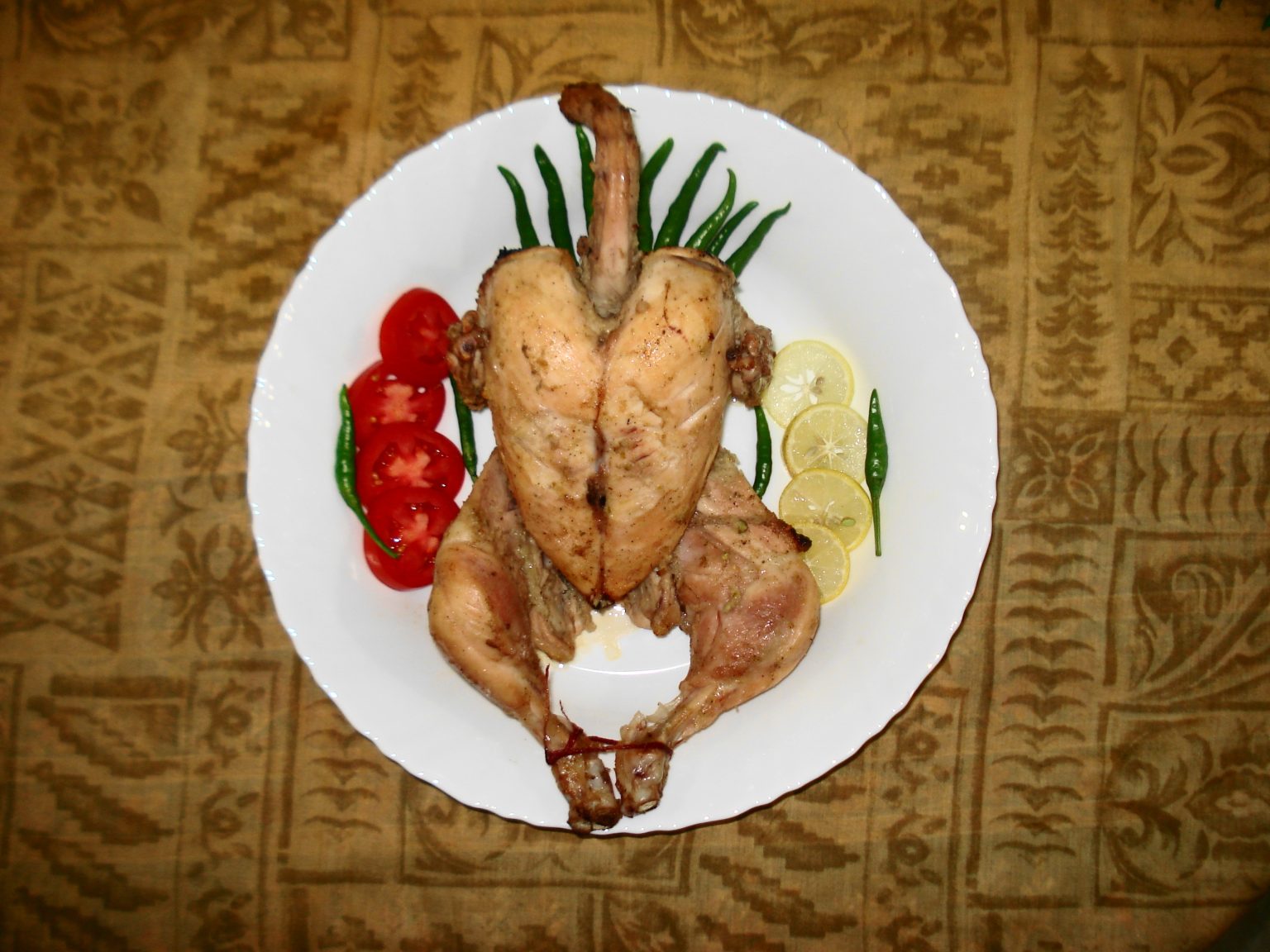
Chicken sajji is a modern city adaptation. The older and more traditional form uses lamb or goat and a slower fire.
Food & Culture
A guide to the salt-seasoned roast from Quetta and the Baloch tribes, from the fire to the table.
Sajji is a slow-roasted whole leg or whole animal from Balochistan, cooked on skewers beside a fire and seasoned with little more than salt. The traditional meat is lamb or goat. A faster chicken version is now sold in cities across Pakistan. Traditional sajji is eaten with kaak, a baked flatbread, or with wholewheat naan, and it is usually pulled apart by hand.
The dish is tied closely to hospitality and to Eid ul Adha, when fresh meat is plentiful. Quetta is the best-known place to eat it, though sajji restaurants now operate in Karachi, Islamabad, Lahore and other cities. This guide explains how sajji is cooked, how the Quetta style differs from the city versions, what to eat it with, and what to know before you order.
Sajji (also spelt saji) is a Balochi roast. The name is written سجی in Urdu. Wikipedia describes it as a dish of Balochistan, and its basic idea is simple: take a large piece of meat, salt it, and cook it slowly beside a fire until the outside is crisp and the inside stays moist.
That simplicity is the point. Most Pakistani meat dishes depend on a long list of spices, fried onions and a heavy masala. Sajji does the opposite. In Quetta the seasoning is kept to salt, and sometimes a little black pepper if the customer asks. The flavour comes from the meat itself and from the smoke of the fire.
Two things set it apart from a barbecue or a tandoori roast. First, the cooking is slow and indirect, so the meat is not charred. Second, the meat is cooked in large pieces, a whole leg of mutton or a whole bird, rather than cut into cubes or minced. It is carved or torn only at the table.
If you know chapli kebab or the grilled meats sold in Pakistan's street food scene, sajji will feel quieter on the palate. There is no marinade crust and no spiced gravy. You taste meat, salt and smoke, and you add flavour at the table with chutney or raita.
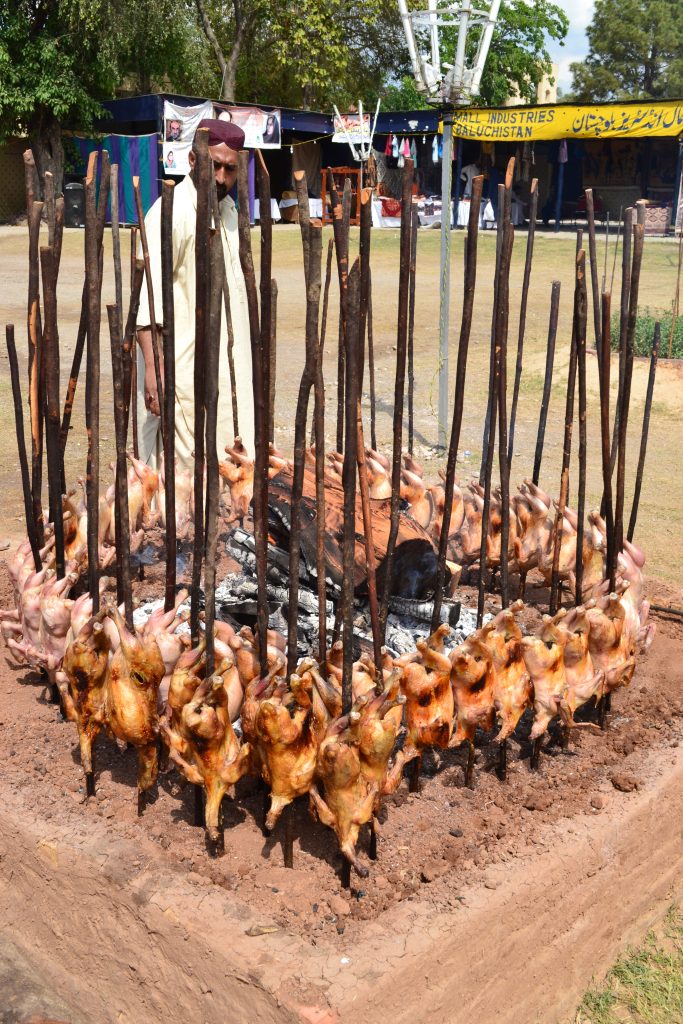
Sajji belongs to the Baloch, and most food writers place its roots in the tribal and nomadic cooking of Balochistan, where livestock were raised across the year and meat was cooked over wood fires. A Dawn Images article from 2022 links the dish to the Lehri tribe and calls Balochistan its hometown. A Google Arts and Culture story on the dish quotes a chef who says it began in Uthal. Another food writer describes it as the cooking of tribal communities who relied on hunting.
These accounts do not agree on one birthplace, and no single authoritative history exists. What they share is the idea that sajji is old, tribal and fire-based. Arab News reported in 2021 that the method was traditionally practised mainly in Dera Bugti and Kohlu and spread to Quetta in the 1960s. That would make Quetta's sajji restaurants a fairly modern chapter in a much older tradition.
Wikipedia also lists Iran alongside Pakistan as a place of origin, which reflects how Baloch communities and their food traditions cross the border. If you are interested in the province itself, our guide to the districts of Balochistan shows where Dera Bugti, Kohlu and Quetta sit on the map.
The details change from cook to cook, and no single recipe is official. The steps below describe the method reported by Arab News from Quetta cooks, with extra detail from other published accounts where noted.
The Wikipedia entry says traditional sajji is considered done when the meat reaches a rare stage, and that urban chicken versions are roasted to medium or well done. Quetta cooks quoted by Arab News talk about crispness and juiciness rather than rareness, so treat doneness as a matter of local habit. If you are served lamb that looks pink near the bone, ask how the restaurant prefers it cooked, and see the safety note further down.
<p>The word sajji now covers several styles. This table summarises the differences described in published accounts.</p>
| Feature | Traditional Balochi style | Quetta restaurant style | City chicken sajji |
|---|---|---|---|
| Meat | Whole lamb or goat, or large cuts | Mutton leg, lamb, goat; chicken also sold | Chicken |
| Seasoning | Salt, minimal spice | Mostly salt, black pepper on request | Often spiced, sometimes marinated with ginger, garlic, lemon and spices |
| Fire | Open wood fire or hot embers | Coal ovens, open-air or mud stoves | Oven or tandoor-style roasting |
| Doneness | Cooked until tender, sometimes described as rare in the old form | Crisp outside, juicy inside | Medium to well done |
| Usual bread | Kaak | Wholewheat naan or kaak | Rice or naan |
Wikipedia notes that traditional Balochistan sajji is served with kaak, while city versions are served with rice. Kaak is the bread traditionally served with sajji in Balochistan, and recipes and shapes vary by cook. If you want to understand the wider bread family, our guide to the breads of Pakistan covers the main types.
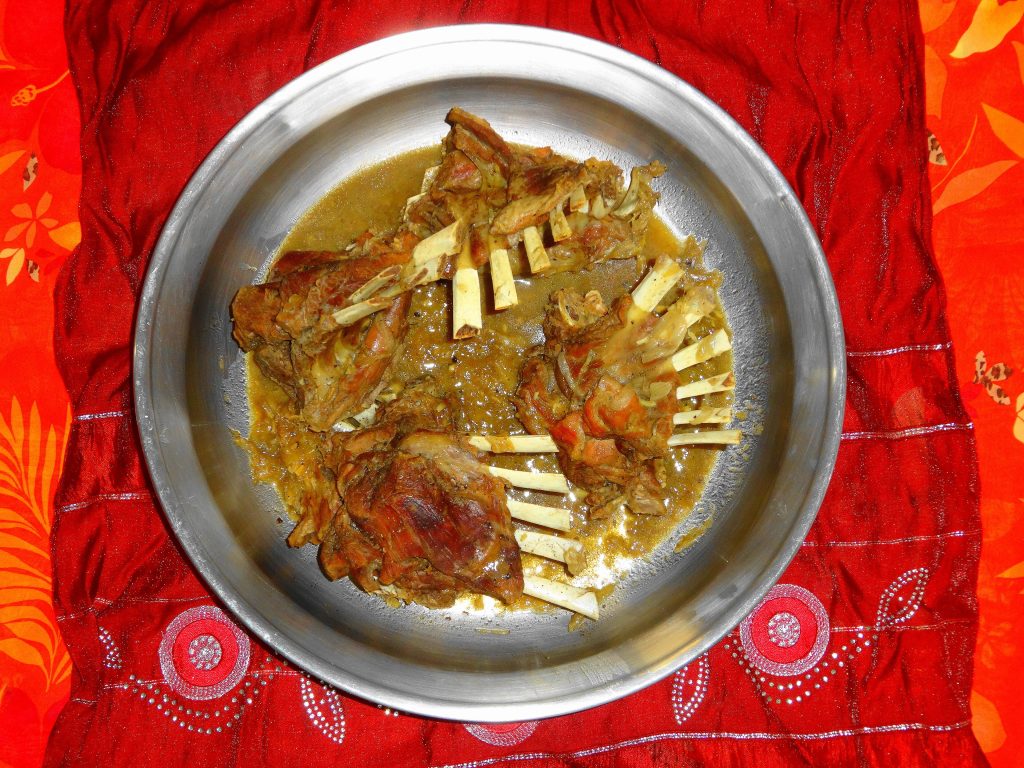
In restaurants in Quetta, a Dawn Images writer reported that sajji came with wholewheat naan, raita or chutney, and was eaten by hand. A food writer who describes a more spiced home version lists kaak, rice, naan and a mint and yoghurt chutney as the usual side dishes. The Google Arts and Culture story describes the meat being served on green papaya leaves, which may be a feature of that cook's style rather than a rule.
Wikipedia says rice is cooked inside the animal in the traditional form. Most restaurant accounts do not mention stuffed rice, so do not expect it at every sajji house. If you want it, ask whether the restaurant offers a stuffed version and whether it needs advance notice.
There is no fixed pairing. Many diners finish with Pakistani tea, and the habit is described in our guide to chai culture. Quetta is also known for its cold winters, so a hot cup after a heavy roast is a common choice.
Sajji is eaten year round, but it is closely linked with Eid ul Adha. Arab News reported in 2021 that sajji is eaten after the morning prayers and the sacrifice, and that Eid meals in Balochistan run longer than elsewhere in Pakistan, with sajji dinners continuing for more than a week. For the religious background to the festival, see our guide to Eid ul Adha and Qurbani.
One food writer describes serving sajji as a sign of respect and hospitality in Balochistan, and says it is prepared for weddings and festivals. Preparing it is also a shared job: family and friends help with the salting, the fire and the roasting, then eat together. If you are invited to a Baloch home or gathering where sajji is served, accept graciously, eat with your right hand, and do not ask for the meat to be spiced up. The plain taste is intended.
For the Eid customs around meat and sharing, see Eid ul Adha and Qurbani. Other slow-cooked meat dishes are in the nihari guide and the haleem and khichra guide, and for dried fruit from the same region see dry fruits and nuts of Pakistan.
Quetta, the provincial capital, is the centre of sajji dining. Arab News names Jinnah Road as a popular area for sajji shops. The Dawn Images article describes Lehri Sajji House, off Main Jinnah Road, as founded in 1968 and run by the founder's family, with a second Quetta branch. Menus, branches and prices change, so confirm opening hours and locations before you travel. Our short profile of Quetta gives background on the city.
Wikipedia notes that Karachi, Islamabad and Lahore have their own versions. A Dawn Images writer says several restaurants in Karachi serve sajji and that the Karachi seasoning is heavier than the Quetta one. If you cannot travel to Balochistan, a city restaurant is a reasonable introduction, but expect a different, more spiced result and often chicken rather than mutton.
Planning a trip? Our Quetta travel guide and the Quetta city page cover getting there and what else to see, and districts of Balochistan shows where the sajji heartland lies.
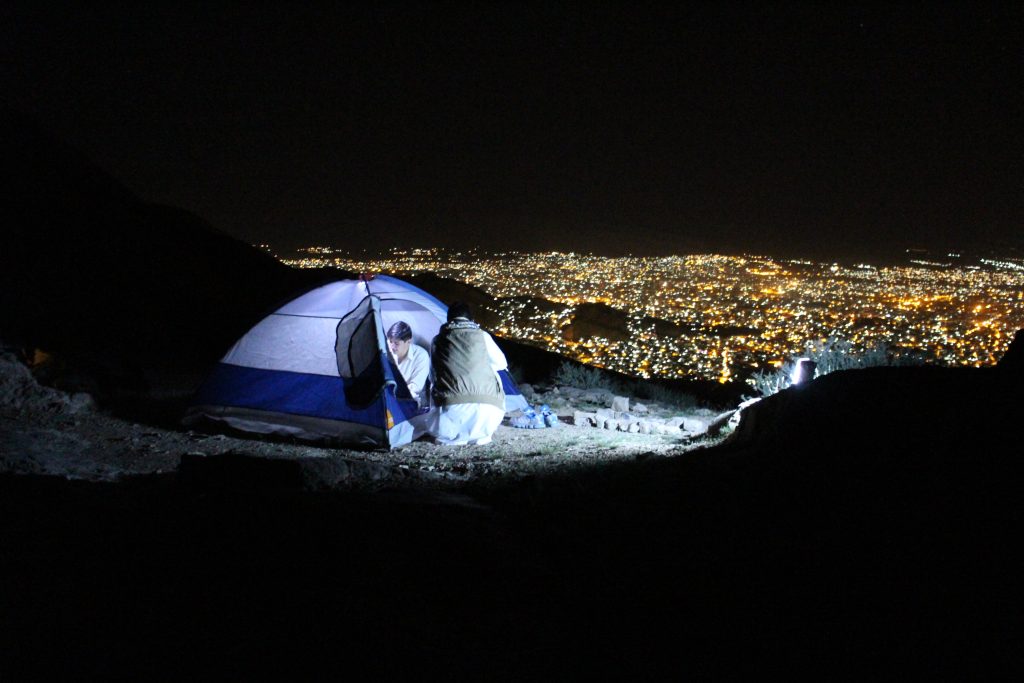
Conditions in parts of Balochistan can change quickly, and some districts need permission or are not advised for visitors. Read our guides to safety tips for travellers and restricted areas and permits, and check your own government's current travel advice, before planning a trip to Quetta or elsewhere in the province. For food, eat at busy places where the meat is cooked to order, and see our advice on food and water safety.
A true sajji needs a fire pit or coal oven and a whole leg or animal, so a home kitchen version is always an approximation. People who cook it abroad usually use a lamb leg or a whole chicken and a very hot oven or a covered barbecue. If you try it, use these principles from the published accounts:
One published home recipe uses a spice paste of roasted and coarsely ground carom, cumin and coriander seeds with salt, black pepper and cardamom, plus lemon, green chilli, garlic and ginger. That is a spiced version and closer to the city style than to Quetta. For ideas on adapting Pakistani dishes with the ingredients available abroad, see Pakistani cooking abroad.
<p>A few points come up again and again when people write about this dish.</p>
Chicken sajji is a modern city adaptation. The older and more traditional form uses lamb or goat and a slower fire.
The Quetta style is the opposite. Salt is the main seasoning, and pepper is added only if you ask for it.
It is associated with Eid and weddings, but restaurants serve it throughout the year, especially in winter in Quetta.
Cooks, tribes and cities differ on the fire, the cut, the spice and the sides. Accounts of its origin also differ.
Sajji is a food tradition rather than a regulated product, so there is no official body that certifies it. For food safety, travel and regional information use these pages:
Details about restaurants, prices and opening hours change frequently and are not verified here, so always confirm with the restaurant directly.
Checked October 2026. Where the origin of sajji is described as a belief or tradition, the cited writers say so and no single account is settled. Restaurant names, hours and prices change, so check locally.
Sajji is a Balochi dish of meat, traditionally lamb or goat, roasted slowly on skewers beside a fire and seasoned mainly with salt. A chicken version is common in cities.
It comes from Balochistan. Accounts differ on the exact place, with Dera Bugti, Kohlu and Uthal all mentioned, and Arab News reports that the method reached Quetta in the 1960s.
Published accounts from Quetta and a Google Arts and Culture story give about three to four hours, with the cook managing the fire throughout.
Traditional sajji is served with kaak bread. Restaurants in Quetta use wholewheat naan with raita or chutney, and city chicken sajji is often served with rice.
Not in the Quetta style, which uses mostly salt and sometimes black pepper on request. City versions are often more heavily seasoned.
Quetta is the centre, with shops reported on Jinnah Road. Karachi, Islamabad and Lahore also have sajji restaurants, though their style differs from Quetta.
Yes. Arab News reports that sajji is eaten after the morning prayers and the sacrifice on Eid ul Adha, and that sajji meals continue for days in Balochistan.
Sajji is made from meat and salt, so it is halal when the animal is slaughtered according to Islamic rules. Ask the restaurant about its supplier if this matters to you.
From majestic mountains to vibrant cities, rich cuisine to timeless traditions — discover the real Pakistan with DailyLife.pk.
