
Cooking guide
LeftoversDone Safely
How long biryani, salan, daal and parathas keep in the fridge and freezer, why rice needs special care, and how to reheat curries and breads so they taste fresh.
- Chill within 1–2 hours
- Fridge 0–5°C, freezer about −18°C
- Reheat until steaming hot
Pakistan
Why Leftovers Need a Plan
Pakistani cooking is generous by nature. A pot of salan is made to last two meals, a dawat leaves trays of biryani, and many families cook nihari, haleem or a big batch of parathas ahead. Storing and reheating them well matters for both flavour and safety, especially in a hot climate, where food left on the stove all afternoon can spoil quickly.
This guide draws on two official sources that broadly agree but differ in detail: the UK Food Standards Agency (and Food Standards Scotland) and the US Department of Agriculture. The FSA advises eating leftovers within 48 hours; the USDA allows 3 to 4 days in the fridge. Where they differ, the shorter, more cautious time is the safer default, and you should follow the advice of your own local food authority.
The core rules are simple: cool food quickly, keep it cold, use it in time, and reheat it until it is steaming hot right through, only once.

The Golden Rules
Cool fast
Into the fridge within 1–2 hours
The FSA says to refrigerate cooked food within one to two hours. The USDA's limit is 2 hours, or 1 hour when it is above 32°C (90°F), as on most Pakistani summer days.
Divide big batches
Shallow containers
A deep deg of biryani or salan cools very slowly. Split it into shallow containers or smaller portions so it chills quickly.
Keep it cold
Fridge 0–5°C
The FSA recommends a fridge between 0 and 5°C and a freezer around −18°C; check with a fridge thermometer.
Reheat properly
Steaming hot, once
Reheat until steaming hot throughout (the USDA's figure is 74°C / 165°F). Bring gravies and soups to a rolling boil, and don't reheat the same food twice.
Label it
Name and date
Write the dish and date on freezer boxes so nothing lingers.
How Long Will It Keep?
| Food | Fridge | Freezer | Notes |
|---|---|---|---|
| Cooked rice, pulao, biryani | Within 24 hours (FSS) | Freeze promptly once cooled; reheat once | Cool within about 1 hour; never reheat more than once |
| Salan, qorma, karahi, nihari, haleem | 48 hours (FSA); 3–4 days (USDA) | 3–4 months for best quality (USDA) | Freeze in portions; skim fat after chilling if you like |
| Daal and cooked beans | 48 hours (FSA); 3–4 days (USDA) | 3–4 months for best quality (USDA) | Thickens when cold: add hot water when reheating |
| Cooked kebabs, shami, tikka | 48 hours (FSA); 3–4 days (USDA) | 3–4 months for best quality (USDA) | Freeze shami kebabs uncooked or cooked, separated by paper |
| Raw chicken, mince | 1–2 days (FoodSafety.gov) | Freeze if not using soon | Keep on the bottom shelf, covered |
| Raw steaks, chops, mutton pieces | 3–5 days (FoodSafety.gov) | Freeze if not using soon | Marinades with yoghurt: keep chilled, use promptly |
| Roti and paratha | About 2 days, wrapped (quality guide) | Freeze in stacks with paper between | Reheat on a hot tawa |
| Kheer, custards, raita | 48 hours (FSA); 3–4 days (USDA) | Not ideal; texture suffers | Keep covered and cold |
Times from the UK Food Standards Agency, Food Standards Scotland, USDA FSIS and FoodSafety.gov; freezer times are for quality, as food kept constantly frozen stays safe longer. Where agencies differ, choose the shorter time and follow your local food authority. Bread time is a quality guide (King Arthur Baking), not a safety limit.
Rice: The Special Case
Food Standards Scotland explains that uncooked rice can contain spores of the bacterium Bacillus cereus, which survive cooking. If cooked rice sits warm, they can grow and produce toxins that reheating may not destroy. So:
- Cool rice as quickly as possible, ideally within 1 hour; take it out of the pot and spread it out or divide it.
- Refrigerate it and eat it within 24 hours.
- Reheat it until steaming hot all the way through, and never more than once.
- Don't leave a deg of biryani standing on the stove for hours after a dawat.
Freezing Pakistani Food Well
- 1
Cool before freezing
Cool food quickly first; the FSA advises splitting it into smaller portions to speed this up.
- 2
Freeze curries without potatoes if you can
Potatoes in aloo gosht turn grainy when frozen. Freeze the meat and gravy, then add freshly boiled potatoes when reheating.
- 3
Leave space
Liquids expand. Leave a little headroom in boxes or bags and lay bags flat to freeze.
- 4
Freeze breads in stacks
Part-cook parathas, cool them, stack with baking paper between and freeze flat. Cook them from frozen on a medium tawa.
- 5
Defrost in the fridge
The FSA recommends defrosting in the fridge and using food within 24 hours of defrosting. If you use the microwave's defrost setting, cook or reheat the food straight away.
- 6
Know the refreeze rule
According to the FSA, raw food that has been frozen and defrosted can be cooked and then frozen again, but you can then only reheat it once.
Reheating, Dish by Dish
| Dish | Best method | Tip |
|---|---|---|
| Salan, qorma, nihari | In a pan, covered, stirring, until bubbling | Add a splash of water; refresh nihari with fresh ginger, chilli and lemon |
| Daal | In a pan with hot water, stirring until boiling | A fresh tarka makes it taste just cooked |
| Haleem | Low heat with water or stock, stirring constantly | It catches easily; top with fresh fried onions |
| Biryani and pulao | Microwave covered with a sprinkle of water, or a covered pan on low heat with a tawa underneath | Heat until steaming hot throughout; stir or rotate halfway |
| Roti | On a hot tawa for a few seconds each side, or wrapped in a damp cloth in the microwave | Brush with ghee after |
| Paratha | On a medium tawa until crisp | Don't microwave: it goes chewy |
| Kebabs | In a pan or under the grill until hot through | Microwaving dries them out |
| Samosa, pakoray | In a hot oven or air-fryer | Re-crisps far better than a microwave |
Microwave reheating. The USDA advises covering and rotating food so it heats evenly, adding a little liquid if needed, letting it stand briefly, and checking in several places that it has reached 74°C (165°F). Microwaves leave cold spots, which is why a stir halfway matters, especially for rice and thick curries.
Leftover Troubleshooting
| Problem | Likely cause | Fix |
|---|---|---|
| Reheated rice is dry and hard | No moisture added | Sprinkle water, cover and steam; heat until steaming hot. |
| Curry split or oily after freezing | Yoghurt or cream gravies separate | Reheat gently and whisk; a spoonful of fresh yoghurt off the heat helps. |
| Daal like a brick | Pulses keep absorbing water | Loosen with hot water while heating. |
| Parathas chewy | Microwaved | Reheat on a tawa instead. |
| Freezer burn | Air in the container | Use airtight boxes or squeeze air out of bags; use within the recommended time. |
| Unsure if it's still good | Unlabelled, old leftovers | If in doubt, throw it out. Smell and look are not reliable safety tests. |
Cook Once, Eat Twice
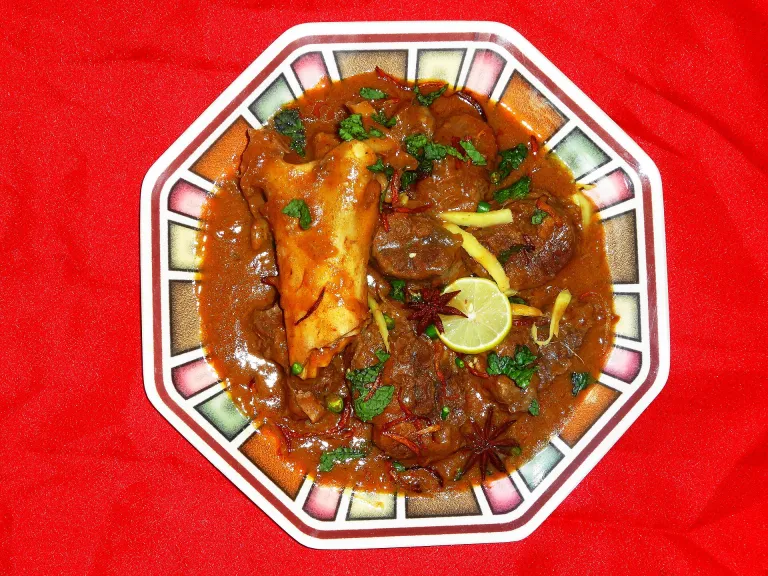 NihariOften better the next day; freezes well.
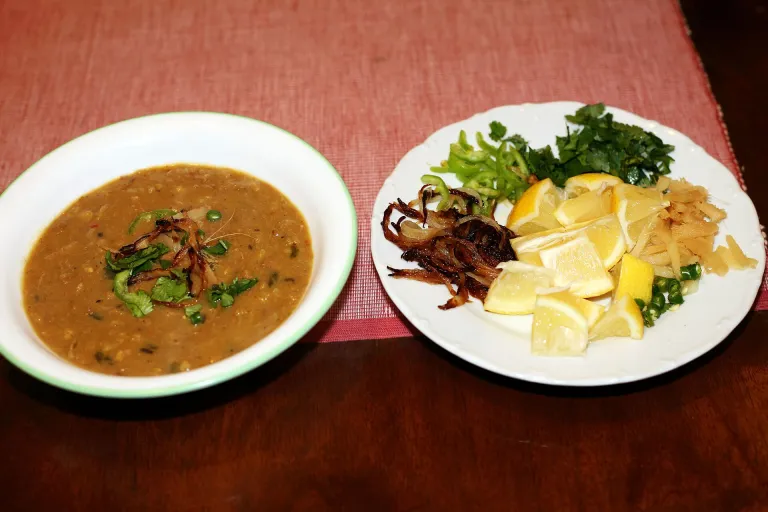 HaleemMake a big batch and freeze in portions.
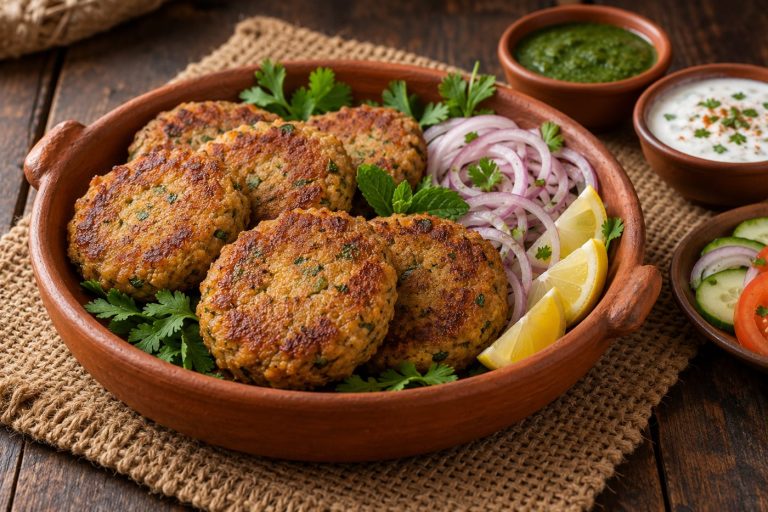 Chicken Shami KebabFreeze shami kebabs for quick lunches.
 Aloo ParathaPart-cook and freeze for busy mornings.
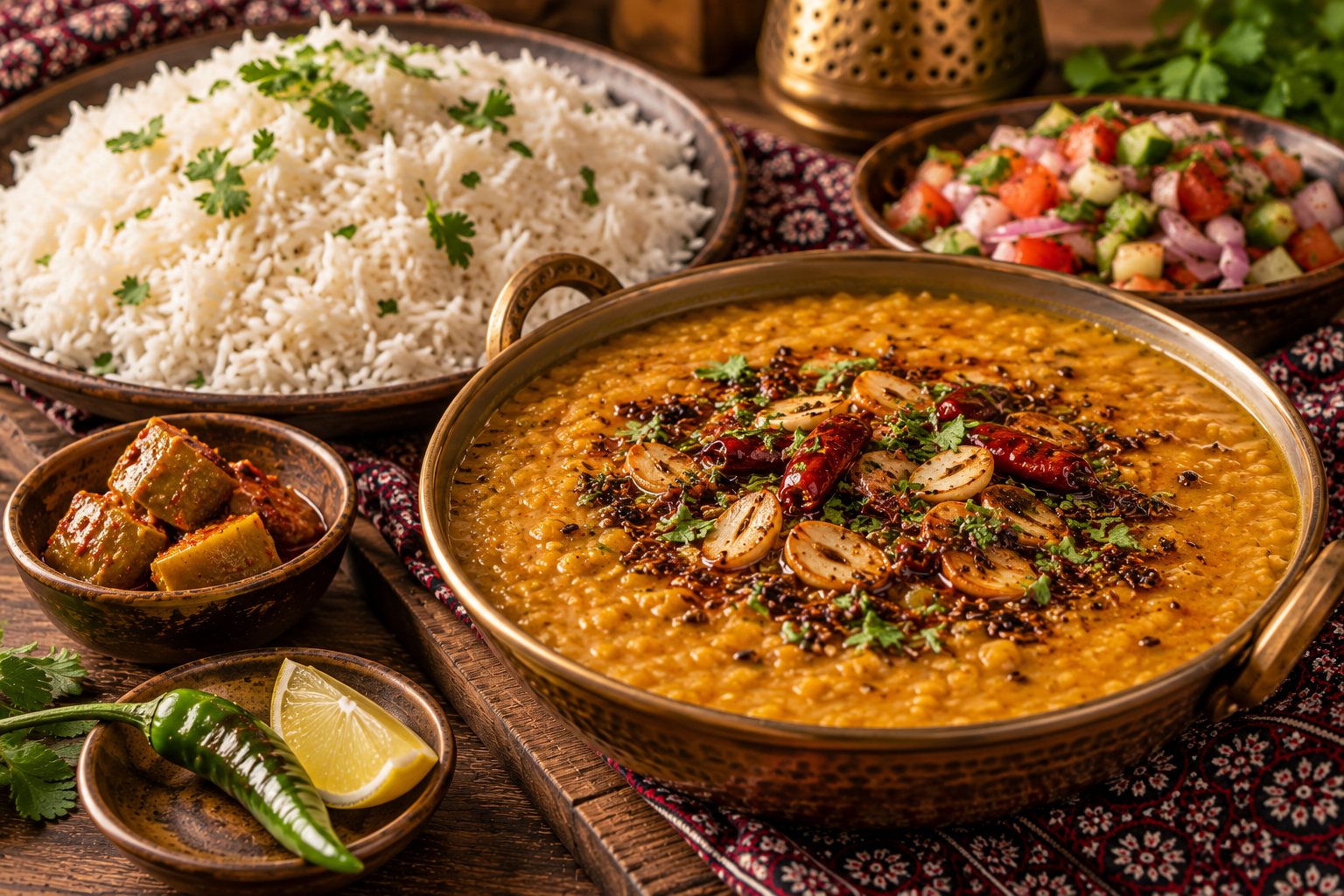
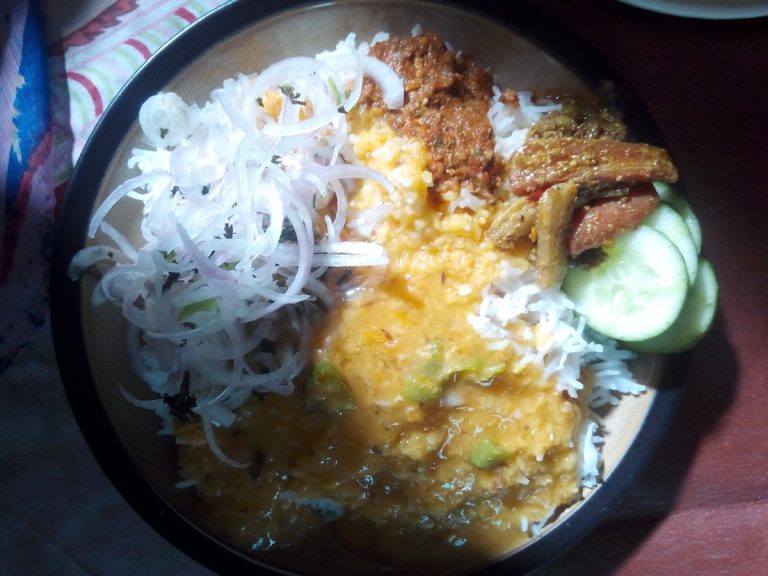 Daal ChawalFreeze the daal; cook the rice fresh.
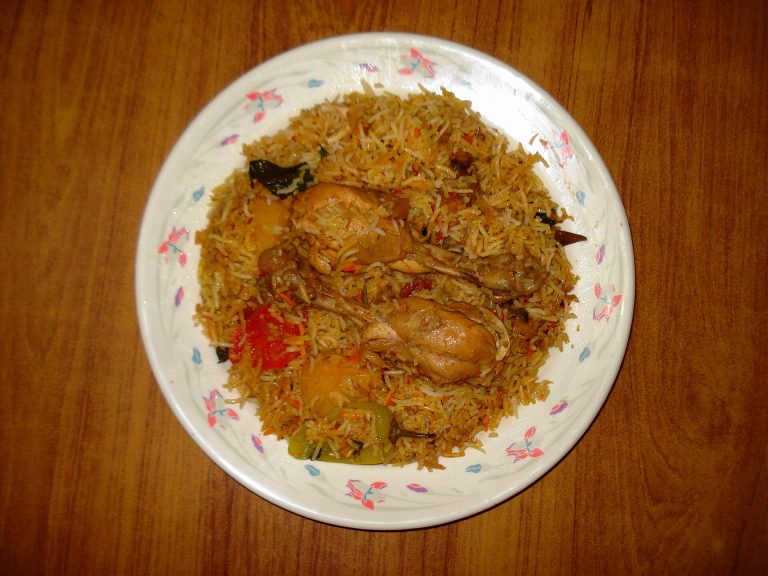 Chicken BiryaniEat leftovers within 24 hours and reheat once.
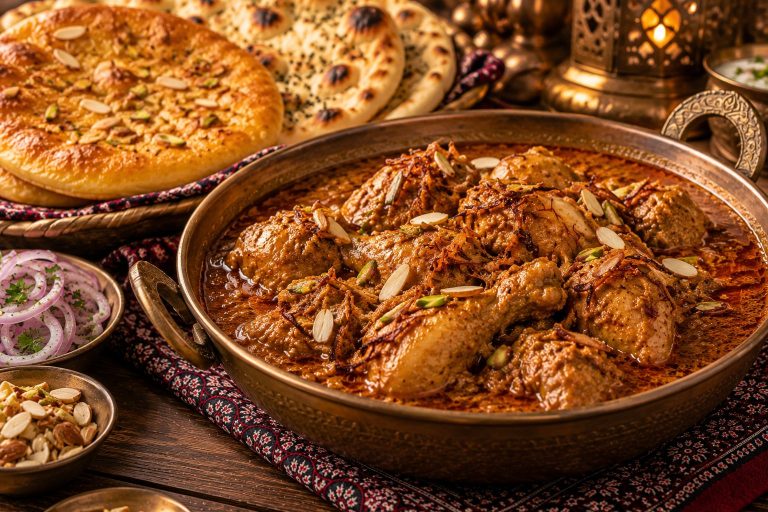 Chicken KormaQorma reheats beautifully over low heat.
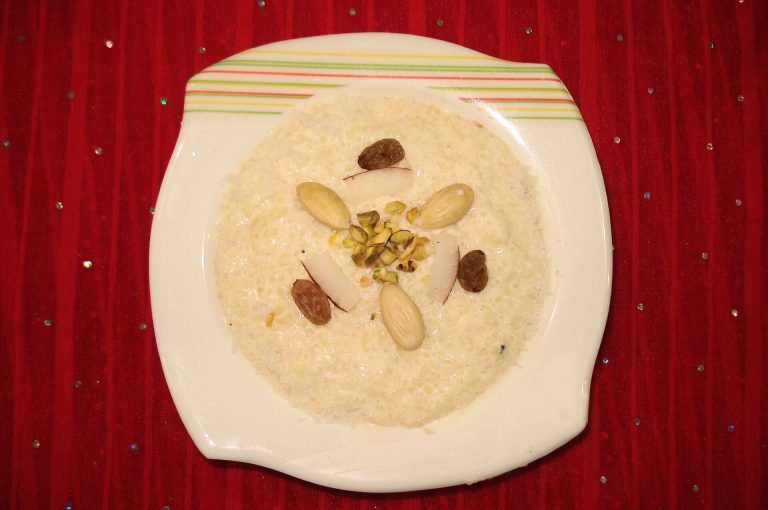 KheerKeep chilled and eat within a couple of days.
Frequently Asked Questions
How long can I keep leftover biryani in the fridge?
Treat it as cooked rice: cool it within about an hour, refrigerate it, eat it within 24 hours and reheat it only once until steaming hot, as Food Standards Scotland advises.
How long does curry keep in the fridge?
The UK Food Standards Agency says to eat leftovers within 48 hours or freeze them; the USDA allows 3 to 4 days. Follow your local authority and use the shorter time if unsure.
Can I freeze curry with yoghurt in it?
Yes, though the sauce may look grainy or split when thawed. Reheat it gently and whisk; it usually comes back together.
Can I refreeze food once it has thawed?
The FSA says raw food that was frozen and defrosted can be cooked and frozen again, but you should then reheat it only once. Don't refreeze cooked leftovers that have already been reheated.
Is it safe to leave food on the stove overnight?
No. Both the FSA and the USDA say cooked food should be refrigerated within about two hours (the USDA says one hour above 32°C). Food left warm overnight can grow bacteria that reheating may not make safe.
Keep Exploring
Related places and stories on DailyLife.pk
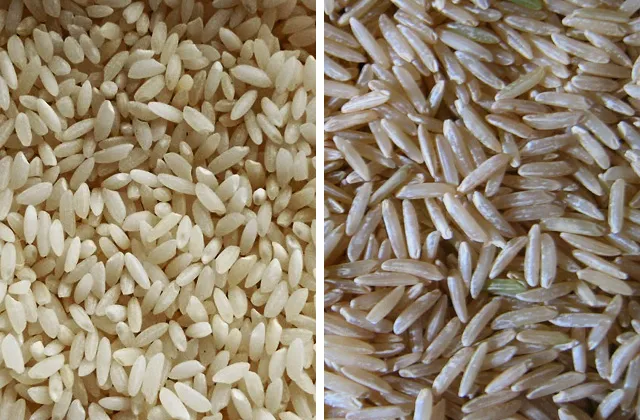 How to Cook Perfect RiceCook basmati the Pakistani way: washing and soaking, boil-and-drain vs absorption, pulao vs biryani rice
 Cooking for a CrowdPlan a Pakistani dawat: scaling biryani, curry and rice, quantities per guest, cooking in a degCooking Daal and BeansCook Pakistani daal and beans: soaking times, pot vs pressure cooker, the tarka
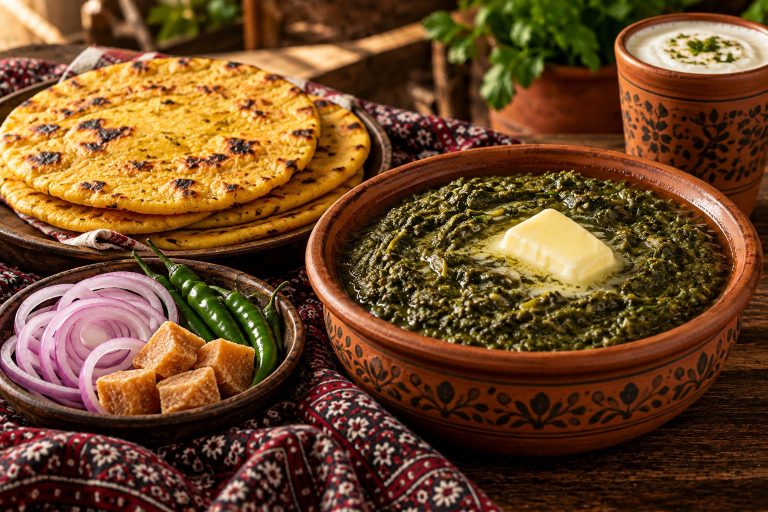 Punjabi CuisinePunjabi food guide: saag and makai roti, halwa puri, paye, Lahori fried fish, sohan halwa, lassi
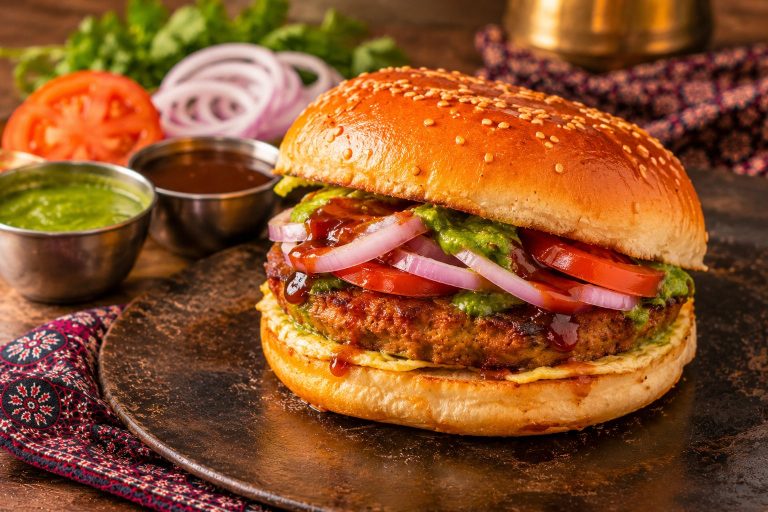 Karachi Street FoodKarachi street food guide: Burns Road nihari and rabri, bun kebab, haleem, biryani, chaat
How we know this
- Type Explainer
- Sources 8 (4 official/academic)
- Reviewed October 2026
- Disputed points None
8 sources
- How to chill, freeze and defrost food safely, Food Standards Agency (UK)
- Rice: storing and reheating safely, Food Standards Scotland
- Food storage, Food Standards Scotland
- Leftovers and Food Safety, USDA Food Safety and Inspection Service
- How do I handle leftovers safely?, USDA FSIS (Ask USDA)
- What methods of reheating food are safe?, USDA FSIS (Ask USDA)
- Cold Food Storage Chart, FoodSafety.gov (U.S. Department of Health and Human Services)
- Roti, King Arthur Baking
Photo credits (10)
- Punjabi Chicken Biryani.JPG, Miansari66, CC0, via Wikimedia Commons
- C8-DPPxXsAEeCOy.jpg, Maryum Siddiqui, CC BY-SA 4.0, via Wikimedia Commons
- Pakistani Haleem served with garnish.jpg, Halt123halt, CC BY-SA 3.0, via Wikimedia Commons
- Kheer Special.JPG, Miansari66, Public domain, via Wikimedia Commons
- Beef Nihari.JPG, Miansari66, CC0, via Wikimedia Commons
- Aloo Paratha (illustration), DailyLife.pk, Illustrative image
- Chicken Biryani (illustration), DailyLife.pk, Illustrative image
- Chicken Korma (illustration), DailyLife.pk, Illustrative image
- Daal Chawal (illustration), DailyLife.pk, Illustrative image
- Chicken Shami Kebab (illustration), DailyLife.pk, Illustrative image
