
Heritage
Forts of Pakistan: A Guide with Verified Facts
An index of Pakistan's great forts, from Rohtas and Lahore to the desert walls of Derawar and the mountain forts of Hunza, with one verified fact for each, links to full pages and notes on access.
- 15 forts indexed
- 2 UNESCO-listed forts
- Some forts are military sites
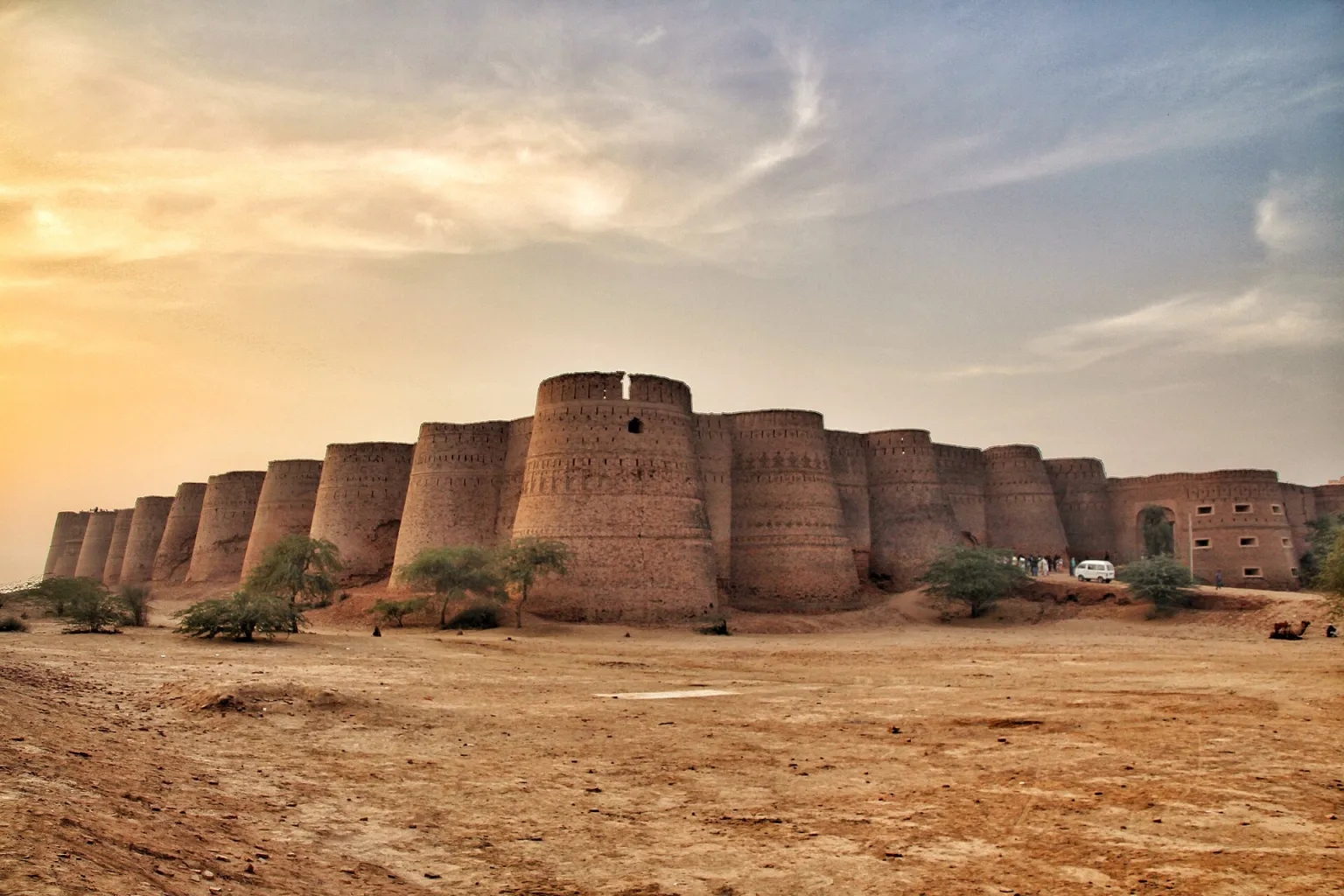
Derawar Fort, Cholistan, Punjab
About the forts
Forts in Pakistan range from royal citadels to desert outposts and caravan stations. Sher Shah Suri raised Rohtas in 1541 to hold the road into the Punjab; the Mughals built the palaces of Lahore Fort; the Talpurs of Sindh raised Kot Diji, Naukot and the great wall of Ranikot in the late 18th and early 19th centuries; and in Hunza, stone and timber forts such as Baltit and Altit commanded valleys on the old Karakoram trade routes. Many have a second life today as museums, markets or army posts.
The entries below give one sourced fact per fort and link to a full page where the site has one. UNESCO inscribed two forts on the World Heritage List, and several others sit on the Tentative List. Two are working military sites with limited or no public access. Confirm opening and access locally before visiting any of them.
Punjab and the Potohar
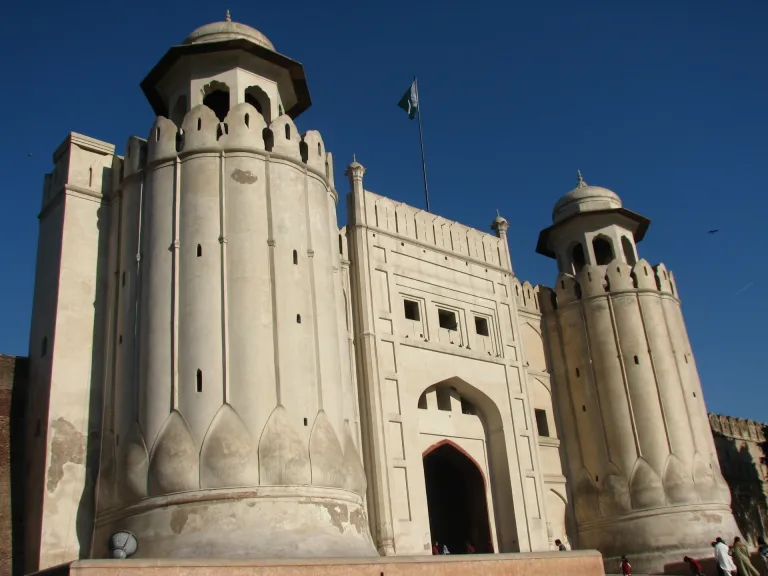 Lahore FortPart of the Fort and Shalamar Gardens in Lahore, inscribed in 1981. UNESCO counts 21 monuments in the fort, including marble palaces and mosques.
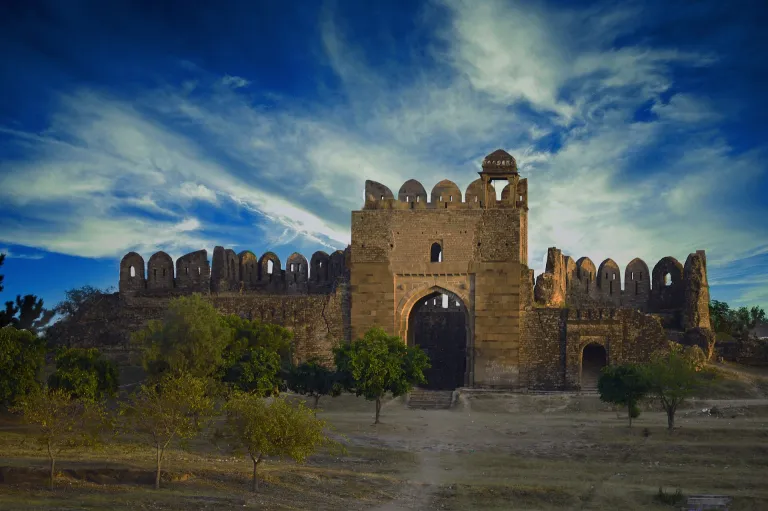
 Rohtas FortBegun in 1541 by Sher Shah Suri. UNESCO notes walls more than 4 km long with 68 bastions and 12 gateways, and says it was never taken by storm.
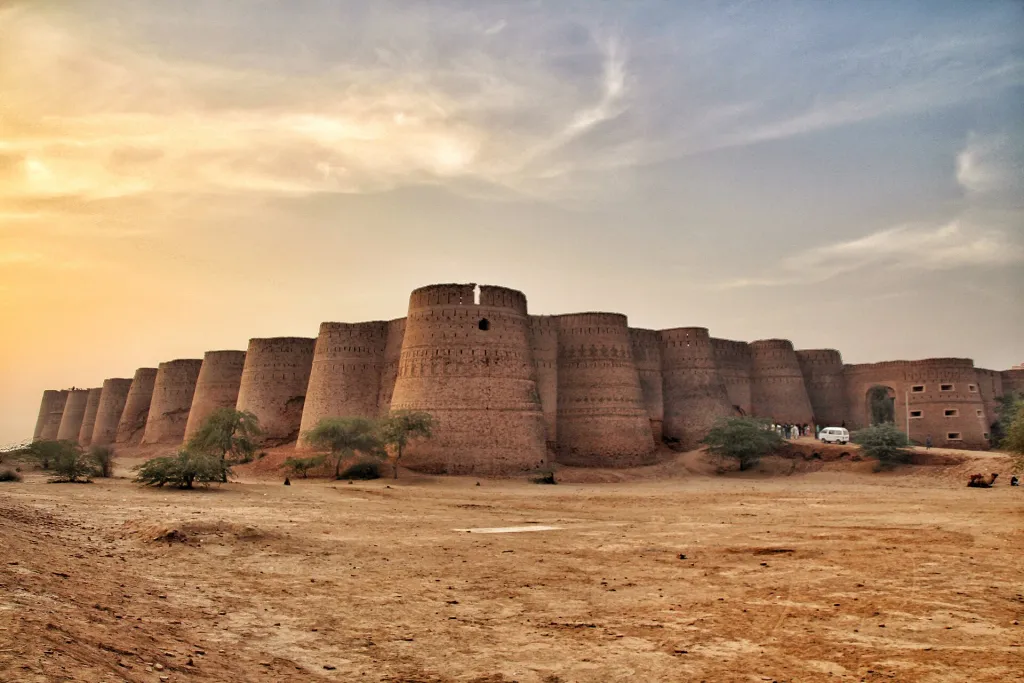
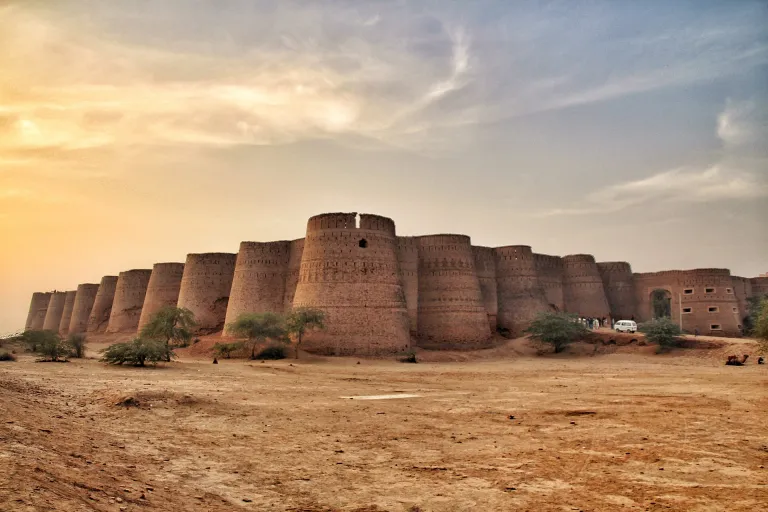 Derawar FortThe best-surviving of the Cholistan desert forts: a square of clay brick with walls about 1,500 m long and up to 30 m high, with forty round bastions, according to UNESCO's Tentative List entry (2016).
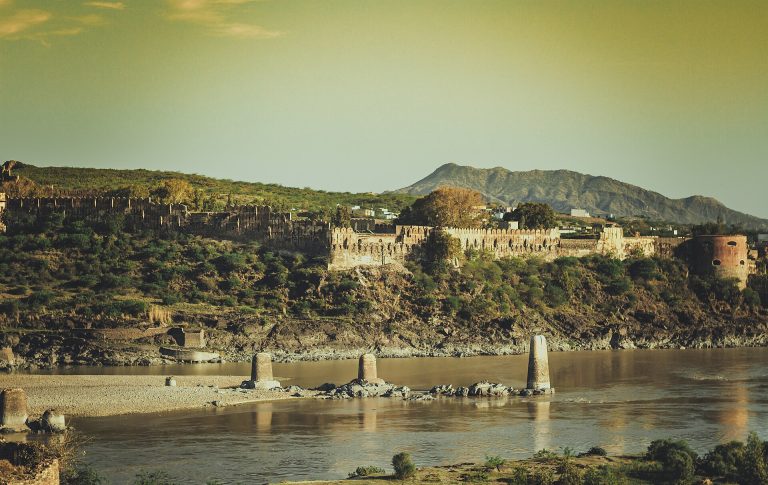 Attock FortOrdered by Akbar and built between 1581 and 1583 above the Indus. It is a military base and visitors are not normally admitted.
 Rawat FortA roadside fort on the Grand Trunk Road east of Rawalpindi, listed as Rewat Fort on the Tentative List in 2026 according to press reports.
Sindh
 Rani Kot FortUNESCO's Tentative List entry (14 December 1993) describes a 35 km fortification wall of stone and lime with semicircular bastions, built in the first quarter of the 19th century.
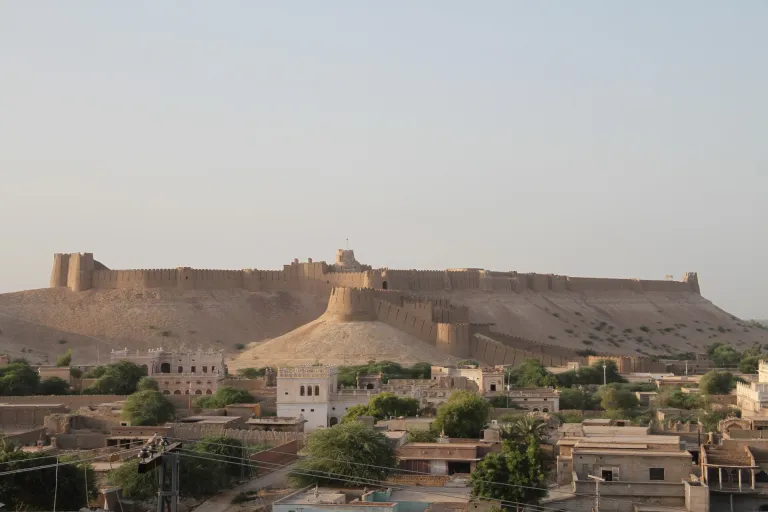 Kot Diji FortA Talpur-era brick fort on a limestone hill. It was reported added to the Tentative List in March 2026.
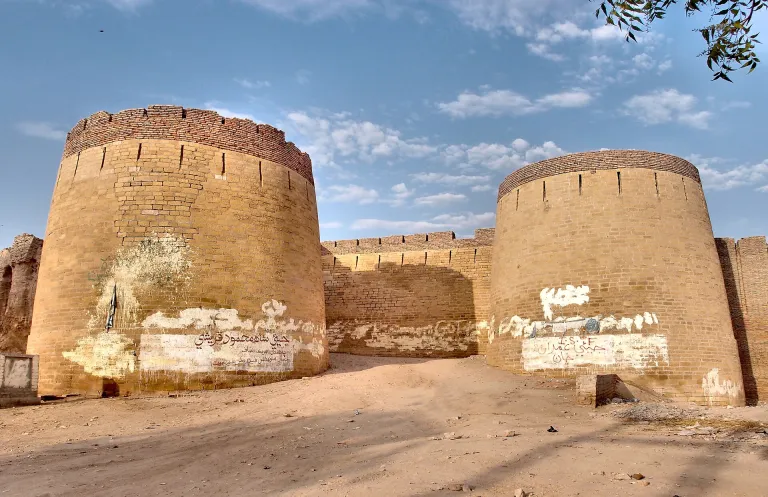 Umerkot FortThe Sindh antiquities department says the Talpurs recovered it in 1813, after Soomro, Rajput and Kalhora rule, and held it until the British took Sindh.
Khyber Pakhtunkhwa, Gilgit-Baltistan and Azad Kashmir
 Bala HisarThe high fort above Peshawar's old city. It is a working military site rather than an open heritage park, so access varies; see the page.
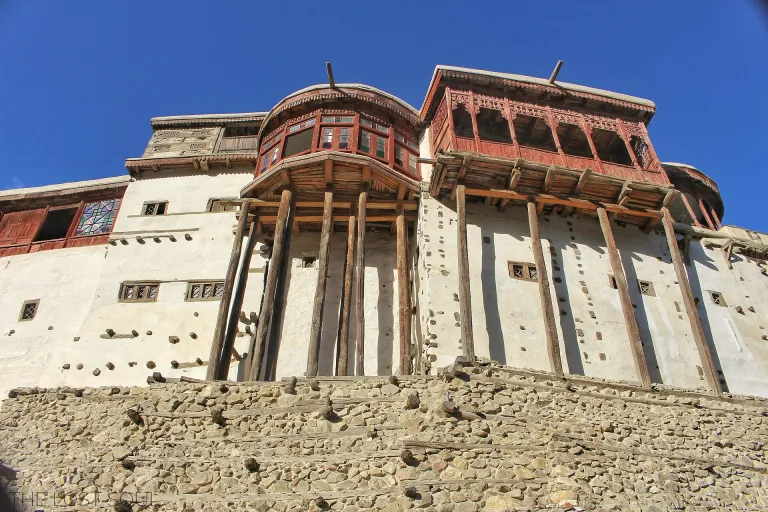 Baltit FortOn the Tentative List since 30 January 2004. UNESCO's entry dates the core tower to the 8th century and says the fort was the seat of the Mir of Hunza until 1945. Aga Khan Trust for Culture completed its restoration in 1996 and it is now a museum and cultural centre.
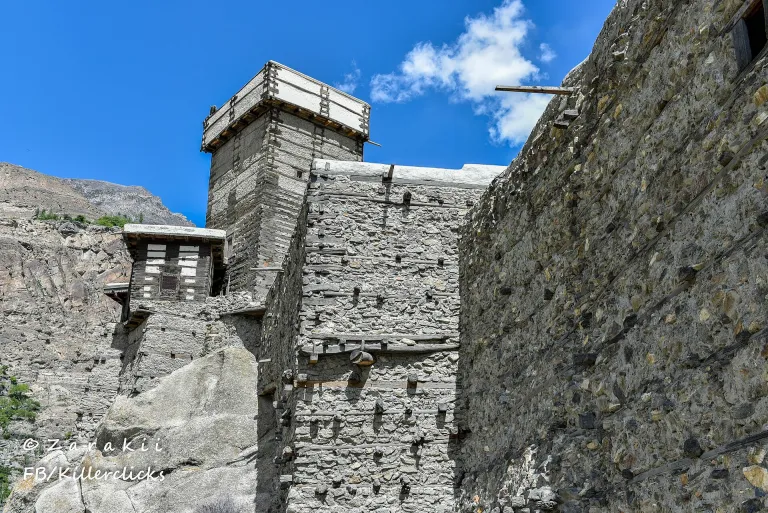 Altit FortThe Aga Khan Development Network calls it about 900 years old. Its restoration was completed in 2010 and it is open to visitors.
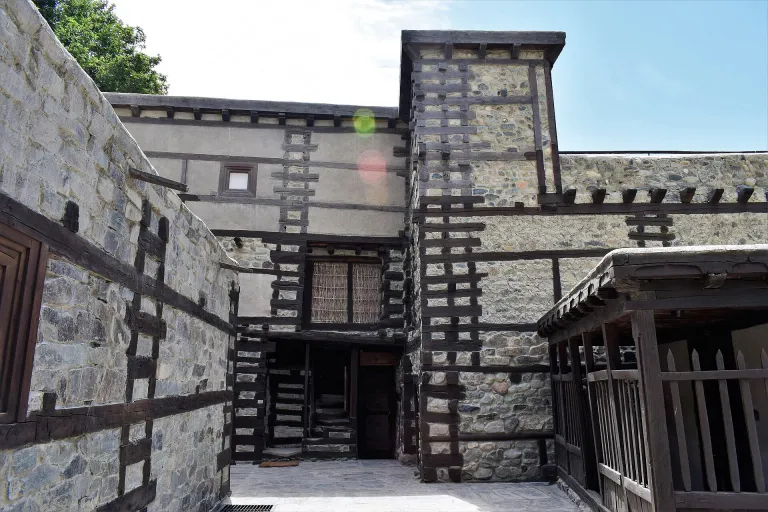 Shigar FortThe 17th-century fort of the Raja of Shigar, converted into a heritage hotel and guesthouse managed since 2008, according to the Aga Khan Development Network.
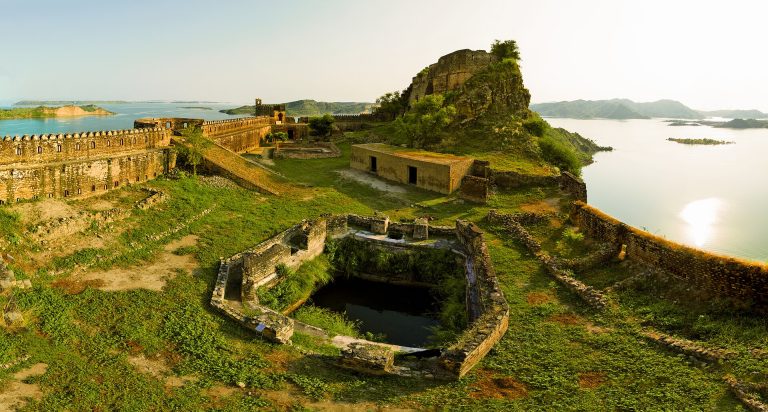 Ramkot FortA stone fort on a height at the meeting of the Jhelum and Poonch rivers in Mirpur District, Azad Jammu and Kashmir, which is administered by Pakistan. See the page for access.
Access, safety and respect
Military sites
Attock Fort and Bala Hisar
Both are controlled by the armed forces. Do not assume you can enter; ask the authorities, and do not photograph security installations.
Hours and fees
Confirm locally
Provincial and federal archaeology departments set hours and fees, which change. Where an official page is silent, ask at the gate or the tourism department.
Heat and monsoon
Plan the season
Desert and plains forts are best between October and March. Monsoon rain and summer heat affect Derawar, Rani Kot and Umerkot.
Care of the fabric
Do not climb
Do not climb on bastions, scratch walls or move stones. Several forts are fragile or under restoration.
Frequently Asked Questions
Which forts are UNESCO World Heritage Sites?
Lahore Fort, inscribed in 1981 together with the Shalimar Gardens, and Rohtas Fort, inscribed in 1997.
Which forts are on the Tentative List?
According to UNESCO's State Party page for Pakistan in October 2026: Rani Kot, Baltit, Derawar and the desert forts of Cholistan, and, since 2026, Kot Diji, Naukot, Umerkot, Rewat, Pharwala and others.
Can I visit Attock Fort or Bala Hisar?
Both are military sites. Public access is limited or varies, so ask the authorities before travelling.
Which fort should I visit first?
Rohtas, a World Heritage Site near Jhelum, is often chosen for scale and preservation. Derawar and Rani Kot reward visitors who enjoy remote places. Check access and season for each.
Keep Exploring
Related places and stories on DailyLife.pk
 Lahore Fort and Badshahi MosqueLahore Fort and Badshahi Mosque guide: Sheesh Mahal, Picture Wall, Alamgiri Gate
 Rohtas FortExplore Rohtas Fort near Jhelum: Sohail Gate, ramparts, Haveli Man Singh, Shahi Masjid and stepwellsDerawar FortPlan a Derawar Fort trip in Cholistan: its history, forty bastions, Abbasi mosque and royal graveyardRanikot FortPlan a Ranikot Fort trip: the 'Great Wall of Sindh', Miri and Shergarh, its gatesKot Diji FortVisit Kot Diji Fort in Khairpur, Sindh: Talpur-era citadel (1785-1795), its gates and bastionsBala Hisar Fort, PeshawarBala Hisar Fort, Peshawar: its Durrani, Sikh and British history, the 1849 walls
How we know this
- Type Historical & cultural research
- Sources 12 (8 official/academic)
- Reviewed October 2026
- Disputed points None
12 sources
- Pakistan: State Party page, UNESCO World Heritage Centre
- Fort and Shalamar Gardens in Lahore, UNESCO World Heritage Centre
- Rohtas Fort, UNESCO World Heritage Centre
- Derawar and the Desert Forts of Cholistan (Tentative List), UNESCO World Heritage Centre
- Rani Kot Fort, Dadu (Tentative List), UNESCO World Heritage Centre
- Baltit Fort (Tentative List), UNESCO World Heritage Centre
- Umerkot Fort, Umerkot, Department of Culture, Tourism, Antiquities and Archives, Government of Sindh
- Conservation and development in Gilgit-Baltistan, Aga Khan Development Network
- Pharwala Fort on its way to regain lost glory, Dawn
- Attock Fort, Wikipedia (used to locate primary sources)
- Naukot Fort, Wikipedia (used to locate primary sources)
- 12 New Pakistani Sites Added to UNESCO World Heritage Tentative List, ProPakistani
Photo credits (15)
- Derawar Fort, Bahawalpur I.jpg, Fassifarooq, CC BY-SA 4.0, via Wikimedia Commons
- Alamgiri Gate - Main entrance to Lahore Fort.jpg, S.hassanjawad, CC BY-SA 3.0, via Wikimedia Commons
- Rohtas Fort (Jhelum, Pakistan) - World Heritage Site.jpeg, Hussain Khalid, CC BY-SA 4.0, via Wikimedia Commons
- Attock Qila.jpg, Imkashi94, CC BY-SA 4.0, via Wikimedia Commons
- Rawat Fort - Main Gate East.jpg, Mudabbirmaajid, CC BY-SA 3.0, via Wikimedia Commons
- Kot Diji Fort by smn-.JPG, Smn121, CC BY-SA 3.0, via Wikimedia Commons
- Ranikot Fort - The Great Wall of Sindh.jpg, Adrian Leslie Lobo, CC BY-SA 3.0, via Wikimedia Commons
- Umarkot Fort view3.JPG, Saqib Qayyum, CC BY-SA 3.0, via Wikimedia Commons
- Bala Hisar-Peshawar.JPG, Ammad Malik-101, CC BY-SA 3.0, via Wikimedia Commons
- Baltit Fort, Karimabad, Hunza, Gilgit Baltistan.jpg, Fassifarooq, CC BY-SA 4.0, via Wikimedia Commons
- Altit Fort 01.JPG, Harismoghal, CC BY-SA 4.0, via Wikimedia Commons
- Ramkot Fort.jpg, Mudabbirmaajid, CC BY-SA 3.0, via Wikimedia Commons
- Shigar Fort.jpg, Shahid Rao, CC BY-SA 4.0, via Wikimedia Commons
- Sohail Gate - Rohtas Fort by Hassan.jpg, Hassantahir6009, CC BY-SA 4.0, via Wikimedia Commons
- Wide angle view of Badshahi Mosque.jpg, Mishel Ijaz, CC BY-SA 4.0, via Wikimedia Commons
