
Travel destination
Bala Hisar: Peshawar's High Fort
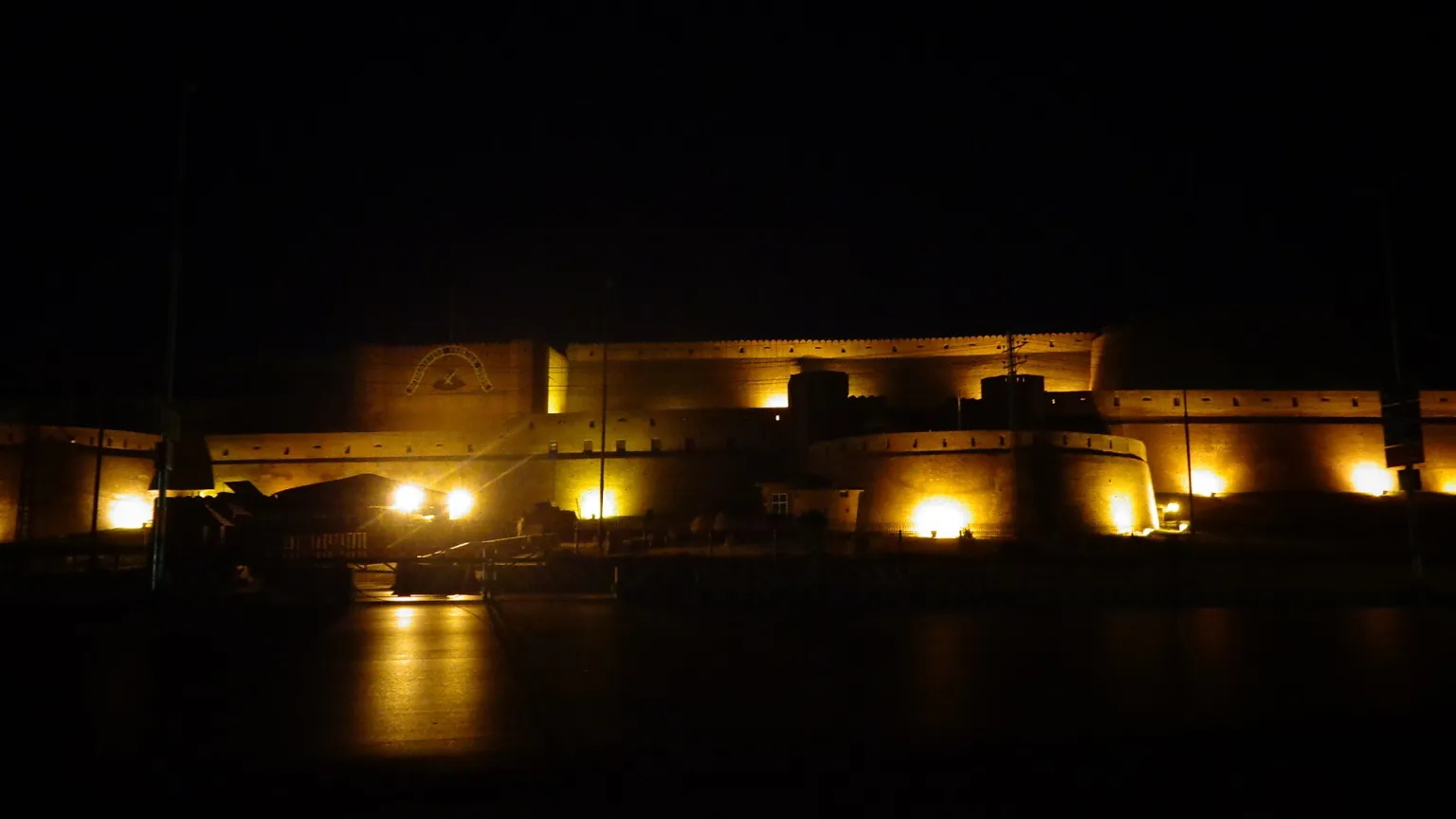
The mud-and-brick citadel on the mound above Peshawar, rebuilt by Sikh and British engineers and still a working military site.
- Peshawar, Khyber Pakhtunkhwa
- Citadel and former royal residence
- Working Frontier Corps site
- Walls rebuilt 1849
Bala Hisar Fort, Peshawar
About Bala Hisar Fort, Peshawar
Bala Hisar, 'the high fort', stands on a mound at the north-west edge of Peshawar's old city. It has been fortified, destroyed and rebuilt many times: the Chinese pilgrim Xuanzang is credited with an early mention of a fort here in the seventh century, Babur called it the fort of Bagram, and under the Durrani kings it became a royal residence. Timur Shah used it as his winter capital between 1773 and 1793.
The Sikh army under Hari Singh Nalwa took Peshawar after the Battle of Nowshera in 1823, destroyed the Durrani court and began rebuilding the fort; in 1834 it was renamed Samir Garh, although the old name outlasted the new one. After the First Anglo-Sikh War the British East India Company rebuilt the outer walls in 1849 and held the fort until 1947.
Today the fort is used by the Frontier Corps, a paramilitary force, and contains a Frontier Corps museum. This is the important thing for visitors to understand: Bala Hisar is not an open heritage park. Access has varied over the years, with ID checks and set days at some points, and the provincial government has sought to open it more fully. The walls and gate are best appreciated from outside, and any visit inside must be arranged and confirmed with the authorities.
Highlights
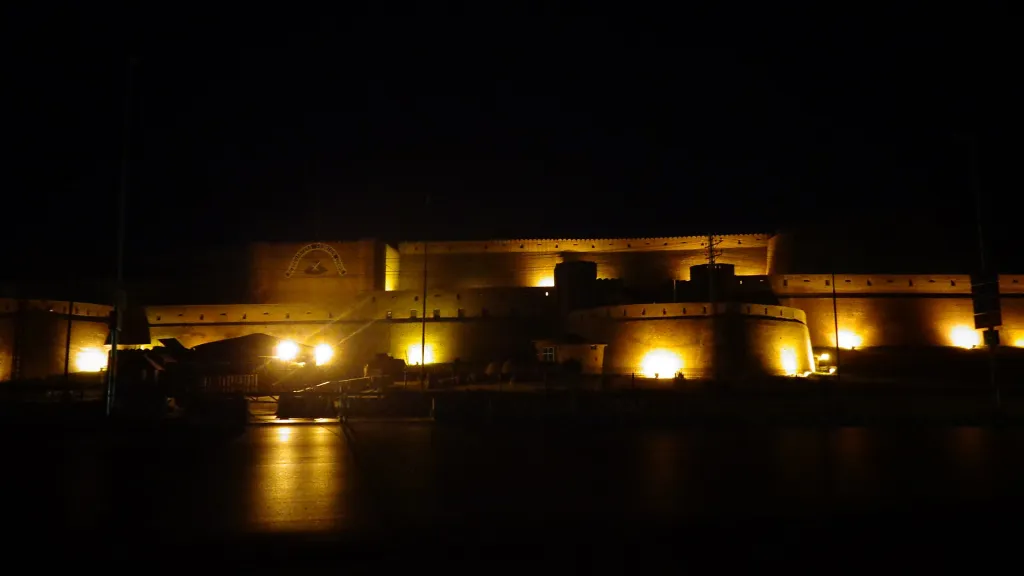
 The outer walls and gatewayThe thick perimeter walls are the fort's best-known feature, the result of the British rebuild of 1849 on older Sikh and Durrani foundations.
 Peshawar MuseumThe city's main museum holds Gandharan sculpture and is a good companion visit in Saddar.
 Sikh and Durrani PeshawarThe fort's story belongs to a wider history of Sikh rule in the Peshawar valley.
 Mahabat Khan Mosque and Qissa KhwaniThe old city's best-known mosque and bazaar are a short distance away.
Plan Your Visit
Best Time to Visit
October to March
Cooler months are far more comfortable for walking around the old city; Peshawar is very hot from May to September.
How to Reach
Old city, west of Qissa Khwani
The fort is on the north-western edge of Peshawar's old city. Use a ride-hailing app or taxi; the surrounding lanes are narrow and congested.
Where to Stay
Saddar or University Town
Most visitors stay in the cantonment, Saddar or University Town and visit the old city by day.
Local Food
Qehwa and chapli kebab
The nearby bazaars serve green tea (qehwa), chapli kebab and Peshawari karahi; see the Peshawar guide for food areas.
Culture & Etiquette
Dress modestly
Dress conservatively and ask before photographing people. Photography near military installations may be restricted; do not photograph checkpoints or personnel.
Permits & Access
Controlled site
Entry arrangements have changed repeatedly. Ask the Khyber Pakhtunkhwa Culture & Tourism Authority or the Directorate of Archaeology and Museums before planning a visit inside.
Before You Go
Fees, permits and road conditions change, confirm these with official sources close to your travel date.
- 1
Check road and weather
Mountain and rural roads can close for snow, landslides, floods or repairs at short notice. Ask your hotel or driver the day before and check Khyber Pakhtunkhwa Culture & Tourism Authority (kptourism.com).
- 2
Confirm permits and entry rules
Rules for Pakistani and foreign visitors differ and can change. Confirm any registration, NOC or checkpoint requirement with the provincial tourism body or Pakistan Tourism Development Corporation (tourism.gov.pk).
- 3
Check fees and local charges
Entry fees, boat or jeep rates and camp charges are set locally and revised from time to time. Confirm on the spot or with the tourism office rather than relying on figures quoted online.
A Half-Day in the Old City
Combine the fort exterior with the nearby bazaars.
- 1
Morning: Bala Hisar from the outside
See the walls and gate in good light, then ask the authorities whether a visit inside is currently possible.
- 2
Late morning: Mahabat Khan Mosque
Walk through the old city to the mosque and the jewellers' bazaar beside it.
- 3
Lunch: Qissa Khwani
Tea and kebabs in the old Storytellers' Bazaar.
- 4
Afternoon: Peshawar Museum
Finish with the Gandharan galleries in Saddar.
Travel Responsibly
- Respect restrictions around the fort; do not try to enter or photograph military areas.
- Use licensed guides and local transport so the old city's businesses benefit.
- Avoid littering and do not climb on walls or earthworks.
- Go with local advice about crowds and timing.
Travel Advisories
Government travel advice for parts of Khyber Pakhtunkhwa varies by district and changes over time, and foreign visitors should read the current guidance of their own government (for example the UK FCDO and US State Department), which can affect travel insurance. Some areas, especially near borders, may need a No Objection Certificate (NOC) or registration. Check current advisories with the Khyber Pakhtunkhwa Culture & Tourism Authority (kptourism.com) and follow local authority guidance; carry your CNIC, or passport and visa.
Frequently Asked Questions
Can tourists enter Bala Hisar Fort?
It is used by the Frontier Corps. Access has varied, with ID requirements and restricted days at times, and there is no guarantee of entry. Check with the tourism authority or archaeology department.
Who built Bala Hisar?
No single builder: the site was fortified in many eras. The Sikhs under Hari Singh Nalwa began rebuilding after 1823, and the British rebuilt the outer walls in 1849.
What does Bala Hisar mean?
It is usually translated as 'high fort' (from Persian), reflecting its position on a mound above the city.
Keep Exploring
Related places and stories on DailyLife.pk
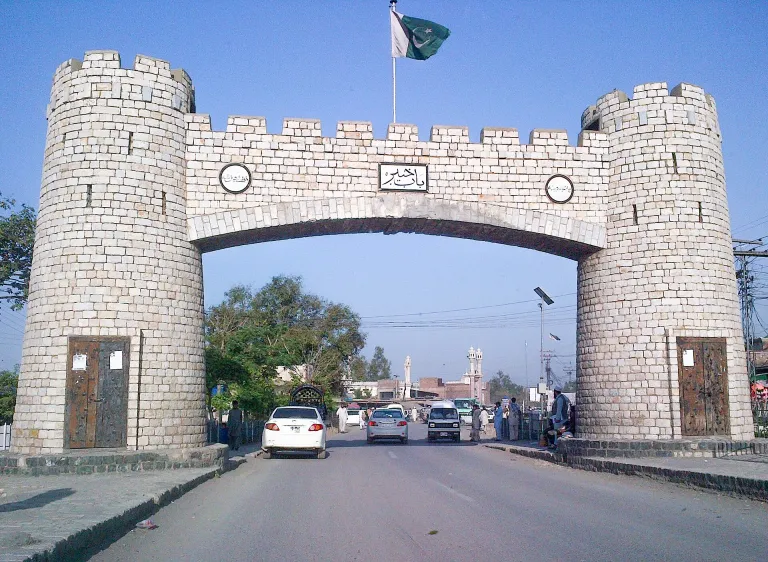 Khyber PassKhyber Pass guide: history from Darius to the British, Jamrud and Ali Masjid forts
 Takht-i-BahiVisit Takht-i-Bahi near Mardan: the UNESCO-listed Gandhara monastery, stupa courts, monks' cells, Sahr-i-Bahlol, history, best seasonMahabat Khan Mosque and Qissa Khwani BazaarMahabat Khan Mosque and Qissa Khwani Bazaar, Peshawar: architecture, the attribution debate, 1930 history, qehwa housesPeshawarPeshawar city guide: Qissa Khwani Bazaar, Mahabat Khan Mosque, Sethi House, Peshawar Museum, Pashtun foodThe Sikh EmpireThe Sikh Empire in Pakistan: Ranjit Singh's capture of Lahore in 1799, Multan, Peshawar
 The British Colonial EraBritish rule in Pakistan 1843–1947: conquest of Sindh and Punjab, the North-West Frontier, railways, canal colonies
How we know this
- Type Travel guide
- Sources 2
- Reviewed October 2026
- Disputed points None
Rules and fees change, confirm with the official links below before you act.
2 sources
- Bala Hissar, Peshawar, Wikipedia (used to locate sources; cites Dawn, Khyber.org and Nalwa 2009)
- Qissa Khwani Bazaar, Wikipedia
Photo credits (6)
- Bala Hisar-Peshawar.JPG, Ammad Malik-101, CC BY-SA 3.0, via Wikimedia Commons
- Sethial street - Sethi House Complex, Peshawar.jpg, Teseum, CC BY-SA 4.0, via Wikimedia Commons
- Hazuri Bagh Baradari with Lahore Fort in the background.jpg, Drdolittle13, CC BY-SA 3.0, via Wikimedia Commons
- Masjid Muhabat Khan.jpg, Hafeezburki, CC BY-SA 4.0, via Wikimedia Commons
- Bab-e-Khyber.jpg, Muhammad Imran Saeed, CC BY 2.5, via Wikimedia Commons
- Takht-i-Bahi Buddhist Monastery.jpg, Muzamil Hassain Toori, CC BY-SA 4.0, via Wikimedia Commons
