
Heritage destination
Ramkot Fort: A Stone Fort Above Mangla Lake
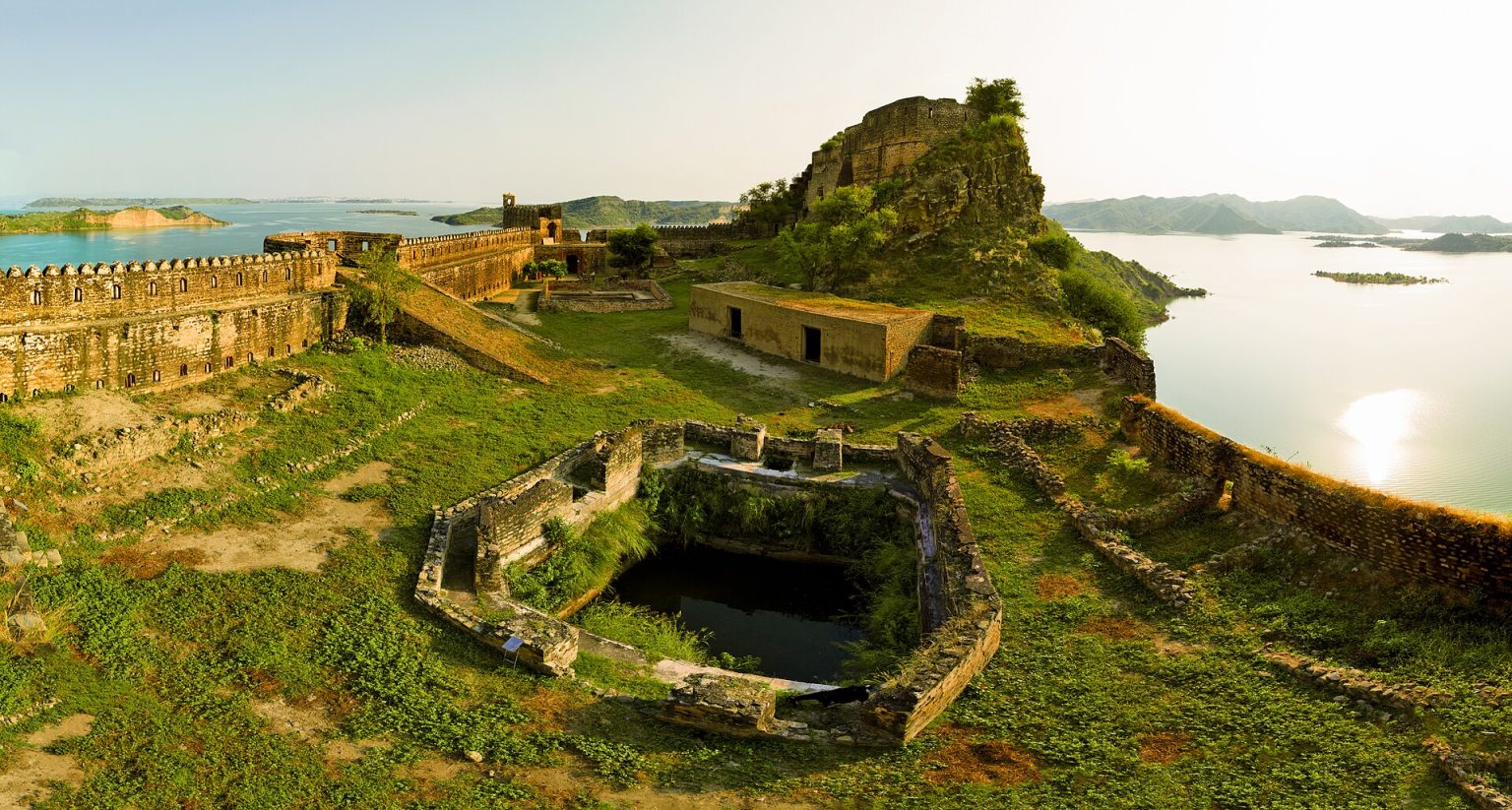
A ruined hilltop fort on a cliff where the Jhelum and Poonch rivers meet, now ringed by the waters of the Mangla reservoir near Mirpur and Dadyal.
- Mirpur District, Azad Jammu and Kashmir
- Probably late 16th century
- Best season October to March
Ramkot Fort, Mangla Lake, Mirpur
About Ramkot Fort
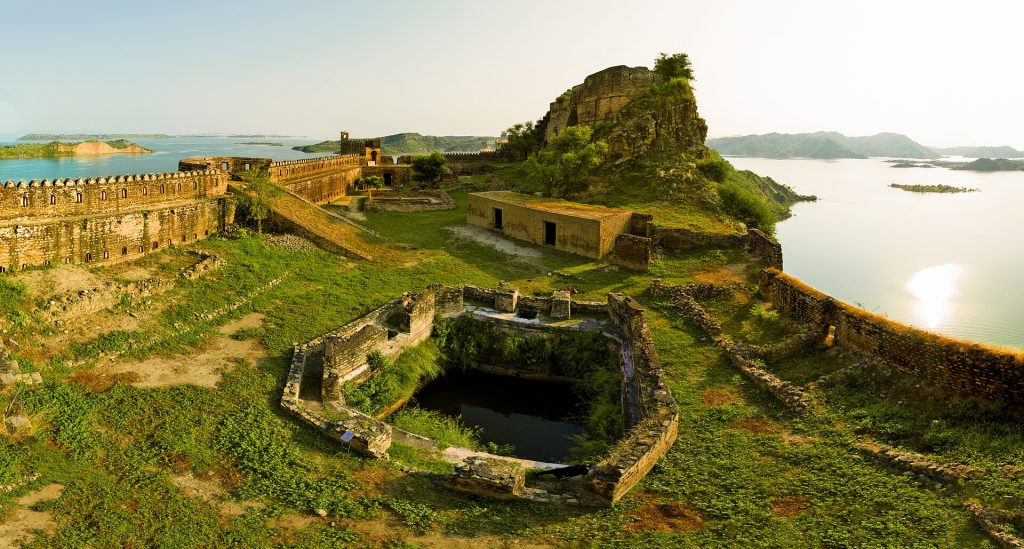
Ramkot (also written Ramakot) is a stone fort on a steep, rocky height at the confluence of the Jhelum and Poonch rivers, in Mirpur District of Azad Jammu and Kashmir. Since the Mangla Dam was built, the reservoir has flooded the valleys around it, so the fort now stands on a cliff above open water and is usually reached by boat. It is one of the most atmospheric heritage sites in AJK, and one of the least visited.
Its origins are debated. Archaeologists consider the present structure most likely to date from the second half of the 16th century, during the rule of Muslim sultans in Kashmir, and compare it with the Red Fort at Muzaffarabad. The 19th-century geologist Frederic Drew recorded a tradition that a Gakkhar chief named Toglu built it, and local stories place a Shiva temple on the site. Later, under Dogra rule, the fort was adapted for artillery, with ramps, cannon crenellations and loopholes for muskets.
Inside the walls are a single, well-defended gateway, ramps up to the ramparts and unusually large water tanks for a fort of its size. Ramkot was largely forgotten until the late 1990s, when the Himalayan Wildlife Foundation drew attention to it and led a restoration. Since then, neglect and the 2005 earthquake have damaged much of that work, and most of the fort is in ruins, which only adds to its lonely grandeur above the lake.
Highlights
 The gatewayThe only way in or out, with firing positions covering every angle of approach.
 Mangla LakeThe reservoir behind Mangla Dam, a vast sheet of water among the hills.
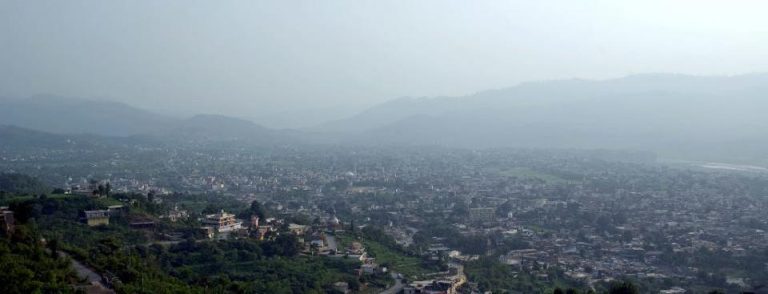 MirpurThe city on the reservoir's shore, rebuilt after the dam was built.
Plan Your Trip
Best Time to Visit
October to March
Mirpur's lowland summers are very hot, and the climb to the fort is exposed. The cooler months are far more comfortable.
How to Reach
By boat across Mangla Lake
Visitors have reached the fort by boat from the Mangla Dam water sports club, followed by a short but steep climb. Overland approaches from the Dadyal side are also reported. Water levels vary through the year and change the landing.
Where to Stay
Mirpur
Mirpur has a range of hotels and guest houses; Dina and Jhelum on the Punjab side are other bases.
Food
Bring supplies
There are no facilities at the fort. Carry water, sun protection and snacks; eat in Mirpur before or after the trip.
Safety
Ruins and water
Walls are unstable and there are drops without railings. Wear good shoes, stay off crumbling masonry and insist on life jackets on boats.
Advisories
AJK
Foreign governments advise caution in Azad Jammu and Kashmir; see the advisory below.
Before You Go
Access, boat services and rules change, check these with official sources close to your travel date.
- 1
Check access and boat services
Ask the AJK Tourism & Archaeology Department (ajktourism.gov.pk) or local tourism offices in Mirpur whether boats are running and where they leave from. Mangla Dam is a sensitive installation, and parts of the shore may be restricted.
- 2
Confirm permits and entry rules
Rules for Pakistani and foreign visitors differ in AJK. Confirm any registration or NOC requirements with the AJK authorities or the Pakistan Tourism Development Corporation (tourism.gov.pk), and carry your CNIC or passport and visa.
- 3
Check fees and local charges
Boat hire and any site charges are set locally and revised from time to time. Agree prices, the waiting time and the return trip before setting off.
- 4
Read the travel advisories
Foreign visitors should read the UK FCDO (gov.uk/foreign-travel-advice/pakistan) and US State Department (travel.state.gov) advice for Pakistan, which can affect travel insurance, and follow local authority guidance.
Suggested Day
A half-day trip from Mirpur, or a stop between Jhelum and Kotli.
- 1
Morning: Across the lake
Take an early boat across Mangla Lake and climb to the fort before the heat.
- 2
Late morning: Explore
Walk the gateway, ramps and water tanks carefully, and take in the views.
- 3
Afternoon: Mirpur
Return for lunch in Mirpur and an evening by the reservoir.
Travel Responsibly
- Do not climb on, write on or remove stones from the walls.
- Carry all rubbish back to the boat and the mainland.
- Do not fly drones near Mangla Dam or other sensitive sites without permission.
- Respect any closures or restrictions set by the authorities.
- Report damage or vandalism to the AJK Tourism & Archaeology Department.
Travel Advisories
Azad Jammu and Kashmir is administered by Pakistan within the wider disputed Kashmir region. The UK FCDO advises against all but essential travel to Azad Jammu and Kashmir and against all travel within 10 miles of the Line of Control; the US State Department tells its citizens not to travel to the immediate vicinity of the Line of Control. These warnings may affect travel insurance. Check current advisories, confirm how close your route comes to the Line of Control, and follow local authority guidance.

Frequently Asked Questions
Is it Ramkot or Ramakot?
Both spellings are used; Ramkot is the more common. The fort is in Mirpur District, near Dadyal, above the Mangla reservoir.
Who built Ramkot Fort?
It is debated. Archaeologists think the present fort probably dates from the late 16th century, under Kashmir's Muslim sultans; a 19th-century account credits a Gakkhar chief, and the Dogras later modified it.
How do I get there?
Most visitors cross Mangla Lake by boat and then climb a short, steep path to the gateway. Check locally whether boats are running.
Are there facilities at the fort?
No. Bring water and sun protection, and take your rubbish away.
Is the fort safe to explore?
Much of it is ruined. Stay off crumbling walls and edges, and supervise children closely.
Keep Exploring
Related places and stories on DailyLife.pk
 Rohtas FortExplore Rohtas Fort near Jhelum: Sohail Gate, ramparts, Haveli Man Singh, Shahi Masjid and stepwells
 Tilla JogianTilla Jogian near Jhelum: the ancient jogi monastery, temples, Guru Nanak and Heer Ranjha links
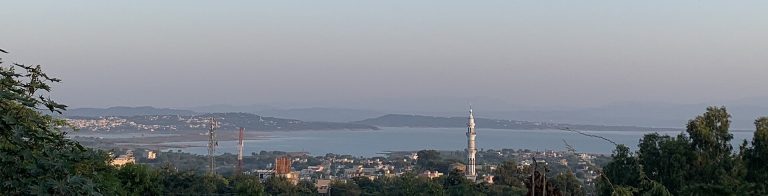 MirpurMirpur city guide: Mangla Dam and lake, the submerged old town, UK diaspora links, Ramkot FortJhelumJhelum city guide: Rohtas Fort, Tilla Jogian, Khewra and Mangla nearby, the river and cantonment
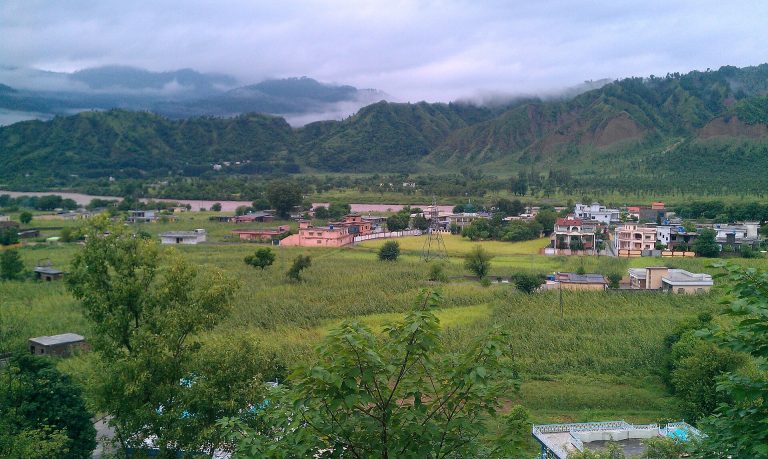 KotliKotli city guide: the Poonch River, Tatta Pani hot springs, Gulpur waterfalls and hydropower
 Architecture of PakistanPakistan's architecture: Indus cities, Gandhara monasteries, Multan tombs, Mughal Lahore, Makli, mountain forts
How we know this
- Type Travel guide
- Sources 6 (3 official/academic)
- Reviewed October 2026
- Disputed points None
Rules and fees change, confirm with the official links below before you act.
6 sources
- Ramkot Fort: the crumbling giant of Azad Kashmir, Dawn
- Ramkot Fort (used to locate primary sources), Wikipedia
- AJK Tourism & Archaeology Department, Government of Azad Jammu and Kashmir
- Pakistan Tourism Development Corporation, Government of Pakistan
- Pakistan travel advice – warnings and insurance, UK Foreign, Commonwealth & Development Office
- Pakistan Travel Advisory, U.S. Department of State
Photo credits (5)
- Ramkot Fort.jpg, Mudabbirmaajid, CC BY-SA 3.0, via Wikimedia Commons
- Mangla-dam-view-mirpur.jpg, Chesterton2020, CC BY-SA 4.0, via Wikimedia Commons
- Mirpur City - Azad Kashmir.jpg, Mohsin Ali, CC BY-SA 3.0, via Wikimedia Commons
- Rohtas Fort (Jhelum, Pakistan) - World Heritage Site.jpeg, Hussain Khalid, CC BY-SA 4.0, via Wikimedia Commons
- Tilla Jogian hills at sunset, River Jhelum in the foreground.jpg, Xishan01, CC BY-SA 3.0, via Wikimedia Commons
