Chicken Korma
چکن قورمہ
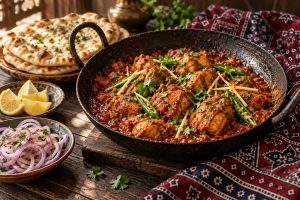
Deep-brown onions, yoghurt and whole spices, rich and fragrant the way it's served at a shaadi.
Bone-in chicken braised in a velvety sauce of crushed fried onions, yoghurt and warm whole spices, finished with kewra and a glossy layer of oil, in the style of Pakistani wedding feasts.

No marinating needed. Onion-frying time depends on your pan and hob; go by colour, not the clock. One tablespoon = 15 ml; one teaspoon = 5 ml.
About Chicken Korma
Korma (also spelled qorma) is the celebration curry of Pakistan. At a shaadi, it usually arrives in huge degs alongside biryani and naan, its surface shining with a layer of spiced oil, or tari. The style is widely associated with Mughal court cooking and the Urdu-speaking households of Delhi, Lucknow and later Karachi, but today it is cooked in homes and wedding kitchens across the country.
A Pakistani korma is built on two things: onions fried slowly to a deep, even amber, then crushed, and plain yoghurt. Together they create a sauce that is savoury, slightly sweet, tangy and thick without needing tomatoes or cream. Whole cardamoms, cloves, cinnamon and peppercorns perfume the oil, and a few drops of kewra (screwpine) water at the end give the floral note that many people remember from wedding food.
Wedding-style korma is richer and more heavily spiced than an everyday home version, and is often made with mutton or beef. This recipe uses chicken, keeps the generous fried onions and visible tari, and offers a little almond paste for extra body, so you can make something close to shaadi korma in an ordinary kitchen.
Personally cooked and tested by Zohair Fakhar for DailyLife.pk. Cooking times can vary with your stove, cookware and batch size; follow the texture and doneness cues in the method.
Make it work for your kitchen
Also known as qorma, chicken qorma, shadi korma, shaadi wala korma, murgh korma, degi korma.
Original quantities serve 5. Cooking times, pan size and frying-oil depth do not scale, cook in extra batches instead.
Before you start
Slice the onions evenly
Slice the onions into thin half-moons of the same thickness, so they brown at the same rate. Separate the layers so they don't clump in the oil.
Heat off · 7 minOrganise your spices
Put the bay leaves, cardamoms, cloves, cinnamon and peppercorns in one bowl, and the coriander, cumin, chilli powders and salt in another. Whisk the yoghurt until completely smooth.
Heat off · 5 minMake the nut paste (optional)
Soak the almonds or cashews in hot water for 10 minutes, drain, then blend or pound with 4 tbsp fresh water to a smooth paste.
Heat off · 10 minSet up the equipment
Have the following tools ready before starting: Wide, heavy-based pot with a lid; slotted spoon; tray lined with kitchen paper; blender or mortar and pestle; instant-read thermometer (recommended).
Clean workspace
Step-by-step cooking method
1 Fry the birista
Heat the oil and ghee in the pot. Add the onions and fry, stirring every minute or so, until they soften, then turn golden, then an even deep amber. Lower the heat if the edges brown faster than the centres. Lift out with a slotted spoon, spread on kitchen paper and leave to crisp. Keep the oil in the pot.
2 Crush the onions into the yoghurt
When the onions are cool and crisp, crumble them with your hands into the whisked yoghurt and mix well. Set aside. Pour off some of the frying oil if you want a lighter dish, leaving at least 6 tbsp in the pot.
3 Bloom the spices and sear the chicken
Reheat the oil. Add the bay leaves, both cardamoms, cloves, cinnamon and peppercorns and stir until they sizzle and the cardamoms puff. Add the garlic and ginger pastes and stir for a few seconds, then add the chicken. Turn the heat up and stir-fry until every piece has turned opaque white with a few golden spots.
4 Add the ground spices
Sprinkle in the coriander, cumin, chilli powders and salt, with a splash of water if the pan looks dry. Stir constantly so they cook without burning.
5 Bhuno with the onion-yoghurt
Turn the heat to low and add the onion-yoghurt mixture a few spoonfuls at a time, stirring well after each addition so it doesn't split. Raise the heat to medium and keep stirring and scraping until the sauce thickens, turns glossy and oil starts to separate at the edges.
6 Simmer the chicken
Pour in the water listed under Chicken and sauce for your selected servings. Bring to a gentle boil, then cover and simmer, stirring once or twice, until the chicken is tender. Check the thickest chicken pieces reach at least 74°C (165°F), placing the thermometer in the flesh without touching bone. Continue cooking if needed; colour and clear juices do not replace this temperature check.
7 Add the nut paste and bring up the tari
Stir in the almond or cashew paste, if using, and simmer uncovered for 3–5 minutes, stirring, until the sauce is thick enough to coat the chicken and a clear layer of oil rises to the surface. Add a splash of water if it gets too thick.
8 Finish on dum
Taste and adjust the salt. Sprinkle over the garam masala, nutmeg and mace and the kewra water. Cover tightly and leave on the lowest possible heat so the aromas settle, then turn off and garnish with slivered almonds if you like.
Chef’s tips
- Fry the onions in batches if your pot is small. Crowded onions steam and turn soft and pale instead of crisp.
- Bring the yoghurt to room temperature and add it slowly over low heat to stop it splitting.
- Kewra is strong: start with the smaller amount and add more only after tasting.
- For true shaadi colour, use Kashmiri chilli generously. It gives a deep red without much extra heat.
- Korma tastes richer the next day; make it ahead and reheat gently.
Common mistakes & quick fixes
- Korma tastes bitter
- The onions were fried too dark. Take them out at deep amber next time; they continue to colour as they cool.
- Sauce split into curds
- Cold yoghurt was added to a hot pan too fast. Lower the heat and keep stirring; it is still safe to eat and often comes back together. Use room-temperature yoghurt next time.
- No oil on top
- The sauce wasn't reduced enough. Uncover and cook on medium, stirring, until the oil separates; or add a spoonful of hot ghee at the end.
- Sauce is pale and thin
- Too few onions or too little reduction. Simmer uncovered to thicken and add more crushed fried onions if you have them.
Variations & serving ideas
Mutton or beef korma: Use 1 kg bone-in mutton or beef. After the onion-yoghurt bhuno, add 500 ml water and simmer covered on low until tender, usually 1–1½ hours for mutton and longer for beef, then reduce until the tari rises.
Lighter home-style: Use 80 ml oil, skip the nut paste and use ½ tsp chilli powder for an everyday korma with the same fried-onion flavour.
With saffron: Steep a large pinch of saffron in 2 tbsp warm milk and add it with the kewra for colour and fragrance.
Smooth sauce: Blend the fried onions with the yoghurt and a little water instead of crushing them, for a silky, restaurant-style sauce.
Perfect result check
| Chicken | Thickest chicken pieces reach at least 74°C (165°F), measured in the flesh without touching bone. |
|---|---|
| Sauce | Thick, glossy, golden-brown and clinging to the chicken; no raw yoghurt tang. |
| Tari | A clear layer of reddish oil sits on the surface. |
| Aroma | Warm whole spices and a gentle floral note from the kewra, not perfume-like. |
Storage & reheating
| Fridge | 3–4 days | Cool promptly in shallow containers and refrigerate at 4°C or below within 2 hours, or within 1 hour when the temperature is above 32°C. Use refrigerated leftovers within 3–4 days. |
|---|---|---|
| Freezer | Freeze promptly in meal-size portions | Freeze promptly in sealed containers and thaw in the fridge. The yogurt sauce may look grainy after thawing; reheat gently while stirring. The texture may remain different from the freshly cooked korma. |
| Reheating | 74°C (165°F) throughout | Reheat gently in a pan with a splash of water, stirring, until it reaches 74°C (165°F) throughout. |
Know when to change the heat
| Stage | Heat | What to look for |
|---|---|---|
| Frying onions | Medium-high, lower if uneven | Even deep amber; lift out before dark brown |
| Whole spices | Medium heat | Sizzling; cardamoms puff |
| Searing chicken | High heat | Colour develops on the outside during searing; confirm the thick centres are cooked later with a thermometer. |
| Onion-yoghurt bhuno | Low, then medium | Glossy, thick; oil separates at the edges |
| Simmer and finish | Low covered, then lowest on dum | Keep a gentle covered simmer and confirm at least 74°C in thick chicken pieces, away from bone. The sauce should be glossy before the aromatic finish. |
Helpful answers before you cook
What makes a korma 'shadi-style'?
In our version, fried onions, yogurt and whole spices build a rich sauce, finished with a small amount of kewra for aroma. The visible surface oil is often called tari. Wedding and household recipes vary, so this page describes our chicken version rather than one rule for every korma.
Can I use shop-bought fried onions?
You can use uncoated fried onions; check the label because some contain flour, extra salt or other allergens. The original five-portion batch suggests about 120 g as a starting amount. Keep them separate from any fresh onion weight when scaling, and follow the onion-yogurt stage. Packaged onions vary in dryness and oil content, so taste and check the sauce as it cooks.
Is Pakistani korma the same as the creamy korma in UK restaurants?
This version builds its sauce from fried onions, yogurt and whole spices, with optional nuts and a kewra finish. It is savoury and aromatic, without added cream, coconut or sugar. Korma recipes vary between households and restaurants, so use this ingredient list to judge the flavour and allergens rather than relying on the name alone.
What is kewra and can I skip it?
Kewra water is an aromatic flower distillate used in small amounts for its floral scent. Water and concentrated essence are different products: follow the label and do not swap them spoon for spoon. You can omit it if preferred; the onion, yogurt and spices still give the korma its main flavour.
Can I use boneless chicken?
Boneless thigh works for this style, but cooks more quickly than the listed bone-in chicken. Start checking earlier during the covered simmer and cook the thickest centres to 74°C (165°F). The same purchased weight gives more edible meat without bones, so portion size and nutrition will differ.