
Culture & Faith
Eid-ul-Adha in Pakistan: The Festival of Sacrifice
Cattle markets on the edge of every city, goats tethered outside front doors, meat shared with neighbours and the poor: how Pakistan celebrates Eid-ul-Adha and performs qurbani.
- 10th of Dhul Hijjah
- Goats, sheep, cows and camels
- Meat shared in three parts
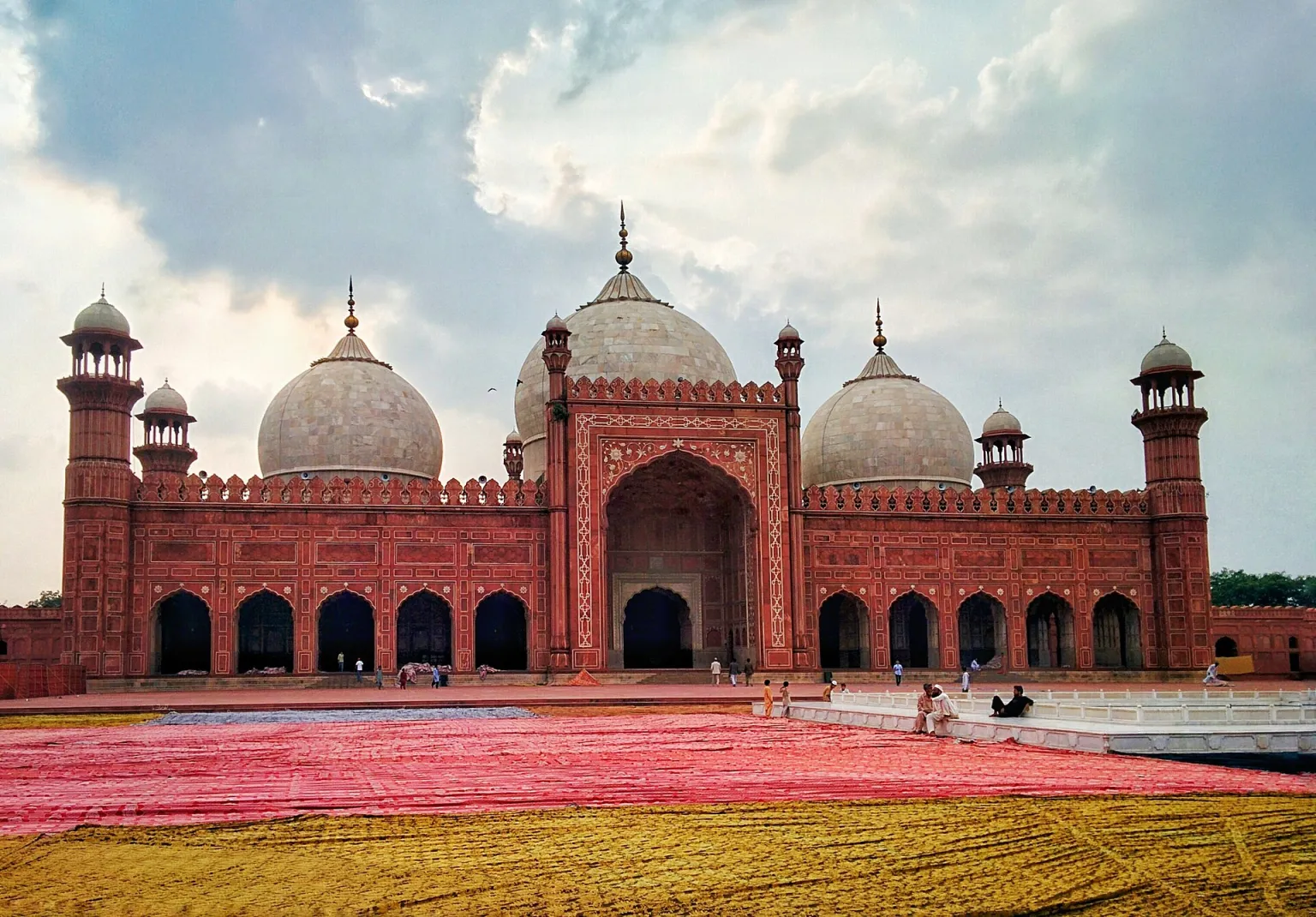
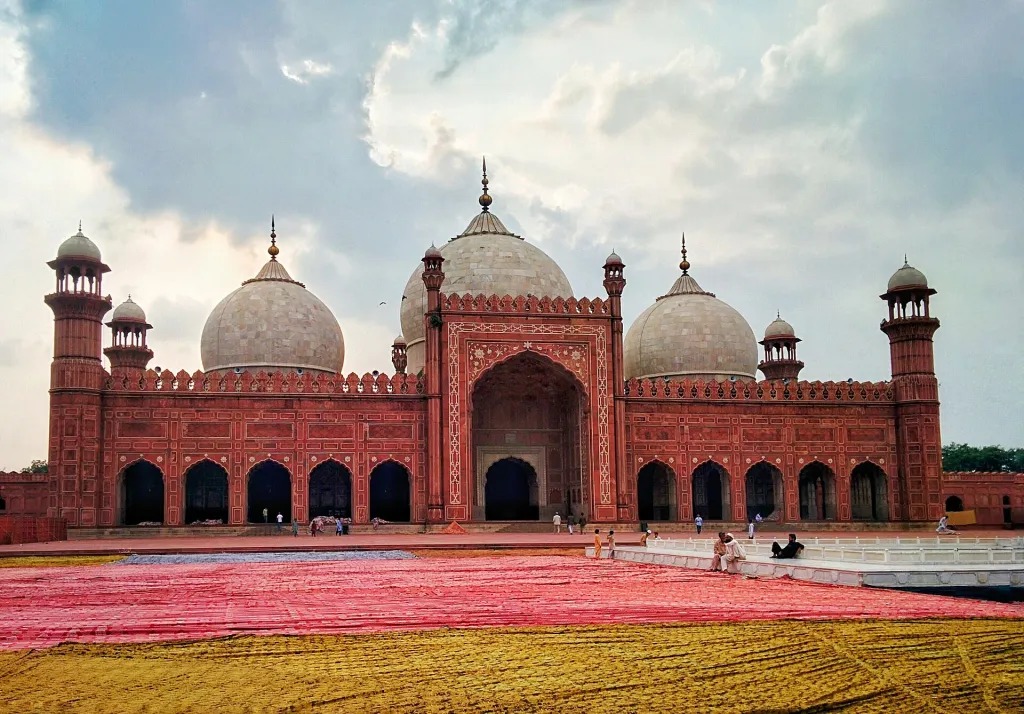
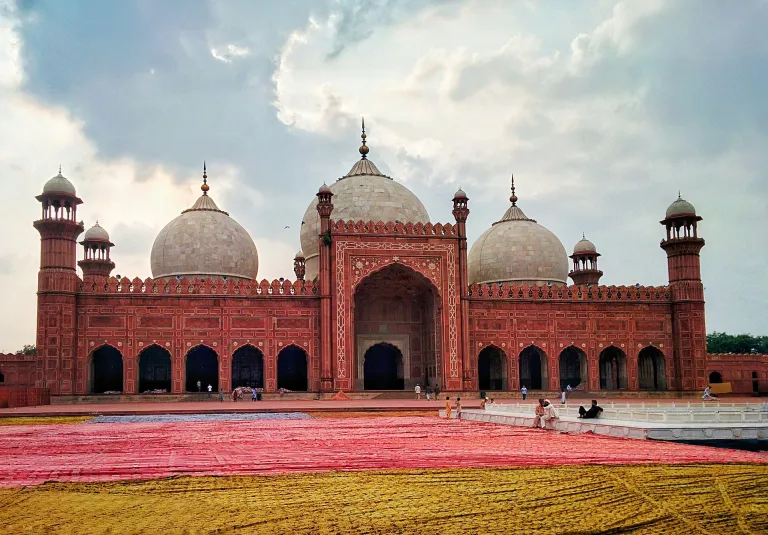
Badshahi Mosque, Lahore
About Eid-ul-Adha
Eid-ul-Adha, the 'Festival of Sacrifice', often written Eid-ul-Azha in Pakistan and known colloquially as Bari Eid (the big Eid) or Bakra Eid, is the second of Islam's two great festivals. It falls on the 10th of Dhul Hijjah, the last month of the Islamic calendar, at the climax of the Hajj pilgrimage in Makkah. It commemorates the Prophet Ibrahim's (Abraham's) willingness to sacrifice his son Ismail at God's command, and the ram provided in his place.
Muslims who can afford it mark the festival by sacrificing an animal, qurbani, and sharing its meat with family, neighbours and the poor. In Pakistan this turns the weeks before Eid into a season of its own. Temporary cattle markets spring up on the outskirts of every city, children walk newly bought goats around the lanes, and on Eid morning neighbourhoods echo with the work of butchers, professional and amateur.
Like all Islamic dates, Eid-ul-Adha moves about 11 days earlier each year. Its exact date is fixed after the Dhul Hijjah moon is sighted by the Central Ruet-e-Hilal Committee, and the federal government notifies the public holidays accordingly.
The Mandi: Buying the Animal
For most families, Eid begins at the mandi, the seasonal cattle market. City administrations designate sites on the edges of cities, and traders bring goats, sheep, cattle and camels from across Punjab, Sindh, Balochistan and Khyber Pakhtunkhwa. Buying is an event: whole families go together, prices are haggled over at length, and prize animals, enormous bulls with names, decorated with garlands and bells, draw crowds of onlookers.
Many families buy days or even weeks in advance and keep the animal at home, where children feed it, walk it and grow attached to it. Others share a cow or camel with relatives or friends, or pay into collective qurbani run by mosques, madrassas and charities, which handle the purchase, slaughter and distribution. Online and doorstep services have grown in the larger cities.
Choosing an animal means checking that it is healthy and of the required age, buyers look at the teeth, which are the traditional guide, and free of defects that would make it unacceptable for sacrifice.

Qurbani in Brief
| Topic | General practice | Notes |
|---|---|---|
| Who offers it | Adult Muslims who meet the wealth threshold (nisab) | Many also offer qurbani on behalf of family members, including the deceased. |
| When | On the 10th, 11th or 12th of Dhul Hijjah, after the Eid prayer | A sacrifice made before the Eid prayer is not counted as qurbani. |
| Goat or sheep | One share; generally at least one year old | Scholars differ on some details, such as age exceptions for sheep. |
| Cow or buffalo | Up to seven shares; generally at least two years old | Popular for families sharing the cost. |
| Camel | Up to seven shares; generally at least five years old | Less common than goats and cattle, and costly. |
| Condition | Healthy, not blind, lame, very thin or missing a large part of the ear or tail | Male and female animals are both acceptable. |
| The meat | Customarily divided into thirds: household, relatives and friends, the needy | The hide is often donated to a charity or madrassa. |
This is a general summary of widely followed practice. Schools of thought differ on details; follow the guidance of your own scholar or mosque.
Eid Day
- 1
Eid prayer
Men and boys, and in many places women, gather early for the Eid prayer at the mosque or open-air eidgah, followed by the sermon and embraces.
- 2
The sacrifice
Animals are slaughtered by hand with a sharp knife, facing the qibla, with God's name invoked. Many families hire a qasai (butcher); demand is so high on the first day that butchers are often booked well in advance.
- 3
Dividing the meat
The meat is cut and weighed into portions. Children carry bags of meat to neighbours and relatives, and the share for the poor is distributed at the door or through charities.
- 4
The first meal
The day's first meat dish is often kaleji, liver fried with tomatoes and spices, followed over the next days by tikka, karahi, pulao and barbecue.
- 5
Three days of visiting
Eid-ul-Adha is celebrated for three days, with visits, family meals and the continuing work of cooking, freezing and sharing meat.
Dishes of Bari Eid
Every part of the animal is used, and favourite recipes come out year after year.
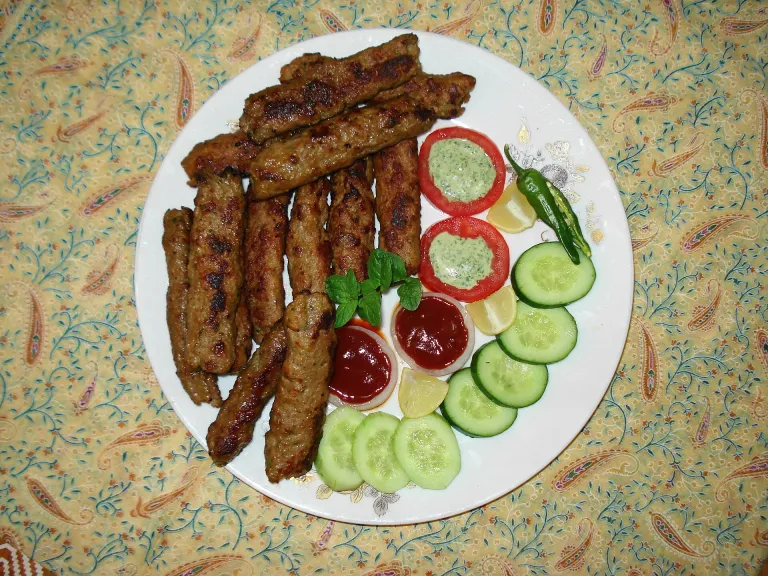 Seekh kebab and BBQMinced meat on skewers and marinated tikka grilled over charcoal on rooftops and in courtyards.
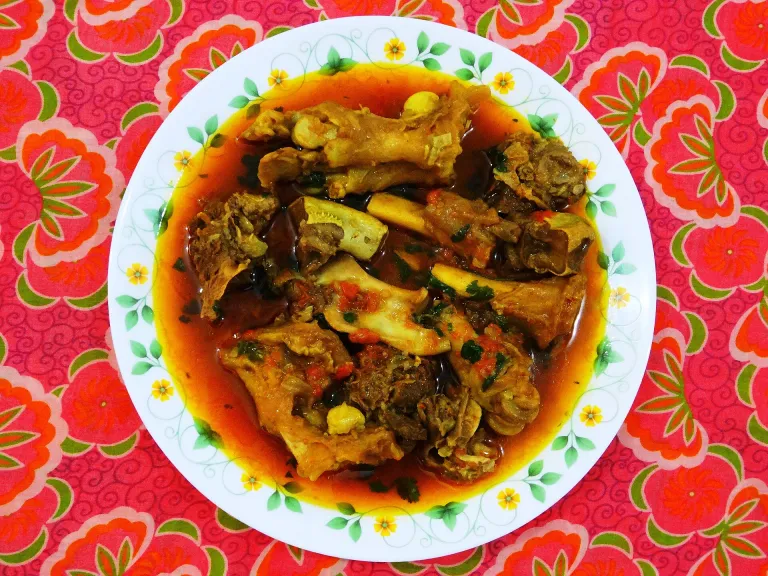 PayaTrotters simmered overnight into a rich, gelatinous broth, eaten with naan.
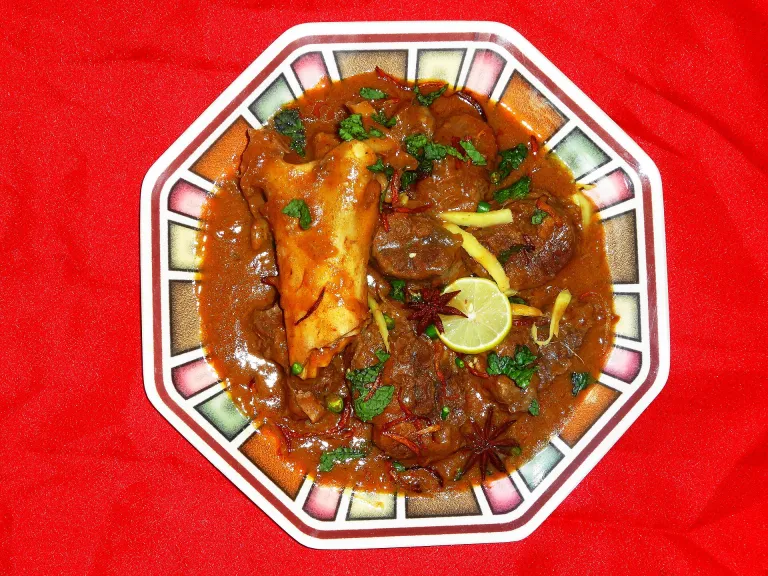 NihariBeef or mutton shank slow-cooked in a spiced gravy, a good use for bony cuts.
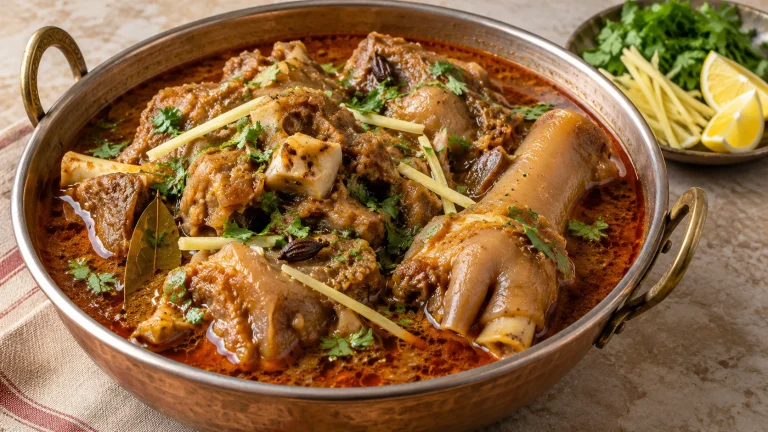 Siri payeHead and trotters cooked together, a Punjabi breakfast favourite.
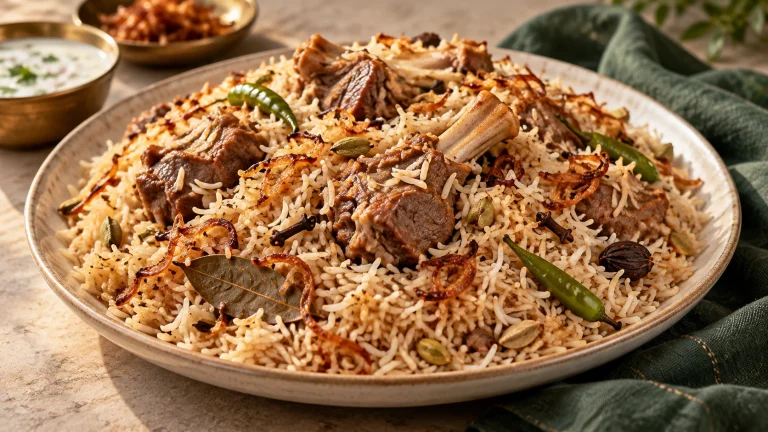 Mutton pulaoRice cooked in meat stock with whole spices, served to guests.
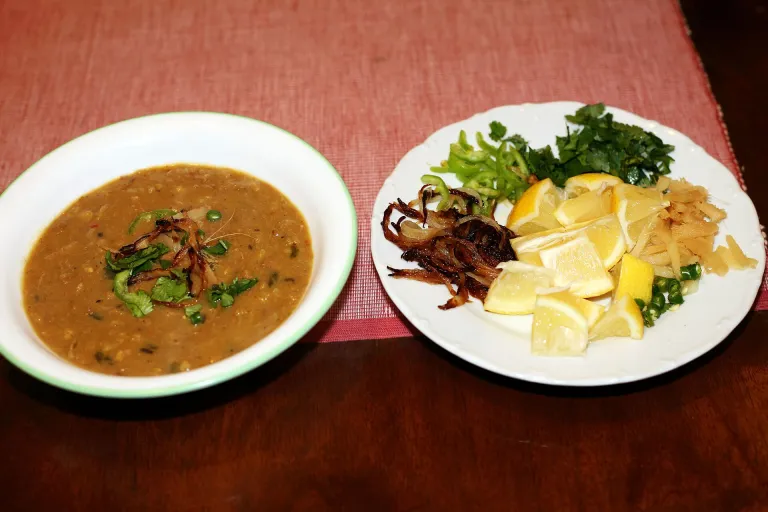 HaleemMeat, wheat and lentils cooked down for hours into a thick, savoury porridge.
 Sajji and namkeen goshtIn Balochistan and Khyber Pakhtunkhwa, salt-roasted and simply cooked meat lets the quality of the animal speak.
Health and Hygiene
Congo fever (CCHF) precautions. Crimean-Congo haemorrhagic fever is spread by ticks and by contact with infected animal blood, and cases are reported in Pakistan around Eid-ul-Adha, when livestock movement and contact with animals increase. The National Institute of Health advises wearing light-coloured clothing so ticks are easy to spot, removing ticks safely, avoiding heavily tick-infested areas, wearing gloves when handling animals or meat, avoiding direct contact with blood during slaughter, and disposing of animal waste properly. Seek medical care promptly for fever after contact with animals, and check the NIH and provincial health departments for the latest advisory.
Food safety. Large amounts of fresh meat in hot weather spoil quickly: refrigerate or freeze portions promptly, keep raw meat separate, and cook it thoroughly.
Clean Eid: Disposing of Offal and Waste
Municipal and waste-management bodies run special Eid clean-up operations every year. Their guidance boils down to a few rules.
- Never dump offal, blood or waste in streets, open plots, drains or canals, it blocks drains and spreads disease. In May 2026 the Punjab government approved a Rs50,000 fine for dumping animal waste in streets and residential areas.
- Use the bags distributed for the purpose: waste companies such as the Lahore Waste Management Company have handed out free biodegradable bags at cattle markets, mosques, eidgahs and union-council camps.
- Take bagged waste to designated collection points, or leave it for the special collection rounds that operate over the three days of Eid.
- Slaughter in a courtyard or designated area rather than on the street where possible, and wash blood away into a proper sewer, not an open drain.
- Donate hides through recognised charities; many collect them door to door on Eid day.
- Check your city's waste-management company or municipal corporation for local camps, collection points and complaint lines.

Frequently Asked Questions
When is Eid-ul-Adha in Pakistan?
It falls on the 10th of Dhul Hijjah in the Islamic lunar calendar, about 11 days earlier each year by the Gregorian calendar. The exact date is confirmed after the Central Ruet-e-Hilal Committee sights the Dhul Hijjah moon, about ten days in advance.
How is qurbani meat divided?
Customarily into three parts: one for the household, one for relatives and friends, and one for the poor and needy. Many families give more than a third to those in need.
How many people can share a cow for qurbani?
A cow, buffalo or camel can be shared by up to seven people, each taking one share. A goat or sheep counts as a single share.
What precautions should I take against Congo fever at Eid?
Wear light-coloured clothes, check for and safely remove ticks, wear gloves when handling animals or meat, avoid contact with blood during slaughter and dispose of waste properly. See a doctor promptly if you develop a fever after animal contact.
Can non-Muslim visitors take part?
Visitors are welcome to join Eid meals and visits, and families often share meat with non-Muslim neighbours too. Ask before photographing slaughter, and be prepared for the sights of Eid morning in residential streets.
Keep Exploring
Related places and stories on DailyLife.pk
 LahoreLahore travel guide: Badshahi Mosque, Lahore Fort, Shalimar Gardens, the Walled City, food streets, neighbourhoods, metro
 KarachiKarachi travel guide: Mazar-e-Quaid, Mohatta Palace, Clifton, Burns Road, bazaars, neighbourhoods, Green Line BRT
 IslamabadIslamabad travel guide: Faisal Mosque, Pakistan Monument, Margalla Hills trails, Saidpur, markets, sectors, Metrobus
 MultanMultan city guide: Shah Rukn-e-Alam and other Sufi shrines, the walled city, blue pottery, sohan halwa
 Festivals of PakistanA guide to Pakistan's festivals: the two Eids, Muharram, urs of Sufi saints, Shandur Polo
 Public Holidays in PakistanPakistan public holidays 2026: fixed national days plus Eid
How we know this
- Type Historical & cultural research
- Sources 7 (2 official/academic)
- Reviewed October 2026
- Disputed points None
Rules and fees change, confirm with the official links below before you act.
7 sources
- Eid al-Adha, Encyclopaedia Britannica
- Qurbani rules, Muslim Aid
- NIH issues Congo Fever advisory, Associated Press of Pakistan, 7 April 2026
- Punjab CM imposes Rs50,000 fine for dumping offal in streets, Aaj News, 23 May 2026
- Eid cleanliness drive begins: LWMC distributing special bags among people for animal waste disposal, Business Recorder, 10 July 2022
- Eid-ul-Azha holidays notification, 20 May 2026, Cabinet Division, Government of Pakistan
- National Assembly passes Pakistan Ruet-e-Hilal Bill 2022, Dawn, 1 June 2023
Photo credits (7)
- Day before Eid-ul-Adha in Badshahi Mosque.jpg, Dasa2344, CC BY-SA 4.0, via Wikimedia Commons
- Cholistan camels.jpg, Hamza Bin Asim, CC BY-SA 4.0, via Wikimedia Commons
- Seekh Kabab.JPG, Miansari66, CC0, via Wikimedia Commons
- Siri Paye .JPG, Miansari66, CC0, via Wikimedia Commons
- Beef Nihari.JPG, Miansari66, CC0, via Wikimedia Commons
- Pakistani Haleem served with garnish.jpg, Halt123halt, CC BY-SA 3.0, via Wikimedia Commons
- Sajji.JPG, Miansari66, CC0, via Wikimedia Commons
