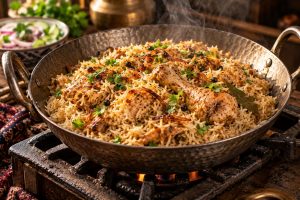
Masala Rice
مصالحہ چاول
Stovetop rice cooking and tempering
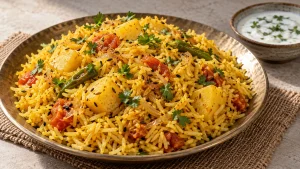
Pakistani-style one-pot tomato-onion masala rice seasoned with cumin, coriander and green chilli. Unlike plain rice it gets its flavour from a cooked masala

Excludes 20 min soaking, 8 min resting. One tablespoon = 15 ml; one teaspoon = 5 ml.
About Masala Rice
Pakistani-style one-pot tomato-onion masala rice seasoned with cumin, coriander and green chilli. Unlike plain rice it gets its flavour from a cooked masala
Personally cooked and tested by Zohair Fakhar for DailyLife.pk. Cooking times can vary with your stove, cookware and batch size; follow the texture and doneness cues in the method.
Make it work for your kitchen
Also known as Spicy Masala Rice, Masalay Walay Chawal.
Original quantities serve 4. Cooking times, pan size and frying-oil depth do not scale, cook in extra batches instead.
Before you start
Before you start
Wash and soak rice while slicing the onion and chopping tomatoes; have measured hot water ready. Boil water in a separate kettle so the hot liquid does not stall rice cooking.
Set up the equipment
Have the following tools ready before starting: Heavy, tight-lidded pot with thick base; Measuring jug and kitchen scale; Sieve and broad fork; Small frying pan for separate garnish if applicable.
Clean workspaceMeasure the ingredients
Measure the ingredient quantities for your selected servings before applying heat. Keep separately listed groups, such as dough, filling, sauce or garnish, in separate containers; keep any optional additions separate.
Use the ingredient list aboveCheck allergens and substitutions
Check ingredient labels and any substitutions against these notes: None declared in core ingredients; review packaged spices.
Before cooking
Step-by-step cooking method
1 Soak rice
Rinse aged basmati rice, dry basmati until water runs almost clear, soak for 20 minutes and drain completely. The soaking water is not part of the listed hot water for rice cooking water.
2 Brown onion and bloom cumin
Heat neutral oil oil in a heavy pot on medium. Add whole cumin cumin until fragrant, then thinly sliced onion onions; stir about 7–9 minutes to light gold.
3 Reduce the masala
Add ginger-garlic paste ginger-garlic paste for 30 seconds, then chopped tomato tomato, ground coriander coriander, turmeric powder turmeric, red chilli powder chilli, optional slit green chilli and fine salt salt.
4 Reduce the masala (continued)
Cook uncovered, stirring, 6–8 minutes until tomatoes soften and free water reduces.
5 Coat drained rice
Fold in drained aged basmati rice, dry rice carefully for about a minute to coat with masala. Avoid breaking the grains.
6 Add water and steam
Pour in hot water for rice cooking hot water; bring to a lively simmer.
7 Add water and steam (continued)
Taste liquid cautiously for seasoning. Cover tightly and lower to minimum heat; cook about 12–14 minutes until grains are tender and liquid absorbed, checking once near the end.
8 Rest and finish
Remove from heat and rest, covered, 8 minutes. Fluff gently, scatter optional chopped coriander leaves coriander and serve.
Chef’s tips
- Test one exact rice brand and pot before approving the liquid ratio.
- Use a heavy pan or diffuser for the final steam.
- Serve with plain yogurt or raita; these are excluded from nutrition.
Common mistakes & quick fixes
- Rice tastes raw or acidic
- Cook tomato masala longer before adding liquid.
- Masala sticks and burns
- Lower heat and add a splash from the measured cooking water.
- Grains turn pasty
- Drain soaked rice well and avoid repeated stirring.
Variations & serving ideas
Variation: Use fewer green chillies for a milder family version.
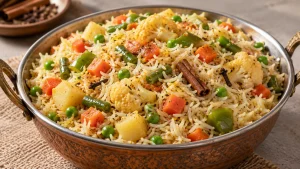
Variation: Cooked peas may be stirred in at the end, but then reclassify as a variation, not the base identity.
Perfect result check
| Check | Separate orange-gold grains coated in masala |
|---|---|
| Check | Cooked-through tomato taste |
| Check | No standing liquid |
Storage & reheating
| Cooling | Serve promptly. To keep cooked rice, cool in shallow portions as quickly as possible, ideally within one hour, and refrigerate promptly at 0–5°C. | |
|---|---|---|
| Fridge | Within 24 hours | Follow conservative Food Standards Scotland guidance: use refrigerated cooked rice within 24 hours; reheat once until steaming hot throughout. |
| Freezer | Freeze promptly in small portions if storing longer; thaw in the fridge and reheat once. Never leave cooked rice at room temperature overnight. |
Know when to change the heat
| Stage | Heat | What to look for |
|---|---|---|
| Soak rice | No heat | Rinsed rice soaks for the listed time and is drained completely; discard the soaking water. |
| Brown onion and bloom cumin | Medium heat | Cumin becomes fragrant and onion turns light golden without scorching. |
| Reduce the masala | Medium heat | Tomatoes soften and their free moisture reduces to a coating masala. |
| Coat drained rice | Low heat | Grains are lightly coated without forceful stirring or breakage. |
| Add water and steam | High then very low heat | After the initial simmer, keep covered on very low heat until the liquid is absorbed and grains are tender. |
| Rest and finish | No heat | Rice rests covered off heat before gentle fluffing; no standing liquid or hard core remains. |
Helpful answers before you cook
Does this recipe require a rice soak?
Yes. Rinse and soak the basmati for 20 minutes, then drain completely before adding it to the masala. The soaking water is separate from the measured cooking water and is discarded. Prepare the onion-tomato base while the rice soaks.
Why should I reduce the tomatoes before adding rice?
A reduced tomato masala coats the grains without bringing a large pool of extra water into the absorption stage. Cook uncovered until the tomatoes soften and free moisture decreases, stirring so the spices do not catch.
Why is the rice breaking when I mix it?
Drain the soaked rice well and fold gently into the masala rather than stirring hard. Keep the covered cooking stage gentle, then rest off heat for the stated eight minutes before fluffing with a broad fork or spoon. Overcooked grains break more readily.
How does serving scaling work?
Ingredient quantities can scale 2/4/8, but rice water, pot size, oil retention and cooking times require practical verification rather than linear scaling.