Kabuli Pulao
کابلی پلاؤ
Stovetop, heavy lidded pan
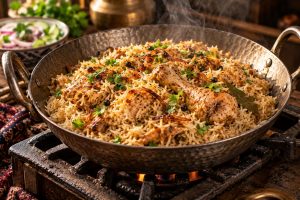
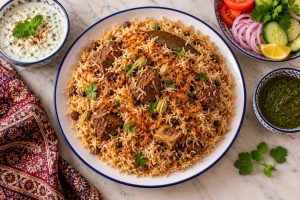
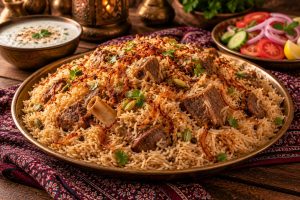
Afghan Kabuli pulao is a gently spiced lamb-and-basmati pilaf finished with sweet sautéed carrots and raisins. Popular in Pakistan too, it is Afghan in culinary identity rather than exclusively Pakistani.
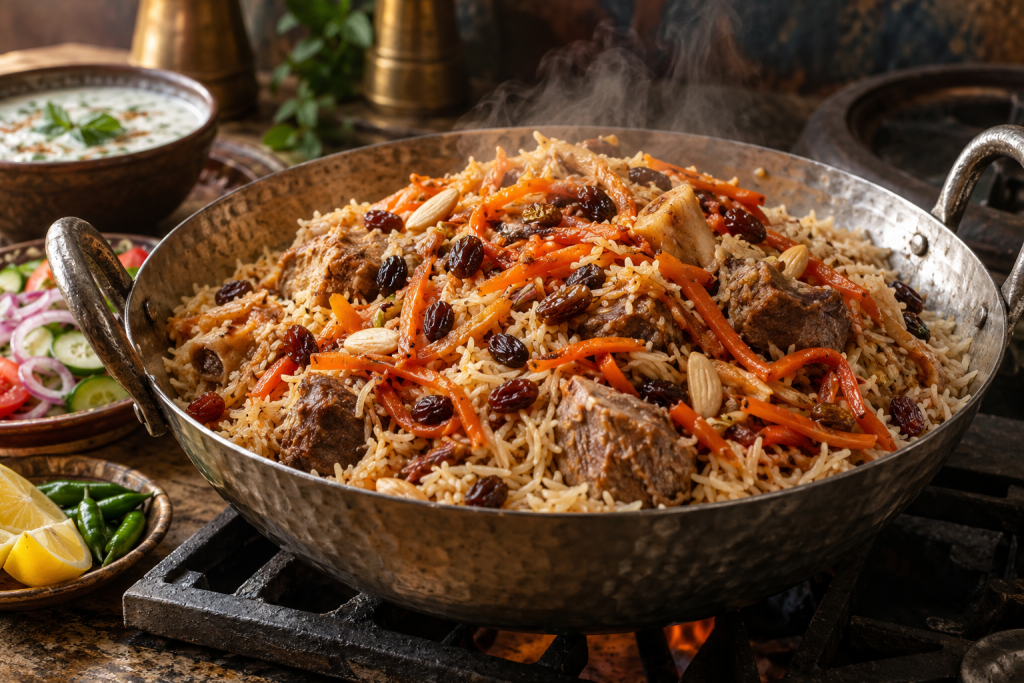
The approximately 185-minute total includes preparing the ingredients, simmering the lamb and the final 10-minute covered rest. The 30-minute rice soak and carrot-raisin topping can overlap the lamb and rice cooking stages. Drain the rice after its soak if the meat needs longer. Lamb cut, piece size and pot capacity affect the estimate. One tablespoon = 15 ml; one teaspoon = 5 ml.
About Kabuli Pulao
Afghan Kabuli pulao is a gently spiced lamb-and-basmati pilaf finished with sweet sautéed carrots and raisins. Popular in Pakistan too, it is Afghan in culinary identity rather than exclusively Pakistani.
Personally cooked and tested by Zohair Fakhar for DailyLife.pk. Cooking times can vary with your stove, cookware and batch size; follow the texture and doneness cues in the method.
Make it work for your kitchen
Also known as Qabili Palau, Qabuli Pulao, Afghani Pulao.
Original quantities serve 4. Cooking times, pan size and frying-oil depth do not scale, cook in extra batches instead.
Before you start
Before you start
Measure the ingredients for your selected servings. Slice the onion, cut the carrots into fine matchsticks and rinse and drain the raisins. Keep the raw lamb chilled until cooking and use separate clean utensils for the finished topping. Soak the rice for 30 minutes while the lamb cooks, then drain it when the time is up; keep it covered if the meat needs longer.
Set up the equipment
Set out a heavy deep lidded pot for the lamb and rice, a separate wide frying pan for the carrot-raisin topping, a fine sieve, a kitchen scale and a measuring jug. Have separate utensils for raw meat and a clean plate for lifting out the cooked lamb.
Clean workspaceMeasure the ingredients
Measure the ingredient quantities for your selected servings before applying heat. Keep separately listed groups, such as dough, filling, sauce or garnish, in separate containers; keep any optional additions separate.
Use the ingredient list aboveCheck allergens and substitutions
Check ingredient labels and any substitutions against these notes: Tree nuts if optional almond topping used; omit nuts for nut-free version and check cross-contact.
Before cooking
Step-by-step cooking method
1 Brown the onions and lamb
Warm two-thirds of the measured neutral oil in the heavy pot, reserving the other third for the carrot-raisin topping. Cook the thinly sliced onion for about 8–12 minutes until golden. Add the boneless lamb shoulder or leg, crushed garlic, cumin seeds, black pepper and 1.5 g of the measured ground cardamom. Turn for 4–5 minutes.
2 Make a tender lamb broth
Add the water for lamb broth and fine salt, bring to a boil and skim off foam. Partially cover and simmer gently for about 70–105 minutes, until the lamb is fork-tender. Replenish with a little freshly boiled water if the level becomes low. Do not start cooking the rice until the meat is tender.
3 Separate lamb and measure cooking broth
Lift the tender lamb onto a clean plate and strain the cooking broth if desired. Measure the strained lamb broth for rice from this cooked broth using the amount shown for your selected servings. If short, add boiling water only until that measured target is reached. If you have more than the target, set the excess aside and chill it promptly rather than pouring it all into the rice pot.
4 Prepare rice and start the covered cook
Drain the rice that has soaked for 30 minutes. Return the tender lamb to the pot, add the drained rice and the measured strained lamb broth for rice, and bring to a bubbling simmer. Level the grains gently and let the liquid fall close to their surface before covering. Avoid repeated stirring.
5 Steam lamb and rice
Cover with a tight lid and heat diffuser if needed; cook on the very lowest heat for 10–15 minutes. Check near the end: grains should have no chalky centre. Sprinkle a little hot water only if genuinely dry, without automatically changing the rice ratio.
6 Cook the carrot and raisin topping
Meanwhile, warm the reserved one-third of the neutral oil in the separate pan. Cook the peeled julienned carrots for 4–6 minutes until tender but still holding their shape. Add the raisins, optional sugar and the remaining 1.5 g of the measured ground cardamom.
7 Cook the carrot and raisin topping (continued)
Stir gently for about 2–3 minutes until the raisins plump without burning. Turn off the heat and fold in the optional slivered almonds.
8 Rest and assemble
Turn off the rice heat and rest, covered, for 10 minutes. Fluff carefully, plate tender lamb with fragrant grains and arrange carrot-raisin topping above the rice. Check for stray bone fragments if using bone-in substitutions.
Chef’s tips
- Use coarse carrot matchsticks so the garnish stays bright rather than turning to paste.
- Aromatic, tender lamb should be cooked before rice enters the pot.
- Use a wide, thick-bottomed pot for more even steaming.
Common mistakes & quick fixes
- Rice is gummy
- Drain soaked rice thoroughly; measure strained broth; minimise stirring.
- Raisins burn
- Add only near the end of carrot sauté and remove when just plump.
- Lamb is tough
- Continue gentle simmer until fork-tender before adding rice.
Variations & serving ideas
Variation: Omit almonds for a nut-free preparation; verify cross-contact.
Variation: Use a less sweet topping by omitting the optional sugar.
Variation: Serve with plain yogurt or salad separately; neither included in nutrition.
Perfect result check
| Check | Distinct tender rice grains |
|---|---|
| Check | Fork-tender lamb |
| Check | Soft carrots and plump unburnt raisins on top |
Storage & reheating
| Fridge | Cool cooked rice promptly in shallow containers, ideally within one hour; refrigerate at 0–5°C. | |
|---|---|---|
| Fridge | For conservative Food Standards Scotland guidance, eat refrigerated cooked rice within 24 hours and reheat once until steaming hot throughout. | |
| Freezer | Freeze small portions promptly if not eating within that window; thaw in fridge and reheat once. Do not leave cooked rice overnight at room temperature. |
Know when to change the heat
| Stage | Heat | What to look for |
|---|---|---|
| Simmer the lamb | Low, partly covered | Keep a quiet simmer with occasional small bubbles until the lamb is fork-tender; avoid a vigorous boil that rapidly dries the pot. |
| Steam the rice | Very low, tightly covered | Use gentle steam until grains have no chalky centre, then rest covered off the heat before lifting the rice. |
Helpful answers before you cook
What makes this pulao distinct?
This version cooks the rice in measured lamb broth and finishes it with a separate carrot-raisin topping. The savoury meat and fragrant grains balance the lightly sweet topping.
When is the lamb ready for the rice?
It should be fork-tender before you add the rice. If it still resists, continue the gentle simmer and replenish the broth as needed. Starting the rice too early can leave you with hard meat and overcooked grains.
Can I double the recipe?
Base ingredients double, but liquid evaporation, cookware capacity and covered cooking time do not scale linearly; recheck rice-water target.
Why measure the broth after cooking the lamb?
Evaporation varies with pot width, lid fit and simmering time. Measuring the finished broth gives the rice the intended amount of liquid. Top up a short measure with boiling water, or reserve excess broth for another use; do not pour in all the initial cooking liquid automatically.