Mutton Pulao
مٹن پلاؤ
Stovetop, heavy lidded pot
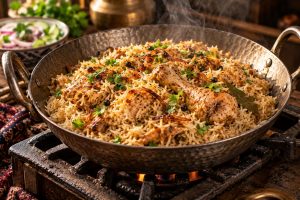
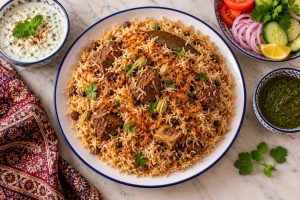
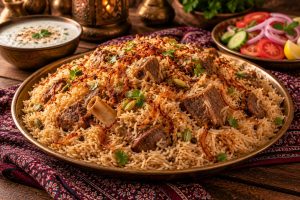
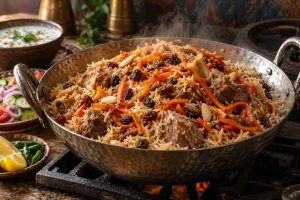
Home-style Pakistani mutton pulao with tender bone-in meat and separate basmati grains scented by coriander, fennel and golden onions.
Start cooking ↓ IngredientsExcludes 30 min soaking, 10 min resting. One tablespoon = 15 ml; one teaspoon = 5 ml.
About Mutton Pulao
Home-style Pakistani mutton pulao with tender bone-in meat and separate basmati grains scented by coriander, fennel and golden onions.
Make it work for your kitchen
Also known as mutton pilau, mutton yakhni pulao, goat pulao.
Original quantities serve 4. Cooking times, pan size and frying-oil depth do not scale, cook in extra batches instead.
Before you start
Before you start
Prepare spices and meat Rinse basmati until runoff is much clearer; soak 30 minutes while stock cooks. Portion meat, slice onions, make a loose spice potli and measure water. Keep uncooked meat chilled until heating. No heat 20–30 minutes, overlapping stock
Step-by-step cooking method
1 Set up the stock pot
Put bone-in goat or sheep meat meat, water used to make yakhni water, onion, quartered onion, ginger, sliced ginger, garlic cloves garlic, and fine salt salt into a saucepan. Tie coriander seeds coriander, fennel seeds fennel, whole black pepper peppercorns, black cardamom pods black cardamom, green cardamom pods green cardamom, cloves cloves, cinnamon stick cinnamon and bay leaf bay leaf in a loose muslin potli; submerge it. Bring to a boil, then skim foam and reduce to a gentle simmer.
2 Simmer until the meat is tender
Cook partially covered at a quiet simmer for approximately 65–100 minutes; turn meat periodically and add small amounts of hot water if needed to prevent drying. Meat should yield to a fork without resistance. Verify doneness independently of elapsed time; Reserve any rendered surface fat as an optional, measured addition only; do not assume it all remains.
3 Separate meat and measure the broth
Lift out tender meat and remove the potli. Strain stock; skim floating fat if preferred. Measure strained yakhni measured for rice stock for the rice. If there is less, supplement with boiling water, only if broth is short boiling water (base quantity zero, actual amount varies) to the same final amount; if much more, reserve it separately. Do not add the original full stock water again.
4 Soak the rice and brown onions
Rinse and soak aged basmati rice, dry rice for 30 minutes while stock simmers, then drain. Heat neutral cooking oil oil in a wide heavy pot; brown onion, thinly sliced sliced onion over medium heat until golden, 10–15 minutes, stirring often. Add cumin seeds cumin for the final 30 seconds.
5 Coat meat and start the rice
Gently turn the cooked meat through golden onions for 2–3 minutes. Add drained rice, strained yakhni measured for rice of the strained stock, and optional green chillies, slit slit chillies. This is a measured transfer, not extra stock. Taste the cooking liquid for seasoning. Bring to a brisk simmer without breaking the rice.
6 Steam rice on low heat
Let the liquid fall to just below rice level, then cover tightly and reduce to the lowest heat, preferably over a diffuser. Steam 10–15 minutes. If rice remains firm and dry, sprinkle hot water a tablespoon at a time rather than using a universal rice ratio. Avoid stirring the pot.
7 Rest, check and serve
Turn off heat and rest covered 10 minutes. Check no hard rice core remains, fluff gently from the edge, inspect for stray bone pieces and serve with raita and sliced salad (not included in nutrition).
Chef’s tips
- A loose muslin potli removes small whole spices cleanly before serving.
- Use a thick-bottomed pot and low heat after the rice absorbs most stock.
- Keep the stock simmer gentle so meat softens without losing too much liquid.
Common mistakes & quick fixes
- Meat is tough when rice is ready
- Cook and test meat until tender before introducing rice; do not rely on a fixed duration.
- Rice turns sticky
- Drain soaked rice well, measure strained stock, avoid unnecessary stirring and test grains near the end.
- Rice scorches before tender
- Use low heat, heavy pot and small additions of hot water only when genuinely dry.
Variations & serving ideas
Variation: For a gentler pulao, omit green chillies; add heat at the table.
Variation: Use a different type of meat only after adjusting stock-tenderizing duration and checking recipe identity.
Variation: Serve with separate cucumber raita and kachumber
Perfect result check
| Check | Meat is fork-tender and fully cooked, with no unsafe bone fragments. |
|---|---|
| Check | Basmati grains are tender with no firm centre and remain reasonably distinct. |
| Check | Pot has no standing broth; spices smell fragrant, not charred. |
Storage & reheating
| Fridge | For rice safety, cool quickly in shallow containers, ideally within one hour, then refrigerate promptly at 5°C or below. | |
|---|---|---|
| Fridge | Follow Food Standards Scotland advice to eat refrigerated cooked rice within 24 hours and reheat only once until steaming hot throughout. | |
| Freezer | Freeze promptly in individual portions if not using within the rice-storage window; defrost in fridge and reheat thoroughly once. Do not leave a pot of rice at room temperature overnight. |
Nutrition information
Nutrition estimate in preparation, we only publish figures we can calculate transparently.
Nutrition estimate in preparation.
Know when to change the heat
| Stage | Heat | What to look for |
|---|---|---|
| Gentle simmer | Meat stock quietly bubbles without hard boiling. | |
| Very low dum | Covered pot produces steam without scorching bottom. |
Helpful answers before you cook
What makes this pulao different from biryani?
The rice is simmered directly in a measured meat yakhni; biryani more often layers rice with separately cooked masala.
Why measure strained stock?
The initial stock water evaporates, and rice needs a measurable cooking volume. The second stock quantity is a transfer, not another pour.
Can I use a pressure cooker?
Not until a model-specific recipe validates its minimum liquid, fill limit, pressure hold time and safe release.
How is nutrition calculated?
The stock transferred to rice is not counted twice.