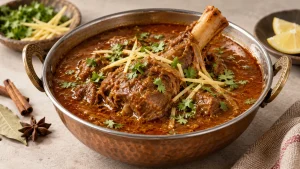
Bong Nihari
بونگ نہاری
heavy covered pot; slow stovetop simmer
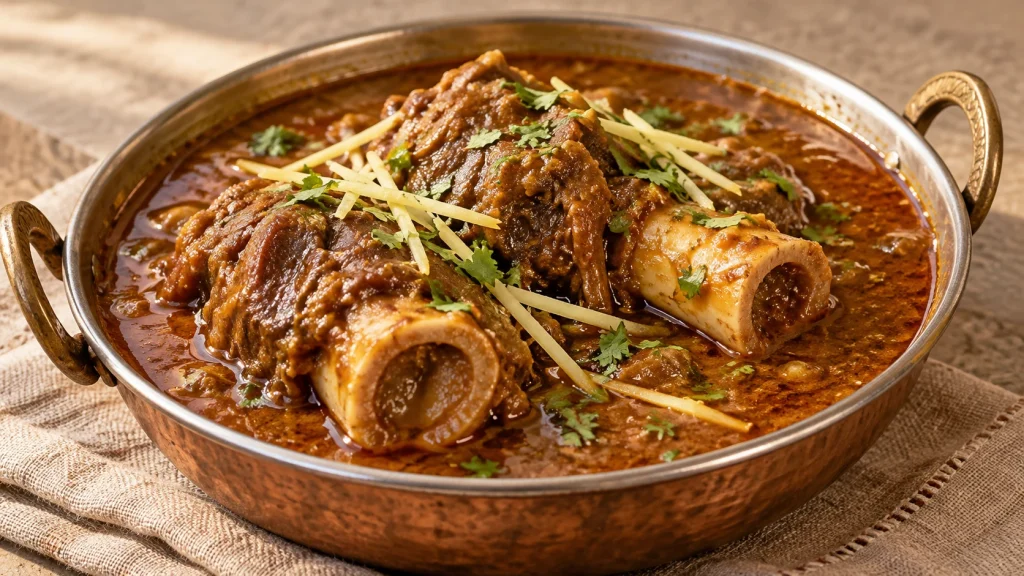
Beef bong (shank) slowly simmered with nihari spices and lightly thickened with atta.
One tablespoon = 15 ml; one teaspoon = 5 ml.
About Bong Nihari
Beef bong (shank) slowly simmered with nihari spices and lightly thickened with atta.
Personally cooked and tested by Zohair Fakhar for DailyLife.pk. Cooking times can vary with your stove, cookware and batch size; follow the texture and doneness cues in the method.
Make it work for your kitchen
Original quantities serve 6. Cooking times, pan size and frying-oil depth do not scale, cook in extra batches instead.
Before you start
Before you start
Weigh all ingredients, trim excess visible fat, and keep raw meat chilled until cooking. Make spice mix and whisk atta slurry only just before finishing. Prepare separate clean serving utensils.
Set up the equipment
Have the following tools ready before starting: Kitchen scale and measuring spoons; Heavy bottomed stockpot and ladle; Food thermometer; Fine strainer and small bowl; Separate tools for raw meat and ready-to-eat garnishes.
Clean workspaceMeasure the ingredients
Measure the ingredient quantities for your selected servings before applying heat. Keep separately listed groups, such as dough, filling, sauce or garnish, in separate containers; keep any optional additions separate.
Use the ingredient list aboveCheck allergens and substitutions
Check ingredient labels and any substitutions against these notes: Wheat/gluten (atta thickener); milk if ghee is used. Check packaged spice blends and all substitutions.
Before cooking
Step-by-step cooking method
1 Brown the protein
Pat beef bong (shank), raw dry. Heat 45 ml of neutral oil or ghee in a heavy pot; brown in manageable batches until the outside changes colour, about 8–12 minutes. Avoid crowding.
2 Build the masala
Add thinly sliced onion to the same pot and stir until golden, 8–12 minutes; add ginger garlic paste and cook 1 minute.
3 Build the masala (continued)
Stir in ground fennel, ground coriander, ground cumin, red chilli powder, ground turmeric, garam masala and black pepper for 30–45 seconds, preventing scorching.
4 Start the slow simmer
Return meat and juices; add water and salt. Bring to a simmer then cook partially covered on low heat, stirring and checking the liquid regularly.
5 Slow-cook beef bong
Simmer beef bong gently with the pot partially covered for roughly 3–4½ hours or until it pulls apart easily. Bone-in pieces require fragment inspection; top up hot water only if needed.
6 Thicken carefully
Whisk whole wheat atta with cold slurry water until lump-free, stream into the simmering gravy while stirring and cook uncovered 10–15 minutes until no raw flour flavour remains.
7 Finish and garnish
Check seasoning; skim excessive visible fat and use the optional remaining 20 ml from neutral oil or ghee only if desired.
8 Finish and garnish (continued)
Serve with optional julienned ginger and fresh coriander leaves; naan is served separately.
Chef’s tips
- Keep the pot at a low simmer; a vigorous boil toughens meat and evaporates stock.
- Use no more atta than needed; nihari should pour rather than set.
- Check marrow or shank for bone fragments before serving.
Common mistakes & quick fixes
- Meat remains tough
- Continue gentle cooking with adequate liquid until tender, rather than increasing heat.
- Lumpy gravy
- Mix atta with cold measured water and stir continuously while pouring.
- Greasy finish
- Skim excess fat rather than assuming all added oil is eaten.
Variations & serving ideas
Variation: Reduce chilli to suit preference; keep safe cooking unchanged.
Variation: Serve naan, lemon and chopped chillies separately; excluded from nutrition.
Perfect result check
| Check | Shank safely cooked and fork-tender |
|---|---|
| Check | Pourable, aromatic, fully cooked flour-thickened gravy |
| Check | Inspect bone-in shank carefully for loose bone fragments before serving. |
Storage & reheating
| Cooling | Divide into shallow containers and refrigerate promptly within two hours (one hour above 32°C). | |
|---|---|---|
| Fridge | 3–4 days | Refrigerate at 4°C or colder; use cooked leftovers within 3–4 days or freeze. |
| Reheating | Reheat leftovers thoroughly to 74°C; bring gravy to a full boil and stir to heat evenly. |
Know when to change the heat
| Stage | Heat | What to look for |
|---|---|---|
| Brown the protein | Medium-high heat | Brown the shank lightly in uncrowded batches; avoid scorching the pan coating. |
| Build the masala | Medium then low heat | Onion should become golden and the spices fragrant without burning. |
| Start the slow simmer | Low simmer | Bring the broth to a simmer, then keep it gently bubbling with the pot partially covered. |
| Slow-cook beef bong | Low simmer | Shank should pull apart easily before thickening. Maintain enough liquid during the long simmer and inspect bone-in pieces for fragments. |
| Thicken carefully | Low heat | Add a smooth cold-water slurry gradually while stirring; simmer until the gravy is cohesive and the flour cooked through. |
| Finish and garnish | Low then off | Check the hot gravy is pourable, skim excess fat and add optional fresh garnish off heat. |
Helpful answers before you cook
How do I avoid lumps when adding the atta?
Whisk the atta with the separately listed cold slurry water until smooth. Add it gradually to simmering gravy while stirring; do not sprinkle dry flour straight into the pot. Continue the stated cooking stage so the flour cooks through, and adjust thickness only after it has simmered.
What if the nihari becomes too thick after chilling?
Shank broth can set or thicken as it chills. Reheat gently at first, stirring and adding a little water if necessary, then heat thoroughly to 74°C/165°F. Judge the final pourable consistency while hot rather than diluting a cold set broth heavily.
How can I tell when this is done?
Shank should be fully cooked and fork-tender; remove fragments of bone.