
Nalli Biryani
نلی بریانی
Stovetop separately parboiled rice and final dum
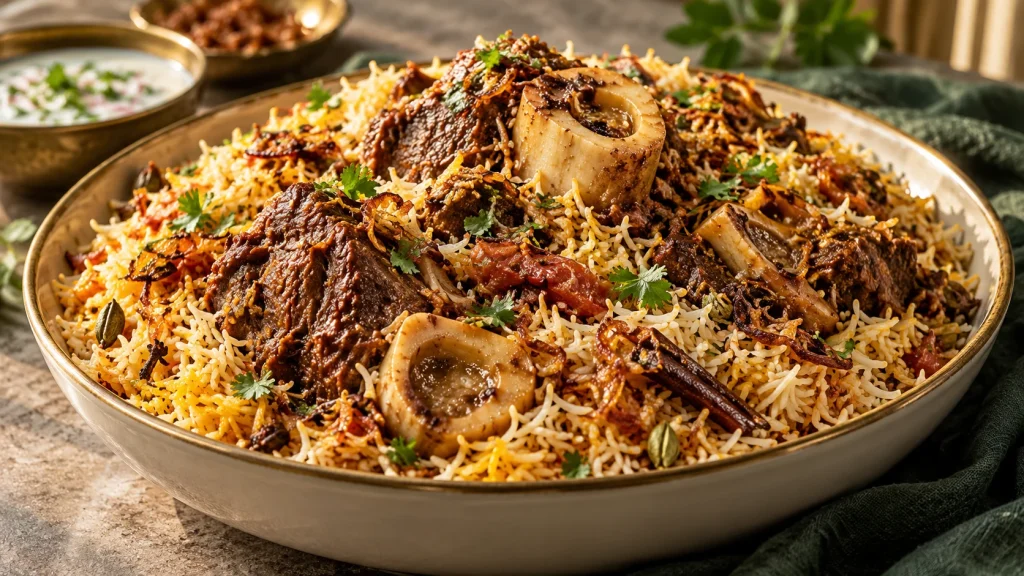
Pakistani-style beef shank and marrow biryani; slow-tenderised bone-in shank and edible marrow are folded through spiced basmati rice. This is one beef interpretation; nalli can also be made with goat or lamb.
Excludes 30 min soaking, 12 min resting. One tablespoon = 15 ml; one teaspoon = 5 ml.
About Nalli Biryani
Pakistani-style beef shank and marrow biryani; slow-tenderised bone-in shank and edible marrow are folded through spiced basmati rice. This is one beef interpretation; nalli can also be made with goat or lamb.
Personally cooked and tested by Zohair Fakhar for DailyLife.pk. Cooking times can vary with your stove, cookware and batch size; follow the texture and doneness cues in the method.
Make it work for your kitchen
Also known as beef nalli biryani, bone marrow biryani.
Original quantities serve 4. Cooking times, pan size and frying-oil depth do not scale, cook in extra batches instead.
Before you start
Before you start
Organise and soak Rinse and soak rice; organise the listed vegetables or shank; measure all spices. Follow separate raw-meat handling for beef nalli. No heat 25–35 minutes
Set up the equipment
Have the following tools ready before starting: Heavy lidded pot (5–6 litres) and a separate large rice pot; Colander, food thermometer, kitchen scale and measuring jug; Heat diffuser or thick-bottomed cooking vessel; wide spoon.
Clean workspaceMeasure the ingredients
Measure the ingredient quantities for your selected servings before applying heat. Keep separately listed groups, such as dough, filling, sauce or garnish, in separate containers; keep any optional additions separate.
Use the ingredient list aboveCheck allergens and substitutions
Check ingredient labels and any substitutions against these notes: Milk (yogurt); check packaged spices
Before cooking
Step-by-step cooking method
1 Prepare rice and safe meat setup
Rinse the dry basmati rice until water runs largely clear, then soak 30 minutes and drain. Slice onions and wash herbs. Place raw shank and bones on a separate cutting board and inspect visible bone shards.
2 Build a golden onion base
Warm oil in a wide heavy pot over medium heat. Add sliced onions and stir 12–16 minutes until deep gold; reserve roughly one quarter for the finishing layers.
3 Season and brown the shank
Add ginger and garlic; stir 1 minute. Add bone-in shank and marrow bones, turning 5–7 minutes. Add tomatoes, red chilli, turmeric, ground coriander, cumin and salt; cook 6–8 minutes until tomatoes soften.
4 Slow-simmer until marrow and meat are ready
Pour in 500 ml of the listed 750 ml hot meat water, cover loosely and gently simmer 95–140 minutes or longer as needed; check every 15–20 minutes and add the reserved 250 ml in small amounts only if drying. Meat must pull away easily from bone. Carefully remove bones and identify edible marrow; discard hard fragments.
5 Finish the thick spiced gravy
Turn heat low; stir in yogurt slowly and simmer 5–8 minutes until fully heated and thick, then add garam masala and lemon juice. Return edible meat and marrow (not discarded bones) to the pan. Confirm there is no watery pool.
6 Parboil and drain basmati
Bring the separately listed rice water, rice-water salt, cardamom, cloves, cinnamon and bay leaves to a rolling boil. Add drained rice, boil uncovered for about 5–7 minutes after returning to a boil, and taste for a firm centre. Drain immediately.
7 Layer and steam gently
In a thick-bottomed lidded pot alternate partly cooked rice and thick shank gravy; add mint, fresh coriander and reserved fried onions. Only sprinkle optional warm finishing water if very dry. Set on a diffuser at the lowest heat, covered, for 12–18 minutes after steam forms.
8 Rest and serve with bone awareness
Rest off heat, covered, 12 minutes. Gently lift portions without crushing grains. Check carefully for remaining bone chips; warn diners if serving any intact bone for presentation.
Chef’s tips
- Ask the butcher for cleaned marrow bones and bone-in beef shank; carefully remove stray fragments before serving.
- Reduce meat gravy to a thick coating before layering; watery shank stock ruins the rice.
- For large quantities cook in batches; do not double pan capacity or final dum time automatically.
Common mistakes & quick fixes
- Soggy rice
- Drain rice when a firm centre remains and reduce masala before layering.
- Scorched bottom
- Use a heavy pan and diffuser, very low heat, and remove if a burnt aroma appears.
- Undercooked main ingredient
- Finish beef or vegetables to the stated tenderness before layering; final dum is not a substitute.
Variations & serving ideas
Variation: Reduce chilli without changing the main cooking method.
Variation: Serve with separately prepared raita and kachumber; not included in nutritional calculation.
Perfect result check
| Check | Rice grains remain distinct and properly cooked. |
|---|---|
| Check | The main ingredient is tender and no free liquid collects at the bottom. |
Storage & reheating
| Cooling and fridge | Use within 24 hours | Cool the rice biryani quickly in shallow portions, ideally within 1 hour, then refrigerate at 4°C or colder. Use within 24 hours under conservative cooked-rice guidance. Do not leave it in a large warm pot. |
|---|---|---|
| Reheating and freezing | Reheat rice biryani only once until steaming hot throughout, checking the meat reaches 74°C/165°F. Freeze portions promptly if longer storage is needed, defrost in the fridge and reheat thoroughly once. |
Know when to change the heat
| Stage | Heat | What to look for |
|---|---|---|
| Onion and shank masala | Medium heat | Brown the onion without blackening, then cook the aromatics and tomato mixture while stirring to keep the spices from catching. |
| Shank simmer and rice dum | Medium-low simmer; very low dum | Simmer the shank gently until the meat yields easily. After layering with drained rice, keep the covered pot on the lowest heat and rest before lifting portions. |
Helpful answers before you cook
Can I use goat nalli?
Yes, but this is a beef-shank recipe. Goat nalli requires separate meat-yield and tenderness checks; do not use the same fixed timing.
Can I add marrow bones directly to rice?
Avoid loose small bones or fragments in portions; separate and inspect bones before layering.
Can the rice dum stage finish a tough shank?
No fixed dum time can make up for an undercooked shank. Continue the slow meat simmer until it pulls away readily from the bone, adding reserved hot meat water as needed. Reduce excess gravy before layering so the rice does not become soggy.


