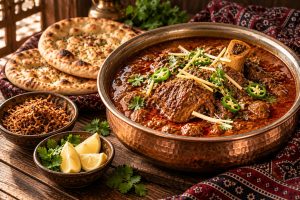
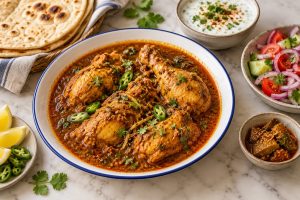
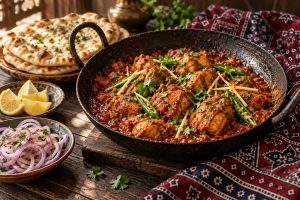
Mutton Nihari
مٹن نہاری
Covered stovetop slow simmer
Slow-cooked goat-shank nihari with a fragrant spice blend and wheat-flour-thickened gravy; a Pakistani home-style adaptation.

One tablespoon = 15 ml; one teaspoon = 5 ml.
About Mutton Nihari
Slow-cooked goat-shank nihari with a fragrant spice blend and wheat-flour-thickened gravy; a Pakistani home-style adaptation.
Personally cooked and tested by Zohair Fakhar for DailyLife.pk. Cooking times can vary with your stove, cookware and batch size; follow the texture and doneness cues in the method.
Make it work for your kitchen
Also known as Goat Nihari, Bakray Ki Nihari.
Original quantities serve 4. Cooking times, pan size and frying-oil depth do not scale, cook in extra batches instead.
Before you start
Before you start
Measure and group ingredients before cooking. Keep raw animal ingredients and ready-to-eat garnishes on separate clean boards. Do not rinse raw chicken. Confirm allergen labels and use a clean thermometer.
Set up the equipment
Have the following tools ready before starting: Heavy stockpot with lid; Digital probe thermometer; Scale, measuring spoons and cups; Whisk, strainer, clean utensils.
Clean workspaceMeasure the ingredients
Measure the ingredient quantities for your selected servings before applying heat. Keep separately listed groups, such as dough, filling, sauce or garnish, in separate containers; keep any optional additions separate.
Use the ingredient list aboveCheck allergens and substitutions
Check ingredient labels and any substitutions against these notes: Wheat (atta); ghee contains milk if used
Before cooking
Step-by-step cooking method
1 Prepare the shank and spices
Pat raw bone-in goat shank dry. Measure ground fennel seed, ground coriander, ground cumin, red chilli powder, turmeric powder, black pepper and salt into a clean bowl; set the garam masala aside for finishing.
2 Brown the onions and goat
Heat neutral oil in a heavy pot and cook thinly sliced onion to golden brown, about 12–15 minutes. Add ginger-garlic paste and shank; brown the outside for 5–7 minutes, stirring so the onions do not scorch.
3 Bloom spices and add water
Add the premeasured ground spices plus cinnamon stick, bay leaves and optional star anise. Stir 30–45 seconds and pour in water. Scrape the pot base, bring to a boil and skim foam.
4 Simmer until the shank softens
Cover and gently simmer for approximately 3½–4½ hours, turning occasionally; top up with separately recorded hot water only if necessary. The meat should pull apart easily; do not judge tenderness by clock alone.
5 Thicken with a smooth atta slurry
Remove 180 ml of warm broth from the pot (reserved cooking broth is a transfer, NOT additional water).
6 Thicken with a smooth atta slurry (continued)
Gradually whisk it into whole-wheat atta until smooth. Pour back while stirring and simmer uncovered 12–18 minutes to remove raw-flour taste.
7 Finish and serve carefully
Discard whole spices, stir in garam masala and optional ghee.
8 Finish and serve carefully (continued)
Check bones for loose fragments. Garnish with fresh ginger matchsticks, fresh coriander leaves and lemon; serve hot with naan (not included in nutrition).
Chef’s tips
- Choose food-grade shank cuts with cartilage and connective tissue; slow simmer for soft texture.
- Brown onions to golden rather than bitter dark brown.
- Reserve broth from the actual pot for the atta slurry to avoid changing liquid balance.
Common mistakes & quick fixes
- Tough meat: extend a gentle covered simmer and check liquid level.
- Tough meat: extend a gentle covered simmer and check liquid level.
- Lumpy sauce: cool reserved broth slightly and whisk gradually into flour.
- Lumpy sauce: cool reserved broth slightly and whisk gradually into flour.
- Greasy surface: skim visibly rendered fat before serving and record it for nutrition.
- Greasy surface: skim visibly rendered fat before serving and record it for nutrition.
Variations & serving ideas
Variation: Aromatic whole spices can be restrained for a lighter flavour.
Variation: Serve ginger, lemon and naan separately; naan excluded from nutrition.
Perfect result check
| Check | Goat shank pulls apart easily and the finished gravy is pourable and aromatic. |
|---|---|
| Check | Meat is fully cooked and tender; inspect bone-in pieces for loose fragments. |
| Check | No raw flour flavour and no loose bone fragments. |
Storage & reheating
| Cooling | Cool promptly in shallow containers and refrigerate within 2 hours (1 hour above 32°C ambient). | |
|---|---|---|
| Fridge | 3–4 days | Refrigerate at or below 4°C and use most leftovers within 3–4 days; freeze promptly for longer storage. |
| Reheating | Reheat leftovers to 74°C (165°F); reboil soup or gravy. Reheat only the quantity needed. |
Know when to change the heat
| Stage | Heat | What to look for |
|---|---|---|
| Prepare the shank and spices | No heat | Keep the finishing garam masala separate from the initial ground spices. |
| Brown the onions and goat | Medium heat | Onions should be golden and the shank lightly coloured, without a scorched onion base. |
| Bloom spices and add water | Medium-high heat | Bloom spices briefly, then add the main water and bring to a boil before reducing heat. |
| Simmer until the shank softens | Low heat | Maintain a quiet simmer until shank pulls apart easily; check liquid periodically and top up only as needed. |
| Thicken with a smooth atta slurry | Medium-low heat | Whisk a smooth atta mixture with the reserved broth, return it gradually while stirring and simmer until the flour is cooked through. |
| Finish and serve carefully | Low heat | Remove whole spices, inspect for loose bone fragments and add the fresh finish near serving. |
Helpful answers before you cook
Can I prepare this ahead?
Yes. Cool promptly in shallow portions and refrigerate within the storage limits below. The broth may set as it chills; reheat while stirring, adding a little water if needed, until 74°C/165°F throughout. Add the fresh garnish near serving.
Why do I remove broth and then put it back?
The reserved broth is used to disperse the atta before thickening the whole pot. It is a transfer from the cooking liquid already present, not another full quantity of water to add. Whisk smooth and add gradually while stirring, then complete the flour-cooking stage.
When is the goat shank tender enough?
A fork should enter easily and the meat pull apart without resistance. Cut, piece size and animal age can extend the gentle simmer. Keep enough liquid to prevent drying and finish tenderising before the atta stage; the timer alone is not the final check.