
City guide
Dera Ismail Khan: City on the Indus
A Saraiki- and Pashto-speaking river city on the west bank of the Indus, where the southern plains of Khyber Pakhtunkhwa meet Punjab, known for sohan halwa, Gomal University and some of South Asia's oldest towns.
- Khyber Pakhtunkhwa (D.I. Khan Division)
- West bank of the Indus
- Saraiki, Pashto, Urdu
- Best season: November–February
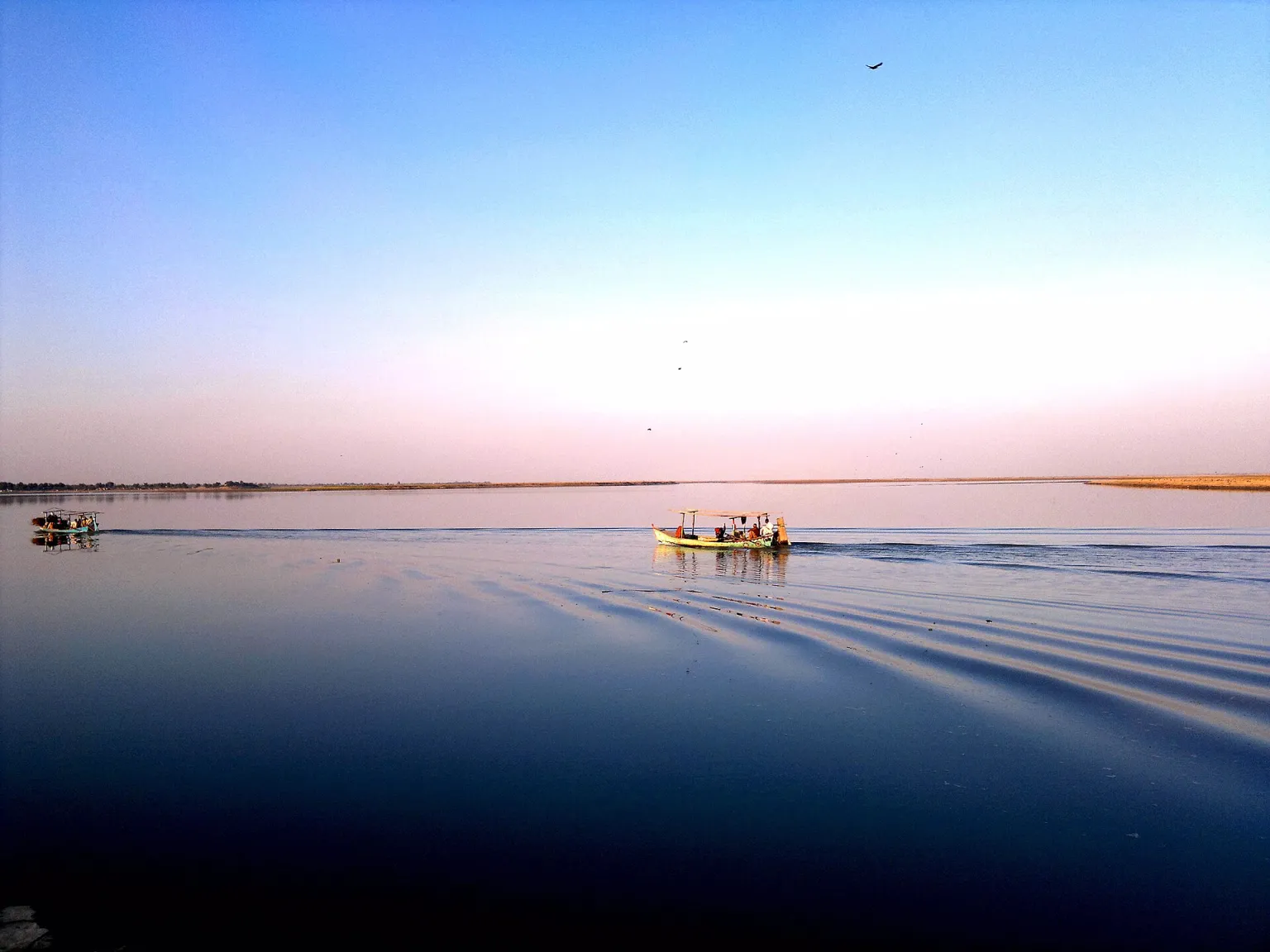
The Indus at Dera Ismail Khan, Khyber Pakhtunkhwa
Dera Ismail Khan at a Glance
About Dera Ismail Khan
Dera Ismail Khan, almost always shortened to D.I. Khan, stands on the west bank of the Indus in the far south of Khyber Pakhtunkhwa. It is the main city of the province's southern plains and the headquarters of D.I. Khan District and Division. To the east, across the river, lies the Thal desert of Punjab; to the west, the plains stretch to the Sulaiman hills and the mouth of the Gomal Pass, an old caravan route to Afghanistan.
The 2023 Census counted 213,756 people in the municipal area and 6,819 in the cantonment, 220,575 in all, and 1,829,811 in the district. D.I. Khan is a meeting place of peoples and languages: Saraiki is the most common first language in the city, Pashto is widely spoken, and Urdu is the shared language of offices, schools and markets. Historically, Pashtun and Baloch tribes met here, and the city's culture blends the Derajat with southern Punjab.
The town is named after Ismail Khan, son of a Baloch chief of the late 15th century. The original settlement was swept away by the Indus in 1823, and today's city was laid out a little further from the river soon afterwards. It became a municipality in 1867, and its four main bazaars, parks and wide streets still follow the plan of that time.
D.I. Khan is a farming and trading city, wheat, millet, gram and sorghum grow on the surrounding plains, and camels and sheep are widely bred, with textile, flour and rice mills and a long tradition of crafts such as lacquered woodwork. It is best known across Pakistan for its sohan halwa, a dense, nutty sweet that travellers buy by the box. For history lovers, the district holds Rehman Dheri, one of the earliest planned towns in South Asia, and the hilltop temple ruins of Kafir Kot above the Indus.
Things to See in and Around D.I. Khan
River views, ancient mounds and Hindu Shahi temples.
 The Indus riverfrontThe broad, braided Indus is the city's defining feature. Evenings by the river and the long bridge towards Darya Khan, built in the early 1980s to replace a bridge of boats, are popular with families.
 Rehman DheriA mound about 22 km north of the city, settled from around 3300 BCE, with a grid of streets and a fortification wall, among the earliest planned towns in South Asia. It is on UNESCO's Tentative List.
A Short History of D.I. Khan
c. 3300–1900 BCE
Rehman Dheri
A planned, walled settlement on the Gomal plain flourishes in the centuries before the mature Indus civilisation.
Hindu Shahi period
Kafir Kot
Forts and temples are built on the hills above the Indus at Kafir Kot and Bilot.
Late 15th century
A Baloch foundation
A Baloch chief settles on the Indus; the town takes the name of his son, Ismail Khan.
1823–1825
Swept away and rebuilt
The Indus washes away the old town; a new town is laid out a few kilometres west of the old site under the Durrani governors.
1867
Municipality
Under British rule, D.I. Khan becomes a municipality and an administrative centre for the Derajat.
1974
Gomal University
Gomal University opens in the city, making it the educational centre of southern Khyber Pakhtunkhwa.
Early 1980s
Bridging the Indus
A permanent road bridge across the Indus replaces the old bridge of boats, linking the city to Punjab.
Getting There and Around
By road
M-14 and the Indus Highway
The Hakla–D.I. Khan Motorway (M-14), part of CPEC's western alignment, links the city with the Islamabad–Lahore motorway near Hakla. The Indus Highway (N-55) runs north to Bannu, Kohat and Peshawar, and south towards Dera Ghazi Khan.
By air
Check current schedules
D.I. Khan has an airport, but it has had no regular commercial flights in recent years. Most travellers fly to Islamabad or Multan and continue by road.
By coach
Intercity services
Coach companies run between D.I. Khan and Islamabad, Peshawar, Lahore and Multan.
Around town
Rickshaws and taxis
Rickshaws and Qingqi motorbike-rickshaws handle local trips. For Rehman Dheri or Kafir Kot, hire a car with a local driver.
Plan Your Visit
Best time to visit
November to February
Winters are mild and dry. From May to September, D.I. Khan is one of the hottest places in the province.
Where to stay
City centre and cantonment
There is a modest choice of hotels in the city; book ahead and ask about security arrangements.
Etiquette
Traditional and hospitable
Dress conservatively, ask before photographing people and avoid photographing military or police sites.
Advisories
Check before you go
D.I. Khan District and the areas bordering South Waziristan have seen repeated militant attacks. Check current travel advisories and local authority guidance; foreign visitors should confirm NOC requirements before travelling.
Dera Ismail Khan Through Time
Every dated moment our guides record about Dera Ismail Khan, from its own history and from national events that touched it. Each entry links to its source page.
- Late 15th century
Founding
Settlers from the Dera Ismail Khan side probably found the town, traditionally named after one Bakhar Khan.
- 2 October 2025
Paharpur approved
The provincial cabinet approved Paharpur as a district split from Dera Ismail Khan, made up of Paharpur and Paniyala tehsils; it was reported as formally created in November 2025.
- 2 October 2025
Paharpur district approved
The Khyber Pakhtunkhwa cabinet approved Paharpur, split from Dera Ismail Khan.
Do you remember Dera Ismail Khan as it used to be? Share a memory or an old photo, our editors review every story before it appears.
Frequently Asked Questions
What is Dera Ismail Khan famous for?
Sohan halwa, its setting on the Indus, Gomal University, and nearby archaeological sites such as Rehman Dheri and the Kafir Kot temples.
What is the population of Dera Ismail Khan?
The 2023 Census counted 220,575 people in the city including its cantonment (213,756 in the municipal area) and 1,829,811 in D.I. Khan District (Pakistan Bureau of Statistics).
What language is spoken in D.I. Khan?
Saraiki is the most common first language in the city, followed by Pashto; Urdu is widely used.
How do I get to D.I. Khan from Islamabad?
By road on the Hakla–D.I. Khan Motorway (M-14), which branches from the Islamabad–Lahore motorway near Hakla. Coaches run the route daily.
Who was Dera Ismail Khan named after?
Ismail Khan, the son of a 15th-century Baloch chief who settled on the Indus. 'Dera' means a camp or settlement.
Keep Exploring
Related places and stories on DailyLife.pk
 BannuBannu city guide: the Kurram River plain, the old fort and gates, Akra mounds
 KohatKohat city guide: the Kohat Pass and tunnel, Tanda Dam wetland, guava orchards
 MultanMultan city guide: Shah Rukn-e-Alam and other Sufi shrines, the walled city, blue pottery, sohan halwa
 PeshawarPeshawar city guide: Qissa Khwani Bazaar, Mahabat Khan Mosque, Sethi House, Peshawar Museum, Pashtun foodIndus Valley CivilizationThe Indus or Harappan civilization (c.
 Rivers and Lakes of PakistanPakistan's rivers and lakes: the Indus and its tributaries, the Indus Waters Treaty, Attabad, Saiful Muluk
How we know this
- Type Place guide
- Sources 7 (3 official/academic)
- Reviewed October 2026
- Disputed points None
7 sources
- Pakistan: Khyber Pakhtunkhwa – cities, towns and districts (Census 2017 and 2023), City Population (Thomas Brinkhoff), citing Pakistan Bureau of Statistics
- Census 2023 – Table 2: Population of urban localities, Khyber Pakhtunkhwa, Pakistan Bureau of Statistics
- Dera Ismail Khan, Encyclopaedia Britannica
- Rehman Dheri (Tentative List), UNESCO World Heritage Centre
- Rehman Dheri: One of the earliest planned cities in South Asia, Harappa.com
- Winter in KP tastes sweeter with DI Khan's Sohan Halwa, Charsadda's Rajar methai, Associated Press of Pakistan
- Dera Ismail Khan, Wikipedia (used to locate primary sources)
Photo credits (3)
- River indus Dera Ismail Khan.jpg, Hammad khan Khaili, CC BY-SA 3.0, via Wikimedia Commons
- Mohenjodaro - view of the stupa mound.JPG, Saqib Qayyum, CC BY-SA 3.0, via Wikimedia Commons
- Chapli Kebab (illustration), DailyLife.pk, Illustrative image
