
City guide
Bhakkar: Between the Indus and the Thal
An old river town on the left bank of the Indus, where date groves and riverside farms give way to the sand ridges of the Thal desert.
- Western Punjab, left bank of the Indus
- Gateway to the Thal desert
- Mainly Saraiki-speaking district
- Best season: November–February
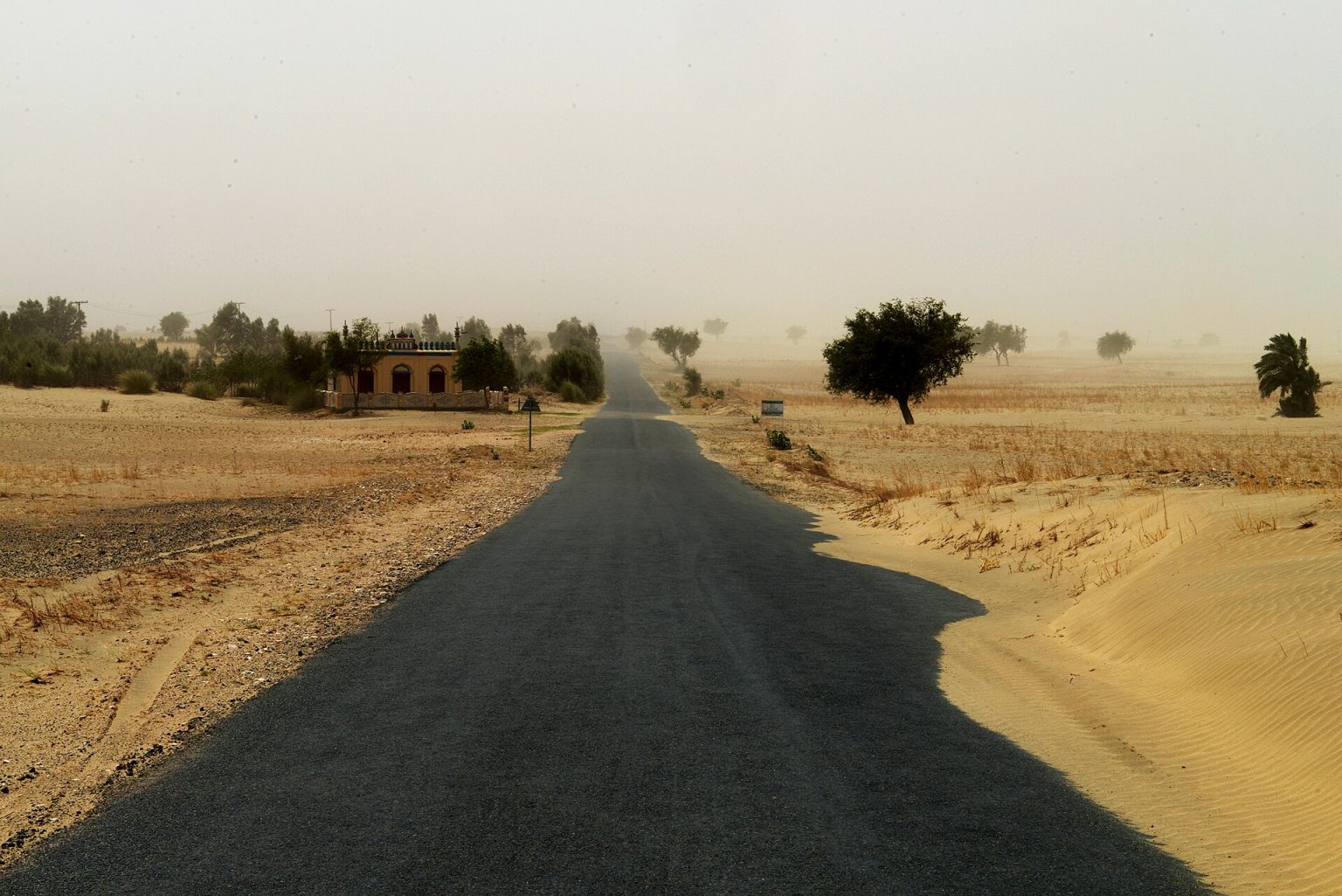
Thal Desert, western Punjab
Bhakkar at a Glance
About Bhakkar
Bhakkar lies on the left bank of the Indus in western Punjab, in Sargodha Division. Below the town, the river's flood plain, the kachha, is green with fields, orchards and old date groves; to the east the ground rises into the dry, sandy plain of the Thal, which covers most of the district. Old descriptions picture the town standing right on the edge of that sandy tract, and it still feels that way.
The 2023 Census counted 131,658 people in Bhakkar city and 1,957,470 in Bhakkar District, which covers 8,153 km² and has four tehsils: Bhakkar, Darya Khan, Kaloorkot and Mankera. Saraiki is the first language of most people in the district, with Punjabi, Urdu and Pashto also spoken.
The town is old. It was probably founded in the late 15th century by settlers from the Dera Ismail Khan side of the river, came under Mughal rule after Humayun regained his throne in 1555, and in 1641 was visited by the Portuguese friar Sebastien Manrique. Under the British it was a tehsil town of Mianwali District, with a municipality from 1874. In 1982 it became the headquarters of its own district.
On one side the river, on the other the sand, Bhakkar has always lived on the line between them.
Things to See
Forts, river country and desert, best explored with a local driver.
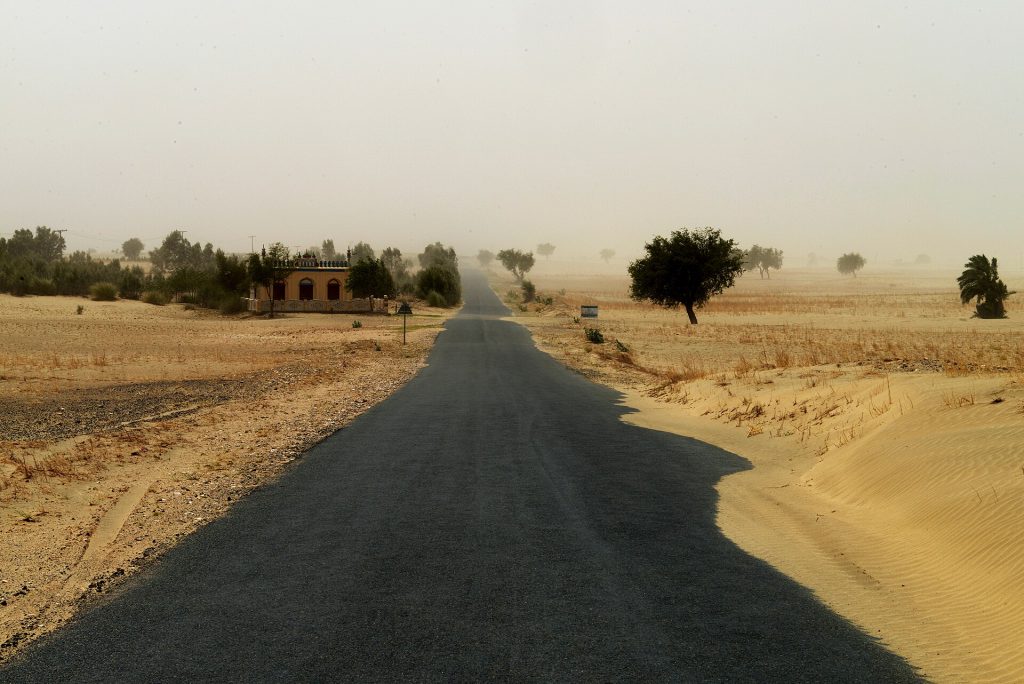
 The Thal desertSand ridges, scrub and patches of irrigated farmland stretch east of the city. Winter brings the Thal Jeep Rally, organised by the Tourism Development Corporation of Punjab, to the wider Thal region.
 The Indus riverainRiverside villages, date palms and fruit gardens line the kachha west of the city. During floods a channel of the Indus has historically been navigable up to Bhakkar.
Food and Local Products
River farms and desert fields shape what reaches the table.
 Thal chickpeasChickpeas (chana) suit the sandy soils of the Thal; they turn up as chana daal, curried chickpeas and roasted snacks.
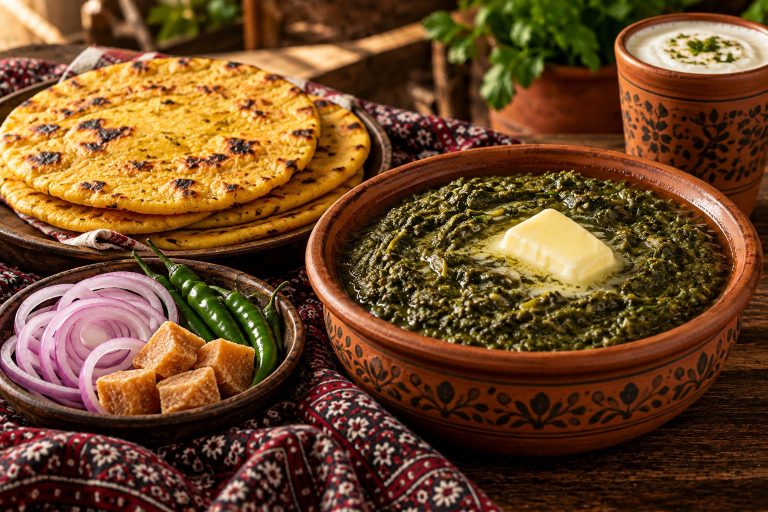 Saraiki home cookingDaal, vegetables, roti and buttermilk at home; karahi and tikka at roadside grills in the evening.

A Short History
Late 15th century
Founding
Settlers from the Dera Ismail Khan side probably found the town, traditionally named after one Bakhar Khan.
1555 onwards
Mughal rule
After Humayun regains his empire, Bhakkar comes under Mughal administration alongside Multan.
1641
A traveller's account
The Portuguese friar Sebastien Manrique passes through and describes Bhakkar as the capital of a kingdom.
1804–1816
Mankera Fort
Nawab Sarbuland Khan Sadozai's fort at Mankera is built on an older fortified site.
1874
Municipality
Bhakkar becomes a municipality; under the British it is part of Mianwali District from 1901.
1982
District headquarters
Bhakkar District is created from parts of Mianwali District.
Getting There and Around
By air
No airport
Bhakkar has no airport; most visitors fly to Multan, Faisalabad or Islamabad and continue by road.
By rail
Bhakkar station
Bhakkar is on the line that runs along the Indus through the Thal; services are limited, so check current timetables.
By road
Coaches via Mianwali, Layyah and Jhang
Roads link Bhakkar with Mianwali to the north, Layyah to the south, Jhang to the east and Dera Ismail Khan across the Indus.
Into the Thal
Go with a local driver
For Mankera and desert tracks, hire a car with an experienced driver and carry water.
Plan Your Visit
Best time to visit
November to February
Mild days and cool nights; the Thal rally season falls in early winter.
Weather
Hot and dry
Summers are very hot with dust storms in the Thal; monsoon floods can affect the riverain.
Where to stay
Simple city hotels
Accommodation is basic; larger hotels are in Mianwali, Sargodha or Dera Ismail Khan.
Advice
Check before you go
Check current local guidance and advisories before travelling into remote desert or riverain areas.

Frequently Asked Questions
What is the population of Bhakkar?
The 2023 Census counted 131,658 people in Bhakkar city and 1,957,470 in Bhakkar District, which covers 8,153 km².
What is the Thal desert?
The Thal is a sandy plain between the Indus and the Jhelum–Chenab, covering much of Bhakkar, Layyah and neighbouring districts. Canals have turned large parts of it into farmland, but sand ridges remain.
What is there to see near Bhakkar?
The ruins of Mankera Fort, the Indus riverain with its date groves, and the Thal desert landscape. In winter the Thal Jeep Rally takes place in the wider region.
Which languages are spoken in Bhakkar?
Saraiki is the first language of most people in the district (about 79% in the 2023 Census), followed by Punjabi, Urdu and Pashto.
When did Bhakkar become a district?
In 1982, when it was carved out of Mianwali District.
Keep Exploring
Related places and stories on DailyLife.pk
 MianwaliMianwali city guide: Namal Lake, Kalabagh's red hills, Jinnah and Chashma barrages, an old stepwell, history
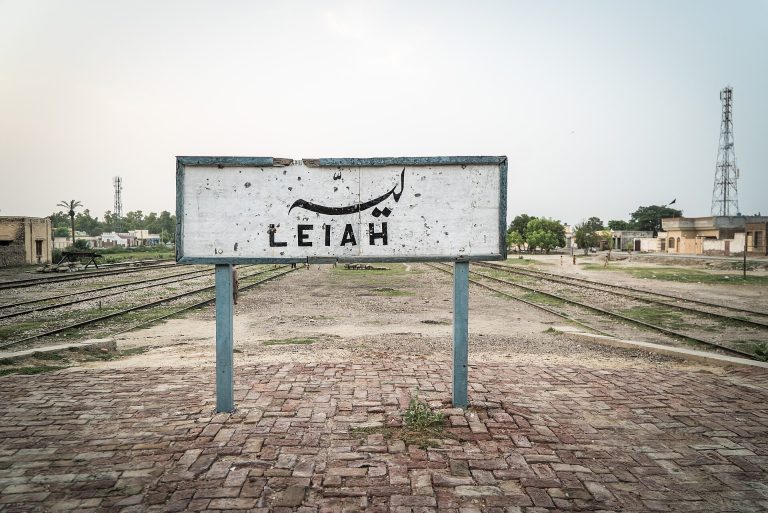 LayyahLayyah city guide: history since Kamal Khan Mirani, the Thal desert and jeep rally, Sufi shrines
 MultanMultan city guide: Shah Rukn-e-Alam and other Sufi shrines, the walled city, blue pottery, sohan halwa
 Rivers and Lakes of PakistanPakistan's rivers and lakes: the Indus and its tributaries, the Indus Waters Treaty, Attabad, Saiful Muluk
 The Mughal EraThe Mughal Empire in Pakistan: Babur to Aurangzeb, Lahore Fort, Shalamar Gardens
 Languages of PakistanPakistan's languages explained: 2023 Census mother-tongue shares, Urdu and English under Article 251
How we know this
- Type Place guide
- Sources 8 (2 official/academic)
- Reviewed October 2026
- Disputed points None
8 sources
- Table 1: Area, population by sex, sex ratio, density, urban proportion: Punjab districts (Census 2023), Pakistan Bureau of Statistics
- Pakistan: Provinces and Major Cities: 2023 Census, City Population (Thomas Brinkhoff), from PBS data
- Punjab (Pakistan): Urban Localities: 2023 Census, City Population (Thomas Brinkhoff), from PBS data
- Important Places: Mankera Fort, Dilkusha Bagh, District Bhakkar, Government of the Punjab
- Schedule for Thal Desert Rally announced, Dawn
- Bhakkar (overview used to locate primary sources), Wikipedia
- Bhakkar District (overview used to locate primary sources), Wikipedia
- Mankera Fort (overview used to locate primary sources), Wikipedia
Photo credits (4)
- Noorpur Thal desert road, engulfed in a sand storm.jpg, Vasiq Eqbal, CC BY-SA 4.0, via Wikimedia Commons
- River indus Dera Ismail Khan.jpg, Hammad khan Khaili, CC BY-SA 3.0, via Wikimedia Commons
- Pindi Chana.JPG, Miansari66, CC0, via Wikimedia Commons
- Sarson Ka Saag (illustration), DailyLife.pk, Illustrative image
