
Pakistan Day versus Independence Day
They are separate occasions. Pakistan Day on 23 March recalls the 1940 resolution and the 1956 republic, while Independence Day on 14 August marks the creation of the state in 1947.
History & National Days
What was passed in Lahore in March 1940, why 23 March is also Republic Day, and how Pakistan Day is marked.
Pakistan Day is observed on 23 March. It commemorates the Lahore Resolution, which the All-India Muslim League put forward at its session in Lahore in March 1940, and it also marks 23 March 1956, when Pakistan's first constitution came into force and the country became an Islamic Republic. For that reason the day was first called Republic Day, and it was renamed Pakistan Day after Ayub Khan's takeover.
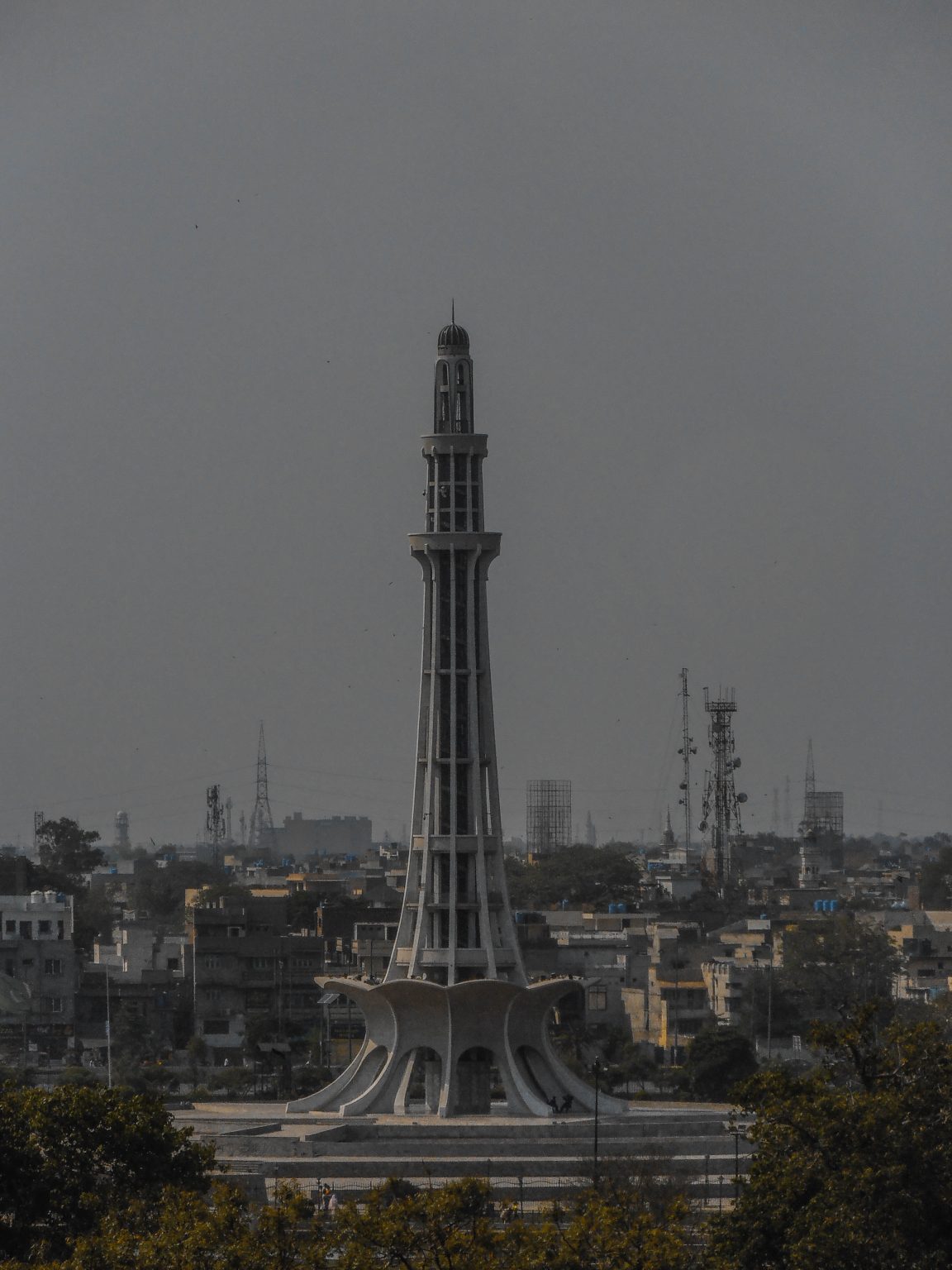
Traditionally, the highlight is a joint services parade in Islamabad, together with gun salutes, wreath-laying at the mausoleums of Allama Iqbal and Muhammad Ali Jinnah, and the conferring of national awards. In Lahore, the day centres on Minar-e-Pakistan, the monument that stands at the site of the 1940 session. See also our pages on the Lahore Resolution and public holidays in Pakistan.
The All-India Muslim League held its annual session at Minto Park in Lahore from 22 to 24 March 1940. The park is now known as Iqbal Park, and the Minar-e-Pakistan stands in the Greater Iqbal Park complex. The resolution was presented on 23 March and the session ended on 24 March, which is why sources describe both dates. The day commemorated in Pakistan is 23 March.
A. K. Fazlul Huq, the Prime Minister of Bengal, moved the resolution. It was seconded by leaders from several regions, including Chaudhry Khaliquzzaman of the United Provinces, Zafar Ali Khan of Punjab, Sardar Aurangzeb Khan of the North-West Frontier Province, Pir Ziauddin Andrabi of Kashmir and Sir Abdullah Haroon of Sindh. Others, such as Qazi Muhammad Essa of Balochistan, announced their support. Muhammad Ali Jinnah led the League and his Lahore address is cited by biographers as marking his commitment to an independent state for Muslims. Our page on Muhammad Ali Jinnah tells that story in more detail.
The speakers came from provinces that now sit in different countries, which is one reason the session is remembered as a broad gathering rather than a regional one. Reading the original text, which is reproduced at the monument, is the best way to see how carefully it was worded.
The same Lahore story is told in our page on the Lahore Resolution, and the wider campaign is in the Pakistan Movement.
No. The text called for "independent states" in the Muslim-majority regions of the north-west and east, with autonomous and sovereign constituent units, and for mandatory safeguards for minorities. The word Pakistan was not used in it. Choudhary Rahmat Ali had proposed the name in 1933, and after the session the Hindu press and leaders quickly described the resolution as a demand for Pakistan. The label stuck, and it became widely known as the Pakistan Resolution.
The resolution did not come from nowhere. Muslim political organisation in India had been building for decades, and Allama Iqbal's address of 1930 is often named as an early public statement of the idea of a consolidated Muslim state in the north-west. You can read about that in the Allahabad Address of 1930 and in our overview of the Pakistan Movement.
In the years after 1940 the League used the resolution as the basis for its struggle for one state. The elections of 1945 and 1946 and the events that followed are covered elsewhere on our history pages. Historians still debate details of how the demand evolved, including how many states were envisaged. The monument inscriptions also include the text of the Delhi Resolution, a later statement of the demand.
Dates are as given in the reference sources we checked.
| Date | Event |
|---|---|
| 1933 | Choudhary Rahmat Ali proposes the name Pakistan |
| 22 to 24 March 1940 | Muslim League session in Lahore |
| 23 March 1940 | Resolution presented |
| 23 March 1956 | First constitution takes effect; dominion becomes an Islamic Republic |
| 23 March 1960 | Foundation stone of Minar-e-Pakistan laid |
| 22 March 1968 | Minar-e-Pakistan completed |
The first constitution of Pakistan took effect on 23 March 1956. It changed the country's status from a dominion to an Islamic Republic and replaced the Governor-General with a President as head of state. The day was then called Republic Day. After Ayub Khan's takeover it was renamed Pakistan Day. For the constitutional story, see the Constitution of 1956.
The double meaning explains why official messages for 23 March often speak both of the original demand of 1940 and of the republic created in 1956.
It also helps to know that the 1956 constitution did not last. Later constitutions replaced it, and the present one dates from 1973, as explained in our history section. The renaming of the day reflects those political changes as much as the original anniversary.
Minar-e-Pakistan is the tower that marks the place where the resolution was passed. Its foundation stone was laid on 23 March 1960 by Akhter Husain, then the governor of West Pakistan, and it was completed on 22 March 1968 at an estimated cost of seven million rupees. The designer was the Russian-born Pakistani architect and engineer Nasreddin Murat-Khan, and Mian Abdul Khaliq was the contractor.
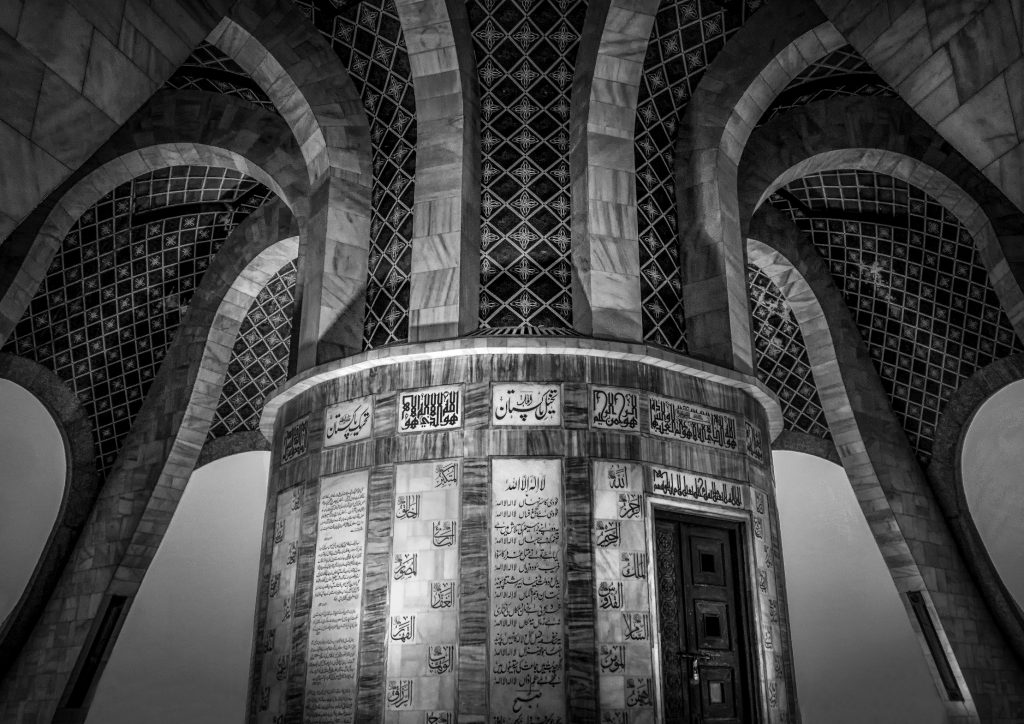
The monument rises about 70 m in total, with the tower itself standing 62 m above an 8 m base. It combines Mughal, Islamic and modern styles, stands on a five-pointed star-shaped platform and is flanked by two crescent-shaped pools, one of red marble and one of green. Ten white marble plaques at its base bear the text of the Lahore Resolution in Urdu, Bengali and English, with Quranic verses, the 99 names of Allah, the national anthem, excerpts from Jinnah's speeches and couplets by Iqbal. Visitors were once able to climb to the top, but that access was later withdrawn, so check before you go.
The monument sits near Lahore's other landmarks, so it combines easily with a day in the city. See Lahore for what else to visit.
Planning a visit? See our Lahore city break and the 48 hours in Lahore itinerary, and read about Allama Iqbal.
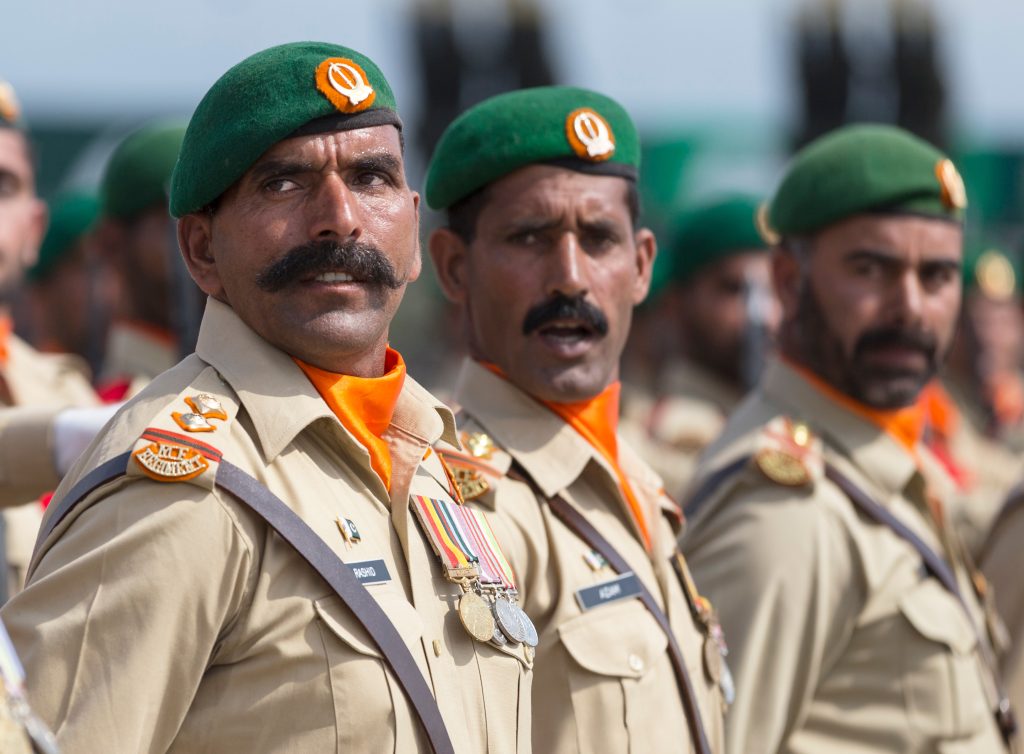
The traditional pattern is as follows. A 31-gun salute is fired in the federal capital and 21-gun salutes in the provincial capitals at the start of the day, and special prayers are offered in mosques after Fajr. The main celebration is held in Islamabad, where the President is usually the chief guest at an early-morning military and civilian parade. A full inter-services parade is rehearsed and broadcast live nationwide. Afterwards the President confers national awards at the Presidency, and wreaths are laid at the mausoleums of Iqbal and Jinnah. Foreign dignitaries are rarely invited.
The day is a national public holiday, although it is mainly observed by government offices and the armed forces. Many schools hold programmes about the resolution, and national flags are flown from public buildings.
Some years differ. Pakistan Observer reported that the parade planned for 23 March 2026 was called off, with officials citing the Gulf oil crisis, austerity measures and regional tensions, and that modest flag-hoisting events took place instead. We found that report in one outlet only, and the next observance falls on 23 March 2027, so check official announcements for the programme in any year.
The other main national day is Independence Day on 14 August. For the full list of days off, see public holidays in Pakistan.
Not every year follows the traditional pattern. Pakistan Observer reported on 23 March 2026 that the usual military parade was cancelled that year and the day was marked with simpler ceremonies such as flag hoisting.
These questions come up often in schools and on social media.
They are separate occasions. Pakistan Day on 23 March recalls the 1940 resolution and the 1956 republic, while Independence Day on 14 August marks the creation of the state in 1947.
The session ran from 22 to 24 March 1940. Sources differ on whether the resolution is recorded as presented on the 23rd or adopted on the 24th. Pakistan commemorates 23 March.
It was held at Minto Park, which is now part of Iqbal Park in Lahore. The Minar-e-Pakistan was later built in the Greater Iqbal Park complex to mark the site.
The parade is a joint services event, but the day itself is a national occasion. It is not the same as Defence Day, which is observed separately.
When teaching the resolution, focus on three points: it was passed in Lahore in March 1940, it called for independent states in the Muslim-majority areas, and it did not itself use the word Pakistan. Mention the name given by Rahmat Ali in 1933. That keeps the lesson accurate and answers the questions students usually ask.
For ceremony schedules and security notices, follow the Government of Pakistan, the Presidency and the provincial governments, and watch for announcements by the Inter-Services Public Relations. For information about visiting Minar-e-Pakistan and Greater Iqbal Park, contact the Lahore administration or park management, as opening hours and rules are not published in the sources we checked. If you are an overseas Pakistani, embassies and consulates often hold small ceremonies and publish the details on their websites. Community groups abroad also hold flag-raising events and talks about the resolution, usually announced a few days ahead on social media. If you plan to attend one, confirm the time and venue with the organisers.
Checked October 2026 against the Cabinet Division list for 2026. Holiday dates can be adjusted by later notifications.
It is the national day observed on 23 March. It commemorates the Lahore Resolution of 1940 and the day in 1956 when the first constitution took effect.
It was a resolution of the All-India Muslim League, presented in Lahore in March 1940. It called for independent states in the Muslim-majority areas of the north-west and east.
A. K. Fazlul Huq, the Prime Minister of Bengal, moved it. Leaders such as Chaudhry Khaliquzzaman and Zafar Ali Khan seconded it.
No. The Hindu press named it the Pakistan Resolution soon afterwards, and the label stuck.
Pakistan's first constitution took effect on 23 March 1956 and the country became an Islamic Republic. The day was then called Republic Day.
The foundation stone was laid on 23 March 1960 and it was completed on 22 March 1968.
Yes, it is a national holiday, although it is mainly observed by government offices and the armed forces.
One outlet reported that the parade was cancelled, citing the Gulf oil crisis and austerity. Check official sources for confirmation.
Yes, it is a national public holiday. The Cabinet Division list for 2026 shows Pakistan Day on Monday, 23 March 2026, which fell on the last day of the Eid-ul-Fitr holidays that year (21 to 23 March).
From majestic mountains to vibrant cities, rich cuisine to timeless traditions — discover the real Pakistan with DailyLife.pk.
