
Attend an official ceremony
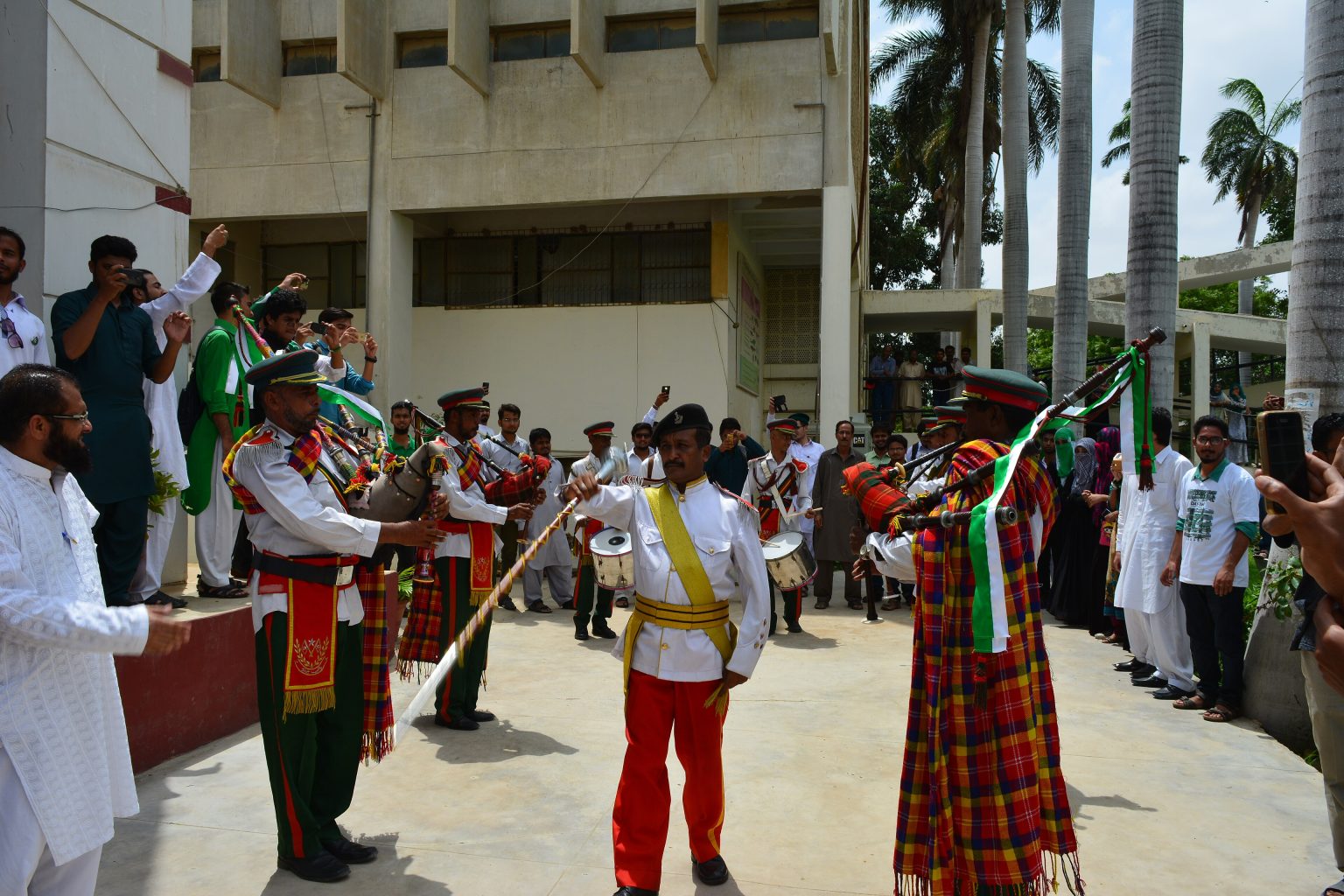
Flag-raising ceremonies are held in the capital and in each provincial capital. Public access depends on security arrangements, so follow announcements by the local administration.
History & National Days
Why Pakistan marks independence on 14 August, what happened in 1947, and how the day is observed from Karachi to Islamabad.
Pakistan celebrates its Independence Day on 14 August. On that date in 1947, the end of British rule in the area that became Pakistan was marked, and Muhammad Ali Jinnah took the oath as the first Governor-General in Karachi. It is a national day, marked with flag-raising, gun salutes, prayers after Fajr, official ceremonies, fireworks and street celebrations. The day is also known in Urdu as Jashn-e-Azadi, meaning "celebration of freedom".
In 2026 the country marked its 79th Independence Day on Friday, 14 August. For the wider background, see our pages on the Partition of 1947. For the dates of other days off, see public holidays in Pakistan.
The Indian Independence Act 1947 received royal assent on 18 July 1947. It created the two dominions of India and Pakistan, provided for the division of the provinces of Bengal and Punjab, and set up the office of Governor-General in each dominion. The decisions that led to it, including the plan announced in June, led to a rapid timetable.
Pakistan came into being at the end of 14 August 1947, and Jinnah took the oath as Governor-General in Karachi, the first capital. The night of 14 to 15 August coincided with the 27th of Ramadan 1366 AH, a night Muslims regard as especially sacred, which many Pakistanis mention when they remember the founding.
Independence came with immense suffering. Partition was accompanied by mass violence and the displacement of nearly 15 million people. That is why the day is both a celebration and a moment of remembrance, and why many families still tell stories of migration. Our guide to Muhammad Ali Jinnah explains the leadership of the movement that led to the new state.
This is a common question. The Indian Independence Act names 15 August 1947 as the date on which the two dominions were set up, and Mountbatten, the last Viceroy, chose 15 August as the date for the transfer of power. He picked 14 August for the Pakistan ceremony so that he could attend events in both countries. Pakistan adopted 14 August in later years, because the oath was administered to Jinnah on the 14th. Early commemorative stamps issued in July 1948 were dated 15 August 1947. Historians therefore describe the dates differently, and you may see both in older documents.
These are the dates that are well documented in the main references we checked.
| Date | Event |
|---|---|
| 18 July 1947 | Indian Independence Act 1947 receives royal assent |
| 11 August 1947 | Constituent Assembly of Pakistan adopts the national flag |
| 14 August 1947 | Flag becomes official; Jinnah takes the oath as Governor-General in Karachi |
| 15 August 1947 | Date named in the Act for the creation of the two dominions |
| July 1948 | First commemorative stamps, dated 15 August 1947 |
The Constituent Assembly adopted Pakistan's flag on 11 August 1947, and it became the official flag of the Dominion on 14 August. A team led by Syed Amir-uddin Kedwaii designed it. The green field takes three quarters of the length and the white bar at the hoist takes one quarter. The green stands for the Muslim majority, the white for religious minorities, the crescent for progress and the star for light and knowledge. For more on the symbols, see national symbols of Pakistan.
Reference sources summarise the flag rules as follows: the flag must not touch the ground, shoes or anything unclean; it should be raised at dawn and lowered at dusk; it must not be flown in darkness or displayed vertically; it must not carry words or pictures; and it must not be burned or trampled. The Pakistan Flag Rules were introduced in 2002, but the full text is not easy to find online, so treat the list as a guide and check official guidance if you are organising a public display. Never discard worn flags or paper flags on the street after 14 August.
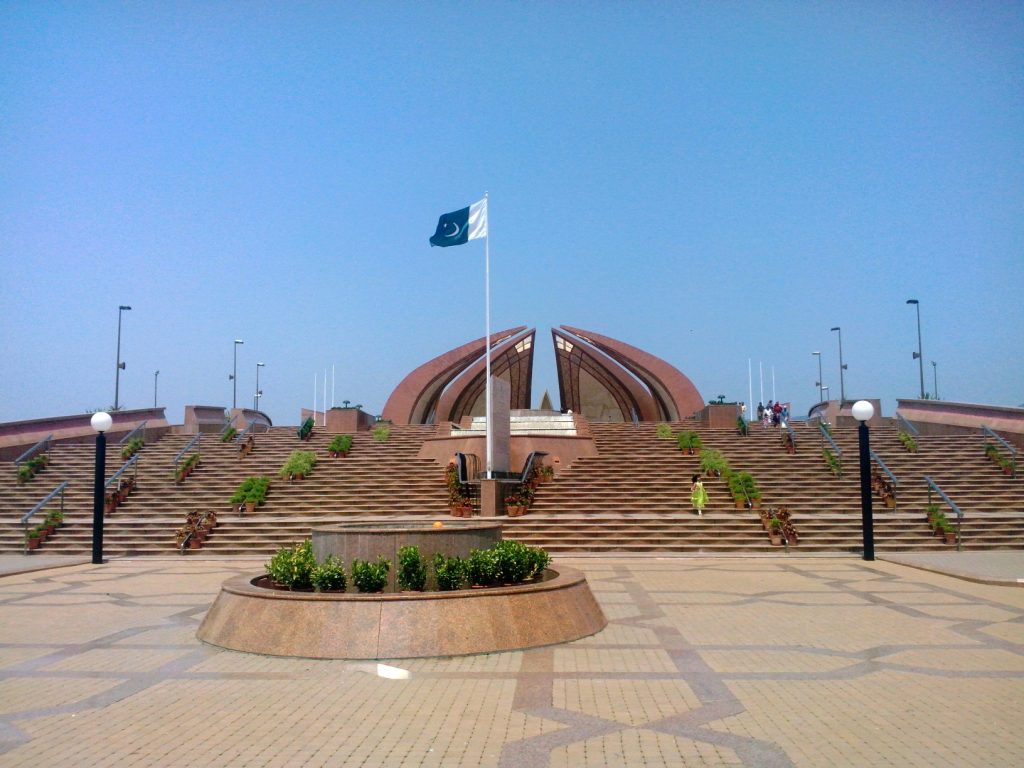
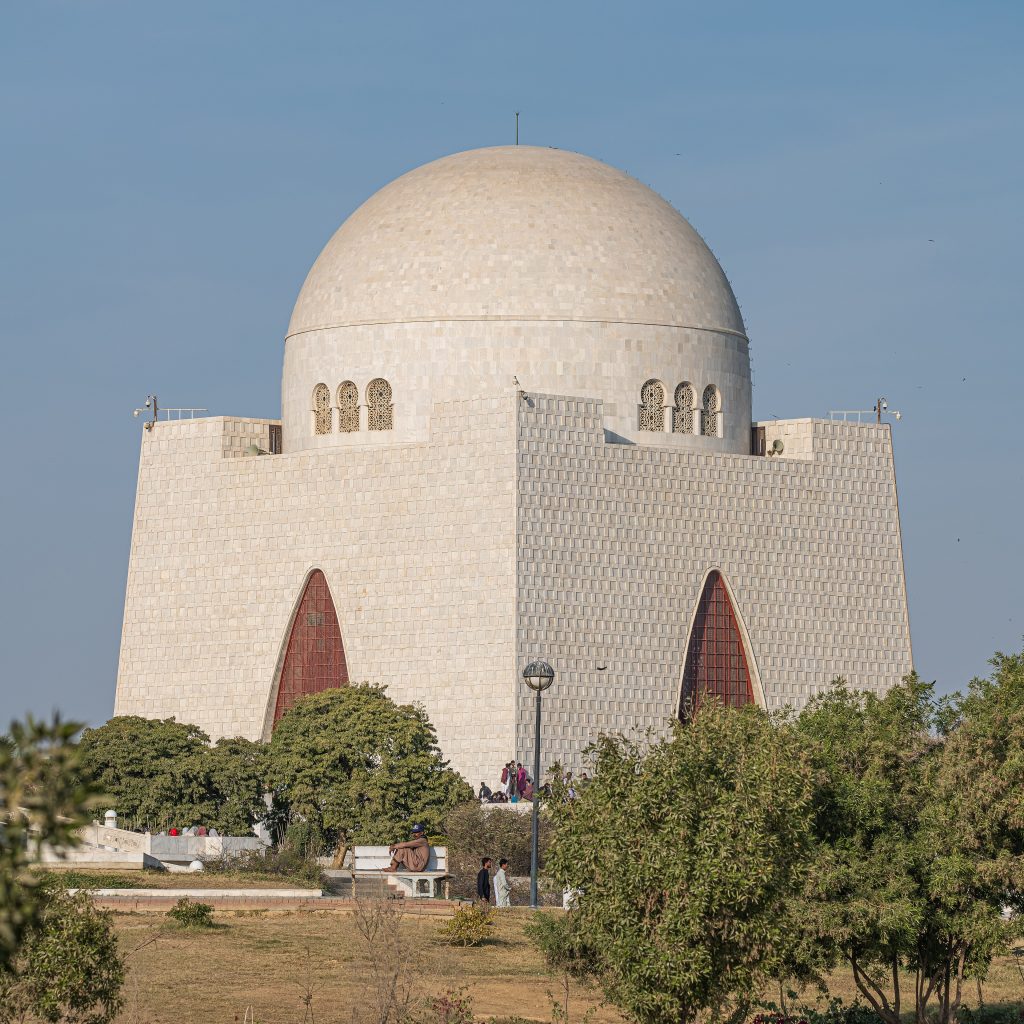
The day usually starts with a 31-gun salute in the federal capital and 21-gun salutes in the provincial capitals, followed by special prayers in mosques for the security, unity and prosperity of the country. The main ceremony in Islamabad includes flag-raising at Parliament House and the Presidency. In Karachi, the central event is held at Mazar-e-Quaid, where the national flag is hoisted, a contingent of the Pakistan Naval Academy takes up guard duties, and senior provincial officials pay their respects to the Quaid-e-Azam and the martyrs of the Pakistan Movement.
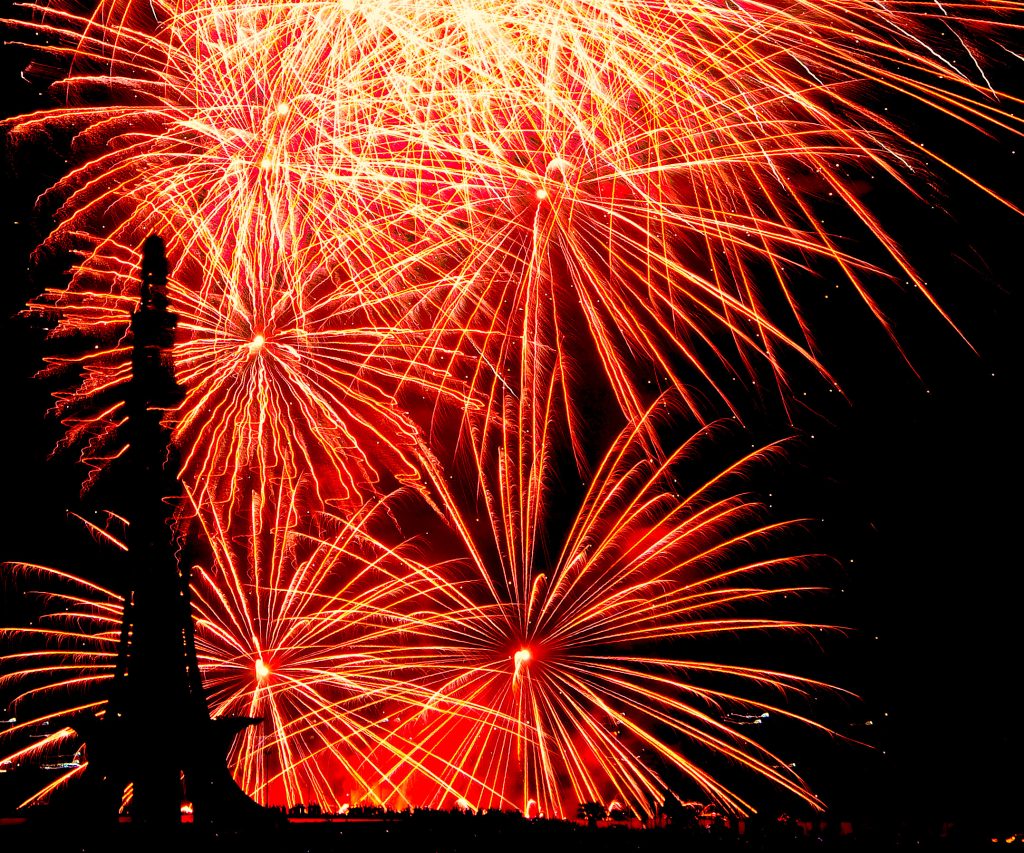
Away from official ceremonies, cities and towns are decorated in green and white, with flags, bunting and lights on roads, markets and public buildings. Reports of the 2026 celebrations describe midnight celebrations, fireworks over Islamabad, illuminated landmarks in Karachi, and rallies, patriotic songs and community gatherings across the country. Minar-e-Pakistan in Lahore is lit up on the eve of the day, and paramilitary forces exchange sweets along the international border.
Families often wear green and white, put flags on cars and homes, and gather for meals. Schools and colleges hold flag ceremonies and speech and song programmes.
For another national and seasonal celebration, read about Basant and its ban, and browse festivals of Pakistan for the wider calendar.
Choose what suits you, and plan around crowds.
Flag-raising ceremonies are held in the capital and in each provincial capital. Public access depends on security arrangements, so follow announcements by the local administration.
Mazar-e-Quaid in Karachi and Minar-e-Pakistan in Lahore are the best-known sites. Allow time for traffic and security checks.
Fly the flag correctly, cook a family meal, and take part in local programmes. Children enjoy flag-making and quizzes about the founding of Pakistan.
Read about the Pakistan Movement and the years that followed in the history of Pakistan since 1947.
For most people 14 August is a mix of pride, gratitude and reflection. Older generations often connect it to family stories of leaving homes in East Punjab, Delhi, Uttar Pradesh and other parts of India and arriving in a new country with very little. Younger people tend to focus on the festive side: the flags, the music, the late-night drives and the sense of shared identity. Both are part of the day, and it is worth keeping the human cost of 1947 in mind while celebrating.
Schools often use the day to teach about the Pakistan Movement, the leaders who shaped it, and the symbols of the state. If you are a teacher or parent, a good approach is to combine a flag ceremony with a short talk or reading about the period, using sources such as our pages on the Pakistan Movement. The aim is for children to understand why the date matters, not only how it is celebrated.
Many people also use the occasion to volunteer, clean public spaces, plant trees or support charities, and local administrations sometimes organise such activities. These are ordinary community choices rather than fixed customs, so look for what is on offer where you live.
The other national day in the calendar is Pakistan Day: read our guide to Pakistan Day and the Lahore Resolution. For the leaders and ideas behind the movement, see Muhammad Ali Jinnah, Allama Muhammad Iqbal and the Pakistan Movement.
Celebrations bring heavy traffic and large crowds. Follow police instructions, and keep away from dangerous practices such as reckless driving, riding without a helmet, or any firing of weapons into the air. Aerial firing is dangerous and unlawful, and bullets fall back to the ground. Monsoon rain can flood roads and cause power cuts, so read our advice on floods and monsoon safety. If you are a visitor, keep to well-lit public areas and follow the guidance in our travel safety pages.
Pakistani communities and embassies abroad hold their own events. For example, the Pakistan Embassy in Beijing marked the 70th anniversary in 2017 with a flag-hoisting ceremony, a Quran recitation, the national anthem, tributes to the founders and martyrs, and messages from the President and Prime Minister. Many communities hold similar flag-hoisting events at consulates and community centres. Look for announcements from your nearest embassy or consulate, and from local Pakistani associations, a few weeks before the date.
Ceremony schedules, road closures and security arrangements are published by the federal and provincial governments and by local administrations, usually in the days before the event. The Press Information Department (PID) issues official press releases. For consular events abroad, check the website or social media channels of your nearest Pakistani embassy or consulate. In an emergency at a public event, go to the nearest police or medical post, and follow the instructions of marshals and officials.
Related: public holidays in Pakistan and the national symbols of Pakistan. Checked October 2026 against the Cabinet Division list for 2026. Holiday lists can be changed by later notifications.
Pakistan came into being at the end of 14 August 1947, when Jinnah took the oath as Governor-General in Karachi. The Indian Independence Act itself names 15 August, but Pakistan observes the 14th.
Muhammad Ali Jinnah took the oath as the first Governor-General on 14 August 1947 in Karachi.
It is the Urdu name for the celebration of freedom, used for Independence Day events. It refers to the festive side of 14 August.
The Constituent Assembly adopted it on 11 August 1947, and it became the official flag of the Dominion on 14 August 1947.
A 31-gun salute is fired in the federal capital and 21-gun salutes in the provincial capitals, as reported for recent years.
Yes, it is observed as a national day. See our public holidays page and official notifications for the arrangements in your area.
It was the 79th Independence Day, and fell on a Friday.
The central event is at Mazar-e-Quaid, the mausoleum of Jinnah, where the flag is hoisted and officials pay tribute.
Yes. The Cabinet Division list of public holidays for 2026 shows Independence Day on Friday, 14 August 2026. Pakistan Day (23 March) and Youm-e-Takbeer (28 May) are the other fixed national days on that list.
From majestic mountains to vibrant cities, rich cuisine to timeless traditions — discover the real Pakistan with DailyLife.pk.
