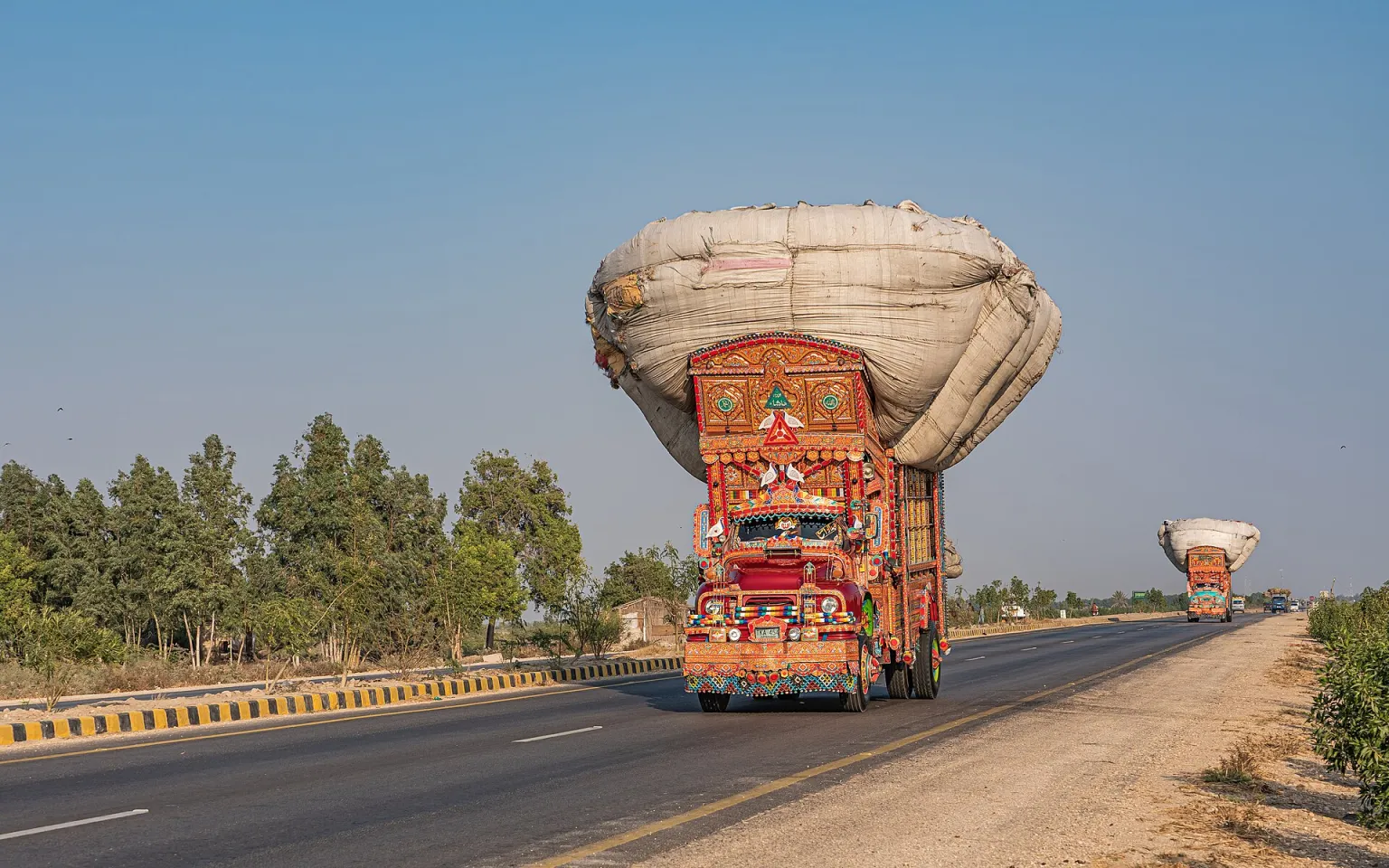
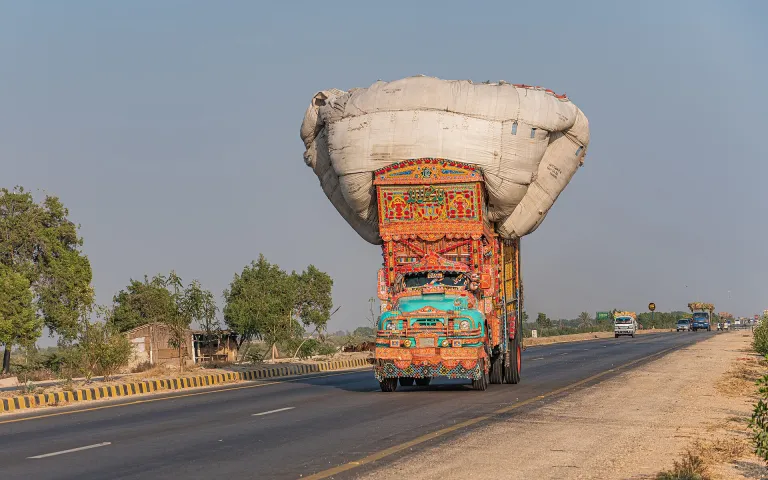
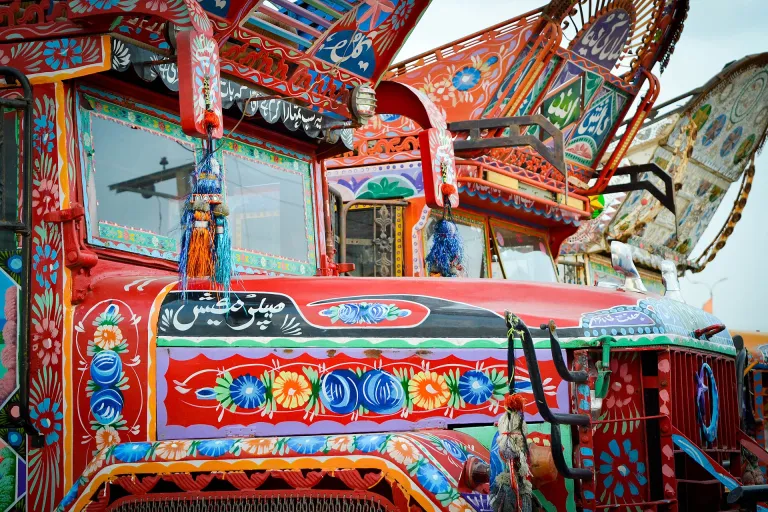
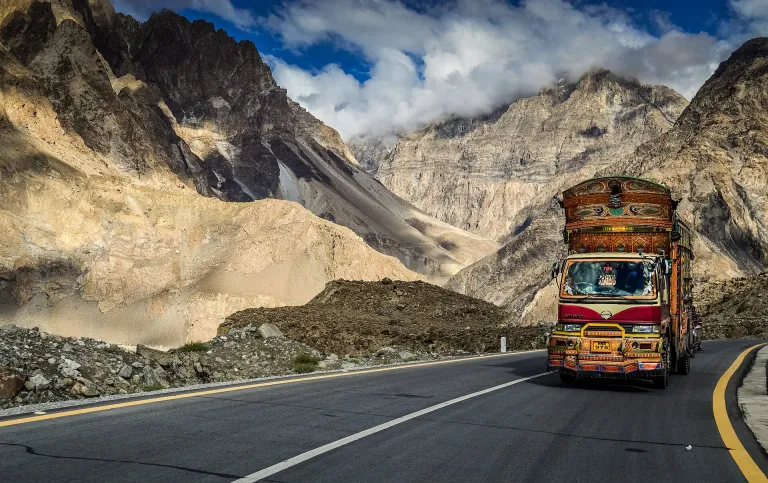
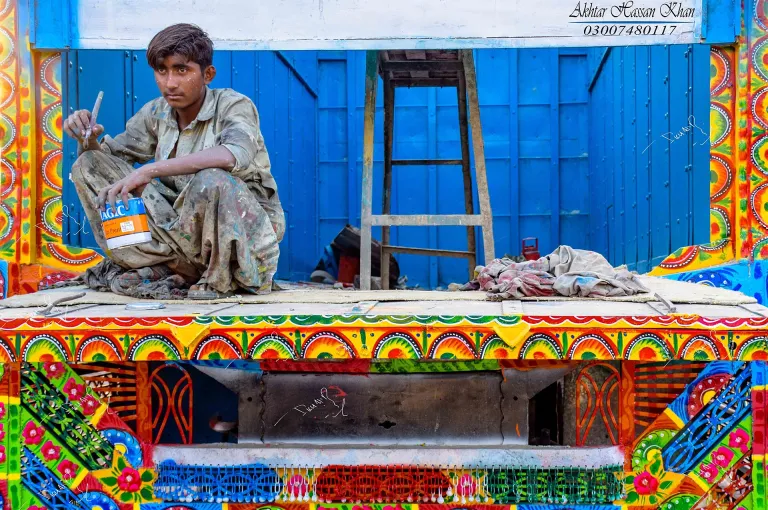
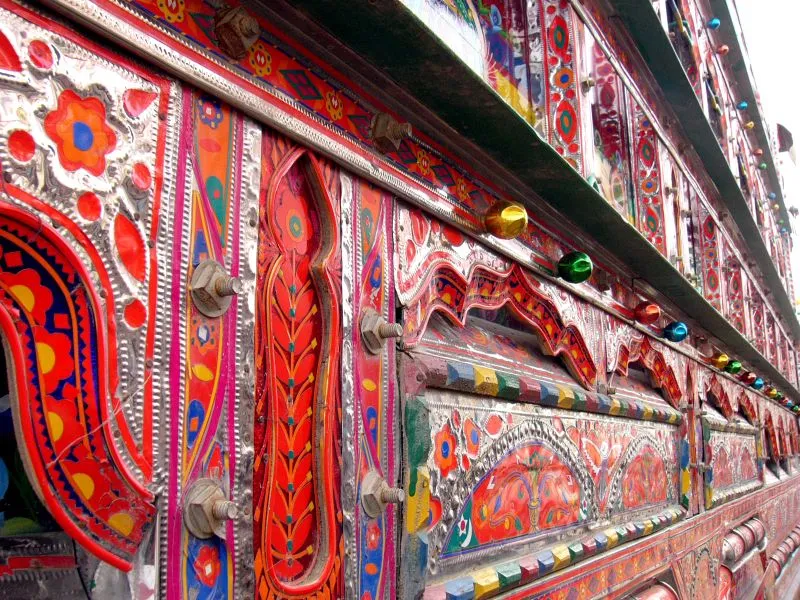
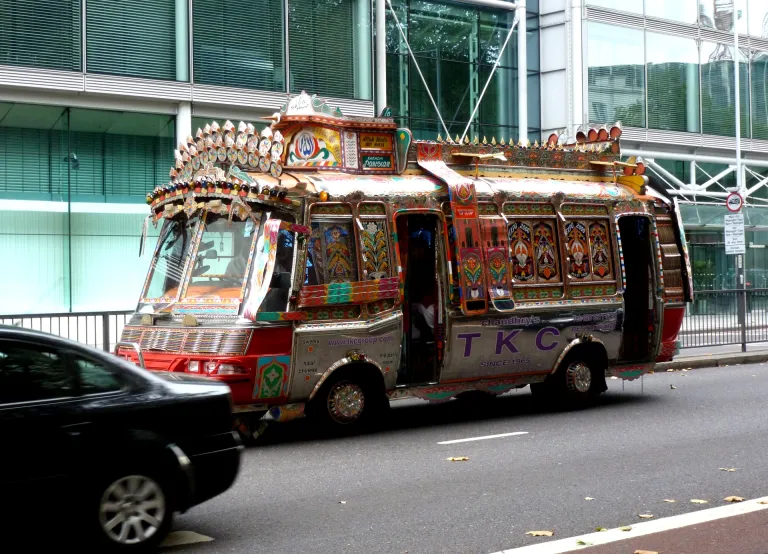
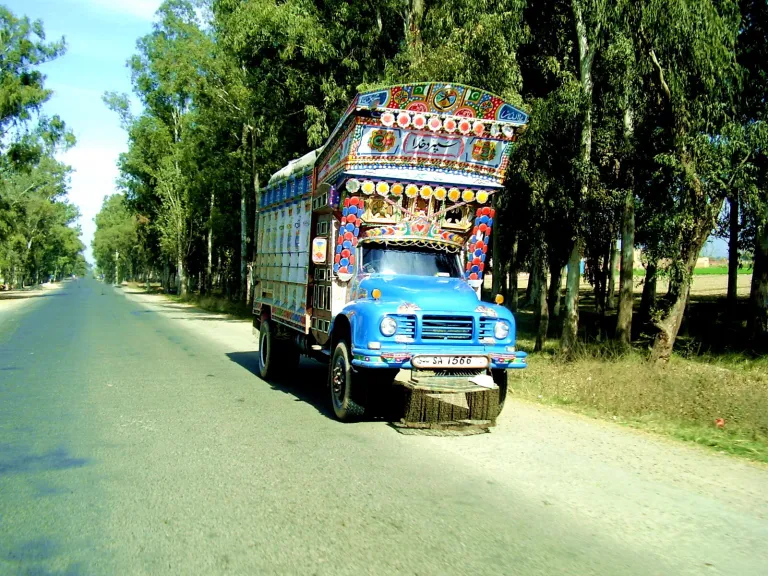
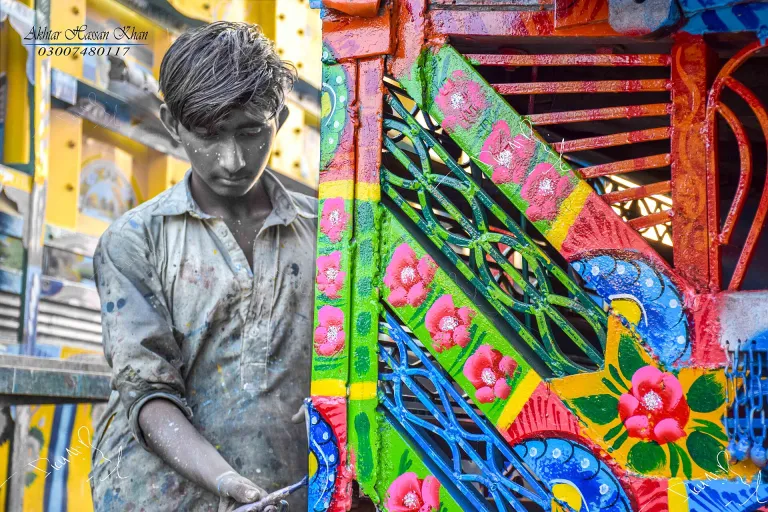
Drive any of Pakistan's highways, the N-5 along the Indus, the Karakoram Highway through the mountains, the coastal roads out of Karachi, and you will share the road with some of the most elaborately decorated working vehicles on earth. Pakistani goods trucks, buses and rickshaws are routinely covered from bumper to roof crest with painted landscapes, flowers, birds, portraits, calligraphy, mirror mosaics, hammered steel, reflective tape and carved wood. Chains and pendants hang from the front bumper, which is why foreign soldiers in neighbouring Afghanistan nicknamed them “jingle trucks”.
For the people who own and drive them, the decoration is not an indulgence. A truck may be a family's main asset and a driver's home for weeks at a time; spending heavily on its appearance is a matter of pride, piety, identity and reputation. The anthropologist Martin Sökefeld, writing in Himal Southasian, described a second economy of honour and aesthetics running alongside the economy of freight.
The craft grew out of the colonial period. Trucks imported in the 1920s, British Bedfords among the earliest, began to carry company logos on wooden panels, and as transport firms competed for business, the decoration became steadily more ambitious. Karachi, where General Motors began assembling trucks in the 1930s, became the hub, and the city's painters, especially masters such as Haji Hussain, helped define the style. Visitors in the 1960s and 1970s photographed the trucks, and the art slowly acquired an international reputation.
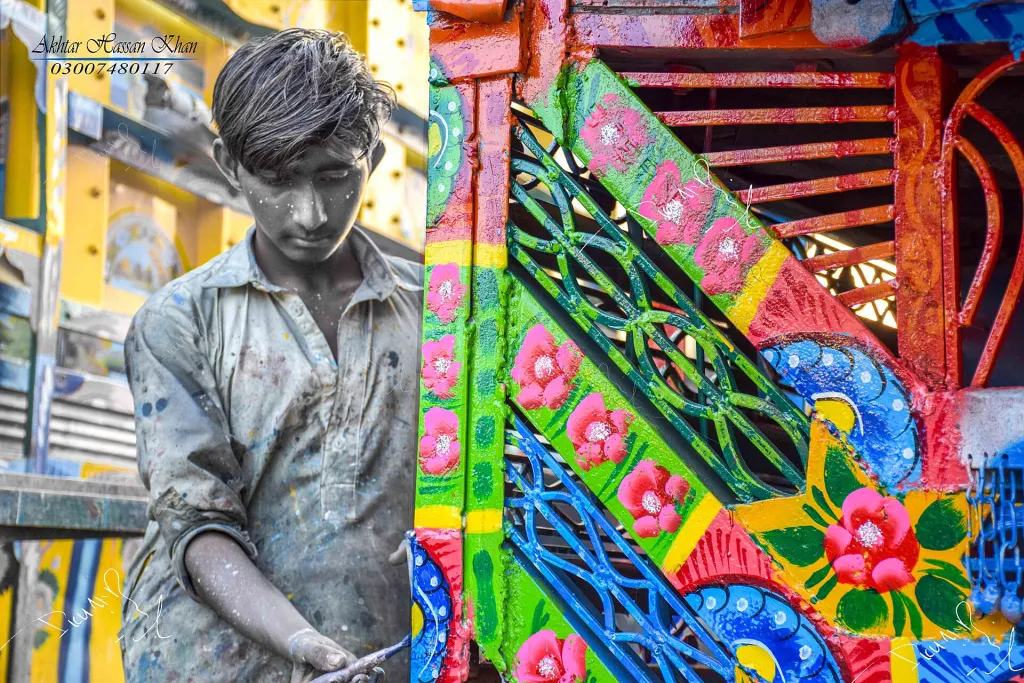
Today truck art lives in two worlds at once. On the road it remains a working tradition practised by teams of specialists in industrial yards. Off the road, its colours and motifs have moved onto kettles, furniture, fashion, shop signs, wedding décor and gallery walls, at home and abroad.