
Food & Drinks
Keema and Kebab: BuyingMixing and Cooking Mince
Distinguish raw mince from shaped uncooked kebabs and finished food, select the species and fat level, and cook the centre with confidence.
DailyLife.pk meat kitchen
Keema describes a preparation, not a species
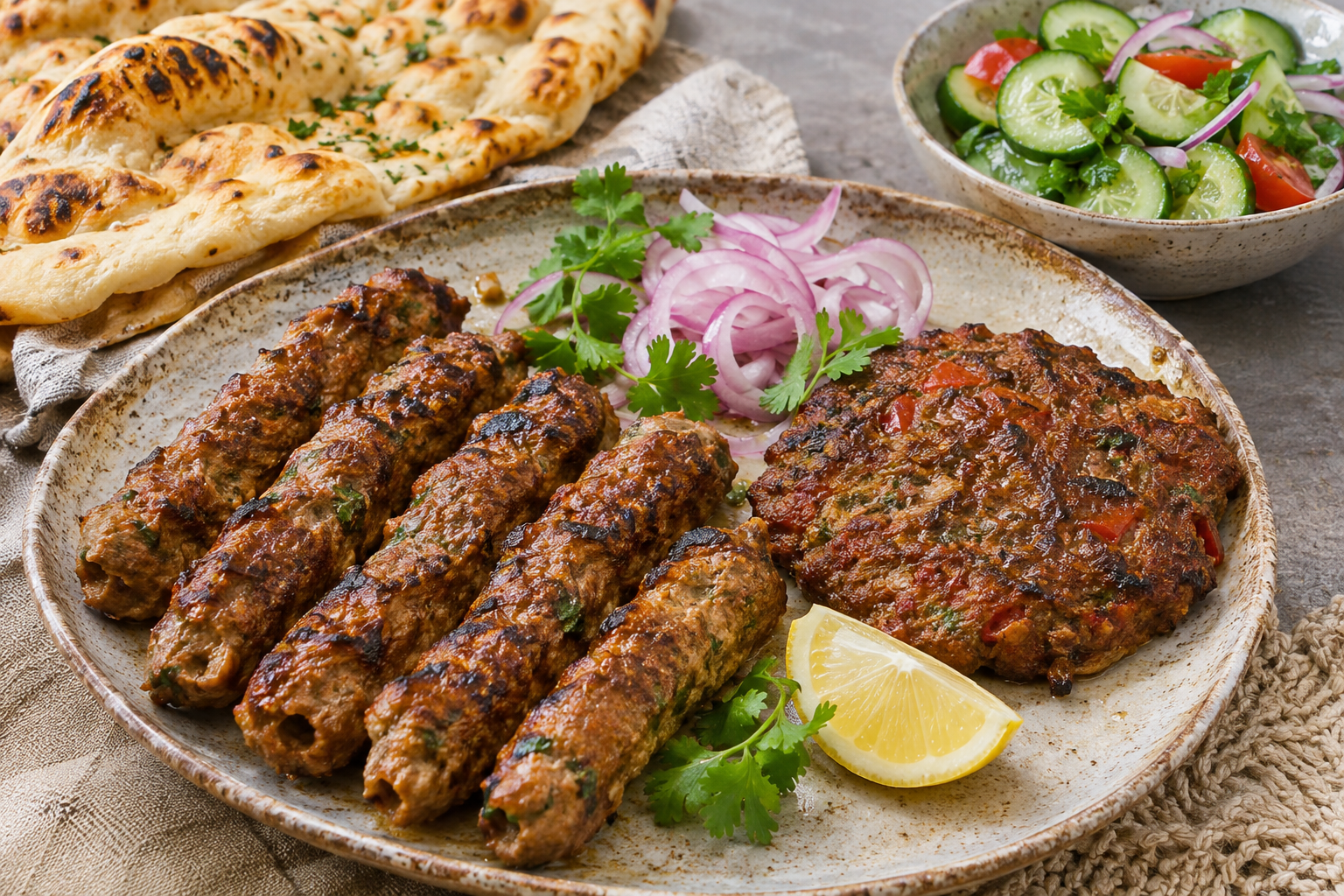
Keema means minced meat; it does not identify the animal, cut or fat content. Confirm beef, buffalo, goat, lamb or chicken before choosing a recipe. Specify whether fat is already included. Mince from a selected chilled piece gives you a clearer starting point than an unidentified mixture, but it still needs hygienic grinding and safe handling.
Ask for the grind that suits the dish. A coarse texture works differently from a fine paste in seekh or a gravy. A kebab can use minced, chopped or previously cooked ingredients depending on its style, so follow the actual recipe rather than treating every named kebab as interchangeable. Keep poultry mixtures on the poultry cooking pathway.
Reference: USDA ground-meat safety.
Choose quality and a manageable quantity
Look for clean equipment and chilled stock with clear product instructions. Watch for separation between raw meat and ready-to-eat food. Red colour alone cannot establish safety, and seasoning does not fix poor handling. If buying ready-seasoned kebabs, ask about the species, ingredients, allergens, preparation date, use-by instruction and whether the product is raw or fully cooked.
Take mince home cold, preferably in an insulated bag, and refrigerate promptly at 4°C or below. Buy what you can use or freeze within one to two refrigerator days, following any stricter label. Do not apply a steak's longer storage window to ground meat. For a crowd, split the order into planned meal portions before freezing.
Reference: FDA safe food handling.
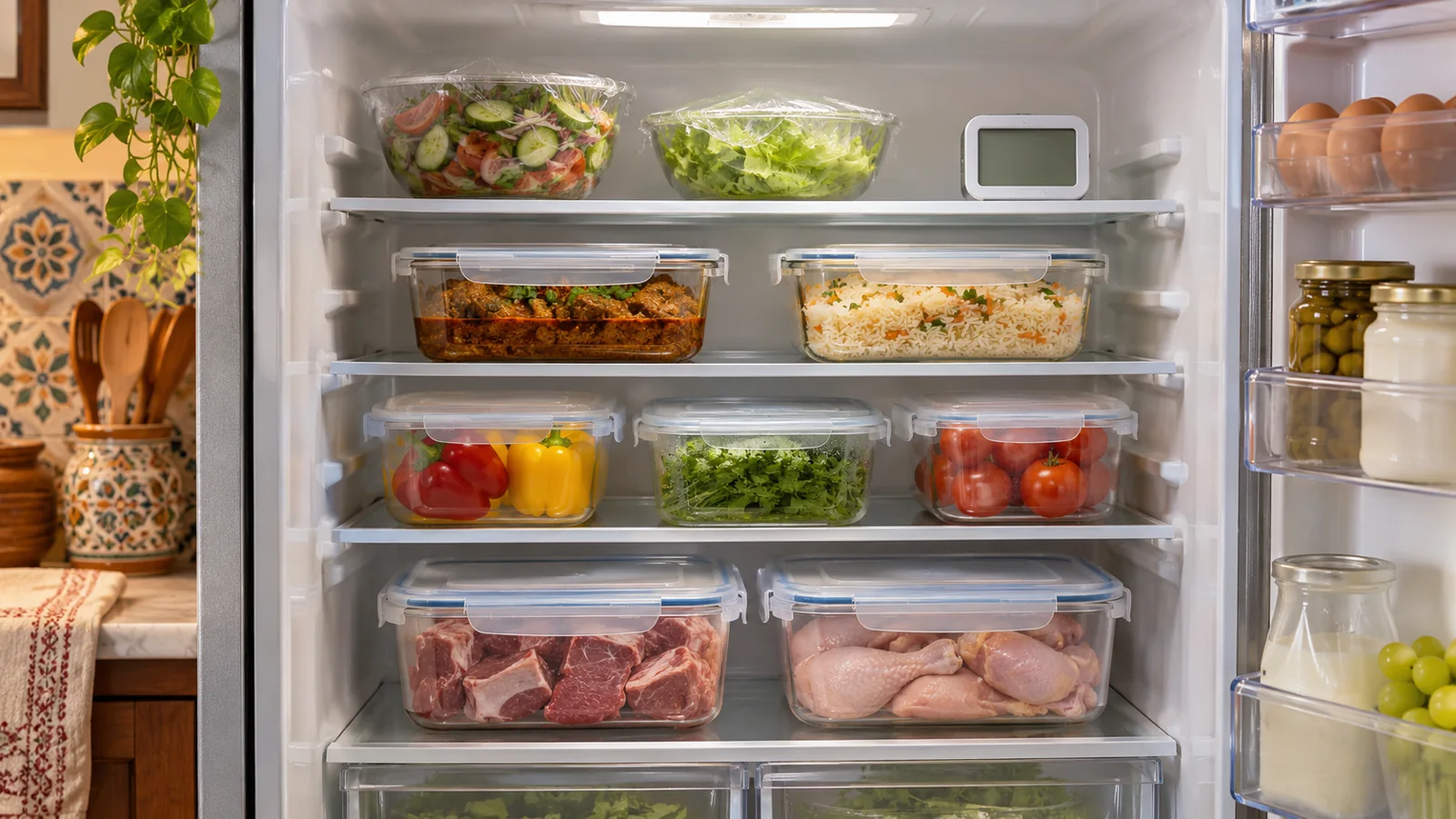
Storage reference: official cold food storage chart.
Match fat and moisture to the recipe
Very lean mince can make a dry kebab unless the recipe is designed for it. More fat may improve a particular texture but also changes saturated fat, dripping and shrinkage. Ask for a known mixture rather than having the seller add unmeasured fat. Account for oil, ghee and other rich ingredients already in the recipe.
Onion, herbs and binders change moisture and structure. Drain or squeeze ingredients only when the recipe calls for it, and weigh them so you can reproduce the result. An excessively wet mixture often needs ingredient control rather than handfuls of extra flour. Keep the mixture cold while making adjustments; do not leave it on the counter while searching for a cure.
Reference: USDA ground-meat safety.
Mix, test and shape consistently
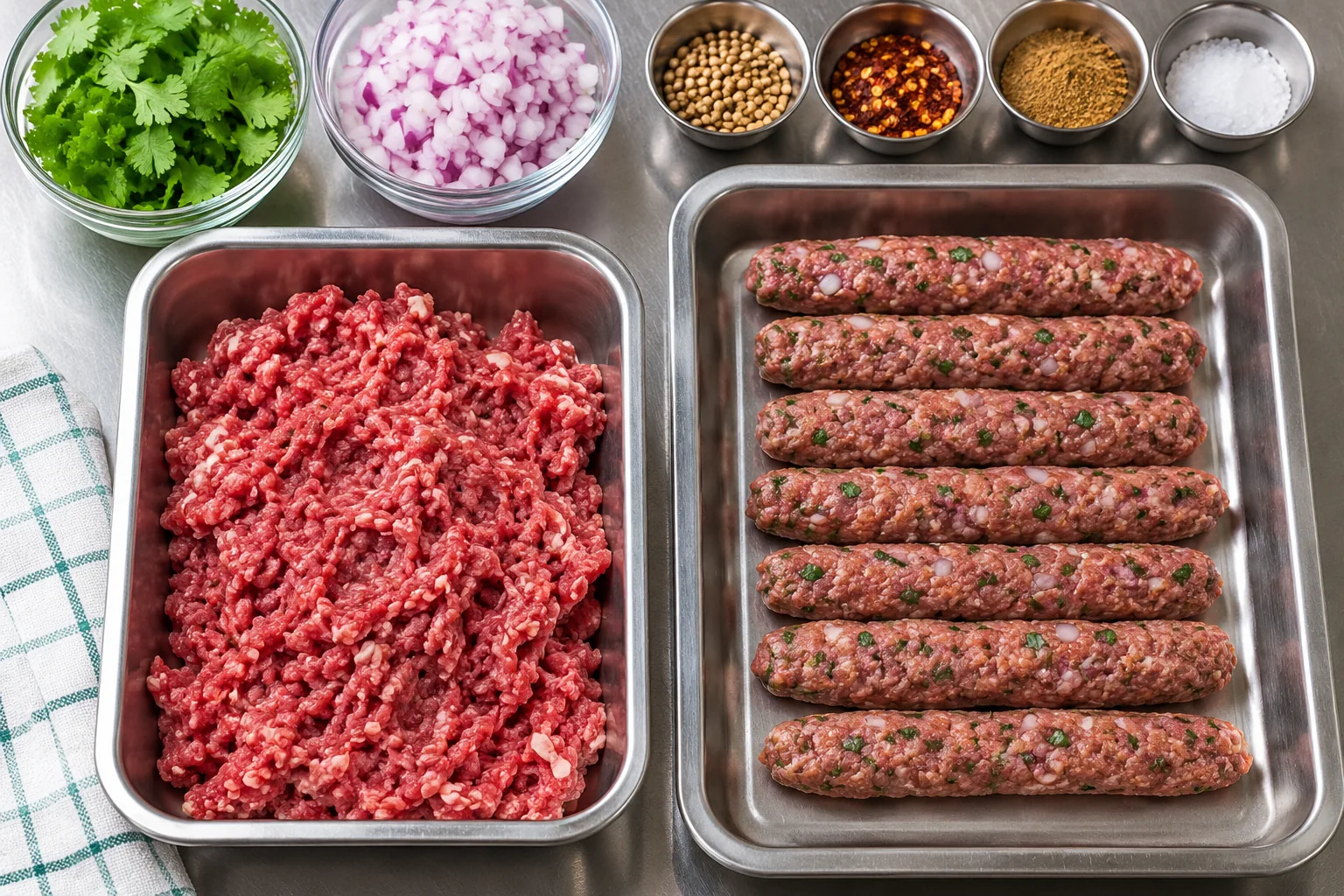
Mix according to the style of kebab, then cook a small test patty fully before shaping the whole batch. This checks seasoning and whether the mixture holds. Never taste raw mince. If the patty falls apart, revisit moisture, binding and handling in the recipe instead of endlessly adding water or fat.
Make kebabs similar in thickness so their centres finish at similar times. Shape only the next manageable batch while the rest remains refrigerated. Use a clean tray for the raw shaped kebabs, with a separate clean tray waiting for cooked food. A beautiful raw seekh is ready to cook, not ready to eat. Treat these stages distinctly: shaping a kebab does not make it ready to eat, and colour alone cannot establish doneness.
Reference: USDA ground-meat safety.
Cook keema in batches for better texture
For a dry-style keema, a crowded pan can trap moisture and make the mince steam. Work in batches when the recipe benefits from browning, then combine with the sauce and finish thoroughly. For a softer gravy, intentional moist cooking is appropriate. These are texture choices; both still need the correct internal temperature.
Break up large dense lumps so heat reaches their centres, but retain the texture the recipe intends. Add peas, vegetables or pulses according to a recipe with appropriate cooking and moisture control. Do not use an undercooked centre to keep a mixture juicy. Better control comes from the fat level, added ingredients, pan heat and stopping when safe cooking is reached.
Reference: FDA barbecue safety.
Measure kebabs in the centre
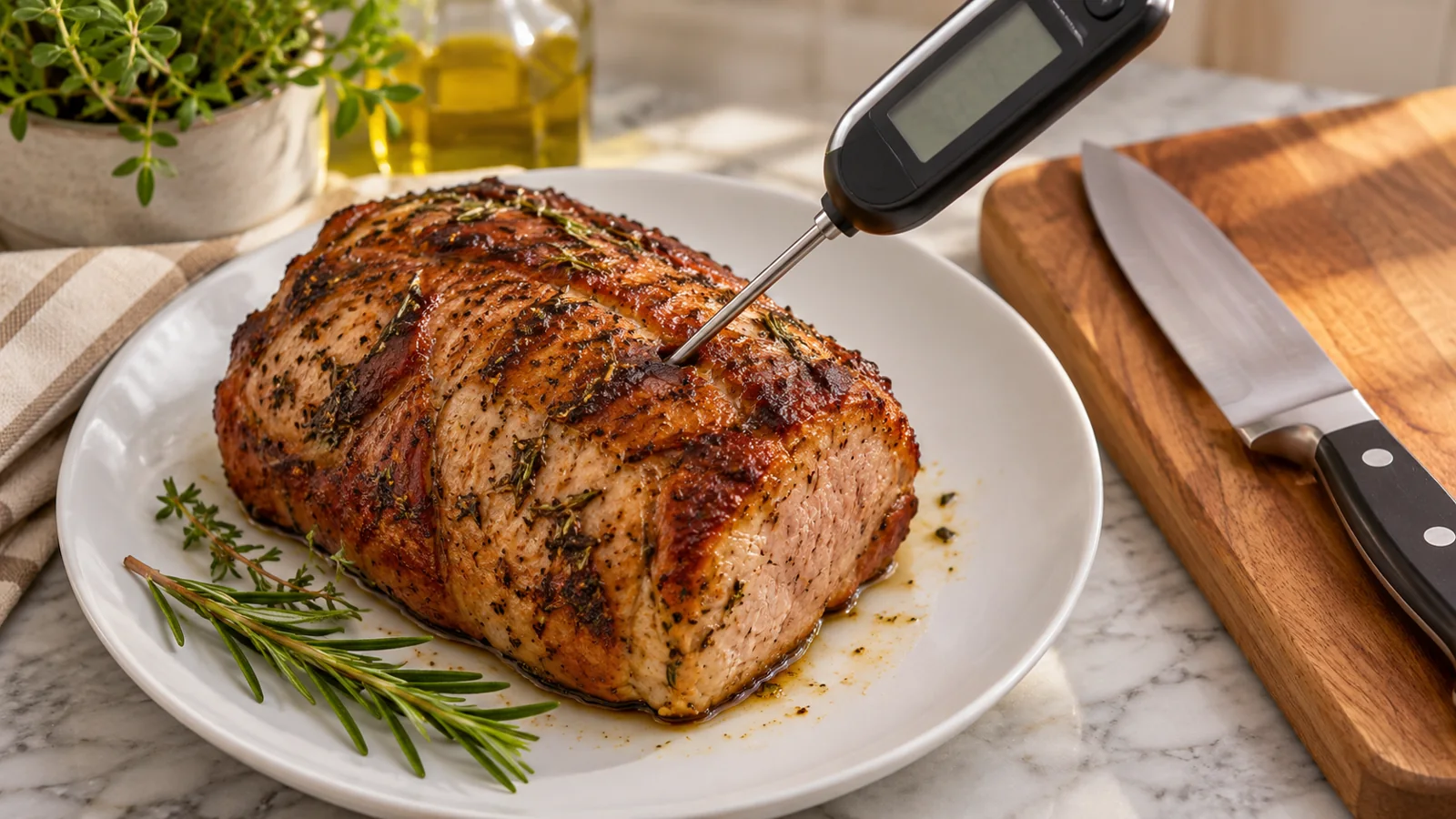
Grinding can distribute surface contamination throughout the mixture, so a surface sear is insufficient. Ground beef, goat and lamb need a measured 71°C; all poultry mince and mixtures containing poultry need 74°C. Use a probe thin enough for the kebab and insert sideways into a thin patty if needed. Avoid touching a hot skewer with the probe tip.
Check several pieces, particularly if shapes vary or the grill has hot spots. Pinkness and clear juices are unreliable guides, and a black crust can hide an undercooked centre. If the surface browns too fast, reduce the heat or move to a gentler zone and continue cooking. Clean the thermometer after contact with an undercooked mixture.
Reference: official minimum cooking temperatures.
Separate serving from raw preparation
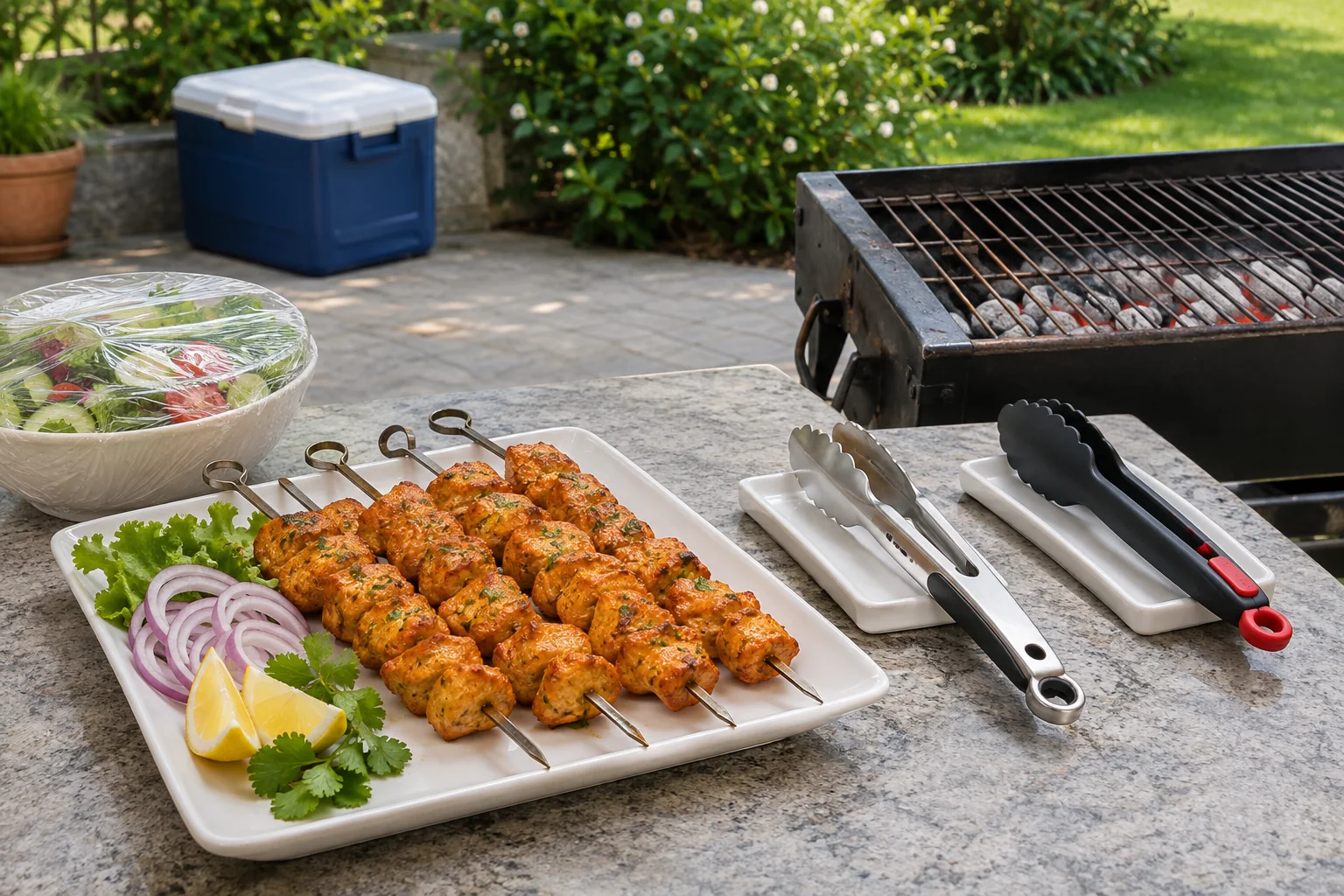
Wash hands after handling raw meat, packaging and utensils. Do not routinely wash raw mince or other meat: splashing creates contamination and mince is not made safe by rinsing. Prepare chutney, salad and bread with clean equipment away from the raw work area. Set out separate serving tongs rather than using the utensils that shaped or turned raw kebabs.
Keep the supply cold and cook small batches for a gathering. Refrigerate perishables within two hours, or within one hour above 32°C. Count preparation, transport and serving together. Chill cooked keema in shallow containers promptly and reheat leftovers to 74°C. Do not leave a large warm pot on the counter overnight or repeatedly warm the whole batch for small servings.
Reference: FDA safe food handling.
Storage reference: official cold food storage chart.
Use mince flexibly without making health promises
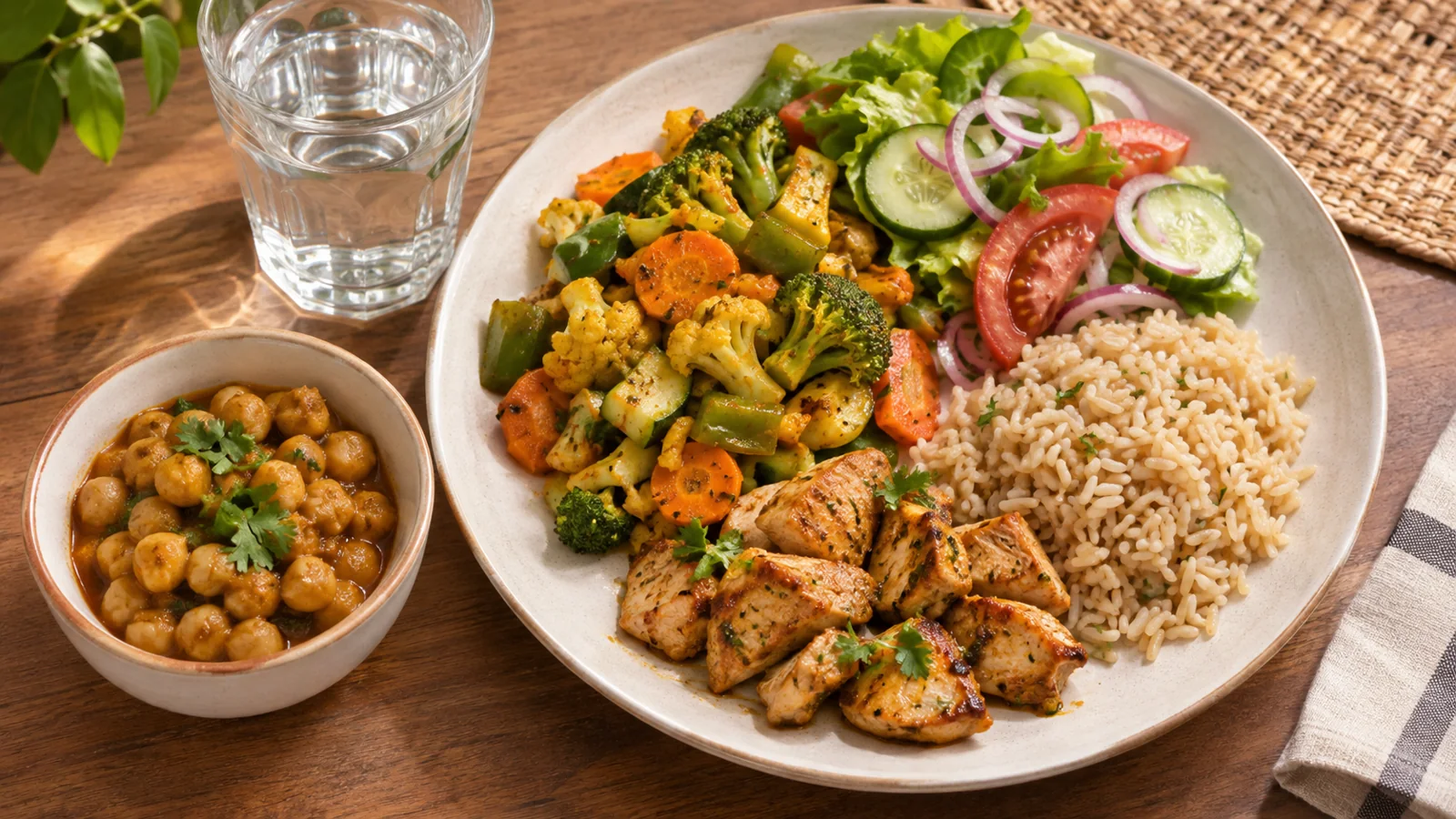
Keema can stretch into a balanced meal with peas, beans, lentils or vegetables and a moderate serving of roti or rice. Meat contributes protein and red meat supplies iron, zinc and B vitamins. The actual nutrition depends on the species, fat mixture and cooking additions. A product labelled homemade is not automatically lean, low-salt or safe.
Plain fresh mince is not automatically processed meat merely because it is ground. Preservation by curing, smoking or salting changes that discussion. Limit fatty and salty prepared kebabs and keep red meat moderate across the week. Avoid treating large kebab servings as a special strength food; vary protein sources and seek individual advice when a medical condition affects the diet.
Before shopping, check that the kitchen can support the plan: a working refrigerator thermometer, clean food-safe containers, a probe thermometer, enough separate utensils and room for prompt chilling. A recipe that fits a small pan may need several batches when doubled. More ingredients do not automatically need the same cooking time, and a larger pot is not proof that the centre heats or cools quickly enough.
For a family meal, decide which jobs can be completed with clean equipment before raw meat is opened. Prepare vegetables and accompaniments separately, then contain the raw work area. After handling raw food, wash hands with soap and clean the surfaces before touching ready-to-eat dishes. Keep the serving area organised so raw packaging and utensils cannot drift back into it.
At the table, offer portions people can finish and replenish from food held at a safe temperature. Keep a record of the quantity that was useful and the amount left over, particularly after a gathering. Planning improves the next meal, but it does not replace time and temperature controls. If a batch has an uncertain storage history, do not test it by tasting a spoonful. Choose an ingredient and process whose handling you can establish, and seek product-specific advice when the label or method is unclear.
Reference: NHS meat and nutrition guidance.
Related DailyLife guides: beef · lamb · chicken mince guides · minimum temperature guide · the portions and meal-planning guide · All meat types and cut guides · Complete buying, storage, temperature and Eid handling guide · recipe collection
Frequently Asked Questions
Is fresh keema the same as processed meat?
Grinding alone does not make ordinary fresh mince equivalent to preserved processed meat. Curing, smoking, salting for preservation and other processing can change its classification.
Why do kebabs break?
Moisture, grind, binding, fat and handling all matter. Follow a recipe suited to the species, cook a test patty and adjust the identified problem while keeping the mixture cold.
How we know this
- Type Explainer
- Sources 3 (3 official/academic)
- Reviewed November 2026
- Disputed points None
3 sources
- Refrigerator storage times for meat, USDA FSIS
- Safe minimum cooking temperatures, FoodSafety.gov
- Separate raw and cooked food during preparation, FDA
