
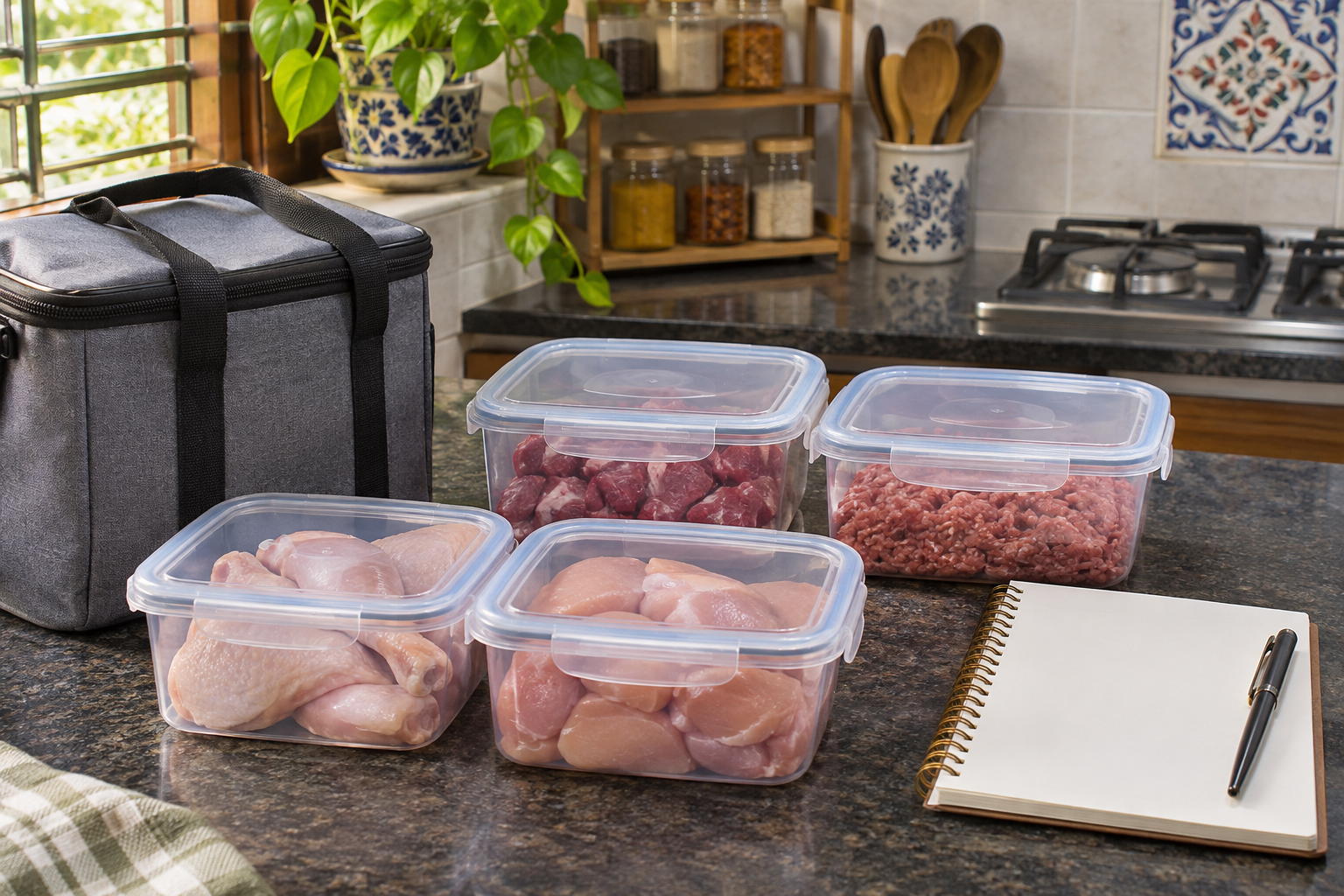
Food & Drinks
Meat Portions and Meal Planning in Pakistan
Separate buying weights from cooked portions, account for bones and shrinkage, and make practical meals with variety, cold storage and less waste.
DailyLife.pk meat kitchen
Decide what a portion means
A butcher's kilo, a recipe's raw weight and a dietary cooked portion describe different quantities. Bone, skin, trimming and cooking loss change the amount that reaches the plate. Write down whether your plan uses raw boneless meat, raw bone-in pieces or cooked edible meat. Do not compare them as if a gram of each gives the same serving.
For a gathering with substantial sides, 150–200 g raw boneless meat or 250–300 g raw bone-in meat per adult can be a useful starting shopping estimate. It is not a daily nutrition target. Adjust for appetites, children, bone-heavy cuts and the number of main dishes. A generous wedding-style menu and a simple family dinner require different amounts of each dish.
Reference: World Cancer Research Fund meat recommendations.
Build the plate before ordering
Decide the vegetables, pulses and starch as well as the meat. A moderate amount of keema can flavour peas or daal; a few cooked meat pieces can accompany rice and greens. Separate meat-free options help guests who prefer them and reduce the pressure to make every dish meat-based. Plan a meal that remains satisfying when meat is a component rather than the entire plate.
Count the number of meat dishes. If serving both tikka and curry, reduce the amount of each rather than buying a full main-course allowance twice. Set aside a small, sensible reserve if needed, preferably held cold until required. Do not cook and display every portion merely to make the table look abundant.
Reference: NHS meat and nutrition guidance.

Compare price by edible yield
Ask whether the quoted weight includes bone, skin and added fat and whether weighing happens before or after trimming. Include delivery charges and likely usable leftovers in the comparison. A cheaper mixed curry bag may contain uneven cuts and heavy bone; it can need more fuel and give fewer predictable servings than a clearly specified cut.
Use the animal and anatomical cut in the order, with the required piece size. Shank, shoulder, breast, chops and boneless boti have different yields and cooking needs. Bones can make stock when handled appropriately, but stock bones are not a replacement for a meat portion. Buying a large bag only saves money if you can chill, cook or freeze it effectively.
Reference: World Cancer Research Fund meat recommendations.
Plan variety through the week
Red meat provides protein, iron, zinc and B vitamins, but variety matters. Include pulses, beans, fish, eggs or poultry according to preferences and availability. The World Cancer Research Fund advises people who eat red meat to keep it to roughly 350–500 g cooked weight per week, with very little, if any, processed meat. This is an overall prevention recommendation, not a prescription for an individual patient's needs.
The NHS advises people regularly eating more than 90 g cooked red or processed meat daily to reduce to about 70 g. These are cooked edible weights; do not directly substitute them for raw buying estimates. A single large meat day affects the weekly pattern. Spread variety deliberately instead of assuming a large portion is necessary every day.
Reference: NHS meat and nutrition guidance.
Make fat and salt visible in the plan
Trim excessive visible fat where practical and ask about the fat level of mince. Measure cooking oil or ghee rather than pouring by habit. A lean cut can still become a very rich meal if the sauce is heavy with added fat. Conversely, a small amount of a rich ingredient may fit a varied menu better than an oversized serving.
Salt accumulates across spice mixes, stock cubes, pickle, chutney and cured meat. Check labels when available and avoid automatically adding the usual full quantity to a dish containing salted meat. Do not claim that traditional processing removes sodium or that spices cancel saturated fat. For hypertension, kidney disease or other dietary restrictions, use individual professional guidance.
Reference: NHS meat and nutrition guidance.
Pack meals before freezing
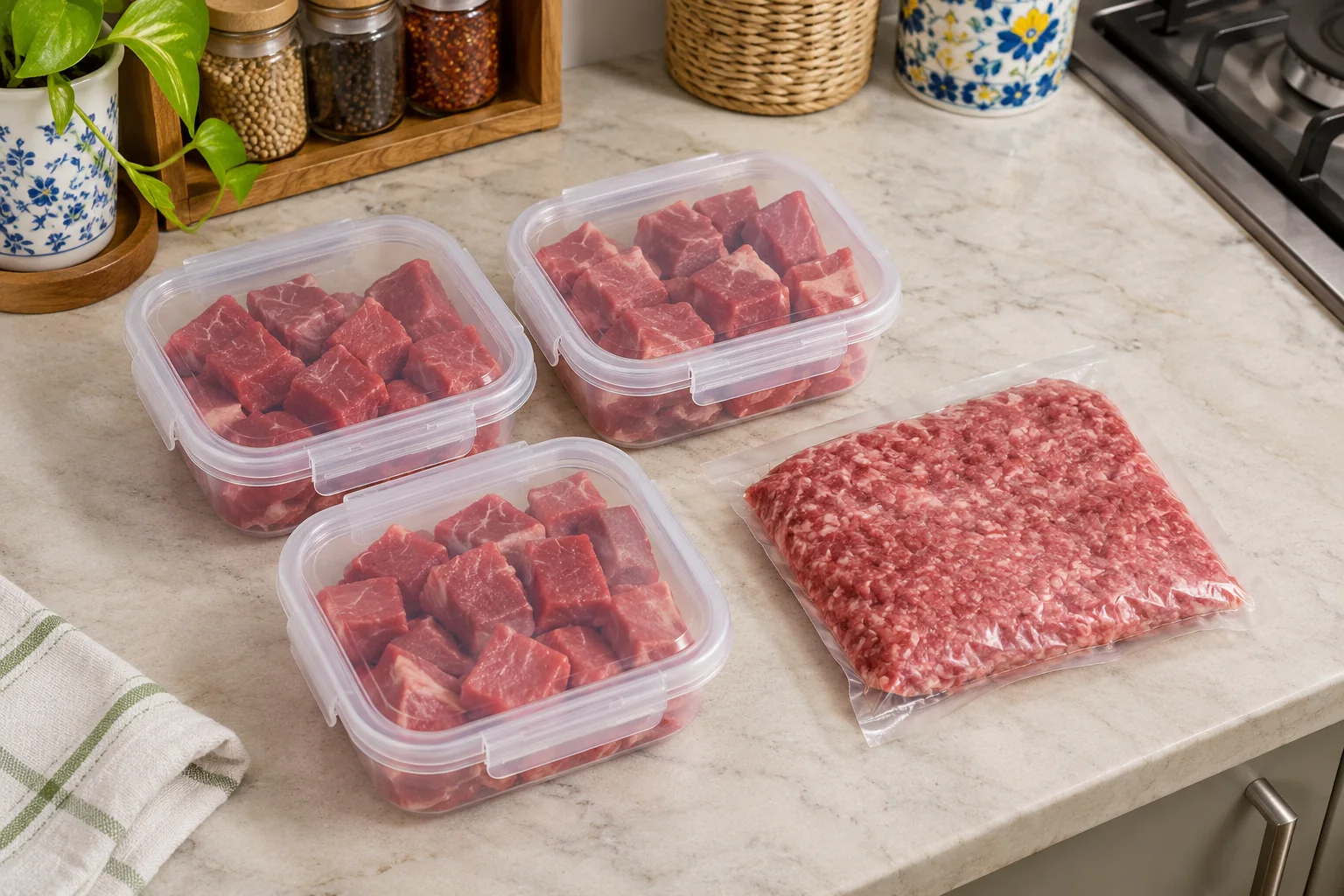
Divide raw meat into portions that match a planned recipe. Mark species, cut, raw weight and date; keep bone-in and boneless packs distinct. Flatten mince packages so they are easier to stack and thaw. Leave appropriate space and use packaging intended for freezing. Keep raw juices contained and store raw meat below ready-to-eat foods in the refrigerator.
Maintain refrigeration at 4°C or below and freezing at −18°C or below. Raw poultry, mince and offal generally need use or freezing within one to two refrigerator days; beef and lamb steaks, chops and roasts usually have three to five days, subject to stricter label instructions. A large purchase does not create a longer storage window. Freeze promptly while the food is still within its safe handling period.
Reference: FDA safe food handling.

Storage reference: official cold food storage chart.
Cook once with a clear leftover plan
Before cooking a large batch, decide which portion is for immediate service and which will be cooled. Divide cooked food into shallow containers and refrigerate promptly; do not wait for a deep pot to become cold on the counter. Refrigerate perishables within two hours, or within one hour when the surroundings exceed 32°C. Include preparation, travel and table time.
Promptly chilled cooked meat is generally used within three to four refrigerator days, unless product instructions are stricter. Reheat leftovers to 74°C throughout. Thaw frozen packs in the refrigerator; cold-water or microwave thawing methods require immediate cooking afterward. Take out only the portion needed. Repeatedly warming an entire pot for one plate makes the plan harder to control.
Reference: FDA safe food handling.
Storage reference: official cold food storage chart.
Review what was actually eaten
Keep a simple note after a family meal or gathering: number of guests, raw quantity, amount of bone, number of mains and leftover cooked portions. This is more useful than repeating a rule regardless of the menu. Note if a cut was especially bony or needed a long braise. Refine the next order from your own kitchen's yield.
During Eid, arrange recipients, shallow containers and insulated transport before distribution. Send species, date and storage instructions with portions. Do not leave warm bags waiting overnight or overload refrigeration beyond its ability to chill them promptly. Smaller well-managed portions reduce waste and help food reach recipients in a usable condition. Neither large portions nor special occasions suspend cold-chain requirements.
Before shopping, check that the kitchen can support the plan: a working refrigerator thermometer, clean food-safe containers, a probe thermometer, enough separate utensils and room for prompt chilling. A recipe that fits a small pan may need several batches when doubled. More ingredients do not automatically need the same cooking time, and a larger pot is not proof that the centre heats or cools quickly enough.
For a family meal, decide which jobs can be completed with clean equipment before raw meat is opened. Prepare vegetables and accompaniments separately, then contain the raw work area. After handling raw food, wash hands with soap and clean the surfaces before touching ready-to-eat dishes. Keep the serving area organised so raw packaging and utensils cannot drift back into it.
At the table, offer portions people can finish and replenish from food held at a safe temperature. Keep a record of the quantity that was useful and the amount left over, particularly after a gathering. Planning improves the next meal, but it does not replace time and temperature controls. If a batch has an uncertain storage history, do not test it by tasting a spoonful. Choose an ingredient and process whose handling you can establish, and seek product-specific advice when the label or method is unclear.
Reference: World Cancer Research Fund meat recommendations.
Related DailyLife guides: handling handbook · All meat types and cut guides · Complete buying, storage, temperature and Eid handling guide · recipe collection
Frequently Asked Questions
Is 200 g raw meat a daily health target?
No. Raw shopping estimates help plan a particular menu. Dietary guidance commonly uses cooked edible red-meat weight and depends on the overall weekly pattern and individual needs.
Should I count bones as meat portions?
No. Bone-in buying weight includes material that is not eaten as meat. Ask about yield and compare equivalent cuts or use your own kitchen records.
How we know this
- Type Explainer
- Sources 3 (3 official/academic)
- Reviewed November 2026
- Disputed points None
3 sources
- Refrigerator storage times for meat, USDA FSIS
- Cold storage chart, FoodSafety.gov
- Separation and safe storage, FDA
