
Cooking guide
PakoraySamosay, Puri: Frying Without Fear
Oil temperature, testing without a thermometer, frying pakoray, samosas and puris, what to do if a pan catches fire, and when to reuse or throw away oil.
- Most frying around 160–190°C
- Never use water on an oil fire
- Strain, store and reuse with care
Pakistan
Why Frying Deserves Respect
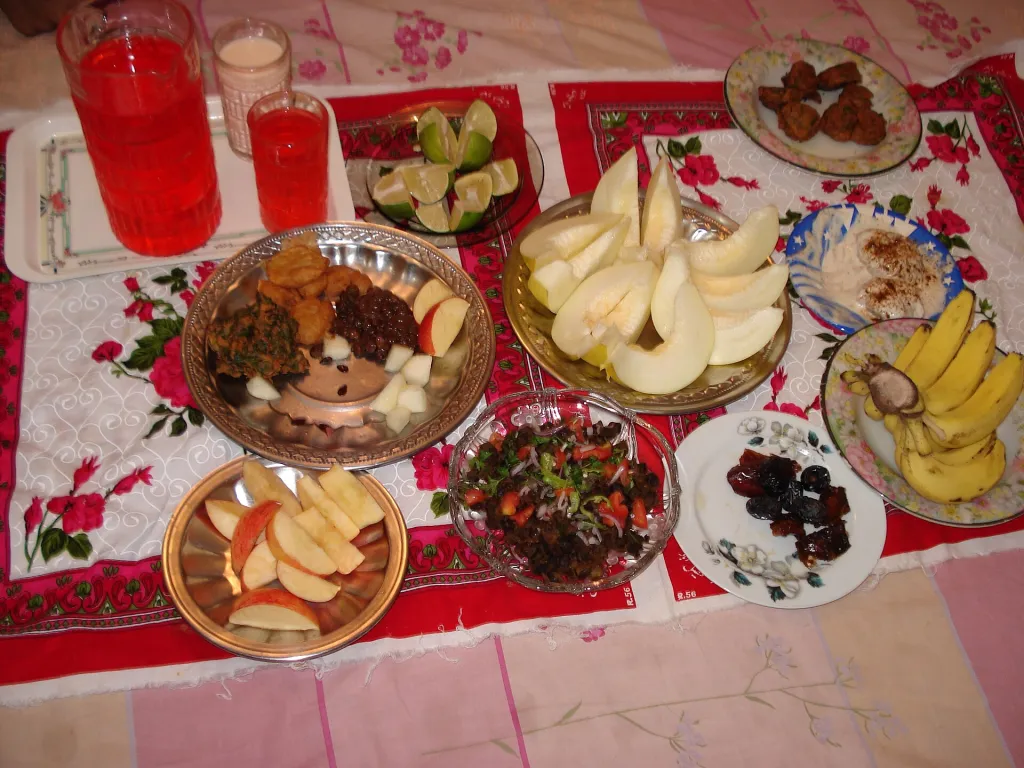
Pakistani kitchens fry a lot. Ramazan iftar means trays of pakoray and samosay; Sunday breakfast means puri with halwa and chana; winter brings fried fish and the evening snack is often something crisp from a karahi of hot oil. Done well, frying is fast and clean: food that is fried at the right temperature cooks through, crisps on the outside and absorbs surprisingly little oil. Done badly, it gives greasy, pale food or burnt outsides with raw middles.
It is also one of the riskier jobs in a home kitchen. The USDA notes that deep-frying oil can reach more than 200°C (400°F), and that water meeting very hot oil turns instantly to steam and can spray hot fat. The U.S. Fire Administration describes cooking as by far the leading cause of home fires and home-fire injuries in the United States, with unattended equipment the leading factor. The good news is that a few habits remove most of the danger.
Oil Temperature Guide
| Food | Rough oil temperature | Why |
|---|---|---|
| Samosa | Start lower, about 150–170°C | Gentler heat crisps the pastry evenly without blistering or leaving raw layers |
| Pakoray (vegetable) | About 170–180°C | Hot enough to set the besan batter and cook vegetables through |
| Fried fish | About 160–180°C (USDA lists 160°C / 320°F for fillets) | Moderate heat cooks the fish through before the coating darkens |
| Puri | About 180–190°C | High heat makes them puff instantly and stay light |
| Chicken pieces (e.g. chargha, broast) | About 175–190°C (USDA lists 190°C / 375°F for pieces) | Must cook through to a safe internal temperature (74°C / 165°F) |
| Jalebi | About 160–175°C | Batter needs to crisp without browning too fast |
USDA reference figures from its deep-fat frying guidance; other ranges are general kitchen practice. Larger, thicker or frozen items need lower heat and longer cooking.
Testing Oil Without a Thermometer
Not ready
Below about 150°C
A drop of batter or a pinch of dough sinks and stays at the bottom with few bubbles.
Medium
About 160–170°C
It sinks, then rises slowly with steady bubbles: right for samosas and thick items.
Hot
About 175–190°C
It rises to the top almost at once with lively bubbles: right for pakoray and puri.
Too hot
Smoking
The oil smokes or the test piece darkens in seconds. Turn the heat off and let it cool.
Frying Step by Step
- 1
Choose a deep, heavy pan
A karahi or deep pot, filled no more than about a third to half full, leaves room for the oil to bubble up when food goes in.
- 2
Use a suitable oil
Choose an oil with a high smoke point, such as canola, sunflower, corn or peanut oil; the USDA lists their approximate smoke points at about 210–230°C (410–450°F).
- 3
Dry the food
Pat fish and vegetables dry and let excess batter drip off. Water causes spitting.
- 4
Heat steadily and stay with it
Never leave a pan of oil on the heat unattended. If it starts to smoke, turn the heat off.
- 5
Lower food in gently, away from you
Slide it in from close to the surface with a slotted spoon. Don't drop it from a height.
- 6
Don't overcrowd
Too much food at once drops the temperature and makes it greasy. Fry in batches and let the oil reheat between them.
- 7
Drain and season
Lift out onto a rack or paper, and sprinkle chaat masala or salt while hot.
If the Oil Catches Fire
Never use water on an oil or grease fire; the USDA is explicit on this, because water flashes to steam in hot oil and throws burning fat. Instead:
- Turn off the heat if you can do so safely.
- Slide a metal lid or a baking sheet over the pan to smother the flames, and leave it covered until cool. The U.S. Fire Administration advises keeping a lid or baking sheet nearby whenever you cook.
- Do not try to carry the burning pan outside.
- If the fire is not out quickly, leave, close the door and call the emergency services (in Pakistan, see our emergency numbers guide).
Keep pan handles turned towards the back of the stove, and keep children and loose dupattas or sleeves away from the cooker.
Reusing and Disposing of Oil
- Let the oil cool completely before handling; the USDA suggests waiting about 2 hours after frying before cleaning a fryer.
- Strain it through a fine sieve or muslin cloth to remove crumbs and batter, which burn and spoil the oil.
- Store it in a sealed, light-proof container; the USDA says strained oil can be kept for up to 3 months, and refrigerated for best quality.
- Keep separate oil for fish, as it carries the flavour.
- Throw it away if it is dark and thick, cloudy, foams, smokes at normal frying heat, or smells or tastes off.
- Never pour oil down the sink. Put cooled oil in a sealable container and dispose of it with household rubbish, or recycle where a local scheme exists.
Frying Troubleshooting
| Problem | Likely cause | Fix |
|---|---|---|
| Greasy pakoray | Oil too cool, pan overcrowded, batter too thin | Heat oil until test batter rises quickly; fry in batches; thicken batter with a little besan. |
| Dark outside, raw inside | Oil too hot, pieces too thick | Lower the heat; cut vegetables thinner; fry samosas gently. |
| Samosa pastry blistered | Oil too hot, dough too soft | Start samosas in moderately hot oil and fry slowly; knead pastry stiffer with enough fat. |
| Puris won't puff | Oil not hot enough, uneven or torn rounds | Heat the oil more; roll evenly; press gently with a slotted spoon. |
| Oil spitting violently | Wet food or water drops in the oil | Dry food thoroughly; keep water and wet spoons away from the pan. |
| Oil foaming | Old or contaminated oil | Discard it and start with fresh oil. |
| Fried chicken pink near the bone | Oil too hot, pieces too large | Lower heat, fry longer, and check it reaches 74°C (165°F) with a thermometer. |
Fried Favourites
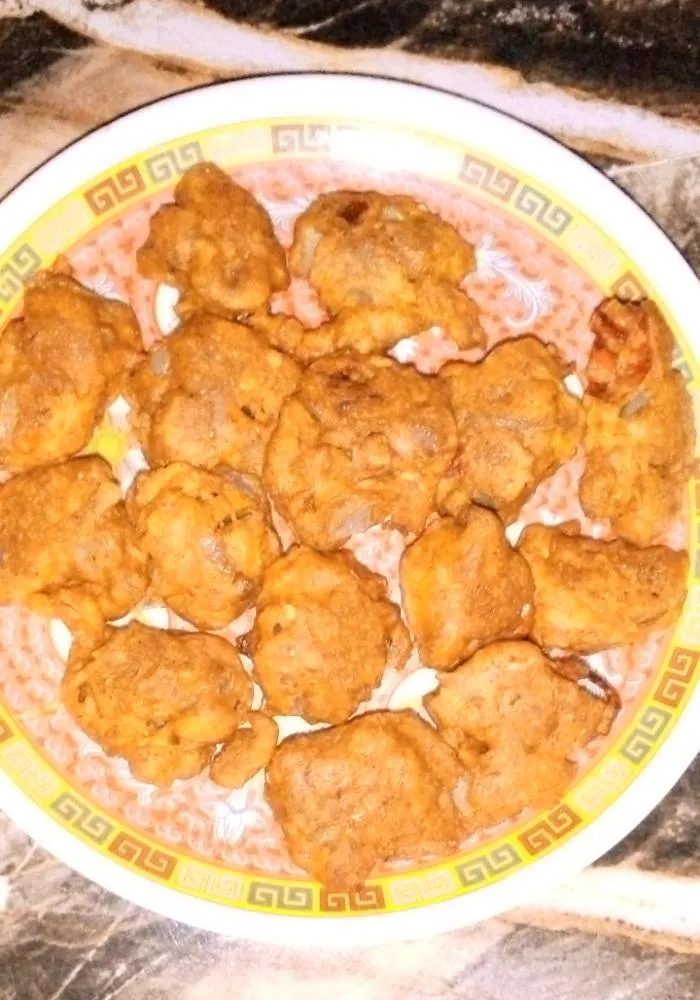
PakorayBesan-battered vegetable fritters for iftar and rainy days. Aloo SamosaPastry triangles fried slowly until crisp.
 Halwa Puri with ChanaPuffed puris for a Sunday breakfast.
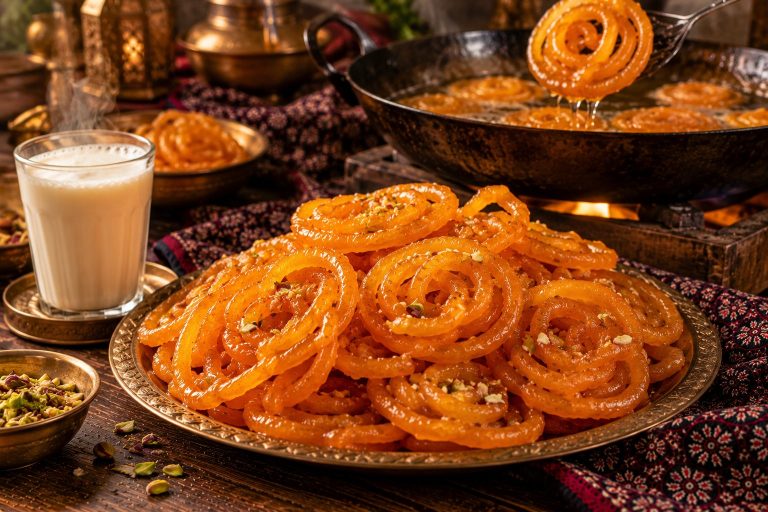 JalebiSpirals of batter fried and soaked in syrup.
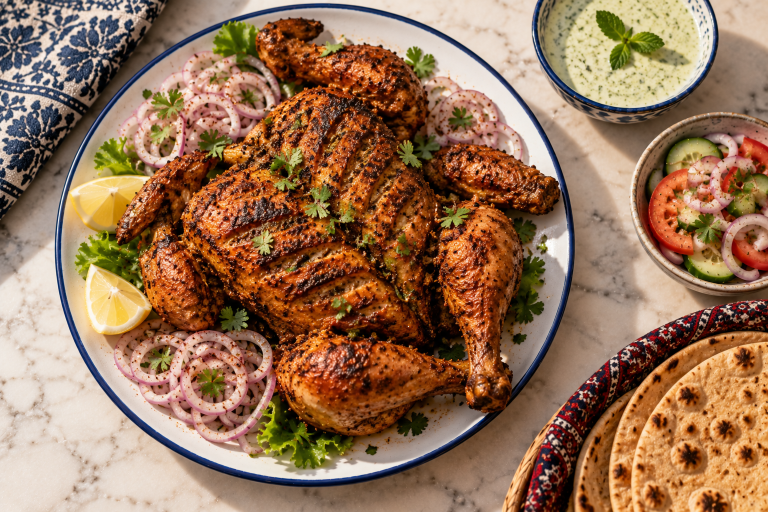 Lahori CharghaSteamed, then fried whole spiced chicken.
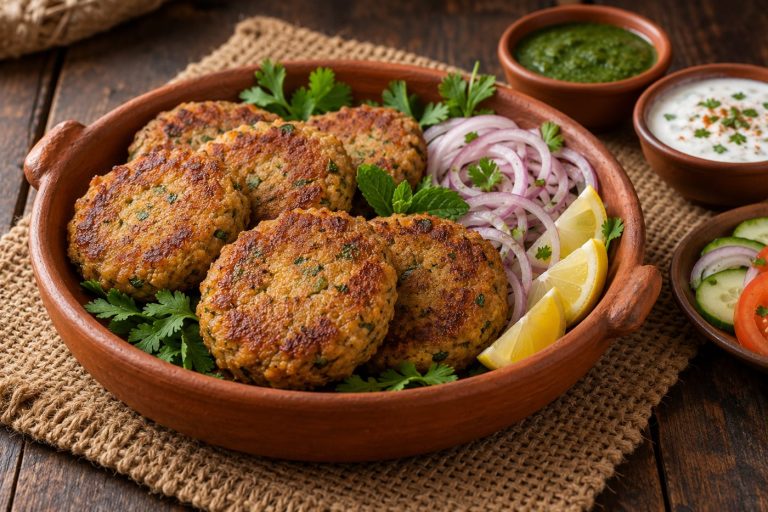 Chicken Shami KebabShallow-fried patties of meat and chana daal.
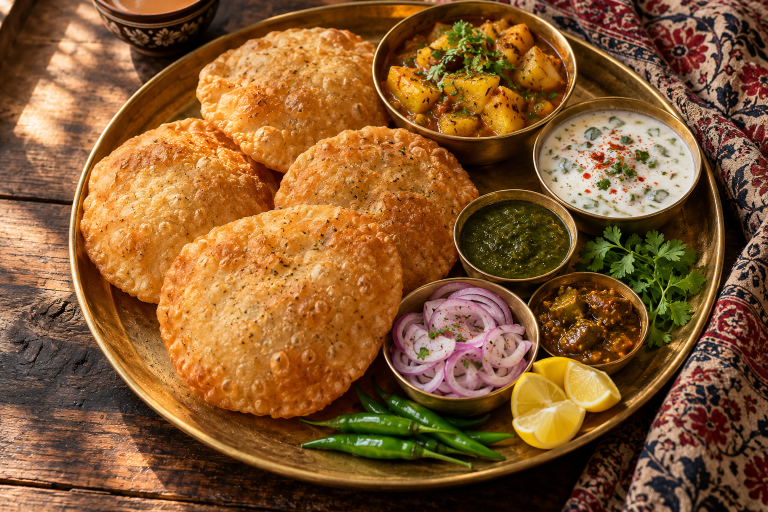 Kachori NashtaStuffed, fried breakfast breads.
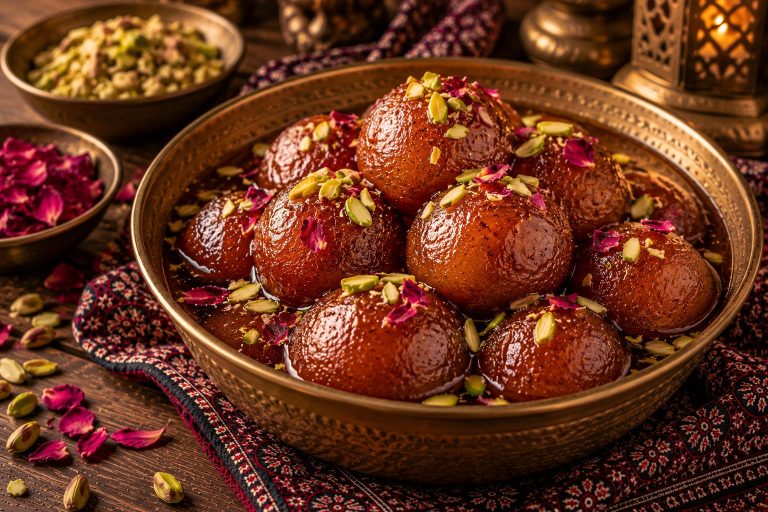 Gulab JamunMilk dumplings fried gently and soaked in syrup.
Frequently Asked Questions
What temperature should oil be for pakoray?
Roughly 170–180°C. Without a thermometer, drop in a little batter: it should sink briefly and then rise quickly with lively bubbles.
Which oil is best for deep-frying?
A neutral oil with a high smoke point, such as canola, sunflower, corn or peanut oil. Desi ghee is used for some puris and sweets but burns more easily if overheated.
How many times can I reuse frying oil?
There is no fixed number. Strain it after each use and store it sealed away from light; the USDA says it can be kept up to 3 months. Throw it away when it darkens, thickens, foams, smokes easily or smells off.
What should I do if my karahi of oil catches fire?
Turn off the heat, cover the pan with a metal lid or baking sheet and leave it covered. Never use water and never carry the pan. If it doesn't go out, leave and call the emergency services.
Why are my samosas bubbly?
The oil was too hot when they went in. Samosas fry best starting in moderately hot oil, so the pastry crisps slowly and evenly.
Keep Exploring
Related places and stories on DailyLife.pk
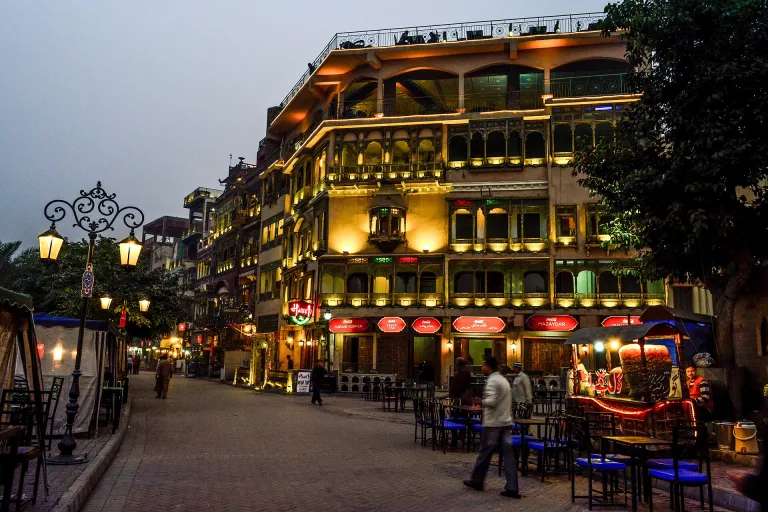 Pakistani Street FoodPakistani street food city by city: Lahore, Karachi, Peshawar, Quetta and Multan's signature dishes
 Emergency Numbers in PakistanPakistan emergency numbers explained: 15 police, 1122 rescue, 115 Edhi ambulance, 16 fire, 130 motorway police
 Dough for Roti, Paratha and PuriMake soft roti, flaky paratha and puffed puri: choosing atta, dough hydration, resting, rolling, tawa heat
 Storing, Freezing and Reheating Pakistani FoodStore, freeze and reheat Pakistani food safely: fridge and freezer times from UK and US food-safety…
 Karachi Street FoodKarachi street food guide: Burns Road nihari and rabri, bun kebab, haleem, biryani, chaat
 Punjabi CuisinePunjabi food guide: saag and makai roti, halwa puri, paye, Lahori fried fish, sohan halwa, lassi
How we know this
- Type Explainer
- Sources 4 (3 official/academic)
- Reviewed October 2026
- Disputed points None
4 sources
- Deep Fat Frying and Food Safety, USDA Food Safety and Inspection Service
- Cooking fire safety, U.S. Fire Administration (FEMA)
- Cooking safety, National Fire Protection Association (NFPA)
- Safe Minimum Internal Temperatures, FoodSafety.gov (U.S. Department of Health and Human Services)
Photo credits (7)
- Halwa Puri, a traditional food made in Walled City of Lahore.jpg, Tahsin Shah, CC BY-SA 4.0, via Wikimedia Commons
- Iftari.JPG, Miansari66, Public domain, via Wikimedia Commons
- Pakora plate.jpg, JogiAsad, CC BY-SA 4.0, via Wikimedia Commons
- Gulab Jamun (illustration), DailyLife.pk, Illustrative image
- Jalebi (illustration), DailyLife.pk, Illustrative image
- Aloo Samosa (illustration), DailyLife.pk, Illustrative image
- Chicken Shami Kebab (illustration), DailyLife.pk, Illustrative image
