Kachori Nashta
کچوری ناشتہ
Stovetop moong-dal kachoris with a crisp filled shell
A Pakistani breakfast of crisp, gently fried kachori with a dry, spiced yellow moong dal filling. Serve with separately prepared potato or chickpea curry. This record covers kachori itself, not a full halwa-chana platter.

The approximately 225-minute estimate includes the 2-hour moong-dal soak. The 20-minute covered dough rest can overlap cooling the filling. Fry in small batches at the stated temperature; larger servings need more batches, while individual kachoris should stay a similar size. One tablespoon = 15 ml; one teaspoon = 5 ml.
About Kachori Nashta
A Pakistani breakfast of crisp, gently fried kachori with a dry, spiced yellow moong dal filling. Serve with separately prepared potato or chickpea curry. This record covers kachori itself, not a full halwa-chana platter.
Personally cooked and tested by Zohair Fakhar for DailyLife.pk. Cooking times can vary with your stove, cookware and batch size; follow the texture and doneness cues in the method.
Make it work for your kitchen
Also known as Daal Kachori, Moong Dal Kachori Breakfast.
Original quantities serve 4. Cooking times, pan size and frying-oil depth do not scale, cook in extra batches instead.
Before you start
Before you start
Rinse the dry split yellow moong dal, soak in plenty of water for 2 hours, then drain. Measure the filling and dough ingredients separately, including their separate salt and fat amounts. Set out a rack over a tray for the fried kachoris. Keep the dough water separate from the fresh water used to cook the dal.
Set up the equipment
Have the following tools ready before starting: Covered saucepan, strainer and fork; Heavy pan for filling; Mixing bowl, scale and rolling pin; Deep heavy frying pan, frying thermometer and slotted spoon; Cooling rack over tray.
Clean workspaceMeasure the ingredients
Measure the ingredient quantities for your selected servings before applying heat. Keep separately listed groups, such as dough, filling, sauce or garnish, in separate containers; keep any optional additions separate.
Use the ingredient list aboveCheck allergens and substitutions
Check ingredient labels and any substitutions against these notes: Wheat/gluten; dairy if ghee used; check asafoetida or premixed spices if substituted
Before cooking
Step-by-step cooking method
1 Cook moong dal until tender
Put the drained soaked dal in a saucepan with the water for cooking dal. Simmer partly covered for about 15–20 minutes, until the grains are tender. Drain thoroughly and crush coarsely with a fork.
2 Prepare a crumbly filling
Warm the neutral oil for filling over medium-low heat. Add the cumin seeds, crushed fennel seeds and crushed coriander seeds for about 30 seconds, then stir in the finely grated ginger and finely chopped green chilli for about 1 minute.
3 Prepare a crumbly filling (continued)
Stir in the red chilli powder, turmeric powder, fine salt for filling and gram flour for about 2 minutes. Fold in the drained dal and chopped fresh coriander, then continue stirring over low heat until the filling is crumbly with no wet patches. Cook the flour mixture thoroughly and let the filling cool before stuffing.
4 Knead and rest pastry
Combine the maida, whole-wheat atta, fine salt for dough and carom seeds. Rub in the ghee or neutral oil for dough until the mixture looks sandy. Add the water for dough gradually, stopping when it forms a firm cohesive dough. Cover and rest for 20 minutes while the filling cools, keeping the surface from drying out.
5 Fill and seal the kachoris
Divide the dough and cooled filling into two equal portions per selected person. Flatten each dough portion into a 10–11 cm circle with a slightly thicker middle. Add one filling portion, gather the edges, pinch firmly closed and flatten gently to about 8 cm without tearing. Keep the shaped pieces covered.
6 Bring oil to a controlled frying temperature
Pour sufficient oil into a deep heavy pan for kachoris to float freely without crowding, never above the safe fill level. Heat gradually to approximately 150–160°C and verify with thermometer; keep a lid nearby for fire safety but do not cover during frying.
7 Fry in small batches
Slide in two or three kachoris at a time without crowding. Maintain about 150–160°C and turn occasionally for 8–11 minutes per batch, until evenly golden and crisp with no raw dough at the seam. Let the oil return to temperature between batches and repeat with all the shaped pieces; larger selected servings need more batches.
8 Drain and serve
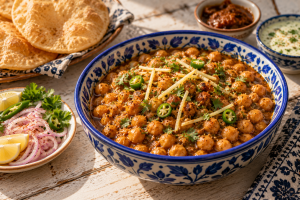
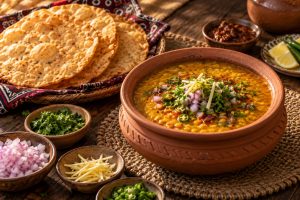
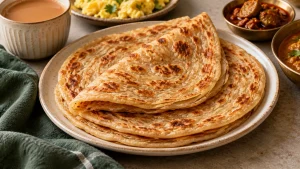
Transfer each cooked batch to the rack and let it drain for about 3 minutes. Serve two medium kachoris per person with any separately prepared aloo bhujia or chickpeas alongside.
Chef’s tips
- Filling must be cool and dry before enclosing.
- A tested thermometer is more reliable than a flour-drop oil test.
- Let oil return to temperature between batches and use enough headspace.
Common mistakes & quick fixes
- Burst seams
- Pinch all folds tightly; keep filling away from sealing edges.
- Dark but doughy shells
- Lower the heat and fry longer; avoid excessively hot oil.
- Soggy bottoms
- Drain on a rack rather than stacking on paper while steaming.
Variations & serving ideas
Breakfast platter: Serve with existing chickpea or potato curry; link and nutrition remain separate.
Whole-wheat leaning: Increase atta only after testing liquid absorption; do not assume same dough.
Chilli control: Omit green chilli and reduce powdered chilli for mild version.
Perfect result check
| Check | The shell is golden and crisp with no gummy raw dough at the seam; the filling is hot and crumbly. |
|---|---|
| Check | Two medium kachoris per selected person, with dough and filling portioned evenly. |
Storage & reheating
| Fridge | Cool leftovers promptly in shallow containers and refrigerate within 2 hours, or within 1 hour above 32°C. | |
|---|---|---|
| Fridge | 3–4 days | Keep this moist lentil-filled pastry covered at 4°C or colder and use within 3–4 days. The shell is crispest when freshly fried. |
| Reheating | Reheat the portion you need in an oven until the filling and centre reach 74°C (165°F), checking more than the outside crust. |
Know when to change the heat
| Stage | Heat | What to look for |
|---|---|---|
| Cook moong dal until tender | Medium then low heat | The dal should crush easily with a fork and drain without a puddle of cooking liquid. |
| Prepare a crumbly filling | Medium-low heat | The filling should become crumbly without wet patches; keep the heat low enough that the spices and flour do not scorch. |
| Knead and rest pastry | No heat | The dough should hold together firmly and smoothly without cracking or sticking; cover it during the rest. |
| Fill and seal the kachoris | No heat | A firm closed seam and an even layer of dough should surround the cooled filling without tearing. |
| Bring oil to a controlled frying temperature | Medium-low heat | Check the oil with a frying thermometer and leave ample headroom; do not cover the pan while frying. |
| Fry in small batches | Medium-low heat | Kachoris should colour slowly and evenly; reduce the heat if the shell darkens before the seam is cooked. |
| Drain and serve | No heat | Let excess oil drain on the rack, then serve while the shell is crisp and the filling hot. |
Helpful answers before you cook
Can I use a pressure cooker for these kachoris?
No. A sealed pressure cooker must never be used for deep-frying.
Why should the filling cool before stuffing?
A cool, crumbly filling is easier to portion and seal. Hot or wet filling softens the pastry and can make it tear; reduce excess moisture in the pan, then let it cool before shaping.
How many kachoris does this make?
Make two medium kachoris per selected person. The original four-person batch makes eight; when changing servings, keep the individual pieces a similar size so the cooking cues remain useful.
What if the filling is too wet?
Drain the cooked dal thoroughly and stir the filling over low heat until no wet patches remain. Let it cool before judging its final texture. Avoid stuffing wet filling into the dough or adding uncooked flour as a last-minute patch.