
History
The Partition of 1947: Independence and Upheaval
In August 1947 British India was divided into India and Pakistan. Independence came with one of the largest migrations in history and violence that touched millions of families.
- 14–15 August 1947
- Punjab and Bengal divided
- Over 10–15 million displaced (estimates)
- Remembered through oral history
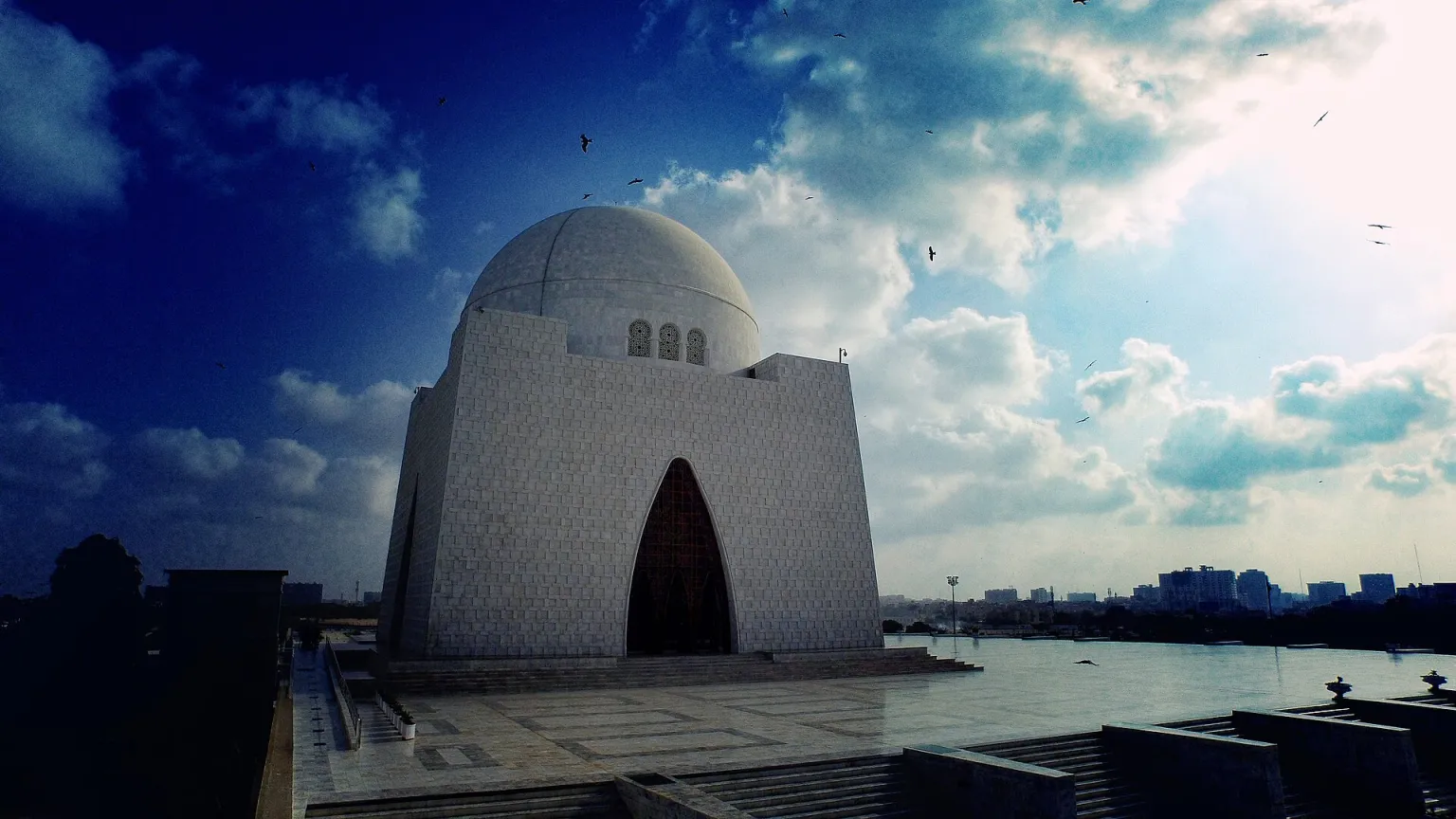
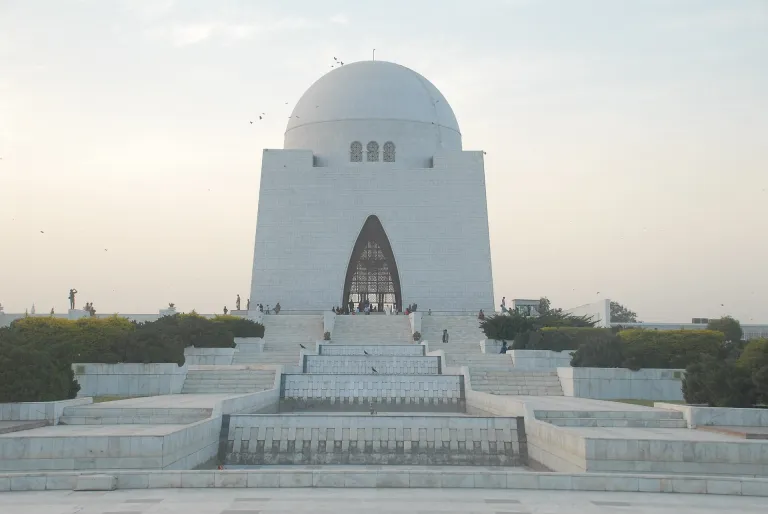
Mazar-e-Quaid, Karachi
On 14 and 15 August 1947, nearly two centuries of British rule in South Asia ended and two independent states took its place: Pakistan, made up of a western wing (today's Pakistan) and an eastern wing (today's Bangladesh), and India. The two provinces with roughly balanced Muslim and non-Muslim populations, Punjab and Bengal, were themselves cut in two.
For Pakistanis, August 1947 is the moment a long political struggle achieved its goal. It was also a human catastrophe. As the new borders became known, Muslims moved west and east into Pakistan, while Hindus and Sikhs moved into India. The migration was accompanied by massacres, abductions and sexual violence committed by members of all communities, especially in Punjab. Almost every family with roots in the divided provinces has a story of loss.
This page sets out what happened, the range of figures historians use, and how Partition is remembered, aiming to respect all who suffered.
How Partition Unfolded
1946
Negotiations fail
The British Cabinet Mission fails to win agreement between Congress and the Muslim League on a united India. Communal violence escalates, beginning with the killings in Calcutta in August and spreading to Bihar, Noakhali and elsewhere.
February 1947
A deadline for withdrawal
Britain announces it will leave India by June 1948 and sends Lord Mountbatten as the last Viceroy to oversee the transfer of power.
March 1947
Violence in Punjab
Riots and massacres break out in Rawalpindi district and other parts of Punjab, foreshadowing what was to come.
3 June 1947
The Partition Plan
Mountbatten, with Nehru and Jinnah, announces that power will pass to two dominions, a year earlier than previously planned.
July 1947
Referendums and legislation
Referendums in the North-West Frontier Province and Sylhet district decide those areas join Pakistan. The Indian Independence Act receives Royal Assent on 18 July.
14–15 August 1947
Independence
Pakistan becomes independent on 14 August and India on 15 August. The exact boundaries are not yet public.
17 August 1947
The Radcliffe Award
The boundary lines for Punjab and Bengal, drawn by commissions chaired by Sir Cyril Radcliffe, are published.
August–November 1947
Mass migration and massacres
Millions cross the new border on foot, by bullock cart and on overcrowded trains. Refugee columns and trains are attacked on both sides.
October 1947–January 1949
War over Kashmir
The accession of Jammu and Kashmir is contested; the first India–Pakistan war ends with a UN-brokered ceasefire, and the territory remains disputed.
Drawing the Line
The provinces of British India were not neatly divided by religion. In Punjab and Bengal, Muslims, Hindus and Sikhs lived intermingled in villages and cities, and religious sites, canals, railways and farmland crossed any possible line. Two boundary commissions, each with two judges nominated by Congress and two by the League, and both chaired by the British lawyer Sir Cyril Radcliffe, were given only a matter of weeks to divide them. They were instructed to follow contiguous Muslim-majority and non-Muslim-majority areas while taking ‘other factors’ into account.
The award was deliberately published on 17 August, two days after independence. Disputed decisions, such as the allocation of parts of Gurdaspur district in Punjab, or of the Chittagong Hill Tracts in Bengal, are still debated. Because neither side knew the final line in advance, many people stayed put until it was too late to leave safely, and others moved in the wrong direction.
The Sikh community was especially affected: its homeland in central Punjab was split, with sacred sites such as Nankana Sahib, the birthplace of Guru Nanak, falling in Pakistan.
Displacement. Estimates of the number of people who crossed the new borders range from more than 10 million to more than 15 million; The National Archives (UK) describes over 15 million people as thought to have migrated in the months around August 1947. It was one of the largest mass migrations of the 20th century.
Deaths. No reliable count was possible at the time, and figures remain contested. Some contemporary official estimates were in the low hundreds of thousands; later historians commonly cite totals of around one million or more, and some up to two million. William Dalrymple, for example, writes of between one and two million dead. Encyclopaedic summaries note that conservative estimates exceed one million while scholars continue to disagree.
Women. Women and girls were targeted in particular. Tens of thousands were abducted, assaulted or killed, EBSCO's reference summary gives a figure of more than 70,000, and some families killed their own women to prevent capture. After 1947, India and Pakistan ran programmes to recover abducted women, often against the women's own wishes, a painful chapter explored by later feminist historians.
Violence was committed by members of every community and suffered by every community. Muslims, Hindus and Sikhs were all victims, and also, in different places, perpetrators. Historians emphasise the role of armed groups, the collapse of local policing and the speed of the British withdrawal.
Images and Records
Photographs from 1947 that help tell the story.
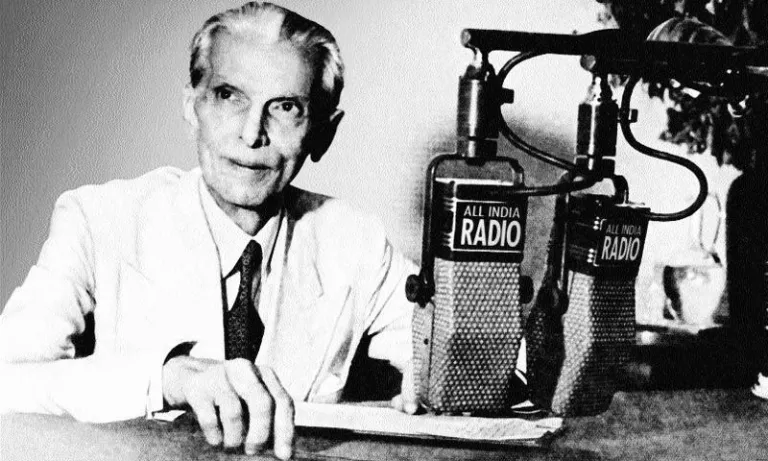 The 3 June broadcastJinnah addressing listeners on All India Radio after the plan for two dominions was made public.
Evidence and Interpretation
Well documented: the sequence of political decisions, the dates of independence and of the boundary award, the scale of migration and the existence of widespread, organised violence in Punjab and elsewhere.
Contested: the exact numbers of dead and displaced; how far the violence was planned or spontaneous; responsibility for the breakdown of negotiations, which Pakistani, Indian and British accounts often apportion differently; and whether a slower or different transfer of power could have saved lives. Readers will find the most balanced picture by consulting historians from all three countries and the growing archive of survivors' testimony.
Memory, Literature and Legacy
For decades Partition was remembered mainly in families and in literature. Writers on both sides of the border gave it lasting form: Saadat Hasan Manto's short stories, including ‘Toba Tek Singh’; Amrita Pritam's Punjabi poem addressed to Waris Shah; Bapsi Sidhwa's novel Ice Candy Man, set in Lahore; and the work of Intizar Husain, among many others. Faiz Ahmed Faiz's poem ‘Subh-e-Azadi’ (‘The Dawn of Freedom’) captured the ambivalence many felt about a freedom stained by bloodshed.
Since the 2000s, oral history projects have recorded thousands of survivors' testimonies before that generation passes. In Pakistan, 14 August is celebrated as Independence Day, while the memory of migration remains central to the identity of many families, particularly in Punjab and Karachi.
Partition's political legacy endures too: the dispute over Kashmir, the long relationship between India and Pakistan, and, in 1971, the separation of East Pakistan as Bangladesh, itself shaped by the geography created in 1947.

Frequently Asked Questions
When did Partition happen?
Pakistan became independent on 14 August 1947 and India on 15 August 1947. The boundary lines dividing Punjab and Bengal were published on 17 August 1947.
How many people were displaced by Partition?
Estimates range from more than 10 million to more than 15 million people. The National Archives (UK) states that over 15 million are thought to have migrated across the new borders.
How many people died?
The number is uncertain and contested. Some official estimates at the time were in the low hundreds of thousands; many historians today cite around one million or more, and some up to two million.
What was the Radcliffe Line?
The boundary drawn through Punjab and Bengal by two commissions chaired by Sir Cyril Radcliffe. The Punjab section is now part of the India–Pakistan border; the Bengal section is the India–Bangladesh border.
Why did Partition lead to the Kashmir dispute?
The princely states were expected to join India or Pakistan. Jammu and Kashmir, a Muslim-majority state with a Hindu ruler, acceded to India in October 1947 amid conflict; Pakistan disputes the accession, and the territory has remained disputed ever since.
How is Partition remembered in Pakistan today?
Mainly through family memory, literature and oral history. Independence Day on 14 August celebrates the founding of Pakistan, while many families, especially in Punjab and Karachi, preserve stories of the journey across the border, the homes left behind and relatives lost. Survivor testimonies recorded by oral history projects since the 2000s are an important resource for anyone researching their family's past.
Were people of all religions affected by the violence?
Yes. Muslims, Hindus and Sikhs were all victims of killings, abductions and expulsions, and members of each community also committed violence in different places. Historians stress that the suffering was shared across communities and borders.
Keep Exploring
Related places and stories on DailyLife.pk
 LahoreLahore travel guide: Badshahi Mosque, Lahore Fort, Shalimar Gardens, the Walled City, food streets, neighbourhoods, metro
 KarachiKarachi travel guide: Mazar-e-Quaid, Mohatta Palace, Clifton, Burns Road, bazaars, neighbourhoods, Green Line BRT
 RawalpindiRawalpindi guide: Raja Bazaar, Saddar, the Army Museum, history from the Gakhars to 1959, food
 The Pakistan MovementThe Pakistan Movement explained: Sir Syed and Aligarh, the Muslim League (1906), Iqbal's 1930 address
 History of Pakistan since 1947Pakistan's history since 1947: Jinnah and Liaquat, constitutions of 1956, 1962 and 1973, the wars
 Poetry and Literature of PakistanPakistan's poetry and literature: Bhittai, Bulleh Shah, Rahman Baba, Khushal Khan Khattak, Ghalib's legacy, Iqbal, Faiz
How we know this
- Type Historical & cultural research
- Sources 7 (2 official/academic)
- Reviewed October 2026
- Disputed points Yes, see the debates
7 sources
- Partition of British India (education resource), The National Archives (UK)
- Partition of India (Research Starters), EBSCO
- The Great Divide (William Dalrymple, review of Nisid Hajari's Midnight's Furies, The New Yorker, 2015): excerpt, 3 Quarks Daily
- Pakistan: History, Encyclopaedia Britannica
- Mohammed Ali Jinnah, Encyclopaedia Britannica
- Indian Independence Act 1947: cross-reference, Wikipedia
- Radcliffe Line: cross-reference, Wikipedia
Photo credits (4)
- Mazar-e-Quaid Karachi.jpg, Furqanlw, CC BY-SA 4.0, via Wikimedia Commons
- Jinnah announces the creation of Pakistan over All India Radio.jpg, Unknown authorUnknown author, Public domain, via Wikimedia Commons
- Mausoleum of the Quaid-e-Azam Muhammad Ali Jinnah medium View.JPG, MunawarAhmed7, CC BY-SA 4.0, via Wikimedia Commons
- Minar-e-Pakistan with waving national flags.JPG, Susmanhamza, CC BY-SA 3.0, via Wikimedia Commons
