
History · Event
Discovery of Mohenjo-daro: Uncovering an Indus City
In the early 1920s archaeologists digging beneath a Buddhist stupa mound in Sindh found a 4,500-year-old planned city, and with it a whole forgotten civilization.
- Excavated from 1922
- Larkana District, Sindh
- UNESCO World Heritage Site (1980)
Mohenjo-daro, Larkana District, Sindh
- When
- 1922–1931 (announced 20 September 1924)
- Where
- Mohenjo-daro, Sindh, Harappa, Larkana
- Certainty
- Well established
What Happened
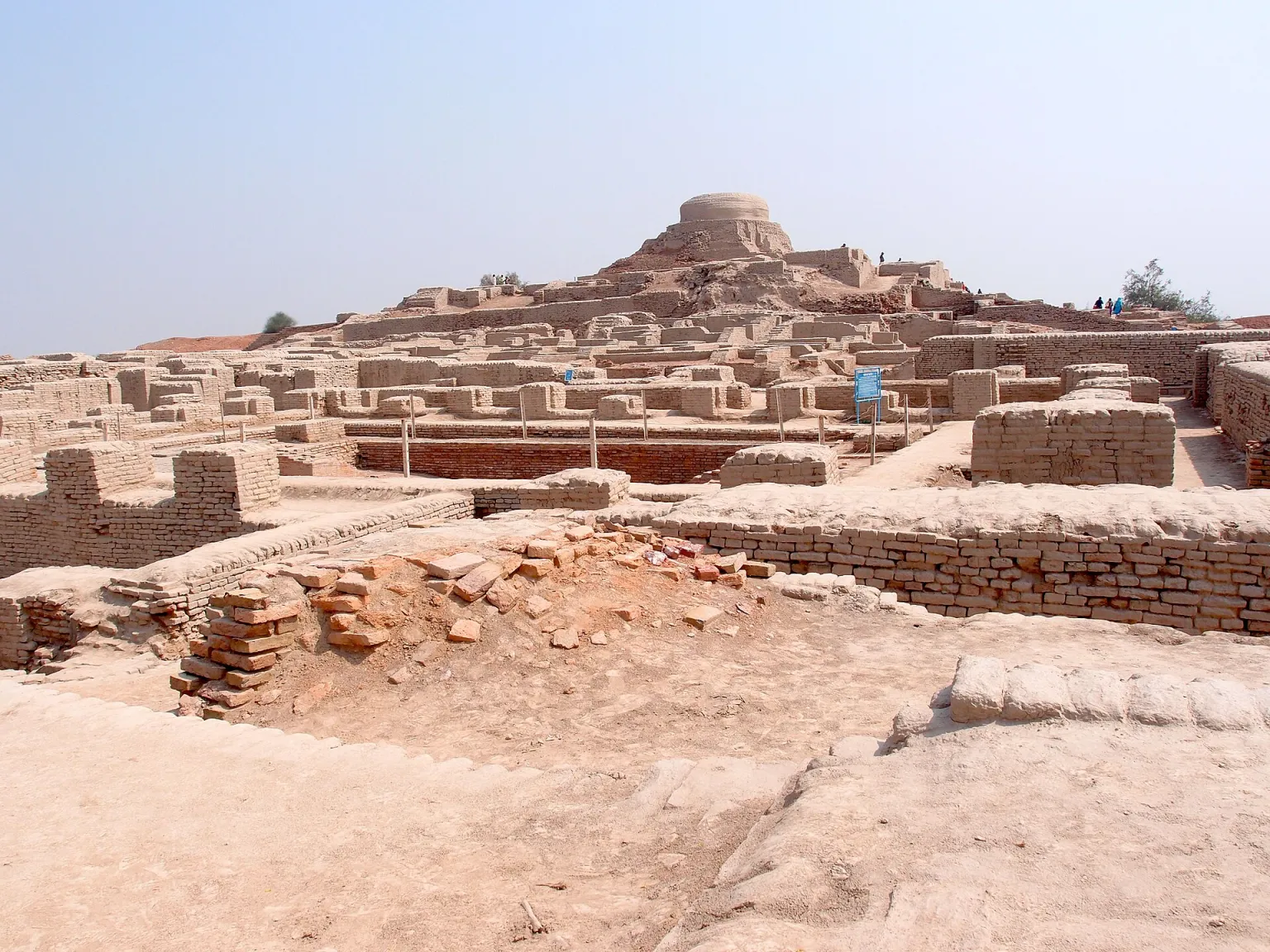
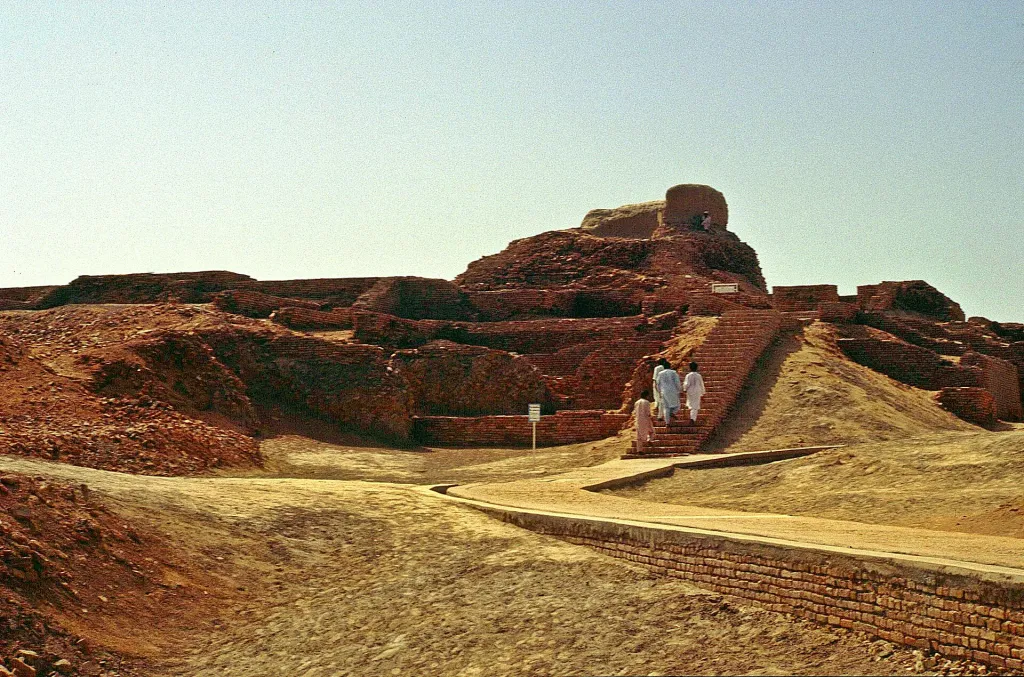
On the right bank of the Indus, about 28 km from Larkana, a high mound crowned by a ruined Buddhist stupa had long stood above the plain. In the early 1920s officers of the Archaeological Survey of India began to dig there. Beneath the stupa, which dates from around the 2nd century CE, they found something far older: streets laid out at right angles, brick houses with wells and drains, and a great public bath.
R. D. Banerji, who first visited the site in 1919–20, began the excavations, and the work was continued under the Survey's Director-General, Sir John Marshall, with K. N. Dikshit, Ernest Mackay and others. When Marshall compared the finds with those from Harappa in Punjab, he realised both belonged to one previously unknown civilization. On 20 September 1924 he announced the discovery in the Illustrated London News, writing that it pushed back the date of the earliest known civilization in the subcontinent by centuries, a figure later revised to millennia.
Mohenjo-daro turned out to be one of the largest cities of the Indus Civilization, built around 2500 BCE. It is now the best-known archaeological site in Sindh and became South Asia's first UNESCO World Heritage Site in 1980.
Background
Before the 1920s, scholars traced the history of the region back to Alexander's campaigns and the Buddhist kingdoms of Gandhara.
Mohenjo-daro was first investigated because of its later Buddhist stupa. Excavations at Harappa under Daya Ram Sahni were going on at the same time. It was the comparison of seals, pottery and brick sizes from the two sites, some 640 km apart, that showed they belonged to the same culture.
Timeline of Discovery
c. 2500 BCE
City founded
A planned city of baked brick rises beside the Indus; it is one of the great centres of the Indus Civilization.
c. 1700 BCE
Abandonment
Mohenjo-daro, like other large Indus cities, is gradually abandoned. Archaeologists still debate the causes, including river shifts and floods.
2nd century CE
Buddhist stupa
A Buddhist stupa and monastery are built on the highest mound, the citadel area, the ruin that later attracts archaeologists.
1919–1920
Banerji's visit
R. D. Banerji of the Archaeological Survey of India visits and finds a flint scraper that convinces him of the site's antiquity.
1922
Excavations begin
Digging starts around the stupa mound; Bronze Age levels with Indus-type seals are found beneath it.
20 September 1924
Announcement
John Marshall announces the discovery of a new civilization at Harappa and Mohenjo-daro in the Illustrated London News.
1924–1931
Large-scale excavation
Seasons led by Marshall, Dikshit and Mackay uncover the Great Bath, the lower town and thousands of objects; Marshall publishes the official report in 1931 and Mackay a further report in 1937.
1950
Wheeler's excavations
Sir Mortimer Wheeler excavates on the citadel mound, by then in Pakistan, and identifies the so-called Great Granary.
1964–1965
Last major excavation
George Dales of the Penn Museum leads the last major dig, studying flood deposits. Large excavations then stop to protect the exposed brickwork.
1980
World Heritage
UNESCO inscribes the Archaeological Ruins at Moenjodaro on the World Heritage List.
Why It Mattered
- It revealed the Indus Civilization, previously unknown, and pushed the known history of the region back by thousands of years.
- It showed that the land that is now Pakistan had planned cities with drainage and standard weights in the 3rd millennium BCE.
- It made Mohenjo-daro the centrepiece of Pakistan's archaeological heritage and, in 1980, South Asia's first World Heritage Site.
- Exposing the brickwork created a long conservation challenge: UNESCO notes salt damage from a rising water table and flood risk.
- Because only about a third of the site has been excavated, much of the city is still unexplored.
How We Know
The main primary sources are the excavation reports themselves, John Marshall's Mohenjo-daro and the Indus Civilization (1931), covering 1922–27, and Ernest Mackay's Further Excavations at Mohenjo-daro (1937), covering 1927–31, together with Marshall's 1924 announcement in the Illustrated London News. Later scientific work, such as George Dales's 1964–65 season published by the Penn Museum, refined the dates and the history of flooding. UNESCO's World Heritage documentation records the site's extent and conservation problems.
Sources differ on small details: UNESCO's summary gives 1922 as the year of discovery, while other accounts start with Banerji's 1919–20 visit. Population estimates (often 'at least 40,000') are rough and debated.
Questions and Debates
Who discovered it? Credit has long been debated. Marshall's announcement made the find famous, but many historians stress that R. D. Banerji first recognised the site's age and dug there. Most modern accounts name both.
Why was it abandoned? Early writers suggested invasion. Excavators such as George Dales argued from flood deposits and skeletal evidence that there was no massacre, and that river changes and repeated flooding were more important. The question is still open.
Before and After
Where this moment sits in Pakistan’s story.
Before
- 1919–1924
The Khilafat Movement
Led by the Ali brothers, Indian Muslims campaign to protect the Ottoman caliphate, allied with Gandhi's non-cooperation movement. In 1920 around 18,000 peasants migrate to Afghanistan in the Hijrat. The movement collapses when the caliphate is abolished in 1924.
- 1921–1922
Rediscovery
Excavations at Harappa (1921) and Mohenjo-daro (1922) reveal that both belong to the same forgotten civilization.
After
- 1922
Knighthood
Knighted by the British Crown, hence ‘Sir Muhammad Iqbal’ in documents of the period.
Frequently Asked Questions
When was Mohenjo-daro discovered?
Excavations began in 1922, after R. D. Banerji of the Archaeological Survey of India visited the site in 1919–20. John Marshall announced the discovery of the Indus Civilization on 20 September 1924.
Who discovered Mohenjo-daro?
R. D. Banerji is usually credited with first recognising and excavating the Bronze Age city; Sir John Marshall directed the wider excavations and announced the discovery.
How old is Mohenjo-daro?
The city was built around 2500 BCE, in the 3rd millennium BCE, and was abandoned around 1700 BCE.
Is Mohenjo-daro a UNESCO World Heritage Site?
Yes. The Archaeological Ruins at Moenjodaro were inscribed in 1980, the first World Heritage Site in South Asia.
Can I visit Mohenjo-daro?
Yes, the site and its museum near Larkana in Sindh are open to visitors. See our Mohenjo-daro travel guide for planning.
Keep Exploring
Related places and stories on DailyLife.pk
 Mohenjo-daroPlan a visit to Mohenjo-daro, Sindh: the Great Bath, citadel stupa, lower town and museum
 HarappaVisit Harappa near Sahiwal: the Bronze Age Indus city, its mounds, granary and museumLarkanaLarkana city guide: Mohenjo-daro, Garhi Khuda Bakhsh, Drigh Lake, guavas and Sindhi food, historyIndus Valley CivilizationThe Indus or Harappan civilization (c.
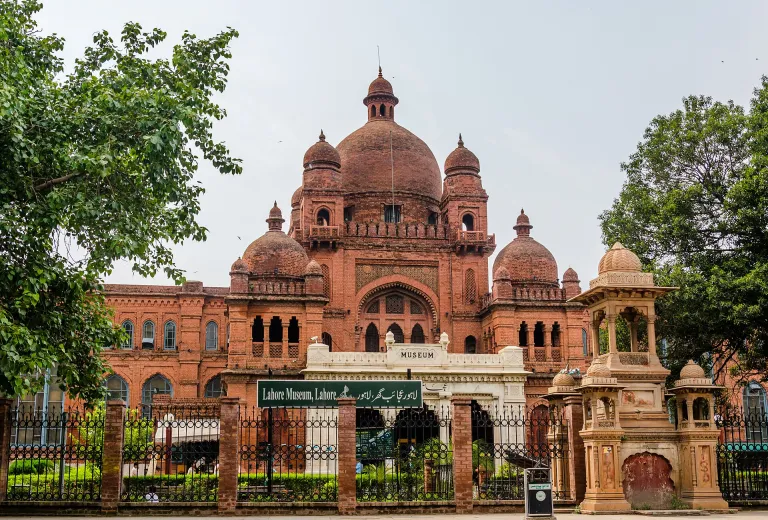 Museums of PakistanA guide to Pakistan's museums: Lahore Museum, National Museum Karachi, Peshawar, Taxila, Swat, Mohenjo-daro, HarappaTimeline of Pakistan: From Mehrgarh to TodayMaster timeline of Pakistan's history: Mehrgarh, the Indus cities, Gandhara, 712, Mughals, Sikhs, the British, 1947
How we know this
- Type Historical record
- Sources 5 (2 official/academic)
- Reviewed October 2026
- Disputed points Yes, see the debates
5 sources
- Archaeological Ruins at Moenjodaro, UNESCO World Heritage Centre
- First images: announcement in the Illustrated London News (1924), Harappa.com
- Mohenjo-daro, Encyclopaedia Britannica
- Civilization and Floods in the Indus Valley (G. F. Dales, Expedition 7:4, 1965), Penn Museum
- Mohenjo-daro (excavation history, used to locate sources), Wikipedia
Photo credits (3)
- Mohenjodaro - view of the stupa mound.JPG, Saqib Qayyum, CC BY-SA 3.0, via Wikimedia Commons
- PkMoenjoDaro01.jpg, Ziegler175, CC BY-SA 3.0, via Wikimedia Commons
- Great bath view Mohenjodaro.JPG, Saqib Qayyum, CC BY-SA 3.0, via Wikimedia Commons
